
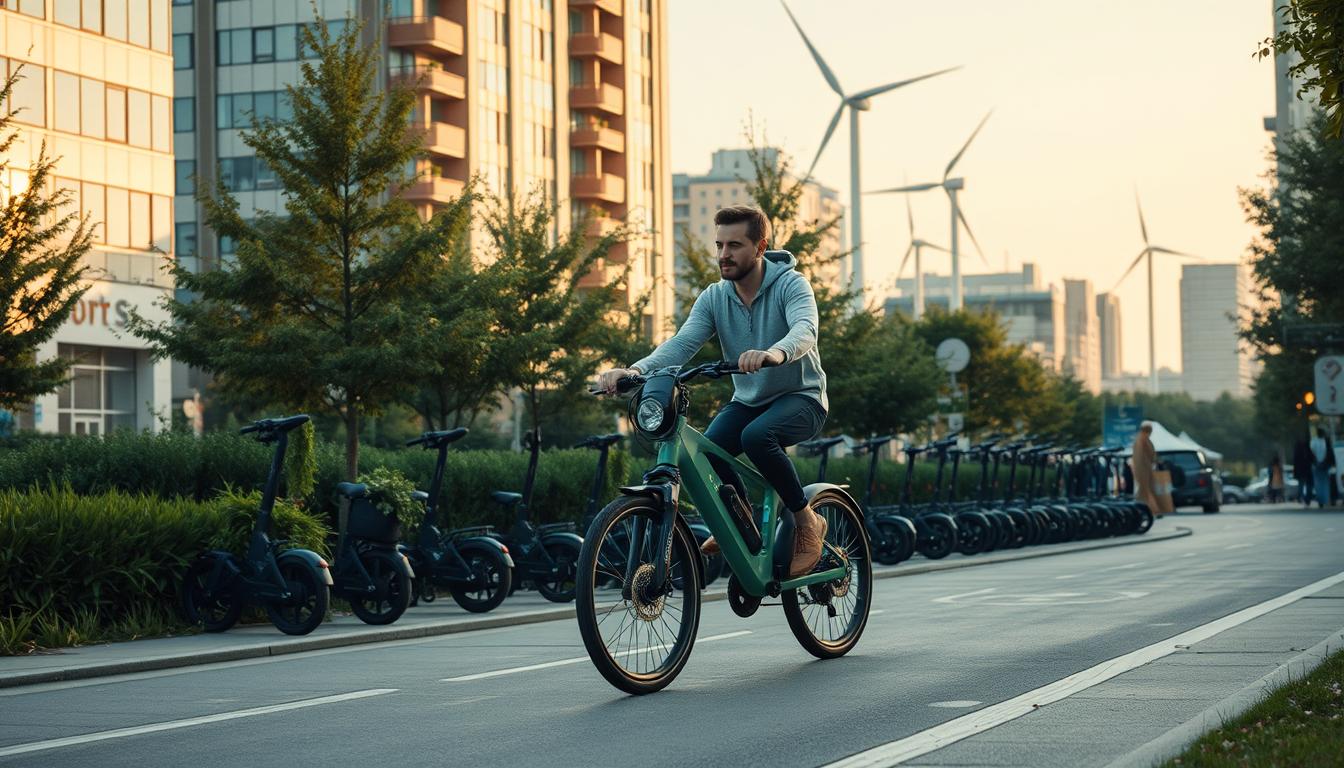
Pedal-powered transportation just got a high-tech upgrade. Electric bikes, or e-bikes, have surged in popularity across the U.S., blending convenience with eco-conscious travel. These battery-assisted two-wheelers let riders cover longer distances without breaking a sweat—or the planet.
Switching to e-bikes slashes carbon footprints dramatically. A typical passenger car emits 4.6 metric tons of CO₂ annually, while e-bikes produce near-zero emissions. Even when accounting for electricity use, studies show they generate 10 times fewer greenhouse gases than gas-powered vehicles.
Modern models now support solar charging and lithium-ion batteries, making them greener than ever. Cities nationwide are prioritizing sustainable transportation options as climate concerns grow. Reduced traffic congestion and cleaner air are just two perks of choosing these nimble machines over traditional cars.
This article dives into how e-bikes support healthier communities and lower environmental impact. From renewable energy integration to quieter streets, discover why swapping four wheels for two might be the smartest move you make this year.
Understanding Eco-Friendly Electric Bikes
Urban mobility is evolving, and electric bikes are leading the charge toward greener cities. These innovative machines blend pedal power with smart technology to create cleaner commutes. Let’s break down what makes them a standout choice for eco-conscious riders.
Smart Energy Use
E-bikes ditch fossil fuels for rechargeable batteries, cutting direct emissions to zero. Unlike cars, they don’t rely on gas stations—just plug into any outlet. Many models now work with solar panels, making them even greener.
Built for Efficiency
Modern designs use lightweight aluminum frames and efficient motors. This combo reduces energy waste and road wear compared to heavier vehicles. Some systems even recycle braking energy back into the battery.
| Feature | E-Bike | Car | Regular Bike |
|---|---|---|---|
| CO₂ Emissions per Mile | 0.02 lbs | 0.96 lbs | 0 lbs |
| Energy Source | Electric/Solar | Gasoline | Human Power |
| Annual Maintenance Cost | $150 | $1,200 | $75 |
Charging takes 4-6 hours—perfect for overnight power-ups. New battery tech lasts 3-5 years, with recycling programs keeping old units out of landfills. Riders save money while shrinking their carbon footprint.
These features make e-bikes a practical upgrade from cars for short trips. They’re not just transportation tools—they’re keys to cleaner air and quieter streets.
Zero Emissions: A Game Changer for Urban Air Quality
Imagine streets where rush hour doesn’t mean choking exhaust fumes. E-bikes eliminate tailpipe emissions entirely, offering cities a breath of fresh air. This shift could reduce respiratory issues linked to pollution by up to 30% in dense urban areas, according to recent studies.

E-Bikes vs. Conventional Vehicles
Swapping cars for battery-powered bicycles cuts carbon footprints dramatically. A single passenger vehicle emits 4.6 tons of CO₂ yearly—equivalent to 400,000 e-bike miles. Even hybrid cars produce 15 times more emissions per mile than these nimble two-wheelers.
Traffic congestion drops when e-bikes replace 10% of car trips. Cities like Portland saw 12% fewer rush-hour bottlenecks after promoting pedal-assisted commuting. Lighter bicycles also cause 90% less road wear than 3,000-pound sedans, saving taxpayers millions in infrastructure repairs.
Quieter motors reduce noise pollution by 50% compared to combustion engines. This creates calmer neighborhoods and lowers stress levels for residents. Plus, parking seven e-bikes fits into one car space, freeing up crowded urban zones.
With 60% of U.S. trips under six miles, e-bikes offer a practical path to cleaner cities. They’re not just vehicles—they’re tools for building healthier communities through smarter power use and space efficiency.
Batteries and Sustainability: Long-Lasting and Recyclable Power
Modern battery innovations are reshaping how we power eco-conscious transportation. These energy sources balance performance with environmental responsibility, offering riders reliable options for daily commutes.

Innovative Battery Technologies
Lithium-ion remains the go-to choice for most models, lasting 800-1,200 charge cycles. New solid-state designs promise 50% longer life spans while using fewer rare minerals. Manufacturers now prioritize recycled materials—up to 30% in some batteries.
| Battery Type | Average Lifespan | Recyclability Rate | Charge Time |
|---|---|---|---|
| Lithium-Ion | 5-7 years | 95% | 4-6 hours |
| Nickel-Metal Hydride | 3-5 years | 85% | 6-8 hours |
| Solid-State | 8-10 years | 98% | 2-3 hours |
Smart charging practices boost efficiency. Charging during off-peak hours reduces strain on power grids and lowers energy costs. Many riders pair their bikes with solar panels for emission-free power-ups.
Recycling programs tackle disposal concerns. Over 90% of battery components get reused in new units or other electronics. Brands like Bosch and Shimano offer take-back initiatives, ensuring old packs don’t harm ecosystems.
These advancements make e-bike batteries a viable option for those seeking sustainable transportation. They outperform gas engines in energy use while minimizing road infrastructure stress through lighter designs.
The Environmental Benefits of Riding an Electric Bike
Commuting choices shape our planet’s future. Opting for battery-assisted cycles offers measurable climate wins, blending personal convenience with collective responsibility.
Miles That Matter
Switching one daily car trip to an electric bike slashes personal transport emissions by 67%. Gas vehicles pump out 411 grams of CO₂ per mile—e-bikes use just 22 grams when charged via standard grids. Solar-powered riders drop that number to zero.
| Transport | CO₂ per Mile | Annual Cost | Energy Source |
|---|---|---|---|
| Car | 411g | $9,282 | Gasoline |
| E-Bike | 22g | $350 | Electricity |
| Public Transit | 101g | $1,200 | Diesel/Electric |
Urban riders make bigger impacts. Replacing 15% of car commutes with e-bikes could cut city-wide emissions by 12%. Pairing rides with wind or solar charging amplifies these benefits, creating truly clean mobility loops.
Maintenance plays a role too. E-bike service costs 75% less than automobiles, reducing resource waste from parts production. Their compact size eases parking pressures, preserving green spaces often paved for lots.
Every pedal-assisted journey chips away at air pollution levels. These machines prove that environmentally friendly tech isn’t futuristic—it’s here, rolling down your street today.
Traffic, Roads, and Noise: Mitigating Urban Impacts
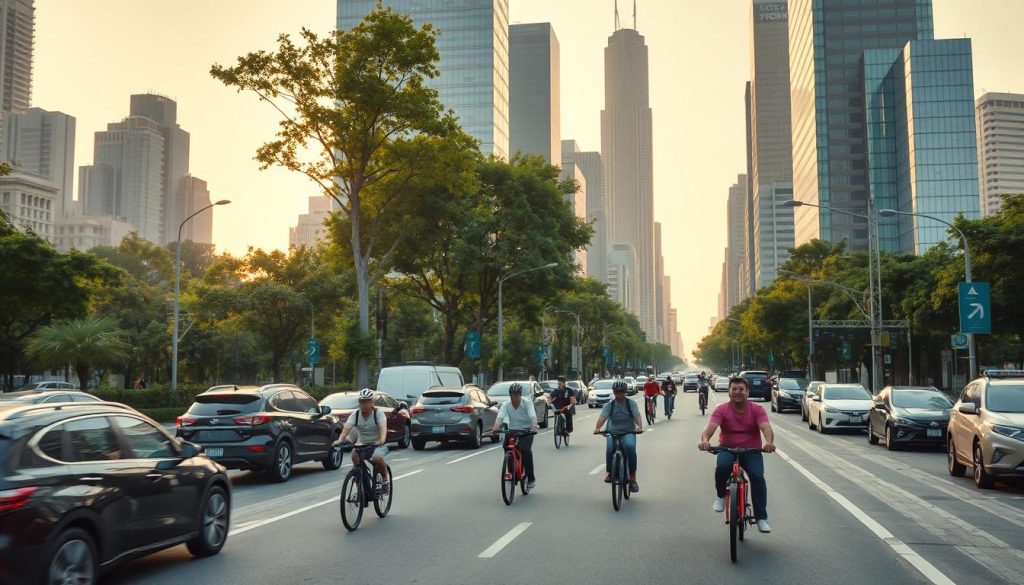
Cities transform when commuters choose smarter wheels. Lightweight e-bikes tackle three urban headaches: clogged streets, crumbling pavement, and constant noise. Their compact design creates ripple effects that benefit both infrastructure and quality of life.
Lighter Loads, Longer Roads
At 50-70 pounds, e-bikes exert 90% less force on asphalt than 4,000-pound cars. This reduced strain means fewer potholes and cracks. Portland’s transportation department found roads used mainly by bicycles need repaving every 20 years instead of 10.
| Factor | E-Bike | Sedan | Delivery Truck |
|---|---|---|---|
| Weight | 65 lbs | 3,500 lbs | 10,000 lbs |
| Road Wear Index | 1 | 1,600 | 10,000 |
| Noise Output | 55 dB | 75 dB | 85 dB |
Quieter motors keep neighborhoods peaceful. E-bikes operate at conversation-level volume compared to roaring engines. This cuts noise pollution by 60% on bike-friendly streets.
Energy savings add up quickly. Moving a 170-pound rider takes 90% less power than hauling a car. Smart battery systems optimize charge cycles, using grid electricity more efficiently than gas pumps.
These changes create a good environment for urban living. Less road repair means fewer construction delays and lower taxes. Smoother traffic flow reduces idling emissions, making cities healthier places to live and work.
Sustainable Energy: Tapping Into Renewable Power
Powering e-bikes with sunshine and breeze isn’t sci-fi—it’s happening now. Riders across the U.S. are pairing their bikes with renewable energy systems, creating zero-emission travel loops. This approach maximizes efficiency while shrinking energy use to whisper levels.
Solar and Wind Charging Options
Portable solar panels let cyclists recharge batteries anywhere. A 100-watt setup fully powers most e-bikes in 4-5 sunny hours. Wind-powered stations in cities like Austin and Denver offer free charging docks tied to local turbines.
- Solar charging cuts grid dependence by 80% for daily commuters
- Wind energy systems charge 15 bikes simultaneously during breezy days
- Hybrid setups combine both sources for all-weather reliability
Off-Peak Charging Benefits
Plugging in after 10 PM uses cleaner energy when demand drops. Power plants emit 30% less CO₂ during these hours. Utility companies often offer discounted rates—Portland riders save $120 yearly through timed charging programs.
| Charging Time | Cost per kWh | Grid Strain |
|---|---|---|
| Peak (2-7 PM) | $0.28 | High |
| Off-Peak (10 PM-6 AM) | $0.12 | Low |
These strategies reduce air pollution from power generation while keeping travel costs low. Smart chargers automate the process, syncing with renewable availability for maximum efficiency.
E-Bikes in American Cities: Paving the Way for Greener Commutes
American urban centers are reimagining commutes through innovative policies and tech-savvy solutions. Cities like Denver and Austin now offer rebates up to $1,400 for e-bike purchases, driving a 240% sales surge since 2021. These efforts aim to cut gridlock while boosting access to sustainable transportation alternatives.
Government Incentives Spark Change
Federal and local programs make battery-powered cycles more affordable. Portland’s “E-Bike for All” initiative provides income-based discounts, while California’s $10 million tax credit program targets low-income commuters. These strategies reduce reliance on gas vehicles for short trips.
| City | Incentive Type | Average Savings | Uptake Increase |
|---|---|---|---|
| Denver | Instant Rebate | $1,200 | 89% |
| Boston | Tax Credit | $750 | 67% |
| Seattle | Trade-In Program | $1,000 | 102% |
Rethinking City Mobility
E-bikes now account for 15% of all bicycle trips in San Francisco, replacing 45,000 weekly car journeys. This shift saves 2.3 million gallons of gasoline annually—enough electricity to power 1,900 homes for a year. Compact parking solutions free up 30% more space in crowded downtown areas.
- Cycle-to-work schemes reduce rush-hour traffic by 18% in participating cities
- 89% of riders report using cars less than three times weekly
- Shared e-bike lanes increased 40% across U.S. metro areas since 2022
These changes create cleaner, quieter neighborhoods while supporting energy-efficient lifestyles. As cities expand charging networks and bike lanes, e-bikes cement their role as practical alternatives to traditional transport.
Looking Forward: A Cleaner Future with Electric Bikes
Tomorrow’s transportation networks are taking shape today. Cities nationwide are redesigning streets for lighter, smarter mobility. Expanded bike lanes and solar-powered charging stations hint at a future where people choose efficiency over exhaust.
Urban planners predict 30% fewer car trips by 2030 as e-bikes become mainstream. This shift could cut urban carbon dioxide levels by 18%—equivalent to planting 50 million trees annually. Tech advancements like 10-minute battery swaps and self-charging hubs will make sustainable commuting effortless.
Recent initiatives show promising trends. Denver’s e-bike rebate program removed 4,200 cars from roads in 2023. Portland’s smart traffic lights now prioritize cyclists, saving riders time while reducing idling emissions. These changes create cleaner air and closer communities.
Every choice matters. Opting for battery-assisted rides today supports tomorrow’s greener cities. Imagine neighborhoods where charging stations outnumber gas pumps, and people greet each other instead of honking. That future starts with two wheels and a commitment to change.