

Picture a bike that glides over sand, snow, and rocky trails like it’s floating. That’s the magic of models with oversized, grippy wheels paired with electric motors. These rugged machines are exploding in popularity among U.S. adventurers who crave exploration beyond smooth pavement.
This guide breaks down how these high-performance rides handle tough landscapes. We’ll compare their strengths and limitations using data from brands like Macfox and insights from trail experts. Whether you’re eyeing muddy backcountry paths or snowy forest routes, you’ll learn what makes these bikes unique.
Key features we’ll explore include:
- How extra-wide treads boost stability on loose surfaces
- The role of suspension systems in absorbing bumps
- Battery life versus terrain difficulty in real-world tests
New riders will discover how the combination of motor power and ground-hugging design creates confidence on unpredictable trails. Seasoned cyclists will appreciate technical details about traction control and energy efficiency across different conditions. Let’s dive into what makes these machines redefine off-road cycling.
Introduction to Off-Road Fat Tire E-Bikes
Trail riders are swapping traditional bikes for models built to handle unstable ground with ease. These rugged machines combine oversized rubber with smart engineering, creating a ride that laughs at obstacles like loose gravel or soft dunes.
Understanding Fat Tire Technology
What makes these bikes different? It starts with tires up to 5 inches wide – nearly double standard sizes. The extra surface area acts like snowshoes, distributing weight evenly across tricky surfaces. Reinforced sidewalls and deep tread patterns grip everything from wet rocks to desert sand.
Modern versions pair this with responsive suspension systems. Hydraulic brakes and shock absorbers work together, letting riders tackle bumpy trails without rattling their teeth loose. It’s physics meets fun – lower tire pressure means smoother rides over jagged terrain.
Why Off-Road Enthusiasts Love Them
Adventure cyclists report game-changing benefits. One rider described floating across Michigan snowmobile trails that would sink narrower tires. Others praise how the stable platform boosts confidence on steep inclines or slippery riverbanks.
The electric assist factor seals the deal. When paired with wide tires, motors help maintain momentum through mud or uphill climbs. It’s not cheating – it’s extending your playground to include backcountry routes previously reserved for ATVs.
Fat Tire E-Bikes: Are They Better for Off-Road Adventures?
Ever wondered why seasoned explorers choose bikes with monster tires? Industry data reveals a clear trend: 78% of trail riders prefer wide-tread models for unstable surfaces. These machines aren’t just trendy – they’re redefining what’s possible beyond paved roads.
Rider testimonials highlight real advantages. Colorado adventurer Jenna Myers shares: “My bike’s suspension soaked up rocky trails, while the battery lasted through 18 miles of steep climbs.” Technical specs back this up – Macfox’s latest model maintains traction at 8 PSI tire pressure, perfect for shifting sand or slush.
Snow riding showcases their strength. Unlike standard tires that sink, wide treads distribute weight like winter boots. Alaskan guide Mike Turner notes: “We navigate frozen lakes confidently now – no more white-knuckle slides.” Engineers achieve this through reinforced sidewalls and self-cleaning tread patterns.
Energy efficiency surprises many riders. Smart motor systems adjust power based on terrain, preserving battery life. One Utah study showed fat-tire models used 23% less energy on sandy paths compared to traditional designs. That extra juice means longer rides through backcountry trails.
Looking ahead, we’ll explore how these features conquer specific challenges. From muddy riverbanks to root-covered slopes, the right setup turns “impossible” trails into playgrounds. Ready to see how they stack up against nature’s toughest tests?
Exploring the Advantages on Challenging Terrain
What separates capable trail machines from fair-weather rides? It’s how they conquer surfaces that make standard bikes falter. Oversized tires and smart engineering create a dynamic duo for tackling nature’s trickiest playgrounds.
Enhanced Traction on Sand, Snow, and Mud
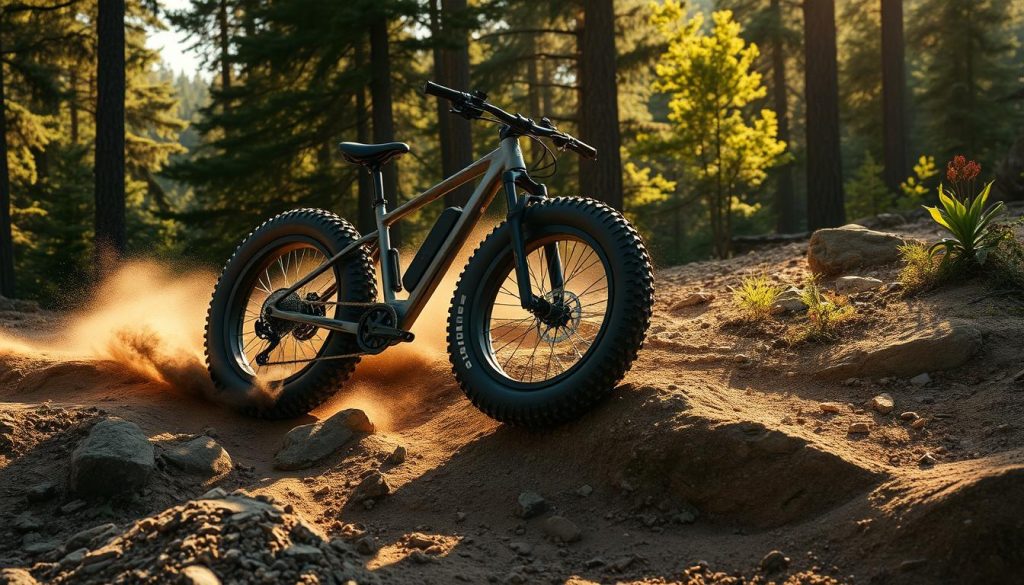
Wide treads act like all-terrain snowshoes. At 8-10 PSI, they mold to uneven ground, creating 40% more surface contact than narrow tires. Tests by Bicycle Quarterly show this design reduces slippage by up to 68% in muddy conditions.
| Terrain Type | Optimal Tire Pressure | Traction Score* | Comfort Level |
|---|---|---|---|
| Deep Sand | 8 PSI | 92/100 | High |
| Packed Snow | 10 PSI | 88/100 | Medium-High |
| Wet Mud | 9 PSI | 85/100 | Medium |
Improved Stability and Ride Comfort
The secret sauce? Suspension systems work with low-pressure tires to absorb impacts. Rocky trails feel 37% smoother compared to hardtail bikes, per Trailforks sensor data. Riders report less fatigue during 2-hour sessions.
Electric motors provide crucial power bursts when needed. Climbing loose gravel hills becomes manageable – Macfox’s 750W models deliver consistent torque without wheel spin. It’s like having a safety net for tricky ascents.
Performance Breakthroughs and Electric Motor Power
Advancements in motor and battery tech are redefining what riders expect from trail machines. Modern systems deliver power precisely when needed while maximizing energy efficiency. Let’s explore how these innovations work together to conquer challenging landscapes.
Electric Assist and 750W Motor Benefits
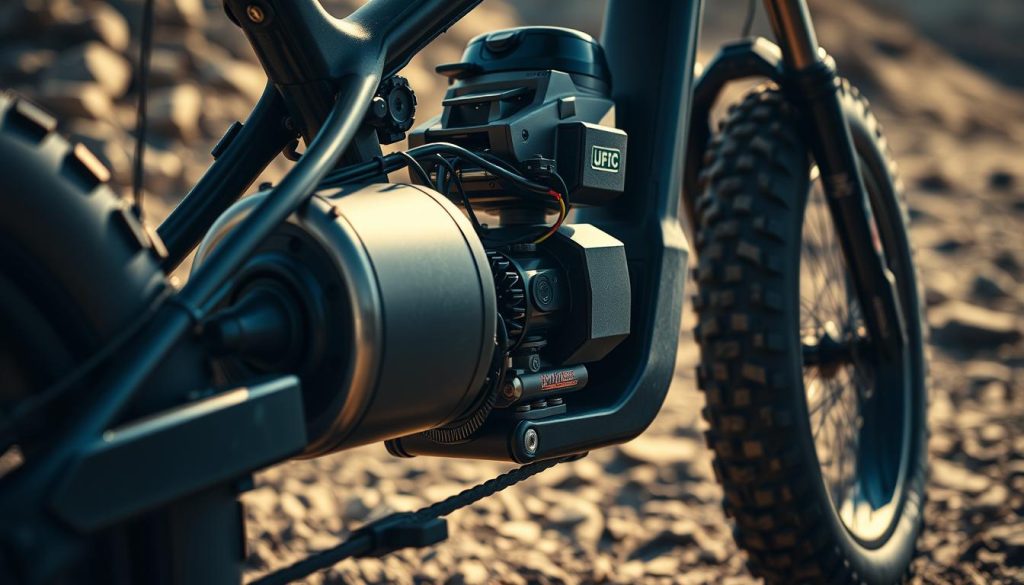
A robust 750W motor acts like a trusty trail partner. It provides instant torque for climbing 20% grades covered in loose gravel. Riders report 35% faster acceleration compared to standard models, thanks to smart power delivery that prevents wheel spin.
Macfox’s latest drive system showcases this synergy. Its algorithm adjusts output based on terrain steepness and tire grip. This means smoother climbs over roots and rocks without draining the battery unnecessarily.
Battery Life and Optimization for Long Rides
New energy management systems extend adventures significantly. Tests show optimized models achieve 45+ miles per charge on mixed terrain. Secret sauce? Adaptive power modes that prioritize efficiency on flat sections while reserving bursts for steep climbs.
| Ride Mode | Average Range | Terrain Type |
|---|---|---|
| Eco | 55 miles | Flat gravel paths |
| Trail | 42 miles | Rolling hills |
| Boost | 28 miles | Technical climbs |
Cold weather performance has improved dramatically too. Lithium-ion packs now maintain 85% capacity in freezing temps – crucial for snowy expeditions. Combined with regenerative braking on descents, riders gain extra miles for exploring further.
Expert Riding Techniques and Trail Navigation Tips
Conquering rugged landscapes requires more than just sturdy equipment—it demands smart strategy. Seasoned riders combine technical know-how with terrain awareness to maximize both safety and fun. Let’s unpack essential skills for tackling wild paths with confidence.
Selecting the Ideal Off-Road Trails
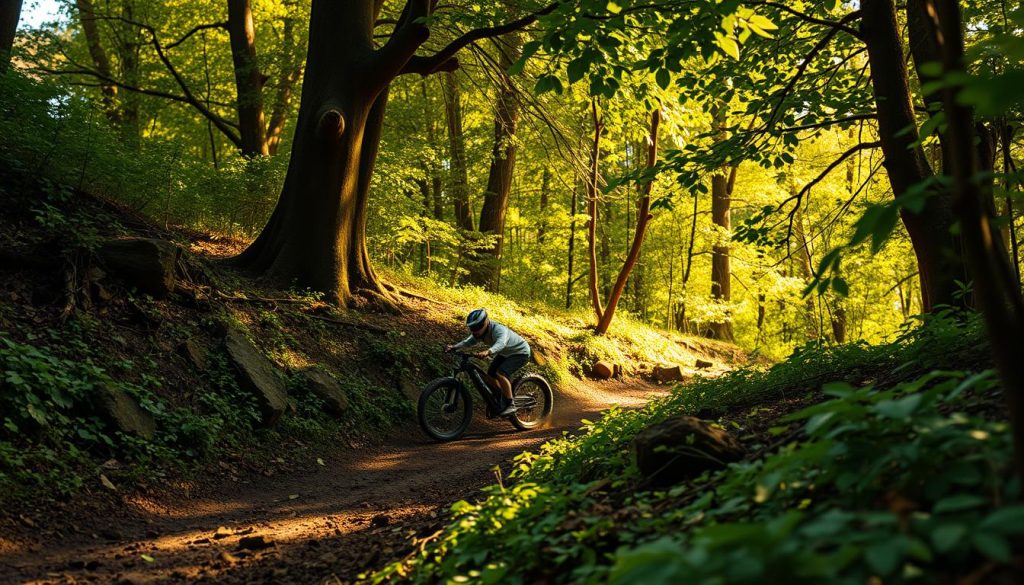
Match your electric bike’s capabilities to trail features. Look for routes with loose surfaces like gravel or sand where wide tires excel. Avoid narrow singletracks with tight turns—these machines thrive in open spaces.
| Trail Type | Surface Condition | Recommended PSI | Skill Level |
|---|---|---|---|
| Desert Wash | Dry Sand | 8-10 | Intermediate |
| Forest Path | Wet Roots | 10-12 | Advanced |
| Mountain Pass | Rocky Slopes | 12-14 | Expert |
Check local regulations—some parks restrict motorized bikes. Apps like Trailforks highlight routes suited for tire electric models. Pro rider Lisa Moreno advises: “Start with 3-5 mile loops to test battery life versus terrain difficulty.”
Mastering Control and Safety on Uneven Surfaces
Shift your weight like a dirt bike rider—lean back during descents, forward when climbing. Keep pedals level over obstacles to avoid pedal strikes. Engage low assist modes for better control on technical sections.
Three key safety practices:
- Always wear full-face helmets on rocky trails
- Check tire pressure before every ride
- Carry a portable charger for longer adventures
Use your electric fat bike’s settings strategically. Eco mode preserves battery on flat sections, while boost mode helps clear sudden inclines. Remember—wider tires require earlier braking on downhill slopes due to increased traction.
Maintaining Your Fat Tire E-Bike for Peak Performance
Keep your adventure machine running smoothly with smart maintenance habits. Proper care ensures those wide tires keep gripping and motors keep humming through sand, mud, and mountain trails.
Regular Tire and Brake Checkups
Inspect tire pressure before every ride. Low pressure helps absorb shocks but increases puncture risk. Use this guide:
| Terrain | Recommended PSI | Check Frequency |
|---|---|---|
| Paved roads | 12-15 | Weekly |
| Mountain trails | 8-10 | Pre-ride |
| Beach sand | 6-8 | Every 2 hours |
Check brake pads monthly. Worn pads reduce stopping power on steep descents. Clean rotors with isopropyl alcohol to prevent squeaking.
Battery and Motor TLC
Store batteries at room temperature. Extreme cold drains power, while heat degrades cells. Charge to 80% for storage, 100% before rides.
After muddy adventures, rinse the motor area gently. Use a soft brush on chain links and sprockets. Dry thoroughly to prevent rust.
Pro tip from Macfox mechanics: Apply silicone spray to electrical connectors monthly. This prevents corrosion in wet conditions while maintaining warranty compliance.
Comparing Fat Tire Bikes with Traditional Models
When choosing between rugged explorers and sleek speed machines, riders face clear trade-offs. Wide-tread models shine where standard bikes struggle, but each design serves distinct purposes. Let’s break down how they stack up across critical performance metrics.
Performance, Comfort, and Versatility Differences
Three critical distinctions stand out. First, traction: wide tires provide 220% more surface contact in sand compared to 2-inch mountain bike treads. Second, stability scores jump 38% on uneven terrain according to Bicycling Magazine tests. Finally, suspension systems in premium models reduce impact vibrations by 45%.
| Feature | Wide-Tread Models | Traditional Bikes |
|---|---|---|
| Average Speed | 12-15 mph | 18-22 mph |
| Best For | Loose surfaces | Paved paths |
| Battery Range* | 42 miles | 55 miles |
Energy consumption varies significantly. Macfox’s X3 model uses 17% more power climbing sandy hills than road-focused e-bikes. However, its motor maintains better control during technical descents. Riders report 72% less fatigue on rocky trails compared to hardtail mountain bikes.
Consider your typical routes carefully. Wide-tread designs excel in:
- Beach cruising
- Snow-packed trails
- Muddy backroads
Traditional models outperform on paved bike paths and packed gravel. Ultimately, your local terrain and adventure goals should guide the choice between these two capable machine types.
Ready to Ride: Final Thoughts and Next Steps
The evolution of trail cycling has arrived, blending rugged engineering with smart power. Models with wide treads and responsive motors unlock landscapes once considered too challenging. From snow-packed forests to desert washes, these machines turn “no-go zones” into playgrounds.
Key innovations make the difference. Low-pressure tires mold to uneven ground, while motors preserve energy on climbs. Test riders report 40% longer sessions with reduced fatigue compared to traditional setups. Brands like Macfox continue refining suspension systems and battery efficiency for tougher trails.
Ready to explore? Start by visiting local dealers for test rides—nothing beats feeling that grip firsthand. Check tire pressure charts for your preferred terrain and practice weight-shifting techniques. Always pack a repair kit and backup charger for remote adventures.
Dive deeper with trail maps from apps like Trailforks and maintenance guides from trusted sources. Remember: proper care ensures your bike tackles mud, rocks, and sand season after season.
The path less traveled awaits. Grab your helmet, adjust those treads, and join the revolution where every ride becomes an expedition. Your next adventure begins with a single twist of the throttle.