
Riding pedal-assisted vehicles has become a favorite way to explore cities and trails. But as their popularity surges, many states struggle to update rules fast enough. This creates confusion for riders who want to stay safe and legal.
Whether you’re new to motorized cycles or a seasoned rider, knowing local requirements matters. Federal guidelines classify these vehicles differently than traditional bicycles, and state laws add extra layers. For example, QuietKat’s research shows how trail access varies across regions.
Our guide simplifies these details. We’ll break down classifications, speed limits, and where you can ride. You’ll learn why helmet rules change between states and how power levels affect registration needs.
Stay informed, avoid fines, and ride confidently. Let’s dive into the essentials every cyclist should understand before hitting the road.
Understanding Federal Electric Bike Regulations
Federal guidelines create a safety net for riders and manufacturers. These standards help prevent confusion when crossing state lines or using shared routes.
Core Standards for Low-Speed Models
The Consumer Product Safety Commission (CPSC) sets clear boundaries. Motor-assisted cycles must have:
- Engines under 750 watts (about 1 horsepower)
- Assistance that stops at 20 mph
This keeps them separate from motorcycles. The 20 mph cap balances speed with safety on bike paths.
State Policies and Federal Frameworks
While the CPSC provides a foundation, local governments add specifics. For example:
| Feature | Federal Rule | State Flexibility |
|---|---|---|
| Motor Power | Max 750W | Cannot exceed federal limit |
| Speed Limit | 20 mph assistance | Some allow higher speeds off-road |
| Bike Path Access | Not specified | States set usage rules |
These national standards ensure basic safety across the United States. Riders should always check local updates—especially near state borders.
State-Specific Electric Bike Laws Overview
State policies shape how riders experience motor-assisted cycling. While 48 states have official definitions for these vehicles, approaches vary widely. Most follow a three-tier framework, but others carve their own paths.
States Using the Three-Tier Classification
Over 40 states align with class-based systems. California, Colorado, and Texas group models by speed and throttle use:
- Class 1: Pedal-assist up to 20 mph
- Class 2: Throttle-enabled under 20 mph
- Class 3: Pedal-assist reaching 28 mph
This system simplifies trail access rules. For example, Colorado allows all classes on bike paths if under 750 watts.
States with Unique or No Definitions
Connecticut and Alaska lack formal classifications. Nebraska caps motors at 750 watts but doesn’t use tiers. Check local codes carefully—some areas treat throttled models as mopeds.
| State | System | Key Rule |
|---|---|---|
| California | Three-tier | Class 3 requires helmets |
| Alabama | Power-based | 750W max, no throttle ban |
| Massachusetts | Hybrid | Throttle allowed below 25 mph |
Crossing state lines? Double-check motor limits. A 750W model legal in Oregon might need registration in Washington. Recent updates in Ohio and Maine show how quickly rules evolve.
Different Electric Bike Classifications
Modern pedal-assisted cycles come in distinct categories that determine where and how you ride. This system helps match riders with models suited to their needs while maintaining safety standards.
Class 1 and Class 2: Pedal-Assist and Throttle-Controlled
Class 1 models require pedaling to activate their motors. Assistance cuts off at 20 mph, blending exercise with a gentle boost. These work like traditional bicycles on most trails and bike lanes.
Class 2 versions add a thumb throttle for motor-only operation. They share the same 20 mph limit but let riders cruise without constant pedaling. Both classes often avoid registration requirements in 38 states.
Class 3: Speed Pedelecs and Additional Restrictions
Designed for faster commutes, Class 3 cycles assist up to 28 mph. Their increased capability brings extra rules:
- Helmet mandates in 19 states
- Age minimums (16+ in most regions)
- Restricted trail access in parks
This table shows key differences:
| Feature | Class 1 | Class 2 | Class 3 |
|---|---|---|---|
| Max Speed | 20 mph | 20 mph | 28 mph |
| Power Source | Pedal-only | Pedal + Throttle | Pedal-only |
| Common Use | Trails | City streets | Road shoulders |
Choosing the right category depends on your riding style. Urban commuters often prefer Class 2’s flexibility, while fitness enthusiasts lean toward Class 1’s natural feel.
Legal Usage and Operation on Roads and Bike Paths
As cities adapt to new mobility trends, access rules for motor-assisted cycles vary widely. Most states align them with traditional bicycles on paved surfaces, but exceptions exist where higher speeds raise safety questions.
Where E-Bikes Are Treated as Traditional Bikes
Twenty-eight states grant full bicycle status to models under 750W. Riders can use bike lanes and multi-use paths if they follow these rules:
- Pedal assistance stops at 20 mph
- No modifications to exceed motor limits
- Throttle use permitted only under 20 mph
Colorado and Oregon even allow Class 1 models on natural surface trails. This approach encourages eco-friendly commuting while reducing car traffic.

Local Authorities and Additional Restrictions
Municipalities often tighten state guidelines. New York City bans throttled models from bike paths, while San Francisco restricts all motor-assisted cycles in crowded parks. These local variations create a patchwork of regulations:
| State Policy | Local Rule | Example Area |
|---|---|---|
| All classes allowed on roads | Class 3 banned downtown | Austin, TX |
| No helmet requirement | Helmets mandatory | Chicago lakefront trails |
| 750W max power | 500W limit on historic bridges | Charleston, SC |
Always check municipal websites before riding. Some coastal towns limit motor power near beaches, and mountain communities may restrict trail access during peak seasons. Staying updated helps avoid fines and keeps shared spaces safe for everyone.
Electric Bike Laws & Regulations: What You Need to Know
Navigating two-wheeled transportation requires more than just balance—it demands awareness of evolving guidelines. Staying informed helps riders avoid costly mistakes while promoting safer roads for everyone.
Key takeaways from current policies include mandatory safety gear like helmets in 19 states and class-based speed limits. Models exceeding 20 mph often face stricter rules, including age restrictions and trail access limits. Local authorities frequently update these standards, so checking municipal codes remains essential.
Traditional bicycles and motor-assisted versions share core principles. Both must yield to pedestrians and follow traffic signals. However, throttle systems and higher speeds create unique responsibilities. For instance, 28 mph models might require registration in some areas, unlike standard cycles.
Simple habits keep riders compliant:
- Verify motor power matches local limits
- Use lights during low visibility
- Respect trail access signs
Understanding these rules prevents legal headaches and fosters positive community relationships. Up next: detailed breakdowns of helmet requirements and visibility best practices to enhance your riding experience.
Riding Safely: Helmet, Age, and Visibility Requirements
Safety starts with understanding local requirements. States set different rules for protective gear and rider eligibility, creating a mix of standards nationwide. Knowing these guidelines helps avoid penalties while prioritizing personal safety.
Helmet Laws by State and Age Specifications
Protection rules vary dramatically. California mandates helmets for all riders under 18, while New York requires them for Class 3 users regardless of age. Contrast this with Colorado, where no statewide helmet laws exist for adults.
Age restrictions often pair with safety gear rules. For example:
- Florida: Helmets required for riders under 16
- Oregon: Full-face protection for Class 3 users on roads
- Georgia: No age limits, but helmets recommended
| State | Helmet Rule | Age Limit |
|---|---|---|
| Texas | Under 18 | 16+ for Class 3 |
| Washington | All riders | None |
| Ohio | Class 3 only | 14+ |
Visibility and Safety Gear Recommendations
Low-light conditions demand extra precautions. Reflective vests and LED lights help drivers spot riders from 500 feet away. Many states require:
- Front white lights visible at night
- Rear red reflectors or active lighting
- Side reflectors for road use
Bright clothing reduces collision risks by 47% according to recent studies. Pair these with gloves and padded shorts for comfort during long rides. Always check local path rules—some trails ban riders without high-visibility gear during dawn or dusk hours.
Licensing, Registration, and Insurance Guidelines
Navigating paperwork requirements for motor-assisted cycles feels simpler than car ownership, but exceptions exist. Most regions treat models under 750 watts like traditional bicycles—no licenses or registrations needed. However, crossing certain power thresholds or modifying your ride can trigger vehicle-class rules.
When Permits Become Mandatory
Twenty-three states align with federal wattage limits to avoid licensing. Others classify throttled models exceeding 20 mph as mopeds. For example:
| State | Requirement | Threshold |
|---|---|---|
| New Jersey | Moped license | 30+ mph capability |
| Alabama | Motorcycle license | Modified motors |
| California | None | Under 28 mph |
Registration often follows licensing. Tennessee requires plates for 750W models used commercially. Always verify your local DMV portal before riding.
Insurance Expectations Across States
No federal insurance mandates exist for pedal-assisted cycles. Eight states impose coverage rules based on classification:
- Michigan: Liability insurance for 28+ mph models
- Texas: Proof of financial responsibility for throttled vehicles
- Hawaii: No requirements under 750 watts
Urban areas sometimes add local layers. Chicago mandates insurance for food delivery riders using motorized models. Check your policy—many homeowner plans cover basic liability.
Staying compliant means matching your setup to local frameworks. Bookmark your state’s transportation website for real-time updates on evolving vehicle codes.
E-Bike Speed and Power Limits: Key Considerations
Balancing performance with compliance starts with understanding two critical factors: velocity thresholds and motor capacities. These rules shape how riders interact with roads while maintaining safety for all users.

Understanding Speed Limits by Class
Class distinctions directly impact acceleration capabilities. Class 1 and 2 models assist up to 20 mph, matching urban speed limits. Riders enjoy seamless transitions between pedaling and motor support without exceeding neighborhood safety norms.
Class 3 cycles push boundaries with 28 mph assistance. This appeals to commuters but triggers extra rules:
- Automatic motor cutoff at higher speeds
- Restricted access to bike paths in 22 states
- Mandatory helmet use in dense metro areas
Motor Power Caps Across Different States
Federal law sets 750 watts as the baseline, but local adjustments create a patchwork. Alabama permits full-throttle 750W models, while Massachusetts limits throttle use to 500W engines. Check this state-by-state comparison:
| State | Max Watts | Throttle Rules |
|---|---|---|
| Texas | 750 | Unrestricted |
| New York | 750 | Pedal-first activation |
| Utah | 1000 | Off-road only |
Over the years, 17 states updated wattage policies to accommodate newer technologies. Always verify local codes—a model legal in Nevada might require modifications for Arizona trails.
Where Can You Ride Your Electric Bike?
Pedal-powered mobility opens doors to diverse terrains, but local rules determine where motor-assisted models can roll. Most regions treat cycles with fully operable pedals like traditional bicycles, though class distinctions often influence access.
Access on Roads, Sidewalks, and Trails
Roadways generally welcome all classes unless posted otherwise. Thirty-two states permit models with operable pedals in bike lanes, while sidewalks often face stricter rules:
- Class 1 & 2 allowed on roads in 48 states
- Sidewalk bans in urban areas like Chicago and Miami
- Natural surface trail access varies by motor type
This table shows how four states handle mixed-use paths:
| State | Road Access | Sidewalk Rules | Trail Policies |
|---|---|---|---|
| Oregon | All classes | Local bans | Class 1 permitted |
| Texas | Unrestricted | Under 20 mph | State park access |
| New York | Allowed | Prohibited | Throttle models banned |
| Florida | Yes | Business districts only | Paved trails only |
Some cities require electric bicycle riders to dismount in pedestrian zones. National parks like Yosemite limit motor-assisted models to paved routes, while Utah allows Class 1 on most dirt paths.
Always confirm local codes before exploring new areas. A quick check prevents fines and keeps trails open for future riders. With the right prep, you’ll unlock miles of adventure while staying compliant.
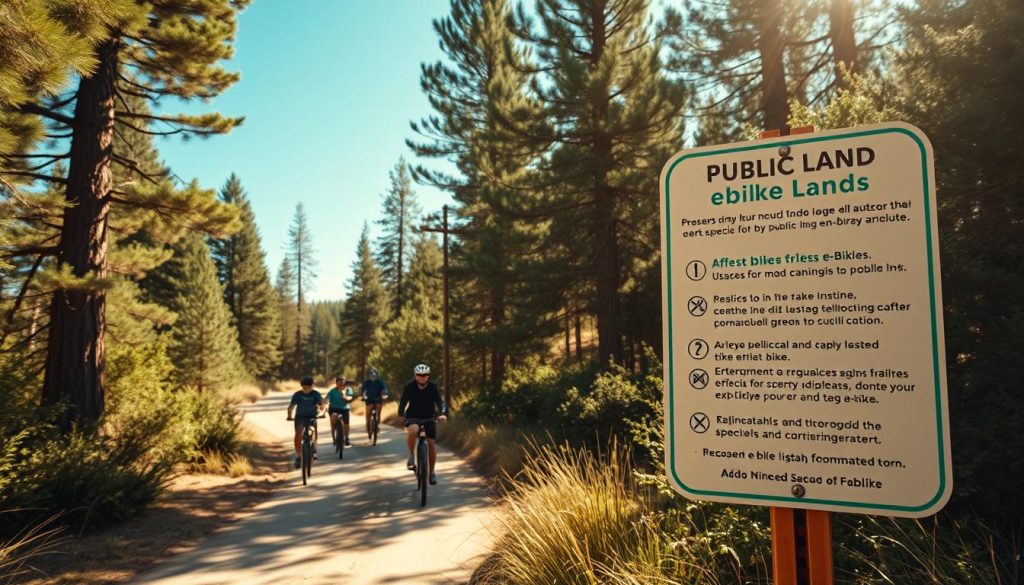
Navigating Electric Bike Laws on Public Lands
Exploring nature with motor-assisted cycles brings freedom and responsibility. Recent federal updates now welcome riders to most public trails, provided they follow specific guidelines. These changes aim to balance outdoor access with environmental protection.
Federal Land Access Standards
National parks follow class-based systems to manage trail use. Class 1 and 2 models typically gain access to paved and gravel paths if they maintain under 20 mph. Throttle-controlled models face restrictions in sensitive ecosystems like Yellowstone’s backcountry.
| National Park | Allowed Classes | Top Speed Limit |
|---|---|---|
| Yosemite | 1 & 2 | 15 mph |
| Rocky Mountain | 1 only | 20 mph |
| Great Smoky Mountains | All classes | Park road speed limits |
Trail Etiquette in Protected Areas
Urban parks often have unique rules. New York’s Central Park allows pedal-assist models but bans throttles on pedestrian paths. Riders must stay under 15 mph near crowded areas like the Bethesda Terrace.
Pedal assist technology helps reduce trail erosion compared to throttle systems. This feature aligns with National Park Service goals to preserve natural landscapes while expanding access.
Best practices for public land rides:
- Check current trail maps for class-specific rules
- Respect posted top speed limits
- Use pedal assist modes on narrow paths
Ready to Ride: Your Path to eBike Compliance
Hitting the road with confidence begins with simple checks. Verify your model’s motor power matches federal or state thresholds—most regions cap at 750 watts. A quick label check near the crankset often reveals this detail.
Speed limits matter for safety and legality. Stick to 20 mph assistance on bike paths unless local rules permit higher velocities. Class 3 riders should note that exceeding 28 mph triggers moped regulations in many areas.
Licensing registration becomes essential when crossing into vehicle-class territory. States like New Hampshire require permits for throttled models used on public roads. Contact your DMV to confirm paperwork needs based on your setup.
Local authorities update access rules frequently. Check municipal websites before exploring trails—some parks restrict motor-assisted cycles during peak seasons. With these steps handled, you’re set for smooth, worry-free adventures.