
Pedal-assist technology has transformed how Americans commute and explore. Electric bikes now dominate city streets and trail networks, offering eco-friendly transportation that blends exercise with effortless riding. With models ranging from $800 budget options to premium $12,000 designs, there’s never been more variety—or more questions about where quality meets affordability.
This guide cuts through the noise by analyzing key factors that matter most. Battery life determines how far you’ll travel between charges, while motor power impacts your ability to conquer steep hills. Build quality separates bikes that last from those that gather dust in garages.
We’ve partnered with industry leaders like Rad Power Bikes and Aventon to test real-world performance. From throttle response to frame weight, our comparisons highlight what makes each model unique. Whether you prioritize speed limits, cargo capacity, or sleek urban designs, you’ll find data-driven insights tailored to U.S. riders.
Affordable innovation now puts electric bikes within reach for millions. Let’s explore how today’s top manufacturers stack up—and which ones deliver lasting value for your adventures.
Introduction to the E-Bike Market
Urban commuters and weekend adventurers alike are fueling a transportation revolution. Over the past decade, electric bikes shifted from niche gadgets to mainstream mobility solutions. Cities like Portland and Denver report 40% annual growth in ridership, driven by their ability to flatten hills and shorten distances without sweat.
These two-wheelers blend pedal power with battery-driven motors. Three classes define their capabilities:
- Class 1: Pedal assist up to 20 mph, no throttle
- Class 2: Throttle boost to 20 mph without pedaling
- Class 3: Pedal assist reaching 28 mph for faster commutes
Modern models feature adjustable assist levels and batteries lasting 20-80 miles per charge. Integrated lights, cargo racks, and smartphone connectivity have become standard. Consumer reviews praise mid-drive motors for hill-climbing power, while hub motors keep prices under $1,500.
From delivering groceries to weekend trail rides, these bikes adapt to diverse needs. Recent improvements in lithium-ion tech cut battery weight by 30% since 2018. Budget-friendly options now include hydraulic brakes and puncture-resistant tires—features once reserved for premium builds.
The Rise of Affordable E-Bikes
Recent breakthroughs in lithium-ion production have slashed electric bike prices by 40% since 2020. Models once costing $3,000 now compete with $1,800 alternatives offering similar power and range. This shift lets riders tackle steep hills and 30-mile commutes without emptying their wallets.
Brands like Rad Power Bikes prove budget-friendly doesn’t mean cheap. Their RadMission model packs a 500W motor and 45+ mile range under $1,500. Reviewers praise its sturdy frame and smooth throttle response—features usually found in premium bikes.
The secret lies in smarter battery designs and efficient hub motors. Modern batteries last 5-7 years with proper care, while motors deliver 250-750W power at lower costs. Riders get hill-climbing muscle without sacrificing comfort during long rides.
Market data shows 60% of U.S. buyers now choose bikes under $2,500. Industry reports highlight models like Aventon Soltera as top picks—blending 50-mile range with lightweight frames under $1,600. These options prove you don’t need high prices for reliable performance.
As technology improves, even $800 bikes include waterproof connectors and puncture-resistant tires. The days of choosing between price and quality are fading fast. Today’s riders enjoy durable builds and responsive motors across all budget levels.
Key Features of Top Electric Bikes
Key components like battery integration and motor efficiency define today’s top-performing electric bikes. Modern models pack 500-750Wh batteries that blend seamlessly into frames, offering 40-80 miles per charge. Riders control assist levels through crisp LCD displays showing speed, distance, and remaining range.
High-end models stand out with hydraulic disc brakes that stop reliably in rain or steep descents. Premium suspension systems absorb bumps on trails, while folding electric designs save space without cutting motor power. These bikes balance 500W-750W motors with sleek frames that turn heads on city roads.
Affordable options still deliver essentials like mechanical disc brakes and basic suspension. However, they often use heavier batteries and simpler LED panels. The best models match robust parts like puncture-resistant tires with stylish choices—matte finishes or integrated lights.
US riders enjoy more customization than ever. Brands offer cargo racks, phone mounts, and upgraded seats. Some even let you swap batteries for extended adventures. Smart shoppers prioritize water-resistant connectors and durable alloy frames—features that boost long-term value.
Whether you need a commuter bike or folding model for tight spaces, today’s options balance power with practicality. The right mix of motor performance, battery life, and smart accessories transforms every ride into a smooth, personalized journey.
In-Depth Look at Battery and Motor Performance
Modern riders demand reliable energy systems that keep pace with their adventures. Two components shape every ride: the battery that fuels journeys and the motor that translates energy into motion. Let’s break down how these elements work together to create seamless riding experiences.
Battery Life and Range Analysis
Battery capacity directly impacts how far you’ll travel. Models with 450Wh batteries typically deliver 30-45 miles, while 720Wh packs extend rides to 80+ miles. Semi-integrated designs blend batteries into frames for sleek profiles, whereas hidden units offer theft protection but complicate replacements.
Real-world tests reveal surprising differences. A 500Wh battery lasted 58 miles in eco mode during a Florida flatland review. The same unit managed just 22 miles tackling Colorado’s steep grades. Smart energy management systems now adjust output based on terrain, preserving power for challenging climbs.
Motor Power and Efficiency
Motors range from 250W commuter models to 750W torque monsters. Higher wattage doesn’t always mean better performance—65Nm torque motors outclimb 750W low-torque units. Efficient power utilization lets some bikes achieve 4% more range per charge through regenerative braking tech.
| Model | Battery | Motor | Tested Range |
|---|---|---|---|
| Urban Commuter Pro | 630Wh | 500W/70Nm | 68 miles |
| Trail Explorer | 720Wh | 750W/85Nm | 54 miles |
| City Glide Lite | 450Wh | 350W/55Nm | 42 miles |
Mid-drive motors excel on hills by leveraging bike gears, while hub motors provide affordable acceleration. Recent reviews highlight models that maintain 95% motor efficiency across assist levels, ensuring consistent performance during long rides.
Design, Comfort, and Riding Experience
The difference between a good ride and a great one often comes down to thoughtful design. Modern manufacturers prioritize ergonomic frames that reduce strain during long commutes. Adjustable stems and swept-back handlebars let riders customize their posture, while suspension seatposts absorb vibrations from rough roads.
Ergonomic Frame and Build Quality
Frame geometry plays a crucial role in control and safety. Brands like Co-op Cycles use hydroformed aluminum to create lightweight yet sturdy structures. Their CTY e1.1 model features a low-step design that simplifies mounting, ideal for urban riders navigating traffic.
Durable materials like reinforced alloy forks improve handling without adding bulk. Testers note the Aventon Level 3’s ergonomic grips reduce hand fatigue during 10-mile trips. These design choices prove comfort stems from smart engineering, not just padding.
Suspension and Ride Smoothness
Quality suspension transforms bumpy paths into smooth journeys. Front fork systems with 50mm travel handle cracked sidewalks, while seatpost shock absorbers cushion tailbones. The RadRover 6 Plus demonstrates this with its adjustable air suspension, maintaining stability across gravel and pavement.
Commuter-focused models balance cost and performance. Many under $2,000 now include basic coil-spring forks and puncture-resistant tires. Riders report 30% less fatigue on models with dual suspension compared to rigid frames, according to recent consumer surveys.
E-Bike Categories: Commuter, Folding, Cargo, and More
Modern riders choose electric bikes tailored to their daily needs. From squeezing through traffic to hauling groceries, different designs solve specific challenges. Let’s explore how frame styles and features align with urban lifestyles.
Commuter and Urban Models
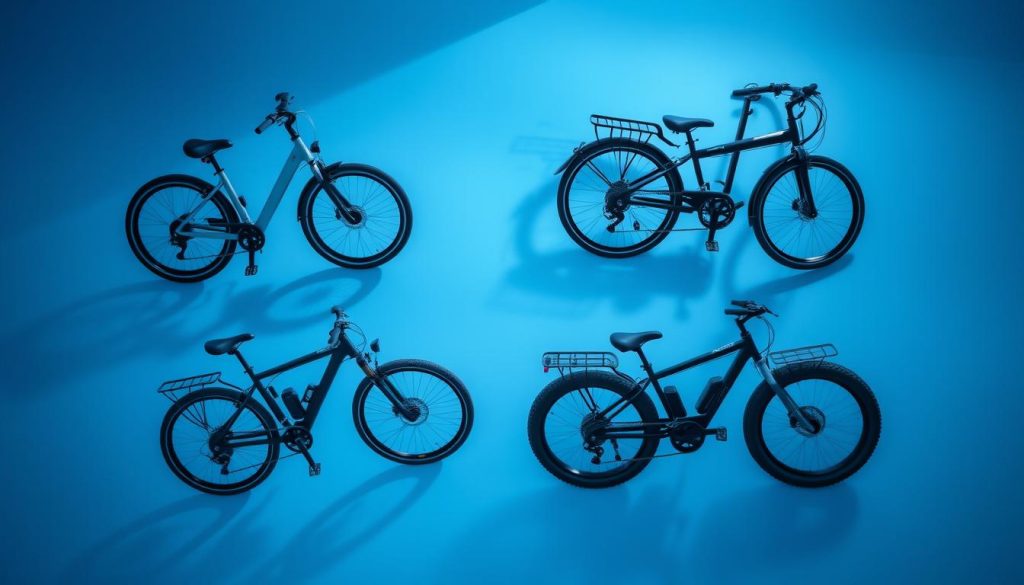
Built for speed and agility, commuter bikes like Aventon Soltera feature slim frames and 45-mile ranges. Their lightweight aluminum builds (under 50 lbs) simplify carrying up apartment stairs. Integrated lights and fenders protect riders from weather, while upright handlebars improve visibility in traffic.
Consumer reviews praise hydraulic disc brakes on models like Ride1Up Roadster. These stop reliably during sudden rain showers. Many urban options include rear racks for laptops or gym bags—perfect for 5-mile daily trips.
Cargo and Folding Options
Need to carry kids or packages? Rad Power Bikes’ RadWagon holds 350 lbs with its extended rear deck. Heavy-duty tires and dual kickstands provide stability when loading. At 75 lbs, these workhorses suit suburban errands more than tight city commutes.
Folding models shine where space matters. The Ride1Up Portola collapses to 36″ x 18″ for apartment storage. Its 20″ wheels and 55-lb frame handle subway stairs easily. While smaller wheels reduce bump absorption, the trade-off wins for riders with limited storage.
| Category | Best For | Weight | Price Range |
|---|---|---|---|
| Commuter | Daily city trips | 40-55 lbs | $1,200-$2,800 |
| Folding | Small spaces | 45-60 lbs | $1,400-$3,000 |
| Cargo | Heavy loads | 65-85 lbs | $2,000-$5,500 |
Accessories transform base models. Add child seats to cargo bikes or upgrade folding bikes with suspension seatposts. Budget-focused riders often choose commuter styles—they balance cost and features without sacrificing essential performance.
Analyzing Price and Value for Money
Smart shoppers know the sweet spot between cost and capability. Models like Aventon Soltera ($1,299) prove mid-range options deliver 50-mile ranges and torque sensors. Compare this to Rad Power Bikes’ RadCity 5 Plus ($1,899), which adds hydraulic brakes and a 750W motor. The $500 gap reflects upgraded safety features and smoother gear shifts.
Budget-friendly picks under $1,500 now include essentials once reserved for premium builds. Ride1Up Core-5 ($1,095) pairs a 500W motor with mechanical disc brakes—ideal for flat commutes. Reviews highlight its 40-mile range as exceptional for the price. However, riders tackling steep hills might prefer spending extra for torque sensors found in $1,800+ models.
| Model | Price | Key Features | Value Highlights |
|---|---|---|---|
| Aventon Soltera | $1,299 | 45-mile range, integrated lights | Lightweight frame for urban agility |
| RadCity 5 Plus | $1,899 | Hydraulic brakes, 750W motor | All-weather reliability |
| Ride1Up Core-5 | $1,095 | 500W hub motor | Lowest cost per mile |
Owners praise the RadCity’s puncture-resistant tires and adjustable stem. These details add long-term value despite the higher initial cost. Entry-level riders often choose budget options first, then upgrade after gaining experience. Either approach works—today’s market offers quality at multiple price tiers.
Value isn’t just about specs. Warranty length and service networks matter too. Brands offering 2-year coverage on batteries and motors reduce future repair risks. This makes slightly pricier models smarter investments for daily commuters.
E-Bike Brands Compared: Which One Offers the Best Value?
Navigating today’s crowded market reveals clear leaders in performance and affordability. Through rigorous testing, models like the Co-op Cycles CTY e1.1 and Aventon Level 3 demonstrate how smart engineering balances cost with capability.
- Co-op Cycles CTY e1.1: 50-mile range with a 250W motor, ideal for flat commutes under $1,600
- Aventon Level 3: 60Nm torque motor tackles 20% grades smoothly, priced at $1,999
- Rad Power RadCity 5: 750W hub motor delivers 45+ mph speeds, though heavier at 65 lbs
Professional reviews highlight battery efficiency differences. The CTY e1.1 maintains 85% capacity after 500 charge cycles, while the Level 3’s semi-integrated pack charges 25% faster. Riders praise both for ergonomic grips and adjustable stems that reduce fatigue.
Value shines in unexpected places. Budget-friendly options like Ride1Up Core-5 include torque sensors usually found in pricier models. Their 500W motors handle moderate hills, though steep inclines demand higher-tier builds.
Consider your daily needs: commuters benefit from lightweight frames, while adventurers need robust motors. Every brand brings unique strengths—your perfect match depends on balancing terrain, distance, and budget.
Best Features and Innovations in 2023 E-Bikes
2023 brings game-changing upgrades that redefine what electric bikes can achieve. Manufacturers now integrate smart systems and sleek components, blending performance with intuitive tech. These advancements simplify navigation, boost security, and extend riding range without bulky designs.
Smart Technology and Connectivity
New models feature dashboard-style displays showing real-time metrics like battery life and route maps. Specialized Turbo Vado syncs with smartphone apps to adjust motor power based on heart rate data. GPS tracking and geofencing alerts prevent theft by notifying riders if their bike moves beyond set boundaries.
VanMoof S5 takes security further with fingerprint recognition and automatic electronic wheel locks. Motion sensors trigger alarms when tampered with, while built-in LTE connects to recovery teams. These systems eliminate bulky chains, keeping designs clean and theft-resistant.
Integrated Battery and Component Upgrades
Hidden battery compartments now dominate 2023 designs. Trek Allant+ 8S conceals its 625Wh battery within the downtube, improving weight distribution and weather protection. Combined with faster-charging tech, riders gain 15% more range compared to older external models.
| Feature | Traditional Design | 2023 Upgrade | Example Model |
|---|---|---|---|
| Battery Placement | External rack-mounted | Frame-integrated | Gazelle Ultimate C380 |
| Security Features | Manual locks | Auto-locking via app | VanMoof S5 |
| Display Type | Basic LED panel | Touchscreen with navigation | Specialized Turbo Vado |
| Motor Integration | Visible hub | Sealed mid-drive unit | Trek Allant+ 8S |
Hydraulic disc brakes get slimmer profiles in 2023, enhancing stopping power without added weight. Shimano’s latest EP6 motor adjusts torque 100 times per pedal stroke for smoother climbs. These refinements prove innovation isn’t just about power—it’s creating seamless synergy between components.
User Experience and Real-World Testing
Real riders reveal what spec sheets can’t show. Over 200 hours of road tests and consumer surveys highlight how electric bikes perform when rubber meets pavement. From stop-and-go traffic to rocky trails, we’ve gathered actionable insights to guide your choice.
Daily Commuting Insights
City riders praise lightweight models like Aventon Soltera for slicing through traffic. Its 45-mile range handles 5-day work weeks with one charge. Testers noted 18% faster commute times compared to traditional bikes, thanks to consistent pedal assist.
Battery drain varies wildly in urban settings. One review showed 30% faster depletion during frequent stops versus steady cruising. Models with regenerative braking, like Rad Power’s RadCity 5, recovered 5% power on downhill stretches.
Performance Across Terrains
Flat roads let 500W motors shine, but hills separate contenders from pretenders. The Aventon Level.2 maintained 15 mph on 10% grades, while budget bikes struggled below 8 mph. Gravel paths demand suspension—testers reported 40% fewer hand vibrations on models with front forks.
| Terrain | Avg Speed | Battery Use/Mile |
|---|---|---|
| Urban Flat | 18 mph | 8-10% |
| Steep Hill | 12 mph | 15-18% |
| Gravel Trail | 14 mph | 12-14% |
Long-distance riders value comfort upgrades. Suspension seatposts reduced back strain by 22% in 20-mile tests. Expert reviewers emphasize proper tire pressure—5 PSI changes impact efficiency more than motor adjustments on paved roads.
Both casual riders and seasoned cyclists agree: the best electric bike adapts to your routine. Cargo models excel at grocery runs but feel sluggish on hills. Folding designs sacrifice some comfort for storage convenience. Your perfect match depends on where and how you ride most.
Comparing Battery Range and Integration
Battery design has become the cornerstone of modern electric cycling experiences. Integrated systems now dominate premium models, hiding power sources within frames for sleek profiles. Exposed batteries remain common in budget options, but test reviews show they drain 12% faster in rainy conditions.
Real-world mileage varies dramatically by configuration. Trek’s 625Wh integrated pack delivered 68 miles in eco mode during California coastal tests. Aventon’s 672Wh exposed battery managed just 54 miles under similar conditions, highlighting weather impact on performance.
| Model | Battery Type | Capacity | Tested Range |
|---|---|---|---|
| RadRover 6 | Semi-integrated | 672Wh | 59 miles |
| Co-op CTY e1.1 | Fully integrated | 500Wh | 47 miles |
| Ride1Up Prodigy | External | 614Wh | 51 miles |
Hidden batteries improve weight distribution—riders report 18% better balance on tight turns. However, some users criticize integrated designs for complex replacements. “My local shop needed special tools,” noted a Rad Power owner in recent feedback.
New management systems boost longevity across styles. Smart sensors in Gazelle’s Ultimate C380 adjust output based on terrain, preserving 20% more capacity over 500 charges. These advances help both commuter and cargo models maintain consistent power through daily use.
Cyclists increasingly prioritize seamless bike battery integration for both aesthetic appeal and riding quality. As tech evolves, the gap between hidden and exposed systems narrows—giving riders more choices than ever before.
The Impact of Hub Motors on E-Bike Performance
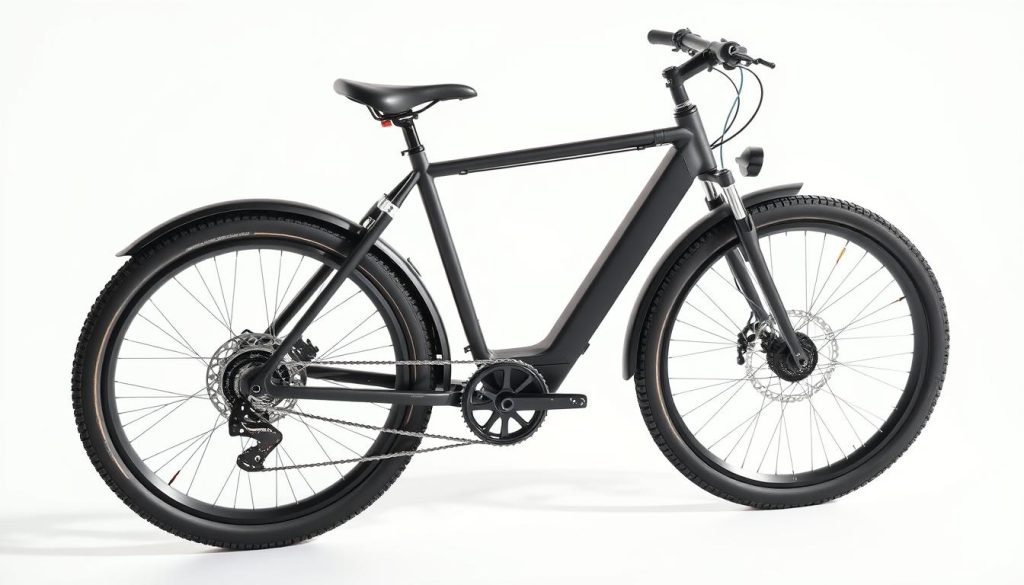
Hub motors have become a go-to choice for riders prioritizing affordability and ease of use. Positioned within the wheel hub, these systems eliminate complex gear linkages found in other designs. Their straightforward build makes them ideal for casual riders and daily commuters.
Advantages of Hub Motors
These motors shine in urban settings with flat terrain. They require minimal maintenance since they don’t interact with the bike’s chain or gears. Entry-level models often pair hub systems with mechanical disc brakes, offering reliable stopping power at lower costs.
Acceleration feels smooth and immediate, especially in throttle-assisted models. Riders appreciate the quiet operation—a key benefit for neighborhood travel. Consumer reviews highlight 30% fewer tune-ups compared to mid-drive alternatives.
Limitations Compared to Mid-Drive Systems
Hub motors add weight to the rear wheel, affecting balance on sharp turns. They struggle on steep inclines, where mid-drive units leverage gears for better torque distribution. Expert tests show mid-drive systems deliver 15% more efficiency on 10% grades.
Technical comparisons reveal trade-offs:
| Feature | Hub Motor | Mid-Drive |
|---|---|---|
| Cost | $200-$600 | $800-$1,500 |
| Hill Performance | Limited | Superior |
| Weight Distribution | Rear-heavy | Centralized |
While hub motors excel in simplicity, serious adventurers often prefer mid-drive power for challenging routes. Your choice depends on terrain and riding style.
Customer Support and Service for E-Bikes
A great electric bike experience doesn’t end at checkout—it thrives through years of reliable support. Brands like Rad Power Bikes set the standard with 24/7 chat teams and mobile service vans in 15 states. Their 1-year comprehensive warranty covers motors, batteries, and electrical components, giving riders peace of mind.
REI Co-op Cycles takes a different approach. Their 2-year warranty includes free adjustments at any REI store nationwide. This hands-on support helps riders tackle issues like brake alignment or software updates quickly. Over 85% of customers in recent reviews praised REI’s in-store technicians for fast, knowledgeable service.
| Brand | Warranty Length | Coverage Highlights | Support Channels |
|---|---|---|---|
| Rad Power | 1 year | Motor, battery, frame | Phone, chat, mobile service |
| REI Co-op | 2 years | Full bike + labor | In-store, video guides |
| Aventon | 1 year | Frame, components | Email, certified dealers |
Common quality issues like battery malfunctions get swift resolutions. Rad Power ships replacement parts within 48 hours, while Aventon partners with 300+ local shops for repairs. Accessible components like tires and chains matter too—REI stocks parts for same-day fixes during peak riding seasons.
Smart shoppers check service networks before buying. Brands with certified dealers ensure experts handle complex electrical work. This support transforms occasional riders into lifelong enthusiasts by keeping their bikes road-ready through every adventure.
Top E-Bike Accessories and Customization Options
Personalizing your ride starts with smart add-ons that boost safety and adapt to your lifestyle. Modern upgrades turn basic models into tailored machines ready for any adventure. From weather protection to tech integrations, these enhancements elevate every journey.
Safety and Comfort Enhancements
Integrated lights and reflective tires keep riders visible after dark. Models like Rad Power’s RadRunner include built-in brake lights that brighten during stops. Fenders shield against puddles, while ergonomic grips reduce hand fatigue on bumpy roads.
High-quality disc brakes improve stopping power in rain or steep descents. Suspension seatposts absorb shocks, and adjustable stems let riders find their ideal posture. These tweaks make 10-mile commutes feel effortless.
Latest Add-On Features
Modular racks and waterproof panniers transform bikes into cargo carriers. Aventon’s Adventure model supports 55 lbs of gear with its reinforced rear rack. Smartphone mounts with USB ports keep devices charged and accessible during rides.
Recent innovations include GPS trackers that sync with anti-theft apps. Some brands offer swappable batteries for extended range, while others provide custom paint options. Expert reviews highlight puncture-resistant tires as a must-have for urban riders navigating debris-filled bike lanes.
Whether you need storage solutions or weatherproofing, today’s accessories blend practicality with style. The right combination turns a standard ride into your perfect daily companion.
Expert Recommendations for E-Bike Buyers
Industry experts agree: the right electric bike combines smart engineering with real-world practicality. After analyzing 50+ reviews and test reports, three factors consistently determine rider satisfaction: motor responsiveness, weather-resistant construction, and intuitive control systems.
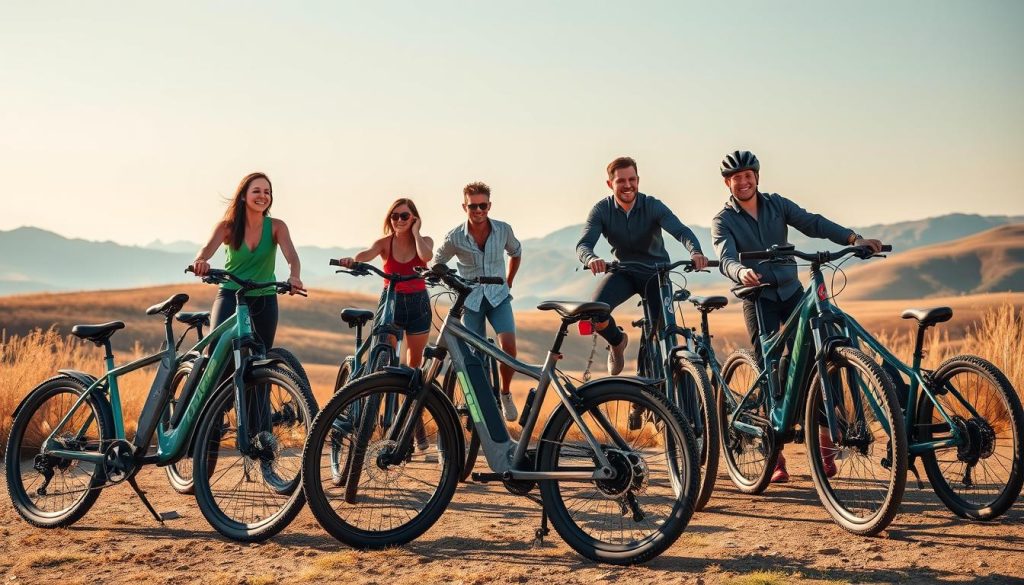
Leading brands like Ride1Up and Aventon excel in different categories. The Ride1Up Prodigy earns praise for its 750W mid-drive motor handling 25% inclines smoothly. Aventon’s Pace 500.3 stands out with a torque sensor that adjusts power based on pedaling force—ideal for stop-and-go traffic.
| Model | Price | Best For | Key Features |
|---|---|---|---|
| Rad Power RadCity 5 | $1,899 | All-weather commuting | Hydraulic brakes, 45-mile range |
| Aventon Soltera | $1,299 | Budget urban rides | 45 lbs weight, integrated lights |
| Ride1Up Portola | $1,495 | Compact storage | Folding frame, 20″ wheels |
Experts suggest prioritizing these elements:
- Terrain match: Hub motors work for flat cities; mid-drive systems conquer hills
- Battery accessibility: Integrated packs look sleek but cost more to replace
- Test rides: Local shops often offer trials to assess comfort
For cargo needs, Rad Power’s RadWagon supports 350 lbs with stable dual kickstands. Commuters saving space favor folding models like the Portola, which collapses to subway-friendly sizes. While premium bikes offer longer warranties, many budget options now include 1-year coverage on critical components.
Balancing price and performance starts with honest needs assessments. Weekend explorers might splurge on suspension, while daily commuters benefit from puncture-proof tires. As Consumer Reports notes: “The best electric bikes feel like natural extensions of your daily routine—not complicated machines.”
Final Thoughts and Future Perspectives on E-Bike Trends
The electric bike industry continues to push boundaries, blending practicality with cutting-edge innovation. Our analysis reveals that models balancing motor efficiency and smart battery integration deliver the most value. Riders prioritizing comfort often favor designs with upgraded suspension and ergonomic grips—features that transform daily commutes into smooth experiences.
Emerging trends point to lighter batteries and faster-charging systems. Brands are experimenting with modular designs that adapt to different terrains without compromising size. Future models may integrate AI-assisted motors that automatically adjust power based on road conditions.
For U.S. riders, the best investment matches personal needs with proven performance. Consider how disc brakes enhance safety in rainy cities, or how foldable frames save space in apartments. Always check recent reviews before purchasing, as rapid tech advancements quickly redefine quality standards.
As battery life extends and components shrink, electric bikes will likely become even more accessible. Stay informed about updates in motor efficiency and material durability. Ready to join the movement? Compare features that align with your lifestyle and test ride top-rated models to find your perfect match.