

Electric bikes are transforming how people commute, explore, and stay active. But navigating the rules for these vehicles can feel overwhelming. This guide simplifies the latest regulations so you can ride confidently and legally.
Every state has unique guidelines for motorized bicycles. Some focus on speed limits or power requirements, while others define where they’re allowed. Knowing your local rules helps avoid fines and ensures safety for everyone.
Classifying your ride correctly matters. Most regions categorize them based on motor power or maximum assisted speed. These distinctions affect where you can ride—bike lanes, roads, or trails—and whether helmets or licenses are required.
Staying updated is key. Laws evolve as cities adapt to growing ridership. We’ve compiled insights from official sources to give you accurate, easy-to-understand details. Whether you’re a daily commuter or weekend adventurer, this guide keeps you informed.
Understanding the Basics of E-Bike Laws
Electric bicycles blend pedal power with motorized assistance, creating a unique transportation category. While they resemble traditional bikes, their technical specs determine legal classification. Let’s break down what makes them different and how regulations work.
What Defines an Electric Bike?
An electric bicycle must have operable pedals and a motor under 750 watts. The motor can’t propel the vehicle faster than 20 mph on level ground without pedaling. Two types of systems exist:
| Feature | Pedal-Assist | Throttle |
|---|---|---|
| Activation | Requires pedaling | Works without pedaling |
| Speed Control | Stops at 20 mph | Stops at 20 mph |
| State Acceptance | Allowed everywhere | Restricted in some areas |
Unlike scooters or mopeds, these vehicles rely partly on human power. Pedals aren’t just decorative—they’re a legal requirement for classification as a bicycle in most states.
Federal Versus State Regulations
The U.S. Consumer Product Safety Commission sets baseline definitions. However, states add their own rules. For example, California requires specific labels on motors, while New York bans throttles in bike lanes.
Local rules might mandate helmets for riders under 18 or restrict access to certain trails. Always check your state’s latest guidelines before riding. This layered approach ensures safety while encouraging eco-friendly transportation.
Navigating e-bike laws: A State-by-State Analysis
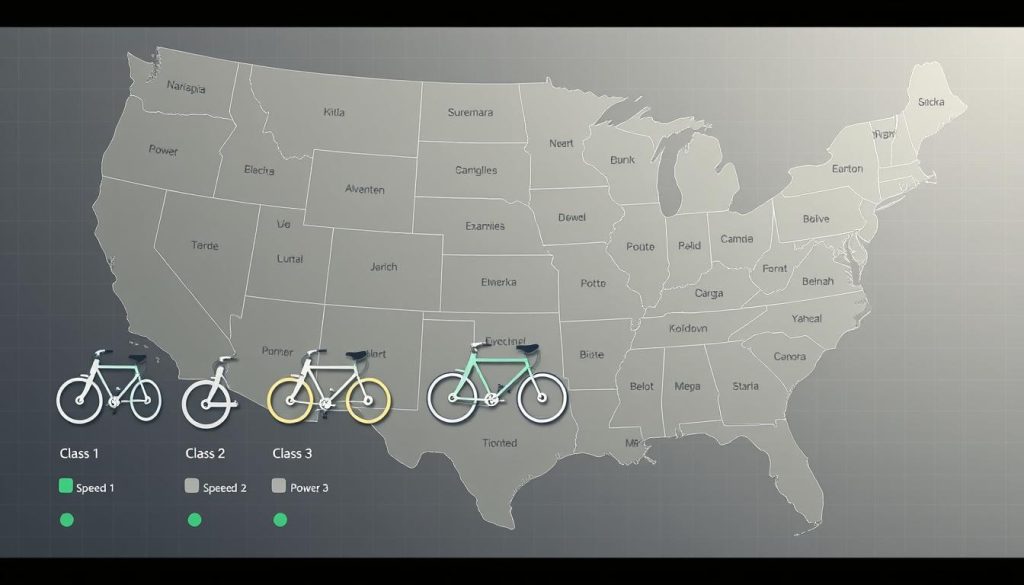
State policies for motor-assisted bicycles vary widely, creating a patchwork of rules. While federal guidelines set basic standards, local adjustments shape where and how you can ride. Let’s explore how these differences impact daily use.
Key Differences Across States
Speed limits and classification systems differ most noticeably. For example, Texas allows Class 3 models (up to 28 mph) on roads but restricts them from bike paths. Meanwhile, Florida treats all classes like traditional bicycles if they meet federal wattage standards.
| State | Max Speed (mph) | Trail Access | Helmet Required? |
|---|---|---|---|
| California | 28 | Limited | Under 18 |
| New York | 20 | Prohibited | All ages |
| Colorado | 28 | Permitted | No |
Latest Updates for 2023
Several states revised their rules this year. Colorado now permits Class 1 and 2 models on mountain biking trails. Hawaii introduced registration for throttled systems. Oregon lowered the minimum age for solo riders to 14.
Urban commuters should note new restrictions in cities like Chicago, where throttle-operated bikes face limits in downtown areas. Always verify local ordinances—especially near parks or pedestrian zones—to avoid surprises.
E-Bike Classifications and Their Implications
Understanding electric bicycle categories helps riders choose the right model while staying compliant. Twenty-six states use a three-tiered system to define operational limits and access rights. Let’s explore how these classes work and what they mean for your ride.
Breaking Down Class 1, 2, and 3
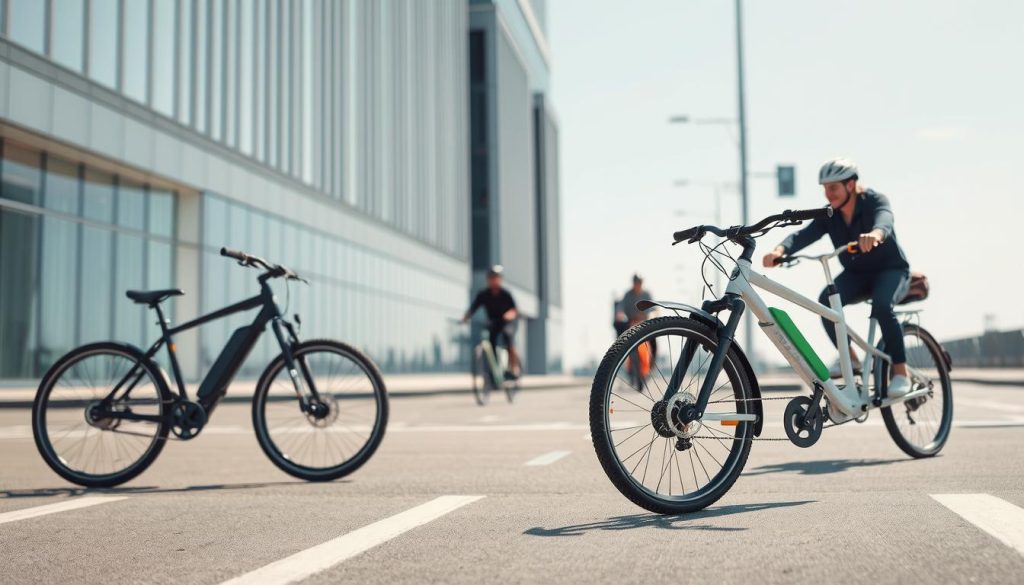
Class 1 models provide pedal assistance up to 20 mph. They’re allowed on most bike paths and trails. Class 2 adds a throttle but keeps the same speed limit, though some states restrict throttle use in urban areas.
Class 3 reaches 28 mph with pedal assist. These often require helmets and face trail restrictions. Here’s a quick comparison:
| Class | Max Speed | Key Feature |
|---|---|---|
| 1 | 20 mph | Pedal-only assist |
| 2 | 20 mph | Throttle option |
| 3 | 28 mph | High-speed pedal assist |
Safety and Legal Must-Knows
Higher classes often mean stricter rules. Ten states require helmets for Class 3 riders. Motor power under 750 watts keeps vehicles in the bicycle category—exceeding this may trigger registration or licensing demands.
Check your state’s stance on throttles and trail access. Urban commuters might prefer Class 1 for unrestricted bike lanes, while rural riders could benefit from Class 3’s extra speed. Always verify local updates—rules shift as communities adapt to new transportation trends.
Safety Tips and Precautions for Riding Electric Bikes
Prioritizing safety ensures enjoyable rides while minimizing risks. Simple habits can prevent accidents and extend your vehicle’s lifespan. Let’s explore essential practices for battery care and protective measures.
Battery Safety and Lithium-Ion Risk Management
Always use manufacturer-approved chargers and batteries. Avoid leaving devices plugged in overnight or near flammable materials. Lithium-ion batteries require regular inspections for swelling or damage.
Store batteries in cool, dry places—never in direct sunlight or freezing temperatures. Charge to 80% for daily use to prolong cell life. Replace cracked or malfunctioning units immediately to prevent fires.
Enhancing Visibility and Protective Gear Use
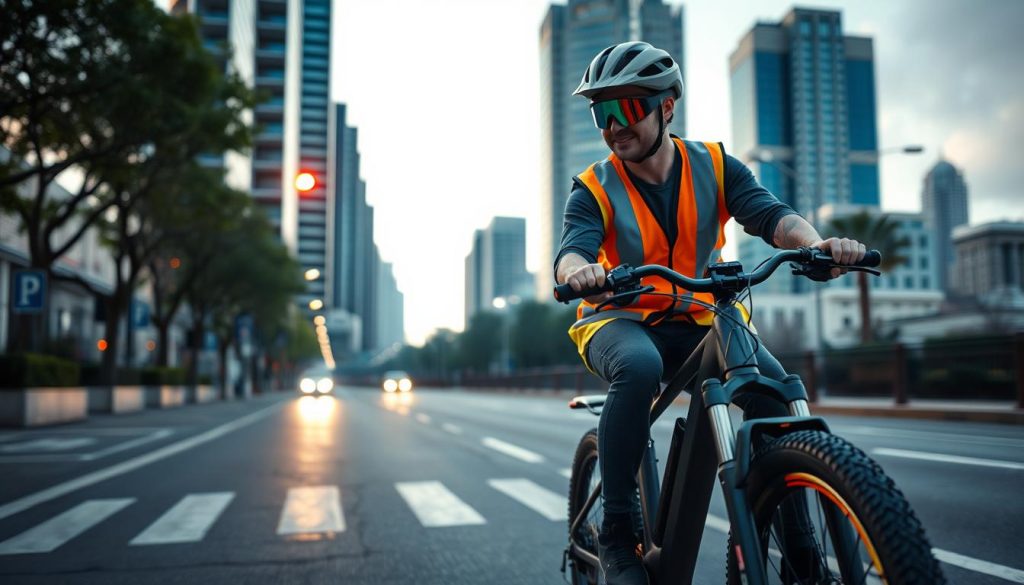
Wear helmets rated for cycling, even if your state doesn’t mandate them. Bright-colored jackets and reflective strips make riders noticeable in traffic. Install front and rear lights for low-light conditions.
Follow speed mph limits to maintain control, especially on crowded paths. Adjust motor assistance levels based on terrain—lower settings improve handling on wet surfaces. Test brakes before each ride to ensure quick stops.
Pair these strategies with situational awareness. Scan for obstacles, signal turns early, and keep both hands on the handlebars. Safe riding protects you and everyone sharing the road.
Legal Considerations for Urban and Off-Road Riding
Urban landscapes and off-road paths each have distinct rules for riders. Local guidelines determine where motor-assisted bicycles can operate, balancing safety with accessibility. Let’s explore how these policies shape your riding experience.
Navigating City Streets and Nature Trails
Bike lanes are widely accessible in cities like Seattle and Denver, but sidewalk use often faces restrictions. New York prohibits riding on sidewalks entirely, while Los Angeles allows it only for Class 1 models. Always check local signage before switching between lanes and pedestrian areas.
| Location | Bike Lane Access | Sidewalk Rules | Vehicle Lane Use |
|---|---|---|---|
| New York City | All classes permitted | Fully prohibited | Allowed if speed ≤20 mph |
| Austin Trails | Not applicable | Permitted at walking speed | Restricted to designated paths |
| Chicago Downtown | Class 1-2 only | Business district ban | Requires bike lane priority |
When sharing roads with motor vehicles, maintain a predictable path and use hand signals. Avoid weaving between parked cars—this reduces visibility for drivers. Off-road trails often require reduced speeds and yield protocols for hikers.
Mountain biking areas like Moab enforce specific trail ratings. Stick to paths marked for motor-assisted use to prevent erosion and conflicts with traditional cyclists. Local ranger stations usually provide updated maps showing permitted routes.
Understanding Registration, Licensing, and Insurance Needs
Registration and insurance rules for motor-assisted bicycles depend heavily on location. While some states treat them like traditional bikes, others impose motor vehicle-style requirements. Let’s simplify how these policies affect riders.
State-Specific Registration Requirements
States classify pedal-assisted vehicles differently based on speed and power. For example, Alabama requires registration for models exceeding 20 mph, while California exempts all Class 1-3 models. Check this table for key differences:
| State | Classification | Registration Needed? |
|---|---|---|
| Texas | Class 3 as moped | Yes |
| Florida | All as bicycles | No |
| New York | Throttle models | Yes |
Human power combined with motor assistance often determines legal status. If your vehicle stops providing assistance at 28 mph, it might avoid registration in 32 states.
Licensing and Insurance Overview
Most regions don’t require licenses for pedal-assisted bicycles. Exceptions exist for high-speed models—Tennessee mandates a motorcycle license for vehicles over 750 watts. Always verify local law before riding electric options.
Insurance isn’t federally required but recommended for expensive models. Policies covering theft or collisions cost $10-$30 monthly. Speed limits also influence coverage needs—28 mph models often require liability protection.
Pro tip: Print your state’s bicycle regulations and keep them with your gear. This helps resolve disputes with authorities and ensures you meet all requirements.
Comparing E-Bike Regulations with Other Micromobility Options
Cities now host diverse electric vehicles, each governed by distinct rules. While they share streets and bike lanes, their technical specs and legal statuses vary significantly. Let’s examine how pedal-assisted models fit into this evolving landscape.
What Sets Them Apart?
Traditional bikes rely solely on human power. Mopeds often need licenses and registration since their engines exceed 750 watts. E-scooters typically lack pedals and face strict speed caps—usually 15 mph in bike lanes.
| Vehicle Type | Max Power | Pedal Requirement | Typical Access |
|---|---|---|---|
| Electric Bicycle | 750 watts | Yes | Bike lanes/trails |
| Moped | 2000+ watts | No | Roads only |
| E-Scooter | 500 watts | No | Sidewalks/bike lanes |
Shaping City Transportation
Urban planners prioritize low-speed options for crowded areas. New York allows pedal-assisted models in bike lanes but bans throttled scooters from sidewalks. San Francisco integrates bike-share racks near transit hubs for seamless transfers.
Power output directly impacts infrastructure use. Vehicles under 750 watts often get bicycle privileges. This encourages eco-friendly commuting while reducing car traffic. Austin’s recent pilot program reserves curb zones for dockless bikes and scooters with speed governors.
Public transit systems adapt too. Chicago’s buses feature bike racks that accommodate pedal-assisted models. Such integrations help riders cover longer distances without overcrowding trains. As cities evolve, clear distinctions between vehicle types ensure safer, more efficient mobility.
Final Thoughts on E-Bike Legal Compliance
Staying informed helps riders make smart choices. Always verify your local rules before hitting the road or trail. Matching your vehicle to regional requirements prevents headaches and keeps adventures enjoyable.
Regulations change as communities adapt to new transportation needs. Bookmark your state’s official cycling resources for updates. Review guidelines before long trips—urban areas often have stricter speed limits than rural zones.
Choosing the right electric bicycle matters. Opt for models that balance performance with compliance in your area. Proper classification ensures access to bike lanes and trails while avoiding fines.
Safety and legality go hand in hand. Wear protective gear, respect speed caps, and maintain your equipment. By prioritizing these practices, you’ll ride confidently while supporting sustainable mobility trends.