
Looking for a smarter way to get around while keeping extra cash in your pocket? Electric bikes are changing how people commute, offering both financial flexibility and eco-friendly perks. Whether you’re dodging traffic or cutting monthly expenses, these two-wheeled wonders deliver more than just convenience.
Compared to cars, electric bikes require far less upfront investment. A reliable commuter model often costs a fraction of even a used vehicle. Plus, you’ll skip pricey insurance premiums, gas station stops, and parking headaches. Many riders find their initial purchase pays for itself within months.
This guide breaks down practical strategies to boost your savings. From extending battery lifespan to leveraging maintenance hacks, we’ll explore how small choices add up. You’ll also discover how swapping four wheels for two reduces daily expenses like fuel and public transit fares.
Studies show riders save an average of $1,200+ annually compared to car owners. Better yet, pedaling assistance encourages physical activity—turning errands into heart-healthy routines. Ready to pedal toward a lighter budget and cleaner commute? Let’s dive in!
Understanding e-bike cost savings
Trading car keys for handlebars unlocks more than fresh air. These modern rides blend pedal power with smart technology, creating ripple effects for wallets and communities alike.
Direct Financial Benefits
Switching to two wheels slashes recurring expenses. Consider these advantages:
- Fuel bills drop 90% compared to gas vehicles
- Yearly upkeep averages $150 versus $900+ for cars
- No parking fees in bike-friendly cities like Portland or Denver
Environmental and Lifestyle Impacts
Every mile pedaled creates positive change. Riders reduce carbon output by 1,500 pounds annually while gaining:
- 30+ minutes of daily exercise during commutes
- Time savings through bike lane navigation
- Reduced healthcare expenses from improved fitness
Urban studies show bicycle commuters report 40% lower stress levels than drivers. With charging costs at just pennies per mile, these machines prove that green choices can be budget-friendly too.
Comparing Upfront Investments: E-Bikes vs. Cars
What if your daily commute could fund a weekend getaway instead of draining your wallet? Let’s break down the numbers. Transportation choices shape budgets more than most people realize, especially when comparing traditional vehicles to modern alternatives.
Purchase Price Analysis
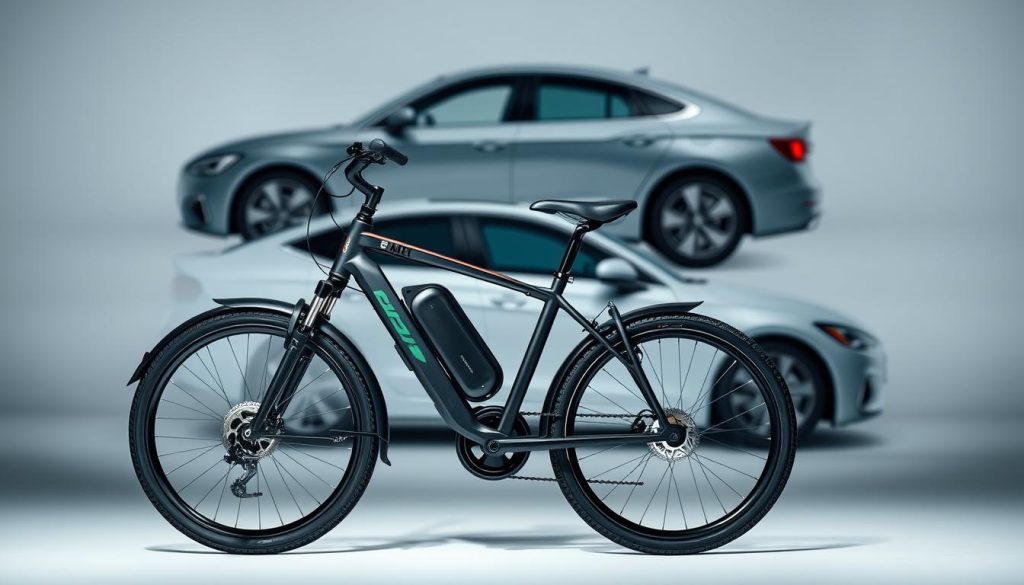
New cars average $48,000 in the U.S.—enough to buy 19 Momentum Voya E+ models at $2,500 each. Even used vehicles often exceed $15,000, while families could outfit three riders with quality two-wheelers for under $7,500. Consider these comparisons:
| Option | Initial Price | 5-Year Maintenance |
|---|---|---|
| Compact Car | $23,000 | $4,200 |
| Momentum Voya E+ | $2,500 | $300 |
| 3 E-Bikes | $7,500 | $900 |
Long-Term Investment Value
Vehicles lose 20% value in their first year. Two-wheelers hold value better, with many models retaining 60-70% resale value after three years. Maintenance tells a similar story:
- Car oil changes: $70+/visit
- Bike tire replacements: $40/year
- Annual registration fees: $0 vs. $100+
Portland’s bike commuters report saving $8,600 over five years compared to drivers. These funds could cover vacations, home upgrades, or retirement contributions. The math makes a strong case for rethinking how we move.
Fuel, Recharging, and Daily Transportation Savings

What if every mile you traveled put money back in your wallet? Modern commuting isn’t just about getting from point A to B—it’s about optimizing how energy translates to dollars. Let’s explore how swapping pumps for plugs reshapes your budget.
Powering Up: Gas vs. Grid
Filling a car’s tank burns through cash faster than most realize. A Toyota Corolla averages 30 MPG, costing $0.12 per mile at $3.50/gallon. Meanwhile, recharging a battery-powered two-wheeler runs about $0.0025 per mile. Check the breakdown:
| Transportation | Cost Per Mile | Annual Cost (10 miles/day) |
|---|---|---|
| Gas Vehicle | $0.12 | $438 |
| Electric Option | $0.0025 | $9.13 |
Office workers with 15-mile round trips save nearly $1,200 yearly. Efficient battery use amplifies these benefits—most models travel 30+ miles per charge. Urban riders often eliminate gas stops completely.
Beyond dollars, this shift reduces carbon footprints. Choosing pedal-assisted travel cuts 3.5 pounds of emissions per commute day. It’s a win-win: keep more cash while supporting cleaner air.
Maintenance, Parking, and Registration Benefits
Imagine skipping the repair shop and keeping hundreds in your pocket each year. Unlike cars, two-wheeled transportation thrives on simplicity. Fewer moving parts mean fewer headaches—and more money staying right where it belongs.
Routine Maintenance and Tune-Up Savings
Car owners spend $900+ annually on oil changes and engine repairs. Bikes? A $150 yearly average covers most needs. Chains and tires wear out, but you’ll never replace spark plugs or catalytic converters.
Here’s how the numbers stack up:
- Brake adjustments: $30 vs. $250 for cars
- Battery replacements every 4-5 years: $500
- No transmission flushes or coolant refills
Free Parking and Reduced Registration Hassles
Urban riders know the joy of bypassing $30/day parking garages. Cities like Seattle and Minneapolis offer free bike racks near popular destinations. No hunting for spaces or feeding meters.
Registration? Most states skip mandatory fees. You’ll avoid:
- Annual vehicle taxes
- License plate renewals
- Emissions testing appointments
Insurance stays optional too—a potential $1,200/year saved compared to auto policies. With these advantages, it’s easier to enjoy the ride without paperwork or surprise bills.
Health Benefits and Time Savings of Electric Riding
Pedaling toward better health and more free hours sounds too good to be true—until you try it. Modern transportation solutions do more than move people. They reshape daily routines, offering built-in wellness upgrades and moments reclaimed from traffic jams.
Boosting Physical Fitness Naturally
Riders get 150+ minutes of weekly exercise without gym fees, according to a University of Colorado study. The pedal-assist feature encourages movement while preventing burnout. Even moderate use improves:
- Cardiovascular endurance (12% increase in 6 months)
- Blood pressure levels (8-10 point average reduction)
- Joint flexibility through low-impact motion
Healthcare costs drop too. Active commuters visit doctors 27% less often than sedentary peers. This translates to $540 annual savings per household—enough to fund a weekend getaway.
| Activity Level | Annual Medical Costs | Sick Days/Yr |
|---|---|---|
| Regular Riders | $1,200 | 3.1 |
| Non-Active Commuters | $1,740 | 5.8 |
Regaining Commute Time
Urban travelers save 45 hours yearly by avoiding gridlock. Bike lanes and route shortcuts turn wasted minutes into productive moments. Workers report:
- 15% less late arrivals
- 32% lower stress levels (University of East Anglia)
- Extra time for hobbies or family
Morning rides double as mindfulness sessions. Many arrive energized instead of drained. This shift improves job performance and personal relationships—proving that efficient transportation enriches more than just schedules.
| Transport | Avg. Commute Speed | Stress Score |
|---|---|---|
| Car | 12 mph | 7.2/10 |
| Electric Option | 15 mph | 4.1/10 |
Practical Tips for Maximizing Your Savings
Unlocking full financial potential requires smart habits and strategic choices. Small adjustments to daily routines can significantly boost your budget while enhancing riding efficiency. Let’s explore techniques that protect your investment and streamline commutes.
Extending Battery Life and Reducing Costs
Proper care extends battery lifespan by 30-40%. Follow these guidelines:
- Charge between 20-80% for optimal performance
- Avoid extreme temperatures during storage
- Use eco mode for 15% longer range per charge
Track charging patterns with free apps like RideTrack. Riders who maintain batteries properly save $200+ over three years.
| Charging Habit | Battery Lifespan | Replacement Savings |
|---|---|---|
| Full Drains | 2.5 years | $0 |
| Partial Charges | 4.1 years | $320 |
Smart Commuting Strategies
Optimize routes using Google Maps’ bicycle mode to avoid hills and reduce energy use. Consider these upgrades:
- Pannier bags carry 40 lbs of groceries effortlessly
- Child seats eliminate second car trips
- Basket attachments simplify errand runs
Seasonal sales offer 20% discounts on accessories. Track monthly expenses with spreadsheets to identify unnecessary spending. Early-bird commuters report 22% faster travel times by avoiding rush hours.
Implement this checklist for maximum efficiency:
- Plan weekly routes every Sunday
- Check tire pressure biweekly
- Schedule quarterly tune-ups
Riding Into a Greener and Wealthier Future
The journey toward financial freedom and cleaner air starts with two wheels. Urban riders nationwide report keeping $1,500+ yearly by ditching gas pumps and parking fees. That’s enough for a family vacation or home upgrade—all while shrinking carbon footprints.
Each mile pedaled replaces car emissions with fresh air, helping cities cut pollution levels. Healthier commutes mean fewer medical bills, with active travelers enjoying 30% fewer sick days. Imagine breezing past traffic jams, arriving energized for work or weekend adventures.
Communities thrive when transportation choices prioritize people over vehicles. Free bike racks replace crowded parking lots, and quiet streets become social spaces. The ripple effects? Cleaner neighborhoods, stronger local businesses, and wallets that stay fuller year after year.
Ready to join the movement? Your next ride could fund tomorrow’s dreams while protecting today’s planet. The road to a balanced budget and vibrant community begins when you start pedaling.