
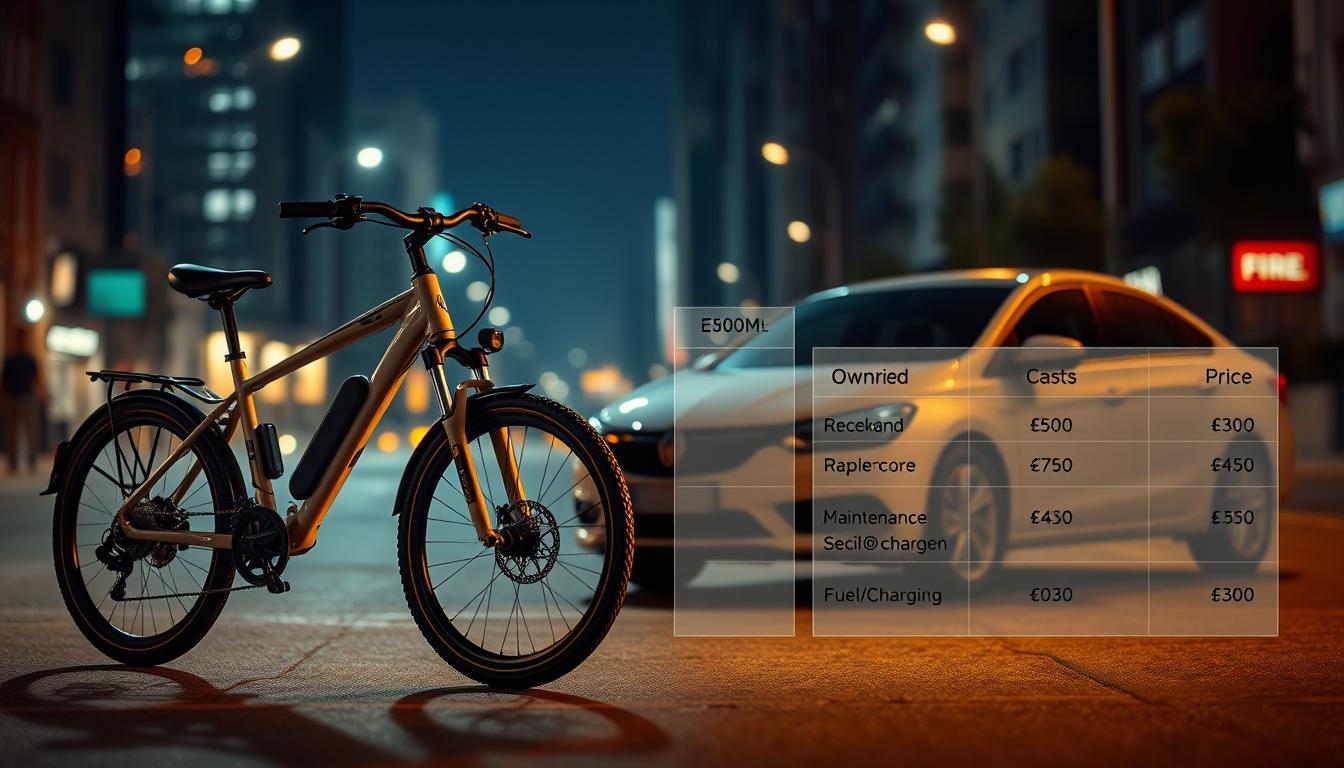
Looking for ways to save money per year while reducing your carbon footprint? The debate between two-wheeled and four-wheeled transportation is heating up across American cities. Let’s explore how modern bikes stack up against traditional options when it comes to investment, daily use, and long-term value.
Recent studies reveal eye-opening numbers. For example, Bryn Grunwald’s five-year analysis found that riding an e-bike cost just $30.75 in electricity, while gas-powered vehicles averaged $1,500 during the same period. This gap grows when you factor in parking fees, insurance, and routine maintenance for cars.
Beyond savings, there’s more to consider. Many commuters enjoy health benefits from occasional pedal power while dodging traffic jams. Cities like Portland and Denver report increased bike lane usage as battery-assisted models make hills easier to conquer.
This article breaks down purchase prices, operational expenses, and hidden costs using data from Electrek and Upway. You’ll discover how different mileage habits affect money spent over time—and why some Americans are trading steering wheels for handlebars.
Breaking Down Ownership Costs
Ownership costs for two-wheeled and four-wheeled options vary dramatically. Let’s examine three key factors: upfront prices, energy needs, and ongoing upkeep. These elements shape your budget over months and years.
Initial Purchase Price Comparisons
The starting line shows a clear gap. Quality electric bikes range from $1,500 to $4,000. Meanwhile, the average new vehicle sells for $35,000. Even used cars often exceed $20,000. This difference alone could fund a decade of bike repairs.
Fuel versus Electricity Expenses
Energy costs diverge sharply. Bryn Grunwald’s research highlights this: $6 yearly for battery charging versus $300 for gas. Here’s why:
- Electricity averages $0.15 per kWh (powers 15-30 miles)
- Gasoline hovers near $3.50 per gallon (fuels 25-30 miles)
Maintenance and Repair Investments
Mechanical needs tell a similar story. Over five years:
- Battery-powered models: $1,130.75 (including one $500 battery swap)
- Gas vehicles: $2,650 for oil changes, brakes, and engine care
Add recurring costs like insurance ($150/month average for autos) and registration fees. Parking tickets and garage rentals? Those only apply to four-wheelers.
These numbers explain why many urban commuters are switching gears. Next, we’ll explore how daily habits amplify these savings.
Exploring Daily Charging, Fueling, and Upkeep
Daily habits shape transportation budgets more than most people realize. Let’s unpack what happens after you unplug your bike or park your vehicle.
Cost of Charging an E-Bike
Powering up two-wheelers is surprisingly affordable. Upway data shows a full charge typically costs 10-16 cents. How? Multiply your battery’s capacity by local electricity rates. A 500Wh model at $0.15 per kWh needs just $0.075 per session.
That’s enough for 20-50 miles. Compare this to gas-powered trips: Electrek reports drivers spend $43-$53 per tank fill. Over 100 miles, battery-assisted travel costs pennies versus $10+ for combustion engines.
Fuel Costs for a Car
Refueling adds up quickly. The average U.S. household spends $150 monthly on gasoline. Frequent stops at pumps also eat into free time—unlike plugging in at home while you sleep.
Electricity use has environmental perks, too. Generating power for bikes creates 95% fewer emissions than refining and burning gasoline. Plus, no oil changes or smog checks mean simpler maintenance routines.
Multiply these daily differences over a year. Cycling commuters save hundreds while reducing their carbon tire tracks. Whether it’s avoiding price spikes at the pump or skipping traffic jams, small choices create big impacts.
e-bike vs car cost: A Detailed Analysis
Transportation choices ripple through budgets in surprising ways over time. Let’s explore how mileage patterns and ownership factors shape long-term affordability.
Comparative Mileage and Efficiency
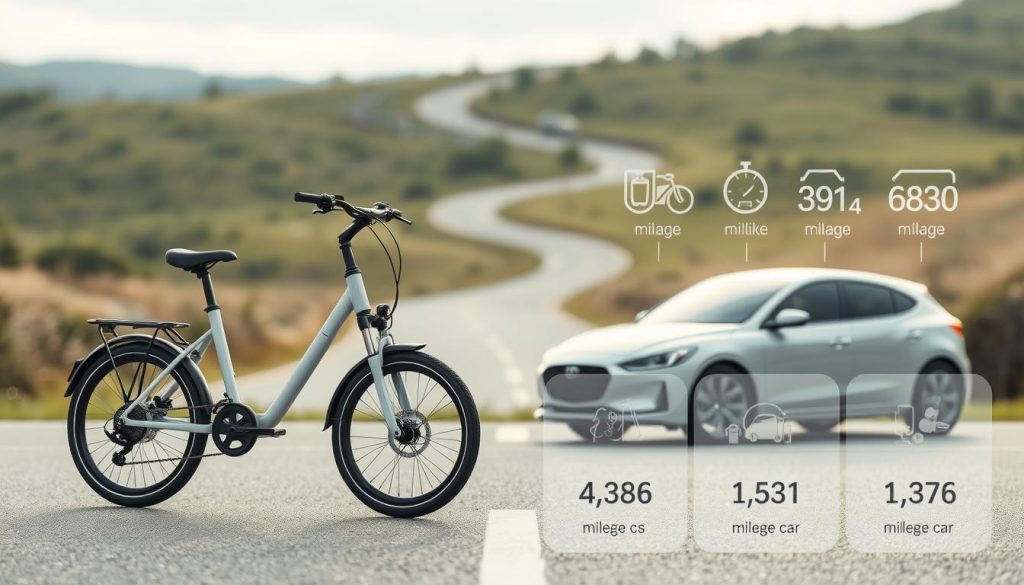
The E-Bike 1000 MPG Project found battery-assisted models achieve 1,100-2,200 miles per energy equivalent gallon. Gas vehicles? Most average 22-33 MPG. Here’s what that means:
- 100 miles costs $0.75-$1.50 for electric bikes
- Same distance costs $10-$15 for combustion engines
Pedal assist technology boosts efficiency. Riders conserve battery life by contributing leg power, especially on flat routes. This hybrid approach extends range while lowering energy bills.
Insurance, Registration, and Depreciation Factors
Annual costs diverge sharply beyond fuel and maintenance:
- Auto insurance averages $1,700 vs $150 for two-wheelers
- State registration fees: $60-$800 for cars vs $0-$30 for bikes
Depreciation hits harder with four-wheeled vehicles. Cars lose 20% value in year one, while quality electric bikes retain 60-70% over three years. Safety features also impact budgets—built-in bike lights cost $50, while advanced car systems add $2,000+ to purchase prices.
Grunwald’s analysis shows five-year savings exceeding $9,000 when choosing battery-assisted travel. For urban commuters covering 15-30 miles daily, this comparison highlights a clear financial path forward.
Health, Environment, and Practical Benefits
Choosing how you move through your city affects more than just your wallet—it shapes your health and community. Beyond financial savings, battery-assisted cycles offer hidden advantages that improve daily life while protecting shared spaces.

Physical Activity and Well-Being
Regular riding strengthens hearts and lungs. Even with pedal assist, users get 40% more moderate exercise than car commuters. Cities like Minneapolis report fewer sick days among residents who cycle to work.
Upway’s survey found 68% of riders improved stamina within three months. One Denver participant lost 15 pounds while commuting—without changing their diet. These health benefits often lead to long-term medical savings.
Environmental Impact and Emission Savings
Battery-powered travel slashes pollution. A typical model produces 95% fewer emissions than gas vehicles over five years. Check how choices stack up:
| Factor | Electric Bikes | Gas Vehicles |
|---|---|---|
| CO2 per mile | 0.02 lbs | 0.96 lbs |
| Noise Level | 50 dB | 70-85 dB |
| Parking Space | 1/10th car space | Full parking spot |
Urban areas benefit from cleaner air and quieter streets. Programs like Portland’s E-Bike Challenge help people test models while earning rebates. Many states now offer $200-$1,500 incentives to encourage adoption.
Switching just 10% of car trips to two-wheeled options could cut U.S. transportation emissions by 12%. That’s cleaner air for everyone—plus easier parking during your next downtown adventure.
Final Takeaways on Your Transportation Investment
Your commute impacts both your wallet and the world around you. Choosing battery-assisted two-wheelers over traditional vehicles could save up to $5,000 yearly—money that stays in your pocket instead of flowing to gas stations and repair shops.
Electric bikes shine in three key areas. They slash fuel costs by 90% compared to gasoline, require minimal insurance, and skip pricey registration fees. Maintenance stays simple too: no oil changes, just occasional brake checks and tire replacements.
Beyond dollars, riders gain hidden perks. Pedal assist modes make hills feel flat while boosting heart health. Every mile traveled cuts emissions by 94% compared to cars—cleaner air for your community.
While not perfect for every trip, these models excel for errands and work commutes. Test ride one through local incentive programs. You might discover a faster, healthier way to navigate cities while keeping thousands in savings each year.