

Have you ever wondered how green your two-wheeled commute really is? As cities grow busier and climate concerns rise, electric bicycles are gaining traction as a cleaner alternative to traditional transportation. But what’s their true environmental impact—and how do they stack up against cars, trains, or even pedal-powered bikes?
Recent studies reveal fascinating insights. For example, electrified bicycles in France produce just 13 grams of CO2 equivalent per kilometer over their lifespan. That’s slightly higher than muscle-powered bikes but dramatically lower than gas-guzzling vehicles. This article breaks down the numbers, from manufacturing to recycling, so you can see the full picture.
We’ll compare emissions across travel options and explore how factors like energy sources and battery production shape sustainability. You’ll also discover how choosing greener rides can benefit urban air quality and personal health. Spoiler: small changes in daily habits add up fast!
Ready to dive into the world of low-emission travel? Let’s pedal through the facts together and uncover how modern transportation choices shape our planet’s future.
Understanding the Basics of E-Bike Carbon Footprint
When choosing how to get around, many of us want options that are kind to the planet. But how do we measure their true environmental impact? Let’s break down the essentials.
Defining Carbon Footprint in Transportation
A transportation carbon footprint measures total greenhouse gases released across a vehicle’s life. This includes manufacturing, daily use, and end-of-life recycling. Vehicles like cars have higher impacts due to fuel consumption, while bicycles show cleaner profiles.
European studies reveal electrified two-wheelers emit 13 grams of CO₂ equivalent per kilometer over their lifespan. Here’s how common options compare:
| Transport Option | CO₂e per km |
|---|---|
| Electric Bicycle | 13g |
| Traditional Bicycle | 8g |
| Gasoline Car | 271g |
How E-Bikes Compare to Traditional Bikes
Muscle-powered bikes edge out electric models in emissions due to simpler designs. However, the gap narrows when considering practical use. Electric assistance enables longer commutes that might otherwise require cars.
Battery production accounts for much of the difference. Yet efficient motors and renewable energy charging can reduce impacts. Proper maintenance extends component lifespans, making both options greener than gas vehicles.
E-Bike Manufacturing: The Hidden Emissions
Behind every sleek electric bicycle lies a complex production chain with surprising environmental costs. While daily use generates minimal emissions, creating these vehicles demands significant resources.
The Role of Aluminum and Material Production
Crafting lightweight frames requires energy-intensive processes. Producing one aluminum frame releases 181 kg of CO₂e – equal to driving a gas car 450 miles. Batteries and motors add more strain:
- Lithium extraction for batteries disrupts ecosystems
- Rare earth metals in motors need specialized mining
- Transporting global components increases fuel use
Assembly, Maintenance, and End-of-Life Impacts
Manufacturing creates up to 94% of total emissions for electric bicycles. Charging accounts for just 6% over a 5-year period. Regular upkeep extends vehicle life – replacing brake pads creates 90% less waste than buying new bikes.
Recycling remains challenging. Only 5% of lithium batteries get properly processed today. New techniques like hydrometallurgical recovery could slash battery-related emissions by 40% in coming years.
Comparing E-Bike Impact with Other Modes of Transport
Every trip to work or the store is a chance to cut emissions with smarter transport choices. Let’s see how electric two-wheelers measure up against common alternatives.
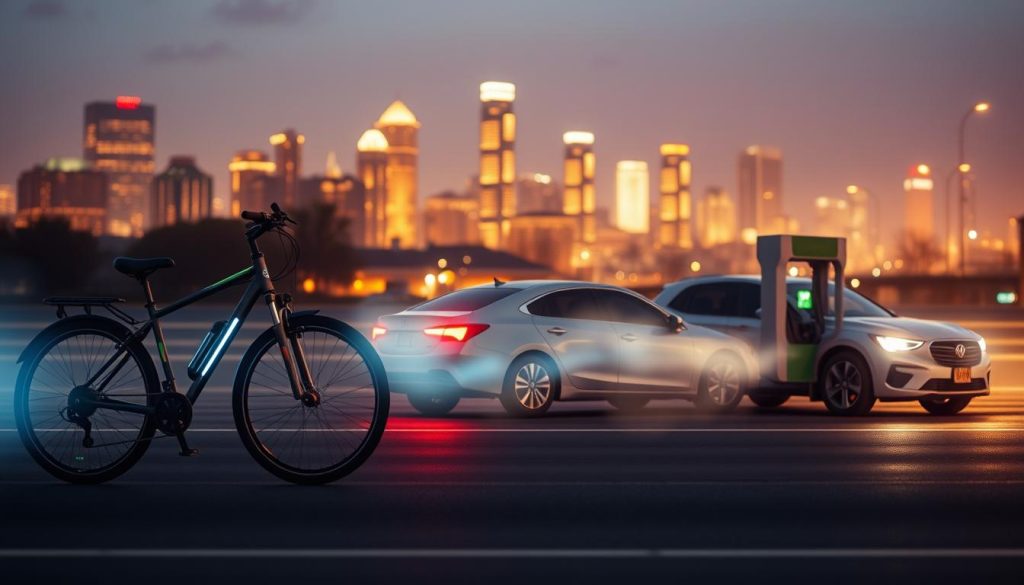
Emissions from Cars, Trains, and Electric Vehicles
Gas-powered cars spew 271 grams of CO₂ per kilometer – 20 times more than pedal-assisted bikes. Even cleaner options like electric trains (35g/km) and EVs (95g/km) can’t match the efficiency of bicycles with motors. Check how they stack up:
| Transport Mode | CO₂e/km |
|---|---|
| Gasoline Car | 271g |
| Electric Car | 95g |
| Commuter Train | 35g |
| E-Bike | 13g |
Charging sources matter too. In countries using coal power, battery-powered transport emissions jump 30%. But solar-charged models stay ultra-clean.
Efficiency of Pedal-Assisted Bicycles vs. Gas-Powered Vehicles
Pedal-assist technology lets riders cover longer distances without car-level emissions. A 5-mile commute on a motor-assisted bike uses less energy than brewing coffee!
Urban areas benefit most. Switching 10% of car trips to electric bicycles could cut traffic emissions by 4% in cities like Chicago. Fewer idling engines mean cleaner air during rush hour.
While manufacturing impacts exist, lifetime emissions stay low. One electric bicycle battery powers 15,000 miles – equivalent to 600 gallons of saved gasoline.
Regional Energy Mix and Emissions Variations
Where you charge matters more than you think. The environmental benefits of electric bicycles depend heavily on local power sources. Let’s explore how national energy choices shape two-wheeled travel.

Impact of the Electricity Mix in France and Germany
An energy mix refers to how countries generate power—like wind, solar, or coal. Cleaner grids mean greener rides. For example:
| Country | Low-Carbon Sources | Emissions per km |
|---|---|---|
| France | Nuclear (70%) + Renewables (20%) | 13g CO₂e |
| Germany | Coal (30%) + Renewables (40%) | 17g CO₂e |
France’s nuclear-heavy grid gives electric bicycles a 23% emissions edge over Germany’s coal-influenced system. Solar-powered charging cuts emissions further, while coal-heavy grids add hidden costs.
Globally, shifting to renewables could trim 4 grams off every kilometer ridden. That’s like removing 2 million cars from roads annually. Even small upgrades in energy infrastructure boost sustainability.
Charging expenses also reflect these differences. Nations with affordable wind or hydro power see lower costs per trip. This makes electric bicycles both eco-friendly and budget-smart in cleaner energy regions.
Your pedal-assisted commute isn’t just personal—it’s part of a worldwide shift. Choosing cleaner transportation modes supports greener grids everywhere, one ride at a time.
Strategies to Reduce e-bike carbon footprint
Small changes in how we build and maintain electric bicycles can amplify their planet-friendly benefits. Let’s explore practical upgrades that make these vehicles even greener.

Better Recycling, Smarter Materials
Advanced battery recycling cuts lifecycle emissions by 40%. Specialized facilities now recover 90% of lithium, reducing mining needs. Pair this with material swaps:
| Material | CO₂ Impact | Cost |
|---|---|---|
| Steel Frames | 33% less | Comparable |
| Bamboo Handlebars | 72% less | Higher |
| Recycled Aluminum | 60% less | Lower |
Steel requires less energy than aluminum. Bamboo grows faster than trees used for wooden parts. These choices shrink manufacturing impacts without sacrificing durability.
Breathing New Life into Old Bikes
Retrofitting pedal bikes with motors slashes production emissions by 65%. Conversion kits cost $500-$800 – cheaper than new electric models. Mechanics can install them in 2-3 hours.
This approach keeps existing frames in use. It also lets riders customize power levels. Regular tune-ups ensure retrofitted bikes last 8+ years, making them a wallet-friendly and earth-conscious choice.
Combined, these strategies trim emissions from both factories and roads. They prove sustainability doesn’t require reinventing the wheel – just refining it.
Economic and Health Benefits of E-Bike Adoption
Switching your commute could pad your wallet and boost your heart health. These pedal-assisted rides offer financial relief from rising gas prices while sneaking exercise into busy schedules. Let’s explore how they outperform traditional options on both fronts.
Cost-Effectiveness Compared to Traditional Vehicles
Gas-powered cars drain budgets fast. The average American spends $8,500 yearly on fuel, insurance, and maintenance. Compare that to e-bikes:
| Expense | Car | E-Bike |
|---|---|---|
| Fuel/Charging | $1,500 | $30 |
| Maintenance | $1,200 | $150 |
| Parking Fees | $600 | $0 |
Charging a battery costs pennies – just 7¢ per 20 miles. Public transport adds up too. A Chicago commuter saves $1,200/year by replacing train trips with two-wheelers.
Integrating Physical Activity into Daily Commutes
Pedal-assist modes let riders choose their effort level. Even light cycling burns 300 calories hourly – like power-walking. Regular riders meet 75% of weekly exercise goals through trips they’d make anyway.
Studies show e-bike users exercise 50% more than car drivers. This reduces heart disease risks by 30% while cutting emissions. Cleaner air from fewer engines idling means healthier lungs for entire communities.
By blending savings and fitness, these vehicles make sustainable living practical. Your bank account and body will thank you.
Hub Motor E-Bikes and Urban Sustainability
City streets are getting smarter – and quieter. At the heart of this transformation? Compact two-wheelers with hub motors that zip through traffic while leaving minimal environmental traces. These innovations are reshaping how we navigate concrete jungles.
Efficient Urban Travel and Reduced Traffic
Hub motors pack silent power into small frames, letting riders conquer hills without breaking a sweat. Studies show replacing 10% of car trips with motor-assisted bicycles cuts congestion by 40% in metro areas. Compact modes like these optimize road space:
| Transport Type | Road Space Used |
|---|---|
| Car | 140 sq ft |
| Electric Bicycle | 15 sq ft |
Fewer idling vehicles mean smoother commutes. Paris saw 22% faster average speeds after expanding bicycle lanes. Each motor-assisted trip saves 150g of greenhouse gas emissions per kilometer compared to cars.
Boosting Air Quality and Lowering Emissions Citywide
Less honking, more breathing. Urban centers using shared electric bicycle programs report 18% drops in nitrogen dioxide levels. Paris reduced carbon dioxide output by 5,000 tons annually through pedal-assisted transportation.
Healthier air means fewer respiratory issues. Cities with high bicycle mode shares see 14% lower asthma hospitalization rates. Operational costs also shrink – maintaining these vehicles costs 90% less than servicing cars.
From rush hour shortcuts to cleaner sidewalks, hub-powered rides prove cities can thrive without sacrificing convenience. The road to sustainable urban living might just have two wheels.
Final Thoughts on Embracing Sustainable E-Bike Travel
Choosing how we move shapes our cities and skies. Modern electric bicycles offer a practical path forward, blending innovation with everyday convenience. Studies confirm they emit 95% less CO₂ per mile than gas cars while costing 90% less to maintain annually.
These vehicles aren’t perfect—battery production and material sourcing still pose challenges. But advancements like lithium recycling and retrofitting old bikes slash their environmental impact further each year. Cities adopting pedal-assisted transportation report cleaner air and 40% less traffic congestion.
Your commute choices ripple outward. Opting for two-wheeled travel:
• Saves $1,200+ yearly compared to car ownership
• Adds low-impact exercise to daily routines
• Supports cleaner urban environments
As energy grids shift toward renewables, electric bicycles will only grow greener. Small steps today—like sharing rides or choosing efficient modes—add up to meaningful change. Why not try swapping one weekly car trip for a breezy, battery-assisted journey? Your lungs, wallet, and community will notice the difference.