
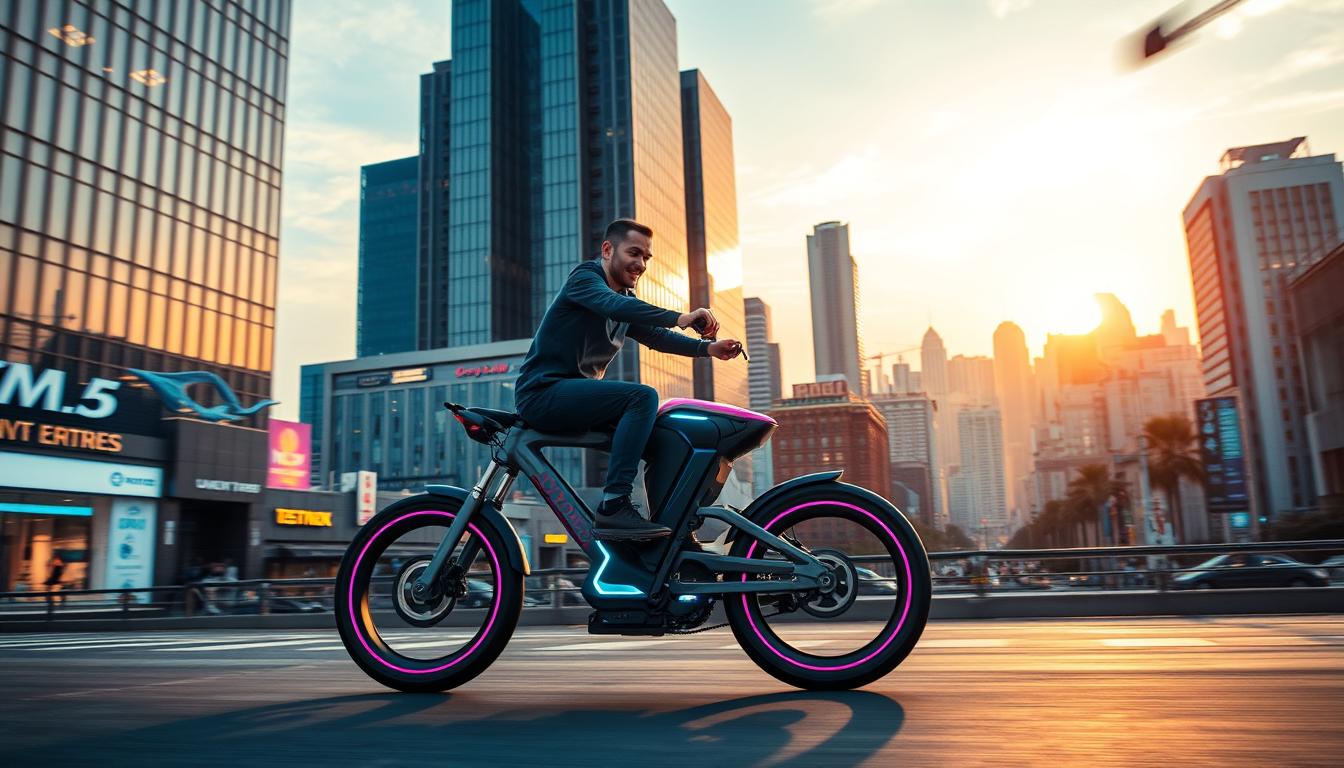
Discover the future of urban mobility with assisted bikes. They are changing how we move around cities and trails. Electric bikes mix human power with tech, offering a fun and efficient way to travel.
An assisted bike is more than a way to get from point A to point B. It’s great for those who commute, love fitness, or seek adventure. It also helps reduce carbon emissions while making cycling better.
In the U.S., people are loving this new tech. It’s perfect for daily commutes, scenic rides, or eco-friendly travel. Electric bikes have advanced systems that let you choose how much help you need.
Assisted bikes come in many styles, from city-friendly to trail-ready. They offer freedom, are good for the planet, and are exciting to ride. Your electric cycling adventure begins now.
Understanding the Power of Assisted Bikes in Modern Transportation
The world of cycling has changed a lot with power-assisted bicycles. These e-bikes mix human power with electric help. They are becoming a key part of modern transportation, seen as a green and efficient choice.
E-bikes are a new way to make cycling easier and more fun. They let riders go further with less effort. This makes cycling open to more people.
Types of Power Assistance Systems
- Hub Motor Systems: Located in the wheel’s center
- Mid-Drive Motor Systems: Positioned at the bike’s bottom bracket
- Friction Drive Systems: Mounted on the bike’s frame
Key Components of E-Bikes
- Electric Motor: Provides pedal-assist power
- Battery Pack: Stores and supplies electrical energy
- Control Unit: Manages power distribution
- Pedal Sensors: Detect rider’s pedaling effort
How Pedal Assist Technology Works
Pedal assist technology makes riding smooth. It works by sensing when you pedal and adding electric power. This makes riding easier and more natural.
Power-assisted bicycles change city travel. They offer a green, efficient, and fun way to get around. They fill the gap between regular bikes and cars.
Benefits of Switching to an Electric-Powered Bicycle

Choosing a pedelec can change how you get around every day. Electric bikes are a smart choice for those who want to save time, help the planet, and stay healthy.
There’s more to electric bikes than just getting from point A to point B. They bring many benefits that change how you move and live:
- Cost-effective alternative to car ownership
- Reduced carbon footprint
- Improved personal fitness
- Flexible commuting options
Electric bikes make it easier to stay fit. The electric boost helps everyone, from beginners to seniors, enjoy cycling without too much effort. It’s great for those who are older, recovering from injuries, or have mobility issues.
Another big plus is saving money. Electric bikes are cheaper than cars in many ways:
- Lower maintenance costs
- No fuel expenses
- Minimal insurance requirements
- Reduced parking fees
They’re also good for the environment. Every ride on an electric bike cuts down on pollution, making cities cleaner. Cities around the world are starting to see electric bikes as a key part of solving climate change.
Electric bikes are a mix of tech, convenience, and green travel. They’re not just a way to get around; they’re a choice that’s good for you and the planet.
Choosing the Perfect Pedelec for Your Lifestyle
Finding the right ebike can change how you ride. Whether you’re commuting in the city or love adventure, picking the perfect pedelec is key. It’s all about matching your needs and likes.

Knowing about electric bikes helps you make smart choices. Each pedelec is made for a certain way of riding and place. So, choosing the right one is important for fun and good performance.
Urban vs. Trail E-Bikes: Matching Your Riding Environment
- Urban e-bikes are sleek for city rides.
- Trail e-bikes have strong frames for off-road.
- Small models fit well in tight city spots.
- Mountain bikes have better suspension.
Battery Range and Charging Essentials
| Battery Type | Average Range | Charging Time |
|---|---|---|
| Standard Lithium-Ion | 40-60 miles | 4-6 hours |
| High-Performance | 70-100 miles | 3-5 hours |
| Extended Range | 100+ miles | 5-8 hours |
Frame Styles and Rider Comfort
The shape of an ebike’s frame affects how comfortable it is. Step-through frames are easy to get on, while diamond frames are more stable. Think about your body and how you ride when picking a frame.
- Aluminum frames are light and affordable.
- Carbon fiber is top-notch for absorbing shocks.
- Steel frames are tough and classic.
Your dream pedelec should match your style and needs. Try out different models to find the one that feels like it’s made for you.
The Evolution of Motorized Bicycles: From Past to Present

The story of motorized bicycles is full of human creativity and change in how we move. In the late 19th century, people started adding small engines to bikes. These early versions were simple but marked the start of a big change in how we travel.
Important moments in the history of motorized bicycles include:
- 1890s: First experimental motorized bicycle designs
- 1920s: Gasoline-powered bicycle attachments become more common
- 1990s: Introduction of modern electric bike technologies
- 2010s: Widespread adoption of lithium-ion battery systems
Today’s electric bikes are a huge step up from the past. They use new materials, smart battery systems, and strong electric motors. This change shows how far we’ve come in technology and how our needs for travel have changed.
How people view motorized bicycles has changed a lot. What was once seen as a special bike is now a green, smart way to get around. People who live in cities, care about the planet, and want to stay fit love electric bikes. They see them as a great way to move around.
The future of motorized bicycles is bright. With better batteries, motors, and designs, electric bikes will keep helping us move around cities in a green way.
Essential Features Every Assisted Bike Should Have
Choosing the right e-bike means knowing what makes it special. Electric bicycles today have advanced tech that boosts your ride. They improve your safety and how well you perform.
Motor Power and Performance
The motor is the core of an e-bike. Its power affects how well it handles different terrains. Think about where the motor is and how much power it has when picking an e-bike.
- Hub motors: Integrated into wheel
- Mid-drive motors: Centered for balanced weight distribution
- Power ranges: 250W to 750W typical configurations
Safety Components and Lighting
Safety is key for e-bike lovers. Good e-bikes have top-notch safety features. They help keep riders safe and visible, day or night.
- Integrated LED headlights
- Rear brake lights
- Reflective frame elements
- Hydraulic disc brakes
Smart Integration and Controls
Today’s e-bikes mix the latest tech with easy-to-use designs. Smart controls let you tailor your ride with digital tools and phone apps.
- Digital display screens
- Bluetooth connectivity
- GPS tracking
- Battery management apps
When looking for an e-bike, focus on ones with full features. They should offer great performance, safety, and tech.
Maintenance Tips for Your Electric Cycle
Keeping your power-assisted bicycle in top shape is key for its best performance and life. Regular care helps avoid expensive fixes and keeps your e-bike running longer.
Battery care is the most important part of e-bike upkeep. To make your battery last longer, remember these tips:
- Charge the battery at room temperature
- Avoid letting the battery drain fully
- Keep the battery at 50-70% charge when not in use for a while
- Clean battery contacts often
Your electric cycle needs regular mechanical checks to stay in good working order. Make a schedule for:
- Monthly tire pressure check
- Quarterly brake system check
- Bi-annual drivetrain cleaning and oiling
- Annual professional tune-up
Motor upkeep for your power-assisted bicycle means keeping electrical connections clean and dry. Check wiring and connectors often for wear or corrosion. Use a soft, dry cloth to clean them and avoid electrical issues.
Cleaning your electric cycle is not just for looks. Use mild soap and water, but avoid high-pressure washers that could harm electrical parts. Dry it well after washing to stop rust and electrical problems.
Look out for signs that mean you might need a pro to help, like strange noises, battery not working right, or motor not helping as it should. Fixing these problems early can stop bigger issues later.
Legal Guidelines and Regulations for E-Bike Riders
Understanding electric bike laws in the United States can be tricky. Each state has its own rules for using assisted bikes. It’s important to know these rules before you start riding.
Speed limits, age rules, and where you can ride vary a lot. So, it’s key to check your local laws for safe and legal e-bike use.
Electric bikes are classified in three main types. Class 1 e-bikes help with pedaling up to 20 mph. Class 2 e-bikes have a throttle for movement. Class 3 e-bikes support pedaling up to 28 mph.
These classes affect where you can ride your electric bike. You might be able to ride in bike lanes, paths, or on roads.
Safety is a big deal for e-bike riders. Many places require helmets, especially for younger riders. Some areas also need specific lights and reflective gear for night riding.
Riders should also know about insurance and registration rules. These might apply to more powerful electric bikes in some places.
As e-bike tech gets better, laws around them change too. Groups work with local governments to make better rules for riders. Keeping up with laws and changes is important for safe and fun riding in cities and countryside.