
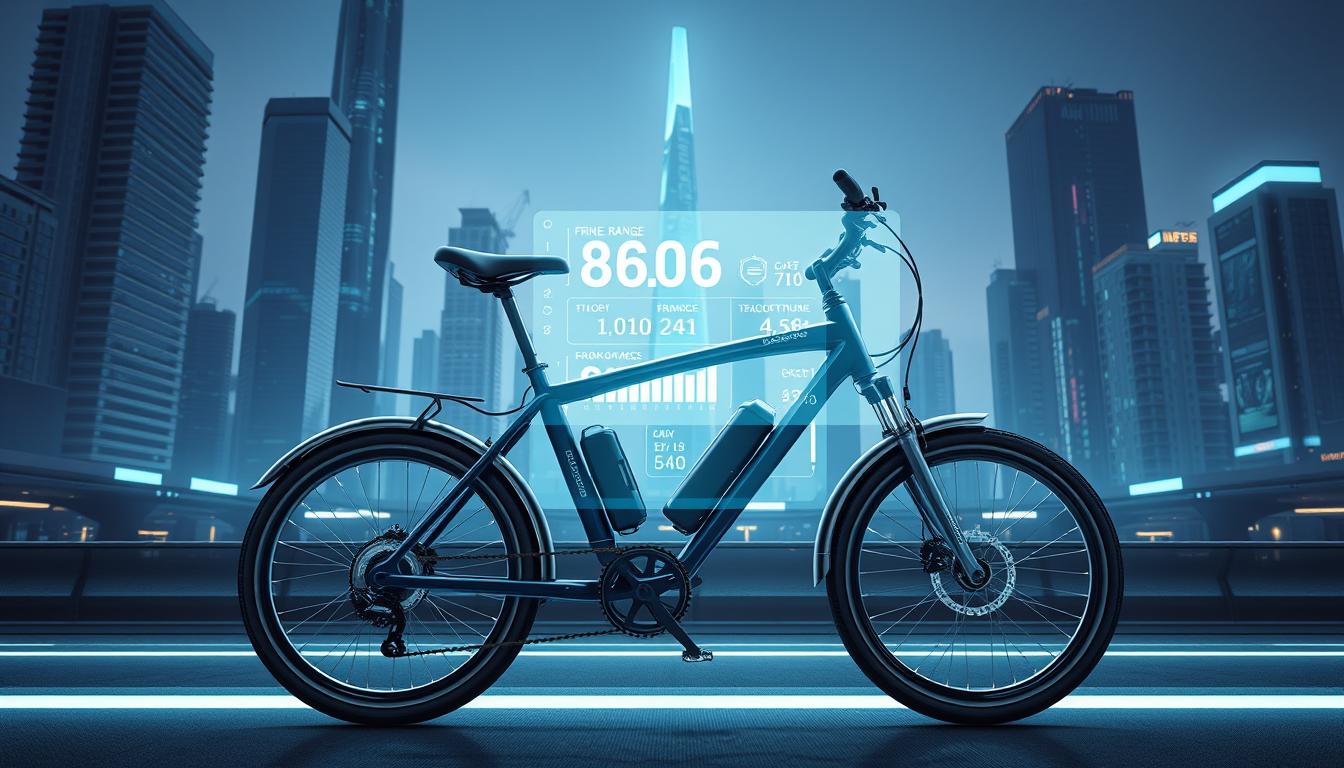
Electric bike riders often face the problem of running out of battery unexpectedly. Our e-bike range calculator solves this issue by giving you exact range estimates. This way, you can plan your rides with confidence.
The e-bike range calculator changes how you plan your cycling trips. It’s not just for commuting; it’s also great for exploring trails. Knowing how far your e-bike can go helps you choose the best routes and manage your battery.
Today’s e-bike riders want the latest tech. Our range calculator lets you predict how your battery will perform. It considers the terrain, weather, and your riding style. This means you can plan your rides without worrying about running out of power.
Get the most out of your e-bike with our advanced range estimation technology. Ride with confidence, knowing how far you can go before needing a recharge. Start your next cycling adventure with smart, data-driven planning.
Understanding E-Bike Range and Why It Matters
Electric bike riders face unique challenges when planning their journeys. The electric bike battery capacity is key to knowing how far and confidently you can ride. Knowing how to estimate range helps cyclists plan their trips better and avoid unexpected battery drain.
Common Range Anxiety Issues
Range anxiety is a big worry for e-bike fans. Riders often fret about:
- Running out of battery mid-journey
- Unexpected terrain challenges
- Unpredictable battery performance in different weather conditions
Impact on Ride Planning
Knowing the exact range you can go helps in planning rides better. Cyclists can now map out routes with confidence, knowing their battery will last the whole trip. This makes riding less stressful and more enjoyable.
Benefits of Accurate Range Prediction
Precise range estimation brings many benefits:
- Enhanced safety through reliable battery performance tracking
- Improved route selection based on actual battery capabilities
- Better understanding of energy consumption patterns
- Increased rider confidence during longer trips
By using advanced range calculation technologies, e-bike riders can enjoy more fun and stress-free cycling adventures.
How Our E-Bike Range Calculator Works
Our e-bike range calculator is a powerful tool. It gives riders precise estimates of their electric bicycle’s potential travel distance. It uses advanced algorithms and data points to provide accurate predictions, helping to reduce range anxiety.
The calculator considers many important factors for reliable estimates:
- Battery capacity and current charge level
- E-bike motor efficiency
- Rider weight and cargo
- Terrain type and elevation changes
- Anticipated riding speed and pedal assist mode
Understanding e-bike motor efficiency is key for accurate range predictions. Our calculator uses complex mathematical models. These models analyze how different motors convert electrical energy into mechanical power. This ensures riders get realistic range estimates based on their e-bike.
| Input Parameter | Impact on Range Calculation |
|---|---|
| Battery Voltage | Direct correlation with potential distance |
| Motor Watts | Determines energy consumption rate |
| Terrain Type | Adjusts range prediction accuracy |
Riders can easily input their details into our user-friendly calculator. In seconds, they’ll get a detailed range estimate. This helps plan rides with confidence and precision.
Essential Factors That Affect Your E-Bike’s Range
Knowing what affects your electric bike’s performance is key. It helps you enjoy your rides more and plan better. Several important factors decide how far you can go on one charge.
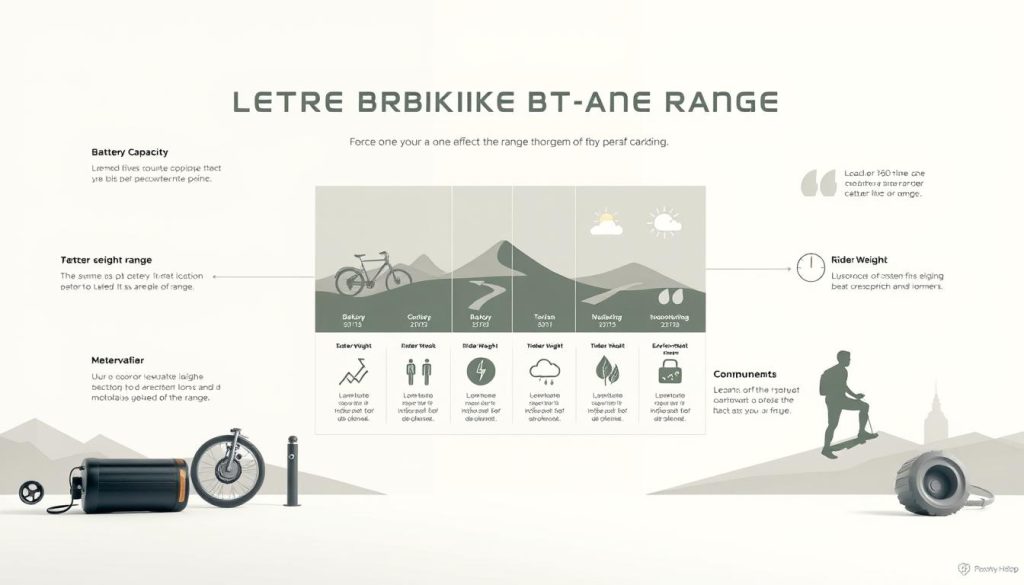
Battery Capacity and Motor Power Dynamics
The size of your electric bike’s battery is very important. It affects how far you can ride. Bigger batteries mean longer rides, and more efficient motors help even more.
- Standard battery capacities range from 36V to 48V
- Motor efficiency impacts overall energy consumption
- Higher wattage motors consume more battery power
Weather Conditions and Temperature Impact
Weather changes how well your e-bike battery works. Cold weather can make batteries less efficient. This can cut your ride’s range by 10-30%.
| Temperature Range | Battery Performance | Range Impact |
|---|---|---|
| Above 77°F | Optimal Performance | 100% Range |
| 32°F – 59°F | Reduced Efficiency | 70-80% Range |
| Below 32°F | Significant Reduction | 50-60% Range |
Riding Style and Wind Resistance
Your riding style affects how far you can go. Wind resistance is especially important at high speeds. Riding smoothly and consistently helps save battery.
- Maintain steady speeds
- Use lower assist modes
- Minimize sudden acceleration
- Reduce exposure to strong headwinds
Understanding Terrain Impact on Battery Life

E-bike riders know that the terrain greatly affects battery use. Different landscapes change how much energy your electric bike uses. Knowing how terrain affects battery life helps you plan better rides and use your e-bike’s full potential.
The incline effect greatly changes how fast the battery drains. Steep hills need more power, using up battery energy quickly. Riders on mountains or hills will go shorter distances than those on flat ground.
- Flat terrain: Minimal battery drain, maximum efficiency
- Gentle slopes: Moderate energy consumption
- Steep inclines: Highest battery usage
Specific terrain features that affect battery performance include:
- Road surface texture (smooth asphalt vs. rough gravel)
- Gradient percentage of climbing routes
- Wind resistance during elevation changes
- Rider weight and cargo load
Smart e-bike riders can improve battery life by choosing the right routes. They should understand how different landscapes affect energy use. Our range calculator helps predict battery performance on various terrains.
Maximizing Range Through Pedal Assist Modes
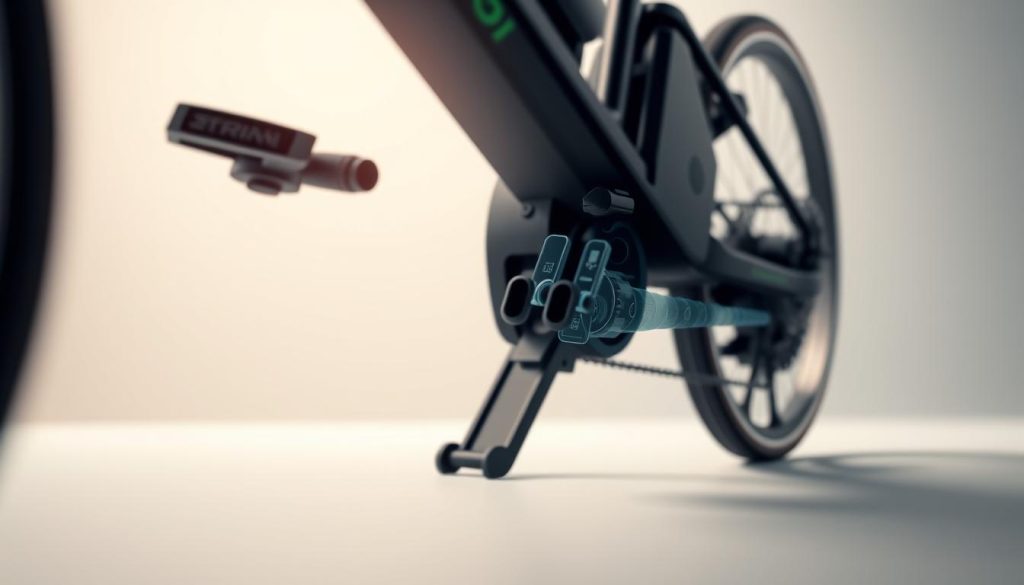
E-bike riders can extend their battery range by using pedal assist modes wisely. These settings let cyclists control the motor support level. This affects how much energy is used and how far they can go.
Understanding Pedal Assist Levels
Pedal assist modes range from eco to high-power boost. Each level offers different motor support, changing how much effort you need and battery use. Your weight also affects how well these modes work.
- Eco Mode: Minimal motor assistance, maximizes battery life
- Normal Mode: Balanced support for everyday riding
- High Mode: Increased power for challenging terrains
- Boost Mode: Maximum motor support for steep climbs
Optimal Mode Selection Strategy
Choosing the right pedal assist mode depends on several things. Terrain, rider fitness, and desired speed are key. Heavier riders might need more support, while lighter ones can save battery with less assist.
| Terrain Type | Recommended Assist Mode | Battery Consumption |
|---|---|---|
| Flat Urban Roads | Eco/Normal Mode | Low |
| Moderate Hills | Normal/High Mode | Medium |
| Steep Mountainous Routes | High/Boost Mode | High |
Try different pedal assist modes and see what works best for you. This way, you can make the most of your e-bike’s range and enjoy a better ride.
Real-World Applications of the E-Bike Range Calculator
The e-bike range calculator makes planning rides much easier. It turns guesswork into precise planning. Now, cyclists can map out their trips with great accuracy.
It’s perfect for anyone, whether you commute daily or go on weekend adventures. This tool gives you key insights into your e-bike’s capabilities.
Here are some ways the calculator is useful:
- Urban Commuting: Predict exact battery performance across city routes
- Long-Distance Touring: Strategically plan charging stops
- Mountain Trail Exploration: Understand terrain impact on battery life
For example, an urban rider faces different terrains. The e-bike range calculator estimates energy use based on:
- Rider weight
- Elevation changes
- Wind resistance
- Pedal assist mode
Both professional and casual riders benefit from this tech. By entering specific details, users learn their e-bike’s range. This reduces worries and makes riding better.
Tips for Extending Your E-Bike’s Battery Life
To get the most out of your electric bike battery, plan and maintain it well. Knowing how your e-bike motor works helps you ride longer and better. Start by charging your battery regularly to avoid letting it drain fully.
Keeping your e-bike in a moderate temperature is key to battery health. Avoid very hot or cold places, as they can harm your battery. In winter, take out the battery and keep it in a room with a normal temperature to keep it working well.
Regular checks on your e-bike’s electrical parts can boost its performance. Get a professional to inspect your battery connections and clean the electrical contacts. Also, make sure all systems are working right. Keeping your tires at the right pressure and carrying less weight can also help your battery last longer.
Learn to ride your e-bike in a way that saves battery. Use lower pedal-assist levels for flat areas and higher levels for hills. This way, you’ll use less battery and ride more efficiently.