

Electric bicycles have changed how we travel in cities. Knowing how long it takes to charge them is key. It helps riders plan better and get the most out of their e-bikes.
Today, e-bikes are changing how we move around. People think about how long it takes to charge, how well the battery works, and how far they can go. Whether you’re going to work or exploring on the weekends, knowing your e-bike’s charging needs can make a big difference.
There are many things that affect how long it takes to charge an e-bike. These include the type of battery, its voltage, and the charging source. Understanding these details helps riders get the best out of their e-bikes and ensures they can rely on them for transportation.
E-bike users in the U.S. are learning the value of managing their batteries well. How long it takes to charge affects how mobile they are. This is important for anyone interested in using electric bicycles.
This guide will dive into the details of e-bike battery charging. It aims to give riders the knowledge they need to make smart choices about their electric bikes.
Basics of E-Bike Battery Charging Time and Power Requirements
Electric bike batteries are crucial for any e-bike’s performance and range. Knowing about lithium-ion battery capacity and energy efficiency helps riders choose the right power for their bike.
Today’s e-bike batteries have detailed specs that affect charging time and performance. Riders must understand these technical details to get the most from their bike.
Understanding Voltage and Amperage Ratings
Voltage and amperage are key to an e-bike battery’s performance. Here’s why they matter:
- Voltage shows the battery’s electrical potential
- Amperage shows how much current it can handle
- More voltage means more power and quicker starts
- Amperage impacts the battery’s capacity and range
Common Battery Types and Their Specifications
| Battery Type | Voltage Range | Typical Capacity | Charging Time |
|---|---|---|---|
| Lithium-Ion | 36V – 48V | 400-700 Wh | 3-6 hours |
| Lithium Polymer | 24V – 36V | 250-500 Wh | 2-4 hours |
| Nickel-Metal Hydride | 24V – 36V | 200-400 Wh | 4-8 hours |
Power Source Requirements for Optimal Charging
To charge efficiently, choose the right power source and know your battery’s needs. Important points include:
- Use chargers recommended by the manufacturer
- Keep charging temperatures steady
- Don’t let the battery drain fully
- Store batteries at the recommended charge level
Understanding these basics helps e-bike riders improve their experience and extend their battery’s life through smart charging.
Factors Affecting battery charging time e-bike Performance
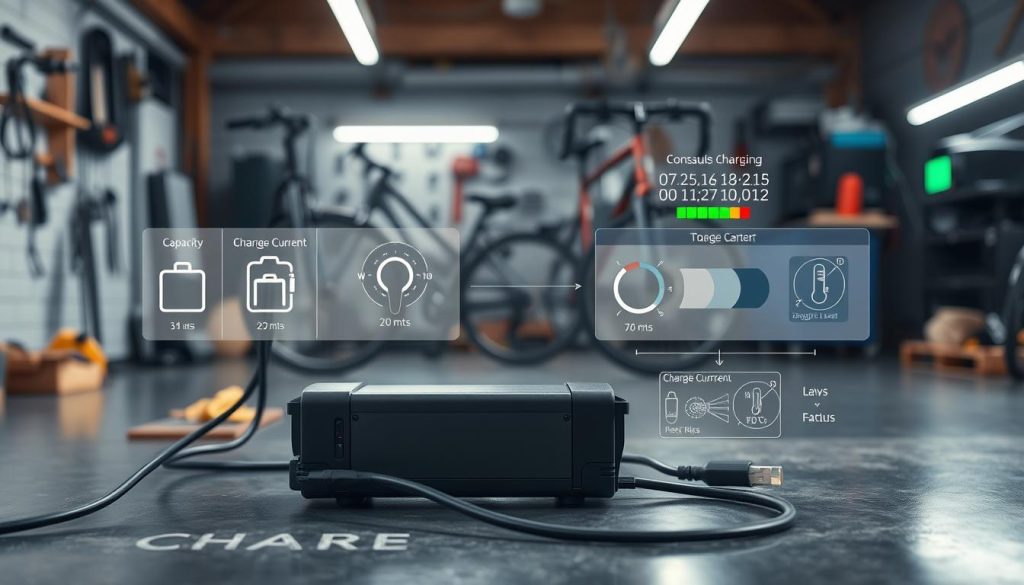
Knowing what affects e-bike battery charging time is key to better riding. The battery’s performance depends on several factors. These factors impact how fast it charges and how well it lasts.
Several important factors affect battery charging time and performance:
- Battery Age: Older batteries take longer to charge and hold less power
- Temperature Conditions: Very hot or cold temperatures slow down charging
- Pedal-assist technology usage: Using pedal-assist more often drains the battery faster
- Charging infrastructure and power source quality
Pedal-assist technology affects battery use. Using it a lot means the battery drains quicker. This leads to more frequent and possibly longer charging times.
Environmental conditions also matter a lot. The best temperature for charging is between 50-77°F (10-25°C). Extreme temperatures can make charging slower and harm the battery over time.
To get the most out of your e-bike battery, follow these tips:
- Charge regularly and consistently
- Don’t let the battery fully drain
- Keep the battery in a moderate temperature
- Use the charging equipment recommended by the manufacturer
By understanding these factors, e-bike fans can charge smarter. This helps extend battery life and improves their rides.
Smart Charging Technologies and Battery Management Systems
Modern e-bikes are changing city travel with smart battery systems. These systems make charging better and safer. They help riders get the most out of their e-bikes and keep batteries healthy for a long time.
The battery management system is key in controlling the charge. It has advanced safety features. These prevent electrical problems and help batteries last longer.
Advanced BMS Features for Charging Optimization
Today’s battery systems have amazing charging abilities:
- Real-time cell voltage monitoring
- Temperature regulation during charging
- Precise energy distribution control
- Intelligent charging cycle management
Temperature Control During Charging Process
Keeping the right temperature is vital for battery health. A smart battery system keeps the charge at the best level. It stops overheating and keeps energy flowing smoothly.
Safety Protocols and Overcharge Protection
Regenerative braking adds to the safety features. It captures energy when slowing down, which helps recharge the battery. The BMS always checks electrical levels to avoid overcharging and damage.
With advanced battery systems, e-bike makers are making travel safer and more reliable. They focus on a better riding experience and longer battery life.
Maximizing Battery Life Through Proper Charging Habits
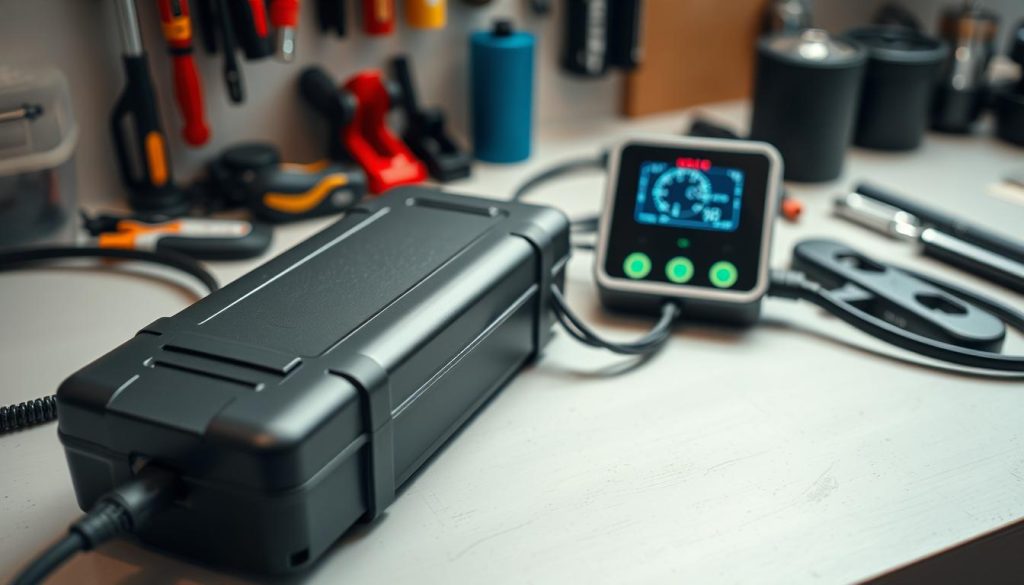
To make your e-bike battery last longer, pay close attention to how you charge it. Smart charging systems and advanced charging setups are key to keeping your battery in top shape.
Learning how to care for your battery can greatly extend your e-bike’s life. Here are some tips for managing your battery well:
- Avoid letting the battery run all the way down before charging it
- Keep the charge between 20% and 80% for the best life
- Use the charging setup recommended by the manufacturer
- Store batteries in a cool, moderate temperature
Charging in different places can really affect how well your battery works. Smart charging systems watch over your battery. They help stop overcharging and make sure your battery gets the right number of charges.
| Charging Practice | Battery Impact | Recommended Frequency |
|---|---|---|
| Partial Charging | Extends Battery Cycle Life | After Every Ride |
| Full Discharge | Reduces Battery Capacity | Avoid Completely |
| Temperature Control | Prevents Performance Degradation | Consistent Monitoring |
Experts say using top-notch charging systems can really boost your battery’s performance. By following these smart charging tips, you can keep your e-bike battery strong and reliable for many years.
Fast Charging Solutions and Infrastructure for E-Bikes
The electric bike world is changing fast with new charging tech. Now, e-bike charging is quicker and easier than before. Companies like Bosch and Shimano are leading the way with fast charging systems.
Across the US, cities are setting up special charging spots for e-bikes. You can find them at transit stops, work places, and shopping areas. This makes it easy for people to charge their bikes quickly, whether they’re commuting or just out for fun.
New charging tech is making e-bikes even better. Some charging stations can fill up to 80% of a battery in under 30 minutes. This is great for people who use e-bikes for work or deliveries, as it means less time waiting to get back on the road.
As more people choose e-bikes, cities are building bigger charging networks. Soon, we’ll see even faster charging options. These will help make e-bike rides even more convenient and sustainable in cities everywhere.