

The electric bicycle revolution is changing how we move around in the U.S. E-bike trends for 2025 will bring new innovations. These changes will make electric bikes a key part of our daily travel.
Technology is moving fast in the e-bike world. We’re seeing sleek designs, strong batteries, and smart features. This makes electric bikes appealing to many, from city commuters to outdoor lovers.
Cities are seeing a big change in how people get around. E-bike trends for 2025 show a big increase in use. Companies are working on new tech for better performance, longer rides, and easier use.
Expect lighter bikes, stronger motors, smart navigation, and safety upgrades. The future of e-bikes looks bright, blending tech, ease, and care for the planet.
The Evolution of Urban Mobility: E-bike Trends 2025
The world of micro-mobility is changing fast, with e-bikes leading the way. They are becoming a key part of urban travel in the U.S. As cities get busier and people care more about the planet, electric bikes are changing how we get around.
Current Market Growth Statistics
The e-bike market is growing fast, with big plans for 2025. Here are some important numbers:
- Expected market value to reach $40 billion globally
- Projected 10% annual growth in the United States
- Urban areas showing highest adoption rates
Impact on American Transportation Culture
E-bikes are changing how Americans travel every day. They offer a green, quick way to get around, solving many city problems at once.
- Reduced carbon emissions
- Lower transportation costs
- Improved personal fitness
- Enhanced urban mobility flexibility
Key Market Drivers and Consumer Demands
People want eco-friendly, easy ways to travel. The micro-mobility world is answering with new designs and tech that fit today’s needs.
- Enhanced battery technologies
- Smart connectivity features
- Affordable pricing models
- Increased range and performance
Revolutionary Battery Technologies Reshaping E-Bike Performance
The world of e-bike technology is seeing a big change with battery advancements. New lithium-ion battery innovations are making electric bikes better than ever. They offer top-notch performance and efficiency.
Recent breakthroughs in lithium-ion battery tech are changing the game for e-bike riders. Companies are making batteries with amazing features:
- Increased energy density for longer rides
- Faster charging times to get back on the road quicker
- Extended battery lifespans for greener travel
- Lighter weight designs for better bike handling
Research is also looking into new battery solutions to replace old ones. Solid-state batteries are a big hope. They promise more energy, safety, and quick charging.
The future of e-bike batteries is very promising. Riders will soon enjoy more powerful, efficient, and dependable batteries. This will make electric bikes even more appealing for city trips and fun rides.
Smart Integration and Connected Features Taking Over
The e-bike revolution is entering a new era. It’s all about smart connectivity features that change how we ride. These features turn e-bikes into more than just a way to get around.

Today’s e-bikes are like mobile platforms. They come with smart tech that makes riding safer, better, and easier. These features are changing how we move around cities, giving us more control and interaction.
Mobile App Integration and Rider Analytics
Smartphone apps give riders a deep look into their rides. They can see things like:
- Distance traveled
- Average speed
- Battery consumption
- Calories burned
- Route optimization
Anti-Theft and Security Innovations
Now, e-bikes have top-notch security. They come with GPS tracking, remote locking, and alerts for theft. This means riders can ride worry-free.
| Security Feature | Functionality |
|---|---|
| GPS Tracking | Real-time location monitoring |
| Remote Locking | Disable bike functionality via smartphone |
| Theft Alerts | Instant notifications for unauthorized movement |
Navigation and Real-Time Diagnostics
Navigation and diagnostic tools are changing how we care for our e-bikes. Riders get updates on bike performance and when it needs maintenance. They also get the best routes to take.
As these features get better, e-bikes are becoming more than just a ride. They’re becoming smart friends that help us move around cities better and stay fit.
Sustainable Manufacturing and Eco-Friendly Materials

The e-bike industry is changing how we think about transportation. It’s using new ways to make e-bikes that are better for the planet. Now, making e-bikes is all about using materials and methods that are kinder to our environment.
Some big changes in making e-bikes include:
- Recycled aluminum frames that use less raw materials
- Biodegradable materials instead of old plastics
- Programs to recycle batteries and cut down on waste
- Factories that use green energy to save resources
Big names in the e-bike world are focusing on making things better for our planet. Brands like Trek and Specialized are working to make e-bikes without harming the environment. They’re showing they care about our planet.
Using eco-friendly materials is more than just being green. It’s setting a new standard in the e-bike world. It’s for people who want to travel in a way that’s good for the Earth.
New materials are helping make e-bikes lighter and stronger. They’re also keeping the focus on being green. Bamboo, recycled carbon fiber, and bio-based plastics are being used more and more.
Infrastructure Development and Charging Solutions
E-bikes are changing how we move around cities. New e-bike charging systems are key to making cities greener. As more people use electric bikes, cities are updating their roads and buildings to support them.
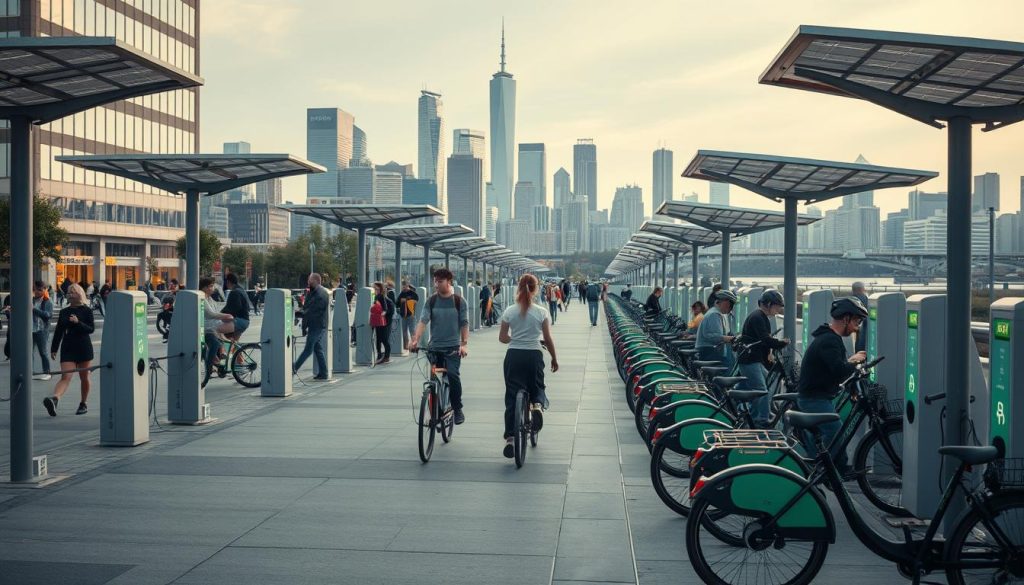
Urban planners are working hard to make e-bikes a big part of city life. They’re building networks that make it easy and safe to ride e-bikes. This helps solve many city problems and makes moving around cleaner.
Urban Planning for E-Bike Networks
Cities are setting up special e-bike lanes and charging spots. This makes riding safer and more convenient. Some important steps include:
- Protected bike lanes with charging points
- Charging stations in busy areas
- Bike-friendly traffic signals and designs
Solar-Powered Charging Stations
Solar-powered charging is changing how we charge e-bikes. These green stations offer:
- Clean energy for e-bike batteries
- A smaller carbon footprint for city travel
- Free charging for e-bike riders
Integration with Public Transportation
The next step is linking e-bikes with public transit. Cities are working on ways to make travel smoother. They’re focusing on:
| Integration Strategy | Key Benefits |
|---|---|
| Bike-Share Programs | Last-mile connectivity |
| Transit Station Charging Zones | Convenient battery recharging |
| Combined Ticketing Systems | Unified transportation access |
As e-bike charging systems get better, cities are becoming greener and more efficient. They’re making travel better for everyone.
Regulatory Landscape and Safety Standards Evolution
The e-bike industry is growing fast, leading to big changes in laws and rules across the U.S. States are making their own rules to keep up with the rise of electric bikes. This includes new designs like folding e-bikes that make city travel easier.
Lawmakers at both the federal and state levels are creating safety standards. They aim to protect riders while allowing for new tech. The Consumer Product Safety Commission has helped set rules for different types of e-bikes, focusing on safety.
States have different rules for e-bikes, with some being stricter than others. Some require helmets and set age limits, while others are more relaxed. Companies making folding e-bikes pay close attention to these rules, making sure their bikes meet safety standards in each area.
As more people start using e-bikes, we’ll see more national rules. These rules will help everyone know what’s expected of riders and makers. They’ll likely cover safety, tech, and how e-bikes fit into our cities’ transportation systems.