

Electric bikes have changed how we move around cities. Knowing how long your e-bike battery lasts is key for a great ride. The battery’s range and how long it lasts can really affect your experience and the value of your e-bike.
Today’s e-bike fans know that battery life is more than just storing power. It’s about how technology, where you ride, and how you care for your bike all work together. By understanding these, you can get the most out of your battery and make your e-bike last longer.
Every e-bike battery has its own story of what it can do. Whether you’re commuting or going on adventures, knowing about battery specs helps you choose the right e-bike for you.
This guide will cover all you need to know about e-bike battery life. We’ll look at the technical details and practical tips to help you get the best from your e-bike’s battery. You’ll learn how to keep your battery in top shape and make sure your e-bike is always ready for your next ride.
Understanding E-bike Battery Life and Performance Basics
Electric bikes have changed how we travel, thanks to lithium-ion batteries. These batteries are key to how far and how well your e-bike goes. It’s important to know what makes them tick.
Recent advances in battery tech have boosted e-bike power. Today’s lithium-ion batteries are more reliable and efficient than ever.
Types of Lithium-ion Batteries for E-bikes
- Lithium Nickel Manganese Cobalt (NMC)
- Lithium Iron Phosphate (LFP)
- Lithium Polymer (LiPo)
- Lithium Cobalt Oxide (LCO)
Key Battery Specifications Explained
Knowing about battery specs helps you choose the right e-bike. It’s all about how well it performs and how long it lasts.
| Specification | Description | Impact on Performance |
|---|---|---|
| Battery Capacity | Measured in Watt-hours (Wh) | Determines total range and energy storage |
| Discharge Rate | Maximum current output | Affects acceleration and climbing power |
| Charge Cycles | Number of complete charge/discharge sequences | Indicates battery longevity |
Voltage and Amp Hours: What They Mean
Voltage is like the battery’s pressure, and amp hours show its energy capacity. More voltage means more power, and more amp hours mean longer rides.
Choosing the right battery is about finding the right balance. Think about your needs, where you ride, and how far you want to go.
Factors Affecting Your Battery’s Range and Longevity
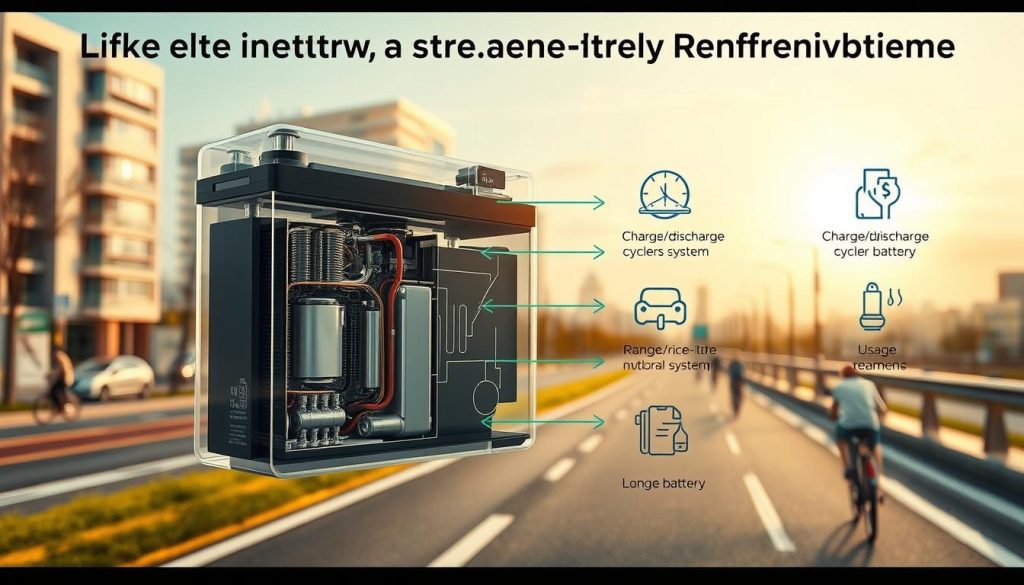
Knowing what affects your e-bike’s battery range is key. It helps you get the most out of your ride and make your battery last longer. There are many things you can control to improve your battery’s performance.
How you ride affects how much energy your battery uses. Fast starts, lots of stops, and high speeds use up the battery quickly. Riding smoothly and at a steady pace helps save battery power and increases your range.
- Choosing the right assist level is important for battery use
- Using higher pedal-assist modes uses more energy
- Lower assist levels can make your battery last longer
Several important factors affect how well your battery performs:
- The type of terrain you ride on (hills vs. flat)
- How much you weigh and what you carry
- How much wind you face
- Keeping your bike in good condition
Battery size and type also play a big role. Modern lithium-ion batteries are more efficient. They can give you up to 50-75 miles on a single charge. Getting a high-quality battery with advanced systems can really boost your e-bike’s range and life.
Smart riders can improve their battery range by riding wisely and keeping their bike in top shape.
How Terrain and Riding Conditions Impact Battery Performance
E-bike battery performance isn’t just about the battery itself. The terrain and riding conditions also matter a lot. Knowing these factors can help you get the most out of your battery and plan better rides.

Effect of Hills and Elevation Changes
Steep terrain really affects battery drain. Climbing hills uses up more energy from your e-bike battery. You can expect your battery range to drop by 30-50% on tough elevation changes.
Steeper slopes need more power, which means your battery will drain faster.
- Flat terrain provides maximum battery efficiency
- Moderate hills reduce battery range by approximately 25%
- Extreme inclines can cut battery performance by half
Weather and Temperature Considerations
Battery performance changes a lot with temperature. Lithium-ion batteries work best between 60-80°F. Cold weather can cut battery capacity by up to 40%.
On the other hand, very hot weather can make batteries degrade faster.
Rider Weight and Cargo Load Factors
Your total weight affects battery performance a lot. Being heavier or carrying more stuff uses more energy. A good rule is that every extra 10 pounds can cut battery range by 5-10%.
- Lighter riders experience more consistent battery performance
- Minimize unnecessary cargo to extend battery life
- Consider battery capacity when planning rides with heavy loads
Maximizing Your E-bike Battery’s Lifespan Through Proper Care

Keeping your e-bike battery in top shape is key to its long life and performance. It’s not just about charging it right. You need a plan to keep your battery healthy and your rides enjoyable.
Good battery care starts with knowing how to charge it correctly. Here are some tips to make your battery last longer:
- Avoid completely draining the battery before recharging
- Keep battery charge between 20% and 80% for optimal health
- Use only manufacturer-recommended chargers
- Store batteries at room temperature when not in use
Temperature is important for battery health. Cold or hot weather can hurt your battery’s performance and life. In winter, keep the battery indoors. In summer, avoid direct sunlight for your e-bike.
Cleaning and checking your battery regularly is also crucial. Clean the battery contacts with a dry cloth and look for any damage. This keeps the battery working well and prevents electrical problems.
By following these care tips, you can make your e-bike battery last longer. This saves you money and ensures you have a reliable ride every time.
Common Battery Management System Features and Benefits
Modern e-bike battery management systems (BMS) are advanced technologies. They protect and optimize ebike power performance. These systems do more than just deliver power, offering important safety and insight features for riders.
The main goal of a battery management system is to keep the battery healthy, safe, and efficient. These advanced systems constantly watch over your e-bike’s most important part.
Overcharge Protection Systems
Overcharge protection is key to avoiding battery damage during charging. The BMS checks voltage levels and stops charging when the battery is full. This stops risks like:
- Battery cell degradation
- Potential thermal runaway
- Reduced battery lifespan
Temperature Monitoring Technology
Temperature monitoring is crucial in battery management. The BMS tracks both internal and external temperatures. It ensures safe use in different weather conditions. This tech guards the battery from extreme temperatures, which can harm ebike power.
Battery Status Indicators and Displays
Modern BMS systems have clear status indicators. They give real-time info on battery health. Riders can see:
- Remaining battery charge
- Current power consumption
- Estimated range
- Battery temperature
These features improve the riding experience. They also help extend battery life and ensure reliable e-bike performance.
Practical Tips for Extending Your Battery’s Service Life
Start by charging your e-bike battery wisely. Keep it charged between 20% and 80% for best results. Avoid letting it go completely flat before you recharge it.
How you ride affects your battery too. Use pedal assist wisely to save power. When going up hills, shift gears and pedal a bit to ease the battery’s work.
Storing your e-bike battery right is key. Keep it in a cool, dry spot at about 50% charge when not using it. Avoid very hot or cold places to protect your battery.
With these tips, you can make your e-bike battery last longer. Small changes in how you charge, ride, and store your bike can add up. They help your battery keep powering your rides for a long time.