

Trail riders and outdoor fans are finding out how great mountain e-bikes with pedal assist are. These electric bikes change off-road cycling by giving strong support on tough trails.
Today’s electric mountain bikes mix new tech with the classic feel of cycling. They let riders tackle steep paths and long rides with less effort. This makes mountain biking open to more people, no matter their fitness level.
The pedal assist feature changes mountain biking by boosting the rider’s power. Advanced sensors feel how hard you’re pedaling and give you electric help right away. This makes for a smooth and exciting ride that takes your skills to new heights.
Mountain e-bikes with pedal assist are becoming a hit with adventure lovers who want to explore tough landscapes without getting too tired. Whether you’re a casual rider or a serious trail enthusiast, these bikes offer a thrilling way to enjoy the outdoors.
In our detailed guide, we’ll explore the world of electric mountain bikes. We’ll look at their tech, performance, and what to think about when choosing the right bike for your trail adventures.
Understanding Mountain E-bike with Pedal Assist Technology
Motorized mountain bicycles are changing off-road cycling. They make mountain biking easier and more fun for everyone. This is true for all skill levels.
Electric mountain bikes use smart pedal assist systems. These systems boost a rider’s pedaling power. They offer different support levels, helping riders conquer tough trails and long rides.
How Pedal Assist Systems Function
Pedal assist systems use smart sensors to help riders. They sense how hard you’re pedaling and give electric support. The key parts are:
- Torque sensors measuring pedaling force
- Cadence sensors tracking pedal rotation speed
- Compact electric motors integrated into bike frames
Different Levels of Assistance
Today’s motorized mountain bikes have various assistance modes:
- Eco Mode: Minimal support, maximum battery efficiency
- Normal Mode: Balanced power and range
- High Mode: Maximum power for challenging terrain
- Turbo Mode: Full electric assistance for steep climbs
Motor Types and Power Output
Off-road cycling needs strong motors. Mountain e-bike motors vary in type and power:
- Mid-drive motors: Centered for optimal weight distribution
- Hub motors: Integrated directly into wheel mechanisms
- Power ranges from 250W to 750W for trail performance
Choosing the right pedal assist system depends on your riding style, the terrain, and how much electric help you want.
Top Features to Look for in Electric Mountain Bikes

Choosing the right electric mountain bike is important. You need to think about key features that make riding better. Modern mountain e-bikes have new technologies that make your outdoor adventures better.
When picking an electric mountain bike, look at a few key things:
- Frame Geometry: Lightweight yet durable designs that support aggressive trail riding
- Wheel Size: 27.5-inch or 29-inch options for different terrain challenges
- Tire Tread: Specialized patterns for maximum grip during battery-powered trail riding
- Motor Placement: Mid-drive or hub motors affecting bike balance and performance
Battery technology is key in electric mountain bikes. Look for lithium-ion batteries that are high-capacity and easy to charge. A good battery should last long on tough trails and not be too heavy.
Modern electric mountain bikes have cool tech. Features like smartphone connectivity and real-time tracking make riding better. GPS and ride-tracking let you plan and track your trails.
- Smart Display: Intuitive interfaces showing battery life, speed, and assistance levels
- Customizable Power Modes: Adaptive assistance for different trail conditions
- Robust Connectivity: Bluetooth and app integration for enhanced riding experience
Getting a top-notch electric mountain bike means knowing these key features. Each part adds to a great ride that mixes tech with nature.
Battery Life and Range Considerations for Trail Riding
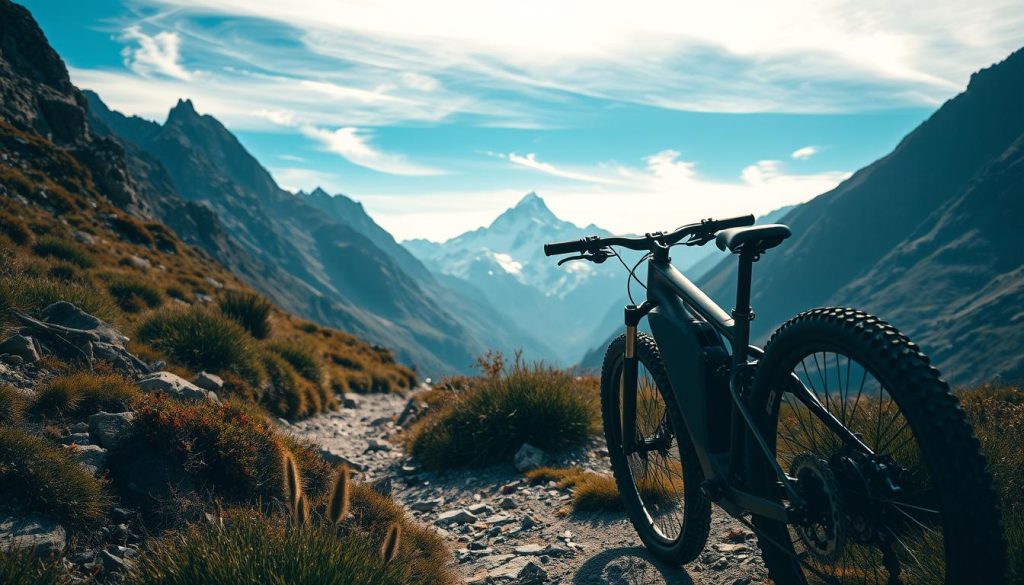
Pedal-assist mountain e-bikes have changed trail riding. Battery performance is key for outdoor fans. Knowing about battery capacity and range can make your rides better, ensuring you enjoy every adventure.
Battery Capacity and Performance
Today’s pedal-assist mountain e-bikes use new battery tech. This tech boosts your ride. You can expect batteries with 400 to 700 watt-hours, affecting range and performance.
- Standard battery capacity: 500 watt-hours
- Advanced battery range: 40-80 miles per charge
- Typical charging time: 3-6 hours
Charging Time and Infrastructure
For rechargeable mountain biking, managing your battery is crucial. Most e-bike batteries can be taken off for easy charging. You can charge them on the bike or with portable packs.
- Use dedicated e-bike charging stations when available
- Carry a portable charger for longer trail rides
- Plan routes with potential charging opportunities
Range Optimization Tips
To get the most from your pedal-assist mountain e-bike, ride smart. Think about the terrain, your weight, how much help you need, and how you ride. These factors can help your battery last longer.
- Use lower assistance levels on flat terrain
- Pedal consistently to reduce battery drain
- Maintain proper tire inflation
- Avoid extreme temperature conditions
Frame Materials and Design Elements
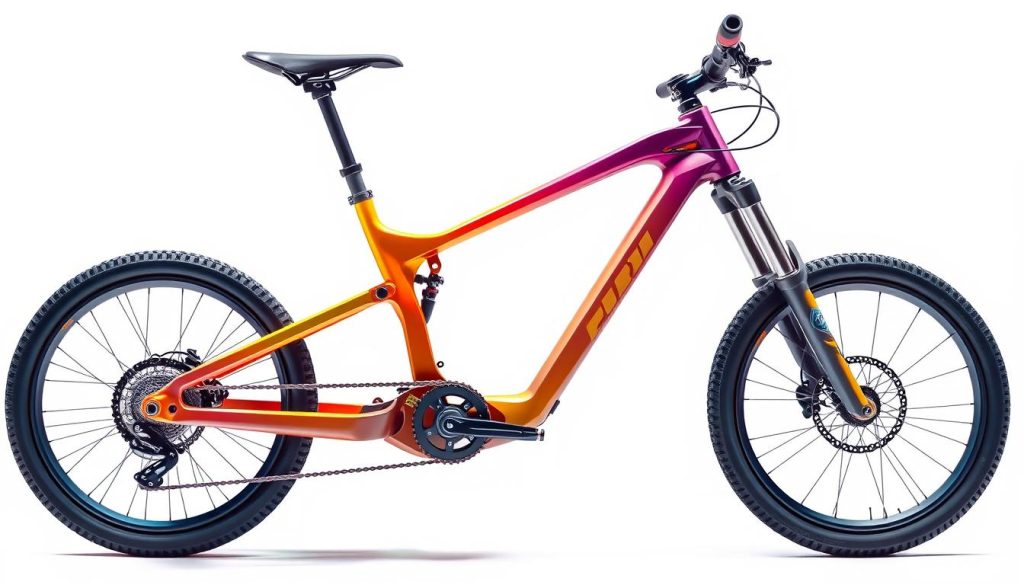
Choosing the right frame is key for electric mountain bikes. The material and design affect the bike’s performance, weight, and durability. Riders should know the unique traits of each frame material to make a smart choice.
Modern mountain e-bikes come in three main frame materials:
- Aluminum: Lightweight and affordable
- Perfect for those watching their budget
- Has a great strength-to-weight ratio
- Resists corrosion well
- Carbon Fiber: A top choice for performance
- Very light
- Reduces vibrations well
- Comes with a higher price tag
- Steel: Known for its durability
- Strong and lasts long
- Soaks up shocks well
- Heavier than other options
Today’s electric mountain bikes focus on blending battery and motor seamlessly. They have hidden battery spots and motors placed for balanced weight. These features boost the bike’s performance and feel.
When picking electric off-road bikes, look at the frame’s geometry. It should support electric assist well. Bikes with a lower center of gravity and smart weight placement ride better on tough trails.
Suspension Systems for Electric-Assist MTBs
Suspension technology is key for electric mountain bikes. The right suspension makes riding more comfortable and in control. It also boosts the bike’s trail capabilities.
Electric mountain bikes need advanced suspension systems. These systems handle the extra weight and power of electric parts. Modern e-bike suspensions offer smooth rides on tough terrain and keep performance high.
Front Fork Options
Front fork suspension is vital for electric mountain bikes. There are several main options:
- Air suspension forks – lightweight and adjustable
- Coil suspension forks – durable and consistent performance
- Hybrid suspension systems with lockout features
Rear Shock Configurations
Rear shock designs greatly affect the ride quality of electric mountain bikes. Various setups offer unique advantages:
- Single-pivot suspension for simple, reliable performance
- Multi-link designs for enhanced terrain absorption
- Specialized e-bike shock absorbers with increased durability
Terrain-Specific Adjustments
Advanced mountain e-bikes with pedal assist have suspension systems for specific terrains. Riders can tweak compression, rebound, and spring rates. This matches their style and the trail.
Professional mountain bikers suggest regular suspension maintenance. This ensures top performance and longevity of electric mountain bikes. Proper care and adjustments enhance the e-bike’s suspension capabilities.
Brake Systems and Safety Features
Safety is key when riding power-assisted off-road bikes. Modern motorized mountain bicycles have advanced brake systems. These systems help protect riders in tough terrain.
Hydraulic disc brakes are the best for e-bike safety. They offer strong stopping power and precise control. This is vital for steep and unpredictable mountain trails.
- Powerful hydraulic disc brakes with multiple piston calipers
- Integrated motor cut-off switches for instant power disconnection
- Enhanced brake lever sensitivity for quick response
Important safety features for power-assisted off-road cycling include:
- Advanced motor detection systems
- Automatic power reduction on steep descents
- Emergency brake assist technologies
Manufacturers add smart safety features to motorized mountain bicycles. Electronic brake sensors can spot potential collision risks. This adds extra protection for riders on tough trails.
Choosing a mountain e-bike with top-notch brake systems is smart. It lets riders confidently ride challenging trails while staying safe and in control.
Price Range and Value Comparison
Choosing the right electric mountain bike means knowing the price and what you get for it. There are many options, from affordable to high-end. Each price has its own set of features for electric-assist MTBs.
When looking at mountain e-bikes, think about your budget and what you need. Here’s a guide to help you choose the best electric mountain bike for you.
Entry-Level Options
If you’re on a tight budget, there are good electric-assist MTBs for $1,500-$2,500. These bikes usually have:
- Basic pedal assist
- Lower-powered motors (250-350W)
- Shorter battery range (25-35 miles)
- Standard aluminum frames
Mid-Range Selections
For serious trail riders, mid-tier electric mountain bikes are a better choice. They cost between $2,500-$4,500 and offer better performance.
- More powerful motors (350-500W)
- Extended battery range (40-60 miles)
- Better suspension systems
- Advanced component quality
Premium Models
At the top, high-end electric-assist MTBs are the best in technology. They cost from $4,500-$8,000 and have the latest features.
| Feature | Premium E-MTB Specifications |
|---|---|
| Motor Power | 500-750W |
| Battery Range | 60-80 miles |
| Frame Material | Carbon Fiber |
| Component Quality | High-End Shimano/SRAM |
Choosing the right electric mountain bike depends on your riding style, budget, and what you expect. Look at each price range to find the best fit for your trail riding adventures.
Maintenance Tips for Battery-Powered Trail Riding
Keeping your pedal-assist mountain e-bikes in top shape is key. Regular care extends their life and keeps them running well on tough trails. Clean your e-bike after each ride, paying special attention to the motor, battery, and suspension.
Battery care is vital. Store it at room temperature and avoid letting it fully drain. Keep the charge between 30% and 80% when not in use. This helps it last longer. Also, check the battery connections monthly and keep them clean and tight.
Electronic parts need extra care. Regularly check the motor mounts and electrical connections for wear or looseness. Use water-resistant sprays on your e-bike. Getting a professional check-up once a year can catch issues early and keep your bike running smoothly.
Tire pressure and brake system maintenance are also crucial. Keep tire pressure right and check brake pads after hard rides. By following these tips, your e-bike will be reliable and ready for many exciting trails.