
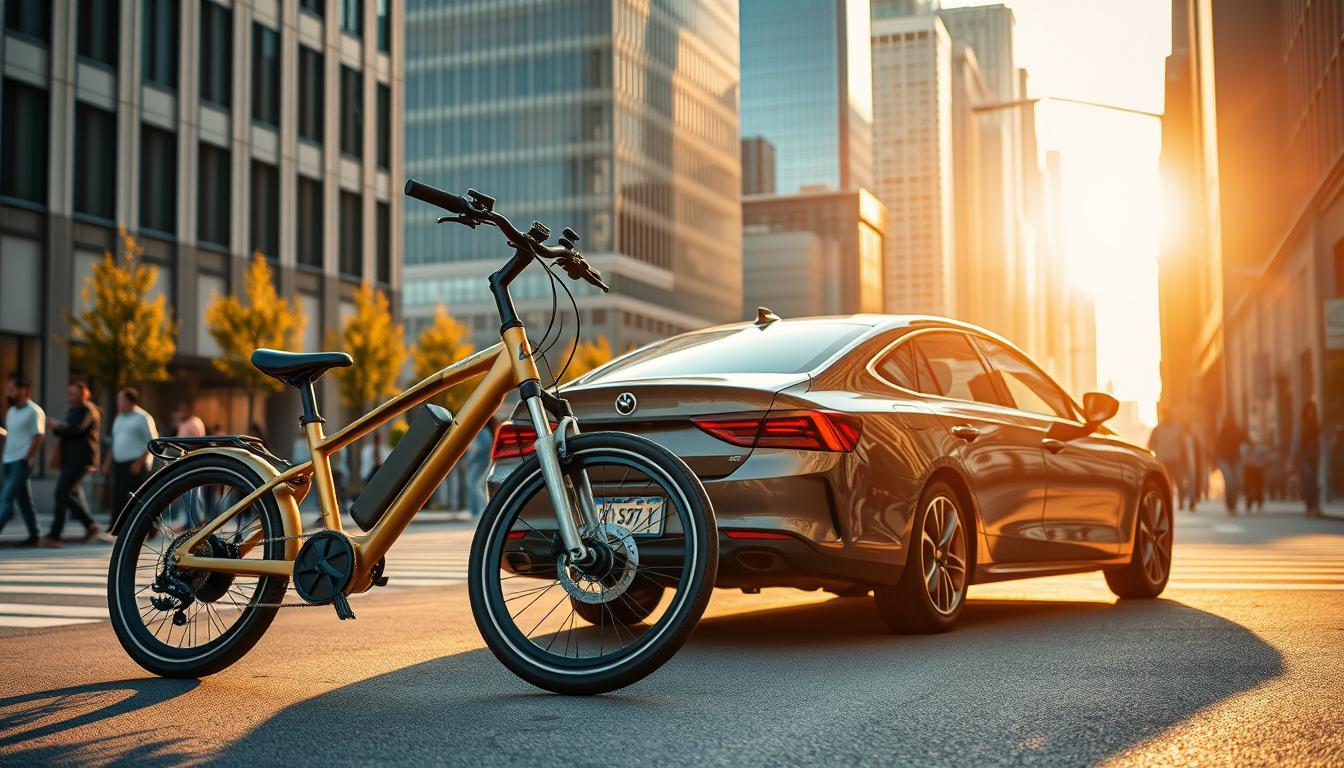
Urban transportation is changing fast. The debate over e-bikes vs cars for commuting is growing. People want smarter ways to get around cities, saving money and fitting their lifestyle.
Electric bikes are becoming more popular. They offer a good alternative to cars. They are flexible, affordable, and good for the environment, appealing to those who care about health and money.
Deciding between an e-bike and a car depends on many things. These include your lifestyle, budget, and how you feel about the environment. We’ll look at all these factors to help you choose the best way to commute.
As cities get busier and we care more about the planet, knowing the pros and cons of e-bikes vs cars is key. This guide will help you make your daily travel better.
Understanding the Cost Comparison: E-bike vs Car for Commuting
Choosing between an e-bike and a car for daily commuting is a big decision. It’s important to think about how it will affect your budget. Knowing the costs of each option is key.
Transportation costs vary a lot between e-bikes and cars. Let’s look at the main costs to help you decide.
Initial Purchase and Setup Costs
E-bikes are much cheaper to start with. A good e-bike costs between $1,000 and $3,000. Cars, on the other hand, are much more expensive:
- E-bike average cost: $1,500
- New car average cost: $48,000
- Used car average cost: $28,000
Daily Operating Expenses
There are big differences in daily costs too. E-bikes save a lot of money every day:
| Expense Category | E-bike | Car |
|---|---|---|
| Fuel/Charging Costs | $5-10/month | $150-250/month |
| Parking Fees | $0 | $100-300/month |
| Insurance | $0 | $100-200/month |
Long-term Maintenance Requirements
E-bikes need much less maintenance and cost less than cars. E-bike maintenance is $50-$200 a year. Car maintenance can be over $1,000 a year.
- E-bike annual maintenance: $50-$200
- Car annual maintenance: $500-$1,500
- Potential repair costs: Much lower for e-bikes
Looking at these costs can help you choose a more affordable and green way to get around. It fits your budget and lifestyle better.
Environmental Impact and Sustainability Benefits
Choosing between an e-bike and a car for commuting is more than just convenience. It affects the environment and helps fight climate change.
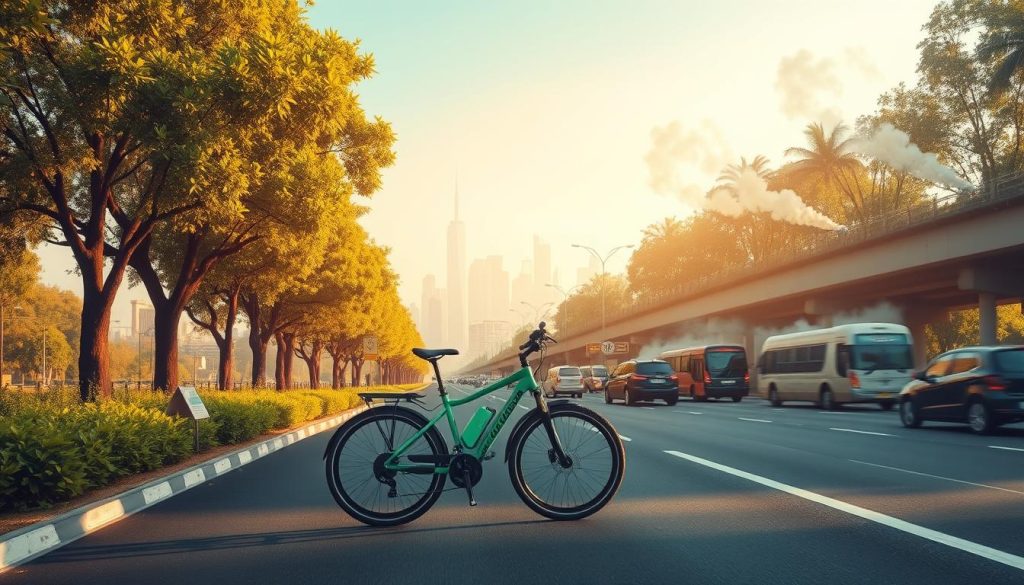
E-bikes are a great way to cut down on carbon emissions in cities. They don’t produce much pollution, unlike cars. A car makes about 404 grams of CO2 per mile. An e-bike makes less than 10 grams.
Carbon Footprint Analysis
The carbon footprint of different ways to travel shows big differences:
- Cars make a lot of pollution
- E-bikes use electric power and are kinder to the planet
- Batteries are getting better for the environment
Energy Consumption Differences
Range anxiety is a worry for some e-bike users. But, today’s e-bikes can go 20-50 miles on one charge. This is enough for most city trips and uses much less energy than cars.
Urban Air Quality Considerations
Cities are getting cleaner thanks to e-bikes. Fewer car emissions mean better air quality. This helps everyone’s health.
Choosing an e-bike is more than just a way to get around. It’s a choice for a greener, healthier city.
Time Management and Traffic Navigation
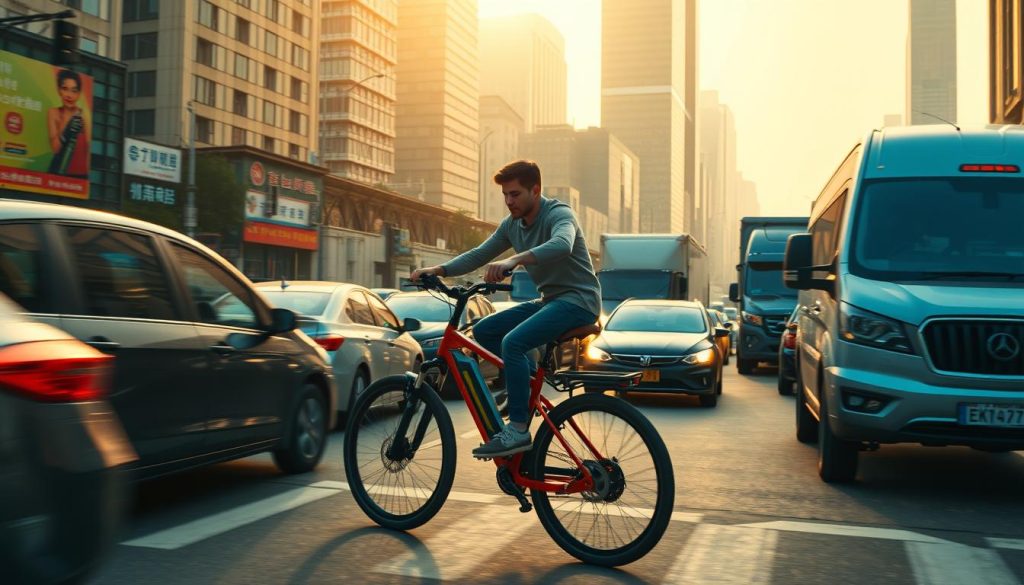
Commuting in cities is tough. E-bikes make it easier than cars. They can quickly move through tight spots and avoid stuck traffic.
In crowded cities, e-bikes stand out. Cars get stuck, but e-bike riders can use bike lanes and paths cars can’t.
- E-bikes reduce commute times by 30-50% during rush hours
- Bike lanes often provide faster transit than congested car lanes
- Compact size allows for more flexible routing
In cities like San Francisco, New York, and Chicago, e-bikes save a lot of time. They help avoid traffic, making them a popular choice.
| Commute Metric | E-bike | Car |
|---|---|---|
| Average Rush Hour Speed | 12-15 mph | 5-8 mph |
| Parking Convenience | Extremely Easy | Often Challenging |
| Route Flexibility | High | Low |
Weather and road conditions affect travel times. E-bikes work best in mild weather and good roads. Plan your route and use other transport in bad weather.
Health and Lifestyle Advantages of E-bike Commuting
E-bike commuting changes how we travel every day. It mixes exercise into our daily lives. This makes it easy for city workers to stay healthy without losing convenience.

Physical Activity Benefits
E-bikes make it easy to get fit. You can change how hard you pedal. This lets you work out at your own pace. Studies show e-bike riders get healthier:
- Improved heart health
- Stronger muscles
- More exercise every day
- Less chance of getting sick from sitting too much
Mental Well-being Improvements
Using an e-bike helps your mind too. It lowers stress and gets you outside. This mix of gentle exercise and nature fights off work stress and boosts your mood.
| Mental Health Benefit | Impact |
|---|---|
| Stress Reduction | 25% less stress hormones |
| Mood Enhancement | More happy hormones |
| Cognitive Function | Sharper focus and clearer thinking |
Work-Life Balance Enhancement
E-bikes make it easy to fit in exercise. They remove excuses for not working out. This way, you can stay fit while keeping up with work.
Practical Considerations for Daily Commuters
Choosing between an e-bike and a car for daily commuting has many factors to consider. Parking is a big issue. Cars often take up a lot of space and can be pricey and time-consuming.
E-bikes are a better choice for many. They need little parking and can be taken right into offices or bike racks.
Convenience is key when picking a commute method. E-bikes are great for short to medium trips. They help you avoid traffic, save on fuel, and find parking easily.
They also come with cargo attachments. This makes carrying groceries and small packages simple.
Safety is crucial for all commuters. E-bike riders need helmets, reflective clothes, and lights. Knowing the rules of the road and riding safely can lower risks.
Many cities now have bike lanes. This makes e-bike riding safer than before.
The best choice depends on your lifestyle and commute. E-bikes are great for city travel, but cars might be needed for longer trips or certain jobs. Think about what you need and the benefits of each option to make the best choice.