
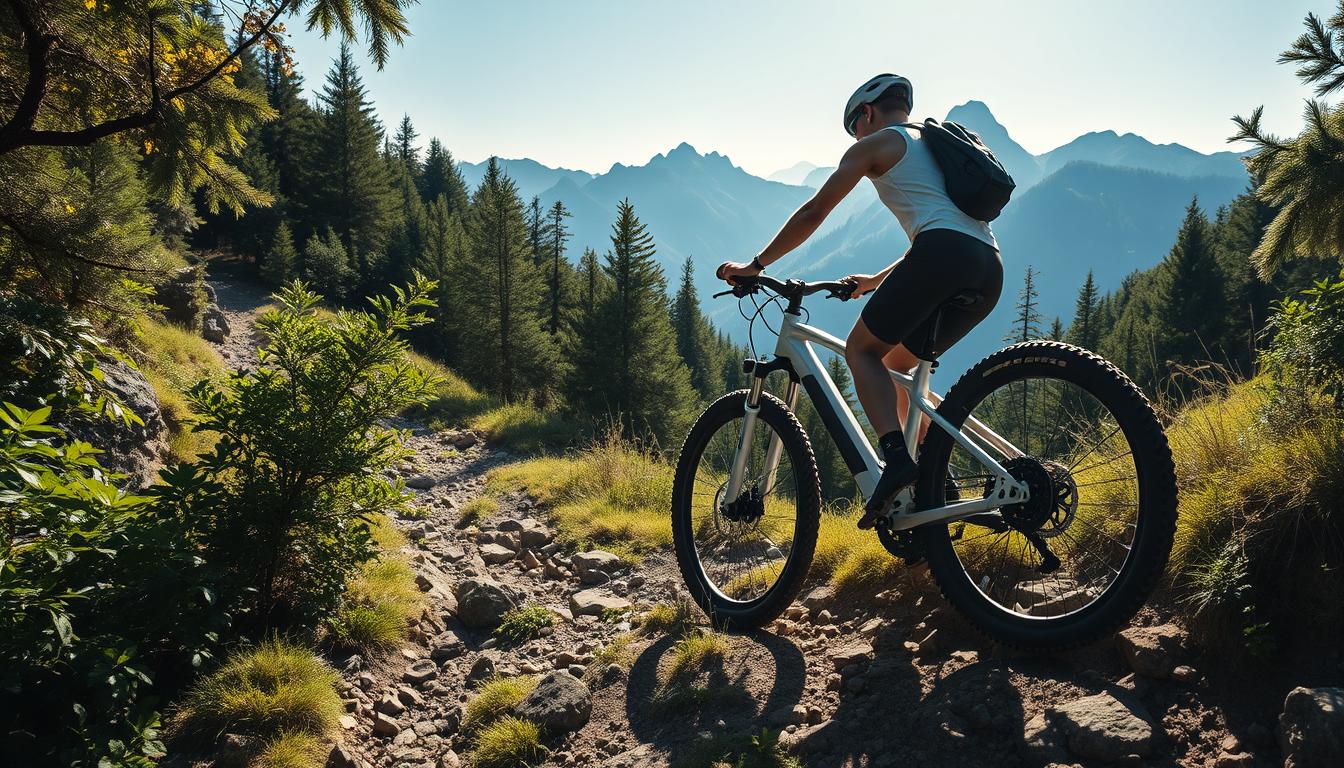
Electric bikes have changed how we move around cities and trails. Mid-drive motors are key for better performance. They give riders more power and efficiency on tough paths.
Getting to know mid-drive motors means diving into electric bike tech. Motors placed near the cranks help with weight and power. This makes steep hills easier for all riders.
Today’s electric bikes with mid-drive motors climb like pros. They work well on city streets and mountain trails. Riders enjoy smoother rides on tough routes.
This guide will dive into mid-drive motor climbing ability. We’ll look at tech, performance, and tips for better rides on different terrains.
Understanding Mid-Drive Motor Technology for Hill Climbing
Electric bicycles have a new feature for climbing hills. Mid-drive motors are a big change. They put the motor in the middle of the bike.
Mid-drive motors give great power for hills. They are placed in a special way. This lets them work better than other motors.
Core Components of Mid-Drive Systems
Mid-drive motors have a few main parts:
- Centrally mounted electric motor
- Precision torque sensors
- Advanced gear integration mechanism
- Sophisticated electronic control unit
Power Transfer Mechanics
Mid-drive motors connect directly to the bike’s gears. This makes power transfer better. It helps a lot when climbing hills.
Gearing Integration Benefits
Mid-drive motors work well with bike gears. This brings many benefits:
- Enhanced climbing efficiency
- Improved weight distribution
- More natural riding experience
- Increased overall system performance
Riders will climb hills much better. Mid-drive technology makes electric bikes strong and useful.
Mid-Drive Motor Climbing Ability: Key Performance Factors
To understand mid-drive motor climbing ability, we must look at key performance factors. These factors are crucial for tackling steep hills. Electric bike fans know that not all motors are the same when facing tough terrain.
Several important elements affect a mid-drive motor’s climbing ability:
- Motor power output (watts)
- Torque characteristics
- Gear ratio optimization
- Weight distribution
- Rider input dynamics
The mid-drive motor’s design is key to its climbing power. Unlike hub motors, mid-drive systems use the bike’s drivetrain. This makes power transfer more efficient on steep hills.
| Performance Factor | Impact on Climbing | Optimal Range |
|---|---|---|
| Motor Power | Direct hill climbing strength | 250-750 watts |
| Torque | Initial acceleration | 70-90 Nm |
| Gear Ratio | Climbing efficiency | 1:1 – 1:3 range |
Riders looking for top performance on steep hills should choose mid-drive motors. Look for high torque and smooth gear integration. The motor’s harmony with the bike’s gearing is what matters most.
Comparing Hub Motors vs Mid-Drive for Steep Ascents
Electric bike fans know motor design is key for uphill rides. The choice between hub motors and mid-drive motors affects climbing performance.
Electric bike motors tackle steep hills in different ways. Mid-drive motors have special benefits for tough uphill rides.
Torque Distribution Differences
Mid-drive motors are great at distributing torque. They use the bike’s gear system to:
- Maximize power transfer through multiple gear ratios
- Optimize climbing efficiency on steep terrain
- Maintain consistent power output across different slopes
Weight Distribution Impact
Motor placement affects climbing performance. Mid-drive motors sit in the center of the bike frame. This:
- Improves overall bike balance
- Enhances stability during steep ascents
- Reduces rider fatigue on challenging climbs
Efficiency Ratings During Climbs
Efficiency is key when comparing mid-drive vs hub motor climbing. Mid-drive systems usually have:
- Higher energy conversion rates
- Better mechanical advantage on inclines
- More natural riding experience
Riders looking for the best uphill performance will find mid-drive motors are a smart choice. They help conquer tough hills with more power and precision.
Optimal Gear Selection for Maximum Climbing Power
Learning how to choose the right gears is key for e-bike climbing power. Electric bikes perform better on hills when you pick the right gear mix. Knowing how gears work with the motor’s power is important.
Steep hills need a smart gear plan. Keep a steady pace and let the motor do its best work. Pick gears that keep your pedaling at 60-80 times a minute.
- Start with lower gears when approaching an incline
- Shift smoothly before the gradient becomes challenging
- Anticipate terrain changes to maintain momentum
- Use the motor’s power curve to your advantage
Each hill is different, so you need a different gear plan. For gentle slopes, use mid-range gears. But for steep hills, go for the lowest gear to get the most power. Modern motors do best with steady, not hard, pedaling.
| Gradient | Recommended Gear Strategy | Ideal Cadence Range |
|---|---|---|
| Mild Incline (0-5%) | Mid-range gears | 70-80 RPM |
| Moderate Climb (5-10%) | Lower gears | 60-75 RPM |
| Steep Climb (10-15%) | Lowest available gears | 50-65 RPM |
Get to know your e-bike’s motor well. This will help you pick the best gears instinctively. Every ride is a chance to get better at climbing and using your bike’s full power.
Battery Management During Extended Climbs
Electric bike riders face unique challenges on steep terrain. Understanding how elevation gain affects your ride is key. It helps maximize performance and range on mountain routes.
Electric bike batteries work hard on long climbs. The power needed and constant elevation changes affect energy use. Riders must grasp these patterns to improve their ride.
Power Consumption Patterns
Battery drain goes up on uphill rides for a few reasons:
- More power is needed from the motor
- Energy is used against gravity all the time
- Steep slopes add more resistance
Range Optimization Techniques
Riders can manage battery use on hills with smart strategies:
- Use lower power modes on gentle slopes
- Change gears wisely to ease motor work
- Keep a steady pedaling pace
Temperature Management
Battery performance is tied to temperature. Extreme heat or cold affects how well it works.
| Temperature Range | Battery Performance Impact |
|---|---|
| 32-77°F (0-25°C) | Best Performance |
| Below 32°F (0°C) | Less Capacity (-20% to -40%) |
| Above 95°F (35°C) | Less Efficient (-10% to -30%) |
Smart riders watch battery temperature. They adjust their ride to keep performance high on tough hills.
Terrain Analysis and Motor Performance
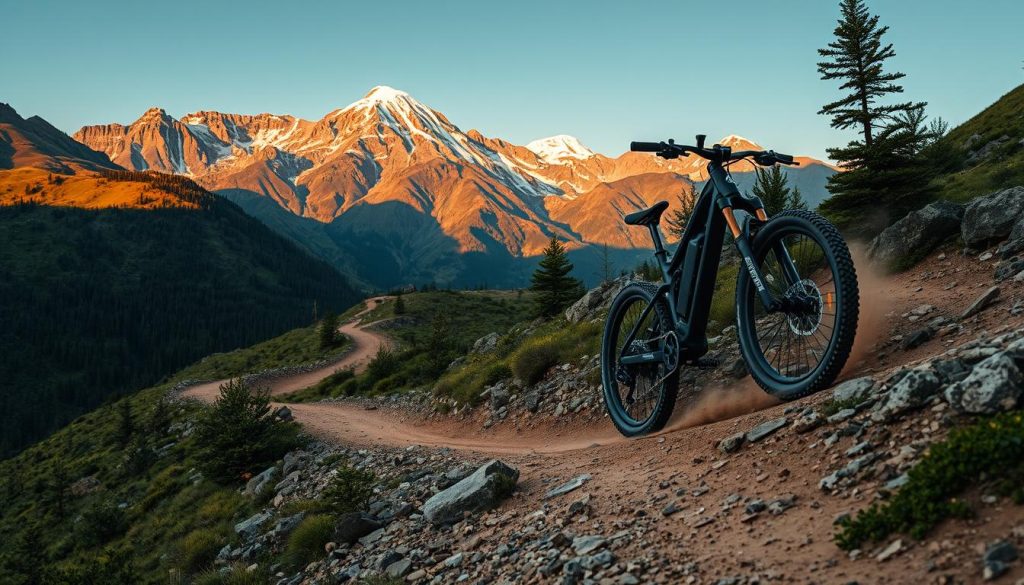
Mid-drive motors need a smart plan for different terrains. Knowing how landscapes affect motor and rider is key.
How well an electric bike does on steep hills depends on several things. Riders must think about the hill’s angle, the surface, and how high it is. This helps use the bike’s power best.
- Rocky surfaces challenge motor power transfer
- Loose gravel reduces traction and motor effectiveness
- Steep gradients demand precise gear selection
- Elevation changes impact battery consumption
The type of surface affects how well the motor works. Dirt paths are better than rocky or sandy ones. Riders should change power settings when the terrain changes.
| Terrain Type | Motor Efficiency | Power Consumption |
|---|---|---|
| Compact Trail | High | Low |
| Rocky Terrain | Medium | High |
| Steep Gradient | Low | Very High |
Knowing how terrain affects the motor helps riders get the most out of their bike. Being ready to adjust and manage power makes mountain biking better.
Essential Maintenance for Peak Climbing Performance
Keeping your electric bike’s mid-drive motor in good shape is key for climbing well. Regular care makes sure your e-bike does its best on tough hills and steep paths.
Good maintenance boosts your e-bike’s climbing power and overall performance. Cyclists who regularly check their bike can make it last longer and climb better.
Drive System Care
Looking after your e-bike’s drive system is important. You should:
- Regularly lubricate the chain
- Check if the gears are aligned
- Look for wear on the chainring and cassette
- Clean the drivetrain parts
Battery Health Monitoring
Battery health affects how well your electric bike climbs. Follow these tips for battery care:
- Don’t let the battery run out completely
- Keep it in a moderate temperature
- Charge it between 20-80% full
- Use the charger the maker suggests
Mechanical Inspection Points
Do these mechanical checks to keep your motor climbing strong:
- Check the motor mounting bolts
- Look at the electrical connections
- Check the suspension parts
- Make sure the brakes work right
Regular maintenance turns your electric bike into a great climbing partner. It boosts performance and makes your bike last longer.
Real-World Performance Testing and Results
We tested mid-drive motors to see how they handle steep hills. Our tests looked at different electric bike motors on various terrains. We wanted to know how well they climb.
We checked three important things:
- How much power they use when climbing
- How efficient they are on steep hills
- How they react to different slopes
We tried to make our tests real-world. We tested on everything from small hills to very steep mountain paths. We saw how different motors did on steep hills, with different riders and terrains.
Our tests showed big differences in motor performance:
- The best motors kept their power on 15-20% grade slopes
- Some motors were really good at going up hills without using too much battery
- How well motors cool down was key for climbing a long time
Our data showed that choosing the right gear and riding style matters a lot. If you want to do well on steep hills, look at the motor’s torque, battery size, and gear system. These things help a lot.
Maximizing Motor Efficiency on Various Gradients
Learning to ride uphill well means knowing how e-bike motors work on different terrains. By using smart techniques, you can make climbing easier. This is all about using the right e-bike torque for hills.
How well you climb hills depends on many things. These include how you ride, the motor’s power, and how you use power. To climb hills well, start by knowing your e-bike’s strengths.
Technique Adjustments for Different Slopes
- Shallow gradients (0-5%): Maintain steady pedaling rhythm
- Moderate slopes (5-10%): Shift weight forward, engage core muscles
- Steep inclines (10-15%): Use lower gears, distribute body weight
- Extreme gradients (15%+): Alternate between seated and standing positions
Power Level Selection Strategies
| Gradient | Recommended Power Level | Energy Efficiency |
|---|---|---|
| 0-5% | Eco/Low | High |
| 5-10% | Medium | Moderate |
| 10-15% | High | Lower |
| 15%+ | Turbo/Max | Lowest |
Using power wisely helps save battery and keeps you climbing smoothly. By changing how you ride and use power, you can use your motor better. This also helps you save energy when going up tough hills.
Common Climbing Challenges and Solutions
Electric bikes face special challenges when riding in mountains. The choice between mid-drive and hub motors affects how well you climb. This is especially true for steep hills and tough landscapes.
Riders often face big problems when going up steep hills:
- Motor overheating during long climbs
- Power stops unexpectedly
- Shifting gears is hard with heavy loads
- Keeping traction on steep, uneven paths
To solve these problems, experienced riders suggest a few things. Choosing the right gear is key for mid-drive motors. They say to shift before the terrain gets tough to keep power smooth.
Keeping the motor cool is also important. Mid-drive motors get very hot when climbing hard. Here’s how to avoid overheating:
- Switch between pedal assist levels
- Take short breaks during long climbs
- Make sure air can get to the motor
- Watch the battery and motor temperature
Regular maintenance helps your mid-drive motor work better. Check the system often, update the firmware, and inspect the mechanics. This will make your bike climb better and avoid sudden failures.
Future Developments in Mid-Drive Climbing Technology
The world of electric bikes is changing fast. Companies are working on new mid-drive motor tech. This tech will make e-bikes better at climbing hills.
New battery tech is coming with more power and quick charging. Bosch and Shimano are making smart systems. These systems adjust power based on the hill and how hard you’re pedaling.
Electric bikes will soon use smart learning to save energy. They’ll be lighter and more efficient thanks to new materials. Riders will enjoy better control and performance on steep hills.
Future e-bikes will connect to your phone for more control. You’ll be able to adjust settings and see how far you’ve climbed. Electric bikes will soon be even better for exploring tough terrains.