
Cycling fans looking for power on hills know mid-drive motors are key. Electric bikes have changed steep terrain cycling. They make tough rides exciting.
Finding the right mid-drive motor is complex. It involves understanding technical specs and how they work in real life. Riders need to know about motor mechanics and how power is spread.
This guide covers what cyclists need to know about mid-drive motors for hills. We’ll look at torque and motor types. Our goal is to help you choose the best electric bike for hills.
Whether you love mountain biking or just need to get up urban hills, mid-drive motors matter. Our review focuses on what makes a motor great for hills. You’ll learn what to look for in a motor.
Experts in cycling and engineering helped make this guide. We’ll dive into motor specs and how they perform. You’ll see what makes top mid-drive motors stand out.
Understanding Mid-Drive Motors for Hill Climbing
E-bike fans looking for better performance on tough hills will love mid-drive motors. These advanced systems change how we climb hills. They give riders amazing power that beats old motor designs.
Mid-drive motors are a smart way to power electric bikes. They sit in the bike’s middle, unlike hub motors. This spot gives them an edge for climbing hills.
Power Distribution Mechanics
Mid-drive motors are great because they share power smartly. They work with the bike’s gears for the best efficiency. This brings many benefits:
- Enhanced weight distribution
- Improved climbing capabilities
- More natural riding experience
- Better energy management
Torque vs Speed Considerations
It’s important to know how torque and speed work together. Mid-drive motors are top at making torque. This means they help you climb hills better.
Riders get smoother power and faster starts on tough paths. The motor’s spot in the bike makes power go to the wheels better. This makes steep hills easier to handle.
Top Features to Consider When Choosing a Mid-Drive Motor for Hills
Choosing the right mountain e-biking motor is key. Riders facing tough terrain need to know what makes a mid-drive motor great for hills.
Power output is the top thing to think about for climbing. Look for motors that give steady torque on all slopes. The best mid-drive motor makes tough hills easy to ride.
- Torque Rating: Crucial for steep terrain performance
- Power Output: Determines climbing capability
- Efficiency: Maximizes battery range and motor performance
- Temperature Management: Ensures consistent power delivery
Technical specs are important when picking a motor. Cadence sensors and smart power systems make top mountain e-biking motors stand out.
| Motor Feature | Performance Impact | Recommended Range |
|---|---|---|
| Torque | Hill Climbing Ability | 70-90 Nm |
| Power Output | Overall Climbing Performance | 250-750 Watts |
| Efficiency | Battery Range | 85-95% |
For the best climbing motors, look for mid-drive systems with good thermal control. Also, make sure they work well with gears. These features help you perform well on all kinds of mountain trails.
Comparing Hub Motors vs Mid-Drive Motors for Steep Terrain
Electric bike fans know the right motor is key for climbing hills. The choice between hub and mid-drive motors is vital for the best hill climbing. It’s all about finding the best electric bike hill assist.
There are two main types of electric bike motors. Each has its own strengths for tough hills. Knowing these differences helps riders choose the best for their needs.
Efficiency Differences
Mid-drive motors are better at climbing steep hills than hub motors. They sit in the middle, sending power straight to the bike’s gears. This makes them more efficient for hills.
- Better weight distribution
- Enhanced torque multiplication through bike gears
- More natural pedaling dynamics
- Improved energy conservation
Weight Distribution Benefits
Where the motor is placed affects how the bike handles. Mid-drive motors are in the middle, making the bike stable on hills. This helps riders feel less tired and have better control.
Performance on Various Gradients
Hub and mid-drive motors perform differently on hills. Mid-drive motors do better on very steep hills. They use the bike’s gears to keep momentum and efficiency.
For reliable hill climbing, mid-drive motors are the best choice. They offer the most effective electric bike hill assist technology.
Battery Performance and Range on Challenging Slopes
Climbing steep terrain is tough. E-bike riders need great battery efficiency on slopes. Knowing how battery capacity affects e-bike climbing power is key for mountain and hill riders.
Several factors affect battery performance on slopes:
- Battery capacity and voltage ratings
- Motor efficiency during uphill rides
- Rider weight and terrain steepness
- Riding style and energy consumption
Modern e-bike batteries aim to boost e-bike climbing power. They give consistent energy output. Lithium-ion batteries are top-notch, offering better efficiency on tough terrain.
Riders can improve battery range by using smart riding techniques. They should also understand their e-bike’s power management system.
Battery efficiency on slopes depends on several key elements:
- Selecting the right battery capacity for your riding needs
- Maintaining proper tire pressure
- Using appropriate pedal-assist modes
- Planning routes with battery conservation in mind
Professional e-bike makers now focus on batteries that perform well on different terrains. New battery technologies keep improving range and efficiency. This lets riders confidently tackle even the toughest slopes.
Premium Mid-Drive Motors for Mountain E-Biking
Mountain e-biking fans know how important top motors are. They help tackle tough trails. The best motors offer great power, dependability, and efficiency.
Choosing the best motors needs careful thought. Experts say to look at certain key features. These features show if a motor is truly top-notch.
High-End Motor Specifications
- Peak power output between 500-750 watts
- Torque range of 80-120 Nm for steep hill climbing
- Lightweight design under 4.5 kg
- Integrated cadence and torque sensing technology
Professional Rider Recommendations
Top e-bike riders want motors that work smoothly and quickly. The best motors fit well with the bike. This ensures great performance on all kinds of trails.
Durability Factors
Choosing premium motors means picking ones made to last. Look for strong aluminum housing, cool systems, and waterproof connections. These keep the motor safe from water and dirt.
Riders should check how reliable a motor is over time. Look at the warranty and how well it performs on trails.
Gear Ratio Optimization for Hill Climbing
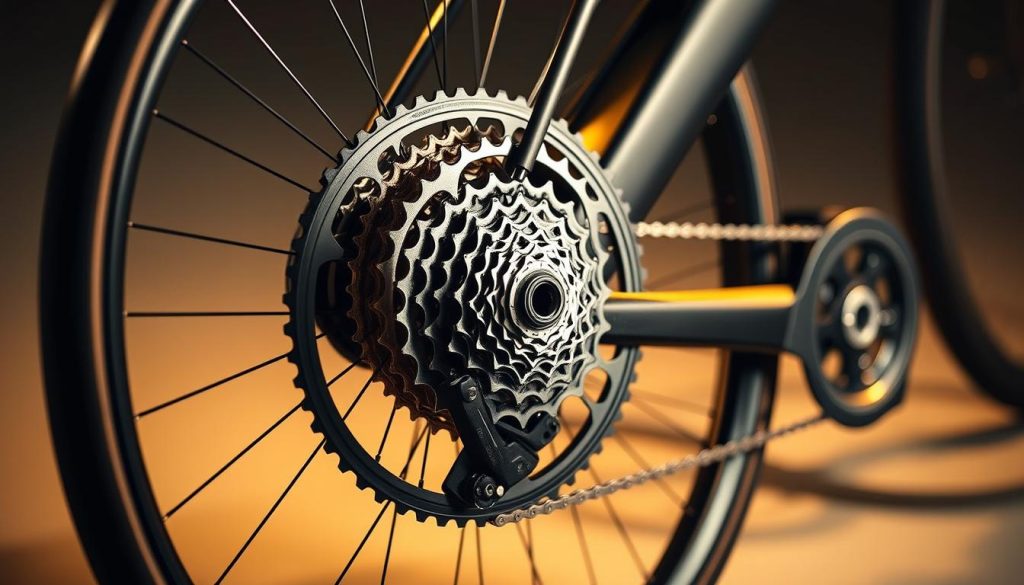
Learning about gear ratio optimization is key for tackling tough terrain with your e-bike. The right gear setup boosts torque on hills, making climbs easier and more efficient. Mid-drive motors work best with smart gear choices that use motor power and rider effort well.
Understanding gear ratio optimization means looking at a few important things:
- Matching motor torque to terrain difficulty
- Selecting the right chainring and cassette
- Keeping a good pedaling cadence
- Reducing energy loss on steep hills
To improve hill climbing, try a few key strategies. Wide-range cassettes offer more flexibility, helping power transfer on different slopes. The best gear ratio balances motor help and human effort, easing the strain on tough climbs.
Pro e-bike riders suggest:
- Go for cassettes with wide gear ranges (10-50 teeth)
- Try different chainring sizes
- Practice smooth gear changes
- Know your motor’s peak torque range
Gear ratio optimization makes tough climbs easier. By picking the right parts and knowing your e-bike’s limits, you can perform better on any terrain.
Installation and Maintenance Tips for Mid-Drive Motors
Keeping your mid-drive motor in good shape is key for the best electric bike hill assist. The right setup and regular upkeep can make your electric bike last longer and work better on tough hills.
Setting up your mid-drive motor right needs focus and care. It’s important to know the key steps to get the most out of your electric bike on hills.
Professional Setup Guidelines
- Carefully align the motor with the bike frame’s mounting points
- Ensure proper chain tension and gear alignment
- Check electrical connections for secure mounting
- Verify torque specifications for motor attachment
Regular Maintenance Schedule
| Maintenance Task | Frequency | Purpose |
|---|---|---|
| Clean motor and connections | Every 2-3 rides | Prevent dirt buildup |
| Check motor mounting bolts | Monthly | Ensure secure installation |
| Inspect electrical connections | Every 3 months | Prevent potential electrical issues |
Troubleshooting Common Issues
- Unusual motor noise: Check for loose components or debris
- Reduced hill climbing performance: Inspect battery and motor connections
- Overheating during steep climbs: Verify cooling system and motor ventilation
- Inconsistent power delivery: Examine gear system and motor alignment
Spending time on maintenance keeps your mid-drive motor reliable for tough hills. Regular care also makes your electric bike last longer and perform better.
Cost Analysis: Investment vs Performance Benefits
Buying a top-notch mid-drive motor for e-bike climbing power needs careful thought about money. The first cost might look high, but the long-term gains can be worth it. Motors for climbing vary from $500 to $1,500, based on power and features.
When looking at an e-bike motor’s value, consider a few important money points:
- Initial purchase price of the motor
- Installation costs
- Potential maintenance expenses
- Long-term performance improvements
- Extended riding capabilities
The main money benefit is better e-bike climbing power. Strong mid-drive motors cut down on effort, letting riders conquer tough paths without using too much battery. This means less upkeep and longer battery life over time.
Riders will see big performance boosts that make the first cost worth it. A good mid-drive motor lets you explore more, ride longer, and take on trails you couldn’t before.
In the end, picking the right motor for climbing is about weighing first costs against future gains. Clever cyclists see this as an investment in their riding, not just a buy.
Real-World Performance Testing and User Experiences
We tested mid-drive motors for steep terrain cycling. Professional mountain bikers and cycling fans helped us. They rode on tough landscapes to see how motors performed.
The tests showed big differences in how motors handled hills. This shows why picking the right motor is key for different terrains.
Riders in California’s Sierra Nevada and Colorado’s Rocky Mountains shared their e-bike stories. They rode electric mountain bikes with top-notch mid-drive motors. These bikes climbed well, even on steep slopes.
Tests showed mid-drive motors with more torque did better than hub motors. Cyclists felt more efficient and had smoother power on hills. How well the motor and battery worked together mattered a lot.
Mountain biking pros said mid-drive motors changed their game. These motors give smart power and handle hills well. Our study backs up that a good mid-drive motor makes a big difference.