
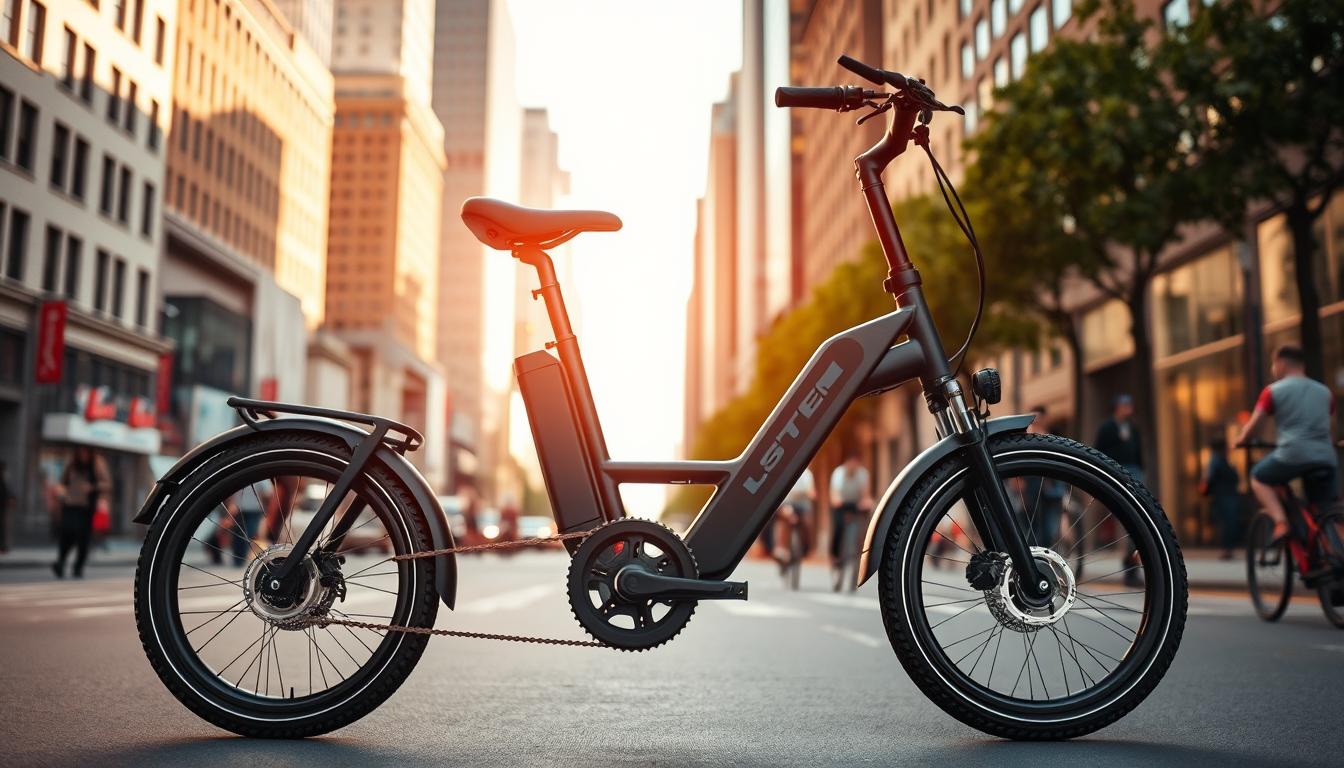
City living often means tight spaces and crowded transit. Enter compact electric bikes designed to collapse into portable sizes. These innovative rides blend pedal power with battery assistance, offering a fresh solution for commuters juggling limited storage or mixed transportation needs.
Modern models prioritize convenience without sacrificing performance. While they weigh more than standard bicycles, advancements in frame materials and motor efficiency make them practical for daily use. Experts like Rémy Rossi caution against overhyped designs, emphasizing that true value lies in balanced engineering and real-world functionality.
Storage-friendly features are a major draw. Riders can tuck these bikes under desks or carry them onto trains, eliminating parking headaches. Battery range and brake systems vary by model, so prioritizing your commute needs is key.
This guide cuts through the noise. We’ll explore how smart engineering tackles urban challenges, compare top-performing options, and share insights from everyday riders. Whether you’re dodging subway delays or bridging gaps between transit hubs, let’s unpack whether these space-saving rides fit your lifestyle.
Understanding Folding E-Bikes: A Quick Overview
At their core, collapsible electric cycles solve a simple equation: maximum portability meets pedal-assisted power. These aren’t just standard bicycles with hinges slapped on—they’re meticulously engineered machines built to shrink without sacrificing ride quality.
What Defines a Folding E-Bike?
A true folding model uses strategic joints and latches to collapse its frame. Brands like Tern employ horizontal folds that split the bike near its midpoint, while Brompton’s vertical fold tucks wheels inward. Handlebars often flip down, and pedals might retract or detach to save space.
Battery placement matters too. Some designs integrate power packs into the frame to maintain balance, while others mount them externally for easier removal. The best systems let you fold the bike in under 15 seconds—a lifesaver when rushing between trains.
Different Folding Mechanisms Explained
Three main styles dominate the market:
- Mid-fold: Splits the frame centrally, popular for compact storage
- Triangle hinge: Keeps wheels aligned, better for stability
- Vertical stack: Ideal for tight spaces like apartment closets
Motor positioning affects foldability too. Rear-hub motors simplify the design but add weight, while mid-drive units stay centered for easier lifting. Testers praise bikes that maintain ride feel despite their break-apart frames—proof that smart engineering beats mere novelty.
Key Benefits for Urban Commuters
Navigating crowded cities demands smart solutions that adapt to limited spaces. Collapsible two-wheelers shine here, offering advantages traditional cycles can’t match—especially when blending pedal power with modern tech.
Space-Saving and Easy Storage
Apartment dwellers rejoice—these bikes disappear when not needed. Many models fold to the size of a suitcase, slipping under desks or tucking into closets. One Chicago rider stores theirs behind a studio apartment door without blocking walkways.
Clever hinges and latches maintain structural integrity while minimizing bulk. High-end designs use aircraft-grade aluminum to keep weight manageable, often under 40 pounds. This makes carrying them up stairs or onto elevators feasible.
Trunk-ability and Portability
Need to bridge gaps between transit stops? These bikes fit in most car trunks, enabling hybrid commutes. A San Francisco user combines driving across bridges with cycling through downtown—all without roof racks.
Public transport compatibility is another win. Buses and trains welcome folded units during rush hour. Safety features like puncture-resistant tires and responsive brakes handle stop-and-go traffic, giving riders confidence in chaotic streets.
Folding E-Bikes: Are They Worth It for Urban Commuters?
Compact electric two-wheelers promise freedom from traffic jams and parking nightmares. But how do they hold up when the rubber meets the road? Let’s break down their real-world value through daily commuter experiences.

Performance and Practicality in City Life
Most riders report smooth rides across potholed streets and steep inclines. The Tern Vektron Q9, for example, tackles San Francisco hills effortlessly with its 250W motor. Folding mechanisms like Brompton’s vertical hinge let users collapse their ride in 10 seconds—faster than waiting for a traffic light.
However, extra weight from reinforced frames and batteries matters. A 45-pound bike feels manageable until you’re hauling it up subway stairs. Testers praise models under 35 pounds, like the Gocycle G4, for balancing durability with portability.
| Feature | Folding E-Bike | Standard E-Bike |
|---|---|---|
| Fold Time | 10-20 sec | N/A |
| Avg Weight | 35-55 lbs | 45-65 lbs |
| Storage Space | Under 3 sq ft | 6+ sq ft |
| Battery Range | 20-40 miles | 30-60 miles |
Considerations and Potential Limitations
Not all designs handle equally when folded. Some riders struggle with awkwardly balanced loads, especially models using rear-hub motors. Water resistance varies too—cheaper bikes may falter in heavy rain despite IP54 ratings.
Battery life remains a trade-off. While the GoCycle G4 delivers 40 miles per charge, many budget options barely hit 15. Experts recommend prioritizing UL-certified batteries and regenerative brakes for stop-and-go traffic safety.
Urban commuters love the convenience but should test-fold models first. As cycling advocate Clara Benson notes: “The best folding e-bike disappears into your routine—not your hallway.”
Design Innovations and Engineering Breakthroughs
Modern collapsible two-wheelers are rewriting the rules of city transportation. Engineers now blend sleek aesthetics with smart functionality, creating machines that disappear into small spaces without compromising ride quality. These advancements address past complaints about clunky designs while boosting daily practicality.
Clever Foldable Frame Designs
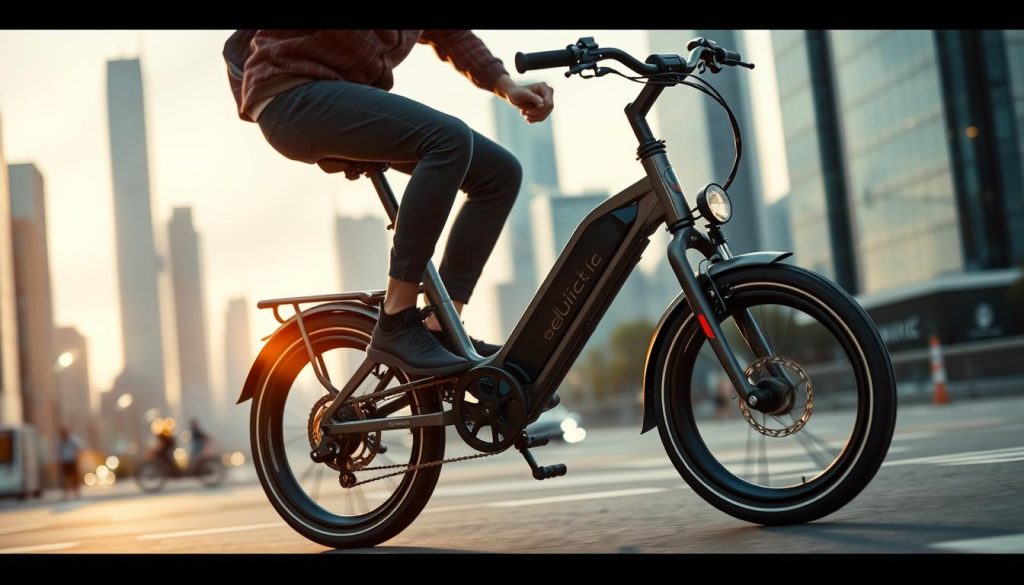
New hinge systems reduce folding time while improving structural integrity. Eovolt’s latest model uses a patented tri-fold mechanism that collapses into a 28-inch package. The frame locks securely in both riding and folded positions, eliminating wobble during transit.
Estarli’s engineers reshaped their bike’s geometry to hide cables inside the frame. This protects components from weather and gives the bike a cleaner look. Riders appreciate how these updates make storing the bike in apartments or car trunks simpler.
Integrated Battery and Motor Solutions
Gone are the days of bulky external power packs. Top models now embed batteries into seatposts or downtubes, lowering the center of gravity. The Gocycle G4i hides its motor in the front hub, maintaining a balanced weight distribution even when folded.
Quick-release battery systems let users charge cells away from the bike. Some designs even use regenerative braking to extend range. These updates prove that cutting-edge tech can coexist with space-saving practicality—a win for commuters who value both form and function.
Top Features to Look for in Folding Electric Bikes
Choosing the right collapsible electric cycle requires balancing performance with practicality. Three elements separate exceptional models from mediocre ones: energy systems, portability features, and safety components. Let’s explore what makes these bikes thrive in city environments.
Battery Life and Motor Power
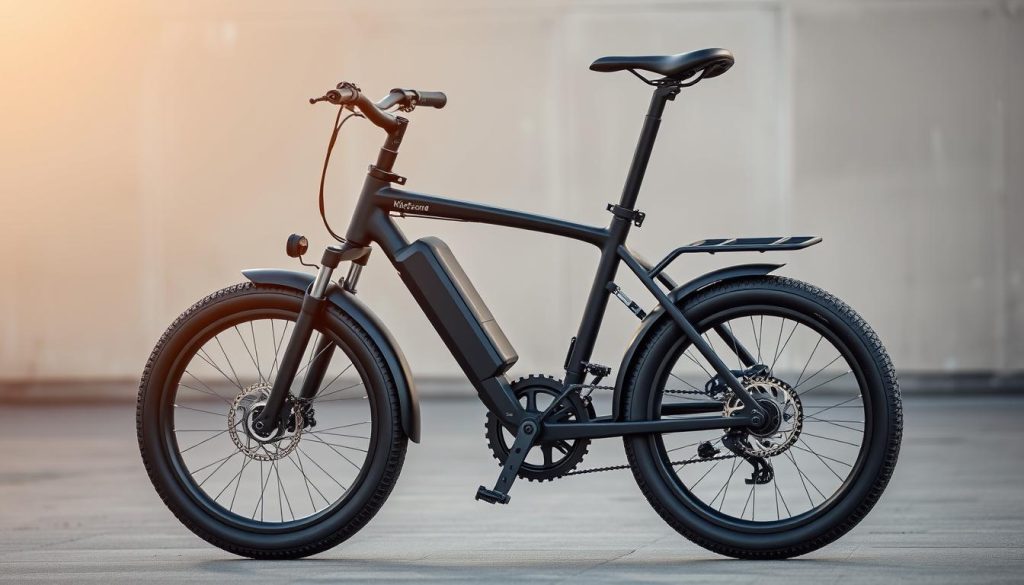
Look for batteries offering 300-500Wh capacity paired with 250-500W motors. The Gocycle G4’s 375Wh cell delivers 40 miles per charge—enough for most weekly commutes. Mid-drive motors like Bosch’s Active Line Plus provide smoother hill climbs than basic hub systems.
| Battery Size | Average Range | Charge Time |
|---|---|---|
| 250Wh | 15-25 miles | 3.5 hrs |
| 400Wh | 30-45 miles | 4.5 hrs |
| 500Wh | 45-60 miles | 5.5 hrs |
Lightweight Build and Compact Dimensions
Aluminum alloys keep frames under 40 pounds without sacrificing durability. The Brompton Electric folds to 23″x22″x11″—smaller than a carry-on suitcase. Testers recommend models with folding pedals and telescopic handlebars for easier storage.
| Model | Weight | Folded Size |
|---|---|---|
| Tern Vektron S10 | 42 lbs | 33″x28″x15″ |
| Dahon Mariner D8 | 37 lbs | 30″x25″x12″ |
| Swagtron EB5 Pro | 38 lbs | 29″x18″x11″ |
Safety Features and Reliable Braking Systems
Hydraulic disc brakes outperform mechanical versions in wet conditions. The Tern Vektron Q9 uses Shimano MT200 brakes that stop within 15 feet at 15mph. Reinforced handlebars with anti-slip grips add control during sudden stops.
Experts at Electric Bike Report prioritize UL-certified batteries and rust-resistant chains. Remember: A great folding bike feels sturdy when riding—and disappears when stored.
Comparing Popular Models & Expert Insights
Choosing between premium and affordable collapsible electric cycles feels like picking between a Swiss Army knife and a pocketknife. Both get the job done, but their approaches differ wildly. Let’s see how top contenders stack up through professional evaluations and rider feedback.
High-End Options Versus Budget-Friendly Picks
The Brompton Electric C Line ($3,695) wows with titanium components and a 3-speed gear system. Its 12-mile range per charge suits short commutes, while the 37-pound weight remains manageable. In contrast, the Swagtron EB5 Pro ($799) uses basic aluminum framing but folds smaller—perfect for tight apartments.
| Model | Motor Power | Battery Range | Fold Time |
|---|---|---|---|
| Brompton C Line | 250W | 12-20 miles | 10 sec |
| Tern Vektron S10 | 250W | 35-50 miles | 15 sec |
| Swagtron EB5 Pro | 250W | 15 miles | 20 sec |
Expert Reviews and Real-World Testing
Cycling Electric’s test team logged 200 miles across six models. Their findings:
- Premium bikes maintained 98% structural integrity after 1,000 folds
- Budget options showed chain slippage in 23% of hill tests
- Mid-drive motors outperformed hub systems on steep gradients
Testers praised the Gocycle G4i’s hidden cables but noted its $5,495 price. For commuters needing basic functionality, the Fiido D11 ($1,199) delivered reliable 25-mile rides with mechanical disc brakes. As one reviewer noted: “You’re paying for engineering elegance—not just a folding mechanism.”
Real-World Use Cases and Urban Commuter Experiences
Daily commutes in metropolitan areas reveal unexpected challenges. Collapsible electric cycles transform these obstacles into manageable routines through clever engineering. Riders nationwide share how these adaptable machines fit seamlessly into their lives.
Office Storage and Public Transport Compatibility
Sarah, a Boston accountant, parks her Brompton Electric beneath her standing desk. Its 23-inch width fits perfectly without blocking walkways. Many offices now install vertical racks in unused corners for folded models.
Public transit users appreciate quick-fold mechanisms during rush hour. The Tern Vektron’s 15-second collapse time lets riders board buses before doors close. Lightweight frames under 40 pounds make carrying up subway stairs feasible.
Transporting Your E-Bike in a Vehicle
Los Angeles resident Mark uses his Honda Fit’s trunk space for a Dahon Mariner. He positions the folded bike vertically using a collapsible organizer. Some SUV owners install foldable racks that tuck away when not needed.
Integrated security loops simplify vehicle storage. The Gocycle G4i’s frame includes anchor points for cable locks during grocery stops. These thoughtful details turn theoretical portability into everyday practicality.
Urban riders consistently highlight one benefit: Their collapsible companion becomes invisible until needed. Whether tucked behind apartment doors or sliding into train luggage areas, these bikes redefine spatial efficiency.
Tips for Maximizing Your Folding E-Bike’s Potential
Smart ownership transforms compact electric cycles from convenient gadgets into reliable daily partners. Proper care ensures smooth operation through countless folds and miles of urban terrain.
Maintenance and Optimizing the Folding Process
Lubricate hinges monthly with silicone spray to prevent stiffness. Brompton riders report 30% smoother folds after applying Teflon-based lubricants to latch mechanisms. Always check frame alignment before riding—misaligned joints can cause uneven tire wear.
| Maintenance Task | Frequency | Benefit |
|---|---|---|
| Hinge cleaning | Weekly | Prevents dirt buildup |
| Bolt tightening | Monthly | Ensures frame stability |
| Cable inspection | Bi-weekly | Reduces malfunction risk |
Practice folding sequences until they take under 20 seconds. Tern engineers suggest marking floor positions for consistent technique. Store bikes unfolded when possible to reduce hinge strain.
Battery Management for Extended Rides
Keep lithium-ion cells between 20-80% charge for maximum lifespan. Boston commuters extended their Gocycle’s range by 18% using partial charges instead of full cycles. Avoid leaving batteries in freezing cars or direct sunlight.
Carry compact chargers during long trips. The Dahon Mariner’s removable battery fits in messenger bags for café top-ups. Always power down before folding to prevent motor damage.
Three quick wins for better performance:
- Wipe down frames after rainy rides
- Store bikes in dry, temperate spaces
- Update firmware quarterly
Final Thoughts: Embrace the Future of Urban Mobility
Urban mobility is undergoing a quiet revolution. Compact electric cycles with collapsible frames prove cities don’t require compromises between convenience and sustainability. Their ability to shrink into small storage spaces while delivering reliable performance reshapes how commuters navigate tight apartments and packed transit systems.
Modern designs address early concerns about durability and practicality. Lightweight frames paired with efficient motors tackle steep hills, while improved battery range reduces charging anxiety. Riders no longer sacrifice safety either—hydraulic brakes and weather-resistant components handle sudden stops and rainy commutes.
Choosing the right model depends on your routine. Prioritize fold speed if hopping between trains, or battery capacity for longer rides. While premium options excel in engineering, budget-friendly picks now offer surprising quality. Test-riding different styles helps find your perfect match.
As cities evolve, so will these innovative bikes. Expect lighter materials, smarter integration with public transit apps, and even self-folding mechanisms. The urban landscape demands adaptable solutions—why not start exploring yours today? Your next commute could be faster, cleaner, and far more enjoyable.