

Electric bike technology has changed how we travel, making cycling more exciting. The right motor can turn a regular bike into a powerful, efficient ride. It helps you go further and feel less tired.
Electric bike kits are now a hit among cyclists wanting to boost their bikes. They offer different motor technologies for smooth power. This makes tough paths and longer rides easier.
Choosing the right motor is key. You need to think about power, how easy it is to install, and if it fits your bike. Whether you’re commuting or going on adventures, the right kit can make a big difference.
This guide will look at the best motor choices. We’ll help you pick the perfect one for your cycling needs and goals.
Understanding Electric Bicycle Motor Types and Technologies
Electric bicycles have changed how we travel, offering various motor types for different needs. Choosing the right motor greatly affects your e-bike’s performance and how it feels to ride.
Today, electric bike fans have many motor choices, each with its own benefits. Knowing about mid-drive motors and hub motor kits helps riders pick the best e-bike for them.
Direct Drive vs Geared Hub Motors
Hub motors come in two main types that cyclists often look at:
- Direct drive motors are quiet and smooth
- Geared hub motors have more torque and are smaller
- Direct drive motors are best for flat areas
- Geared hub motors do well on hills
Mid-Drive Motor Mechanics
Mid-drive motors are built into the bike’s frame near the pedals. They use the bike’s gears for better weight balance and climbing. Riders like mid-drive motors for their balanced power and efficient energy use.
Friction Drive Systems
Friction drive is another way to power electric bikes. It uses a wheel that touches the bike’s wheel to move it. Though not as common as hub motors, friction drives have special benefits for certain rides.
When looking at electric bike motors, think about the terrain, your riding style, and what you need from your bike. This helps choose the best motor for you.
Top Rated Mid-Drive Motors for Battery Assist Bicycles
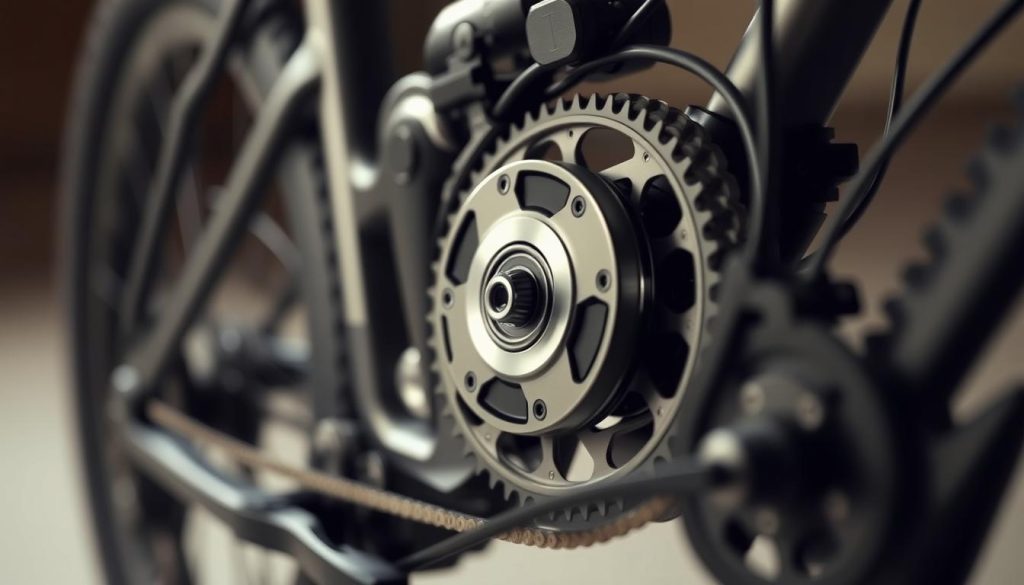
More and more electric bike fans are choosing mid-drive motor systems. They offer better performance and efficiency. These motors give great power and work well with a bike’s drivetrain.
The top mid-drive motors are known for their advanced torque sensors and careful design. Bosch, Shimano, and Brose are at the forefront. They bring new tech that changes how we ride.
- Bosch Performance Line CX: Delivers 85 Nm of torque
- Shimano STEPS E8000: Lightweight and responsive design
- Brose Drive S Mag: Offers exceptional power-to-weight ratio
Mid-drive motor systems have big advantages:
- Better weight distribution
- Improved handling and balance
- Enhanced climbing capabilities
- More natural pedaling experience
When picking a mid-drive motor, look at the torque sensors. They help the motor assist smoothly. These sensors adjust power based on how hard you pedal, making riding feel natural.
Both pro cyclists and daily commuters love mid-drive motors. They’re reliable and perform well on different paths. The advanced torque sensors help manage power and save energy.
Hub Motor Solutions for Electric Bike Conversions
Electric bike conversions are getting more popular among cycling fans. Hub motor kits make it easy to turn regular bikes into electric ones. These kits give riders a fun way to boost their cycling adventures.
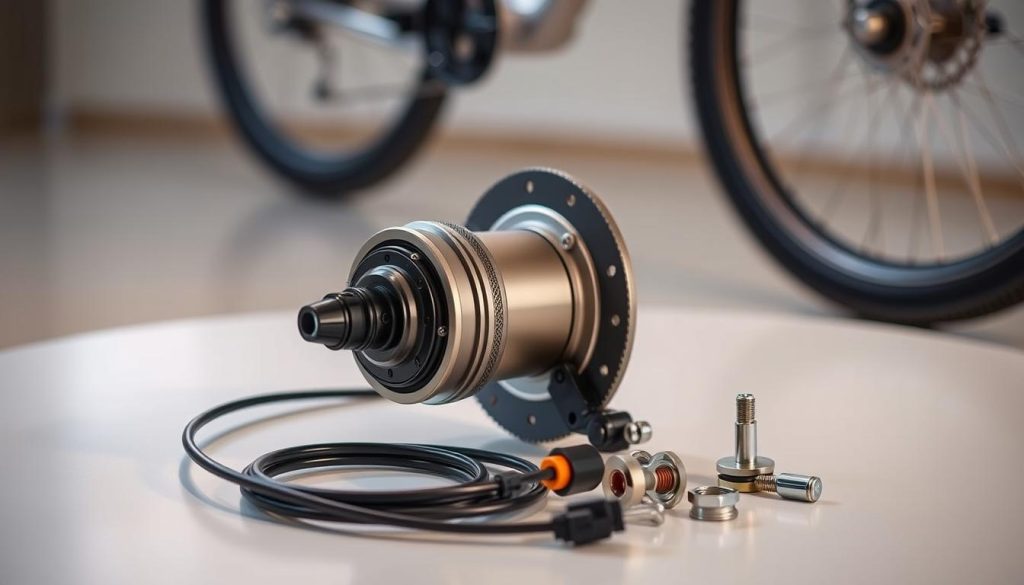
There are two main types of hub motor kits for electric bikes. Each has its own benefits for cyclists looking to go electric:
Front Hub Motor Applications
Front hub motors are a great starting point for making bikes electric. They are:
- More affordable than rear hub motors
- Easier to install for DIY fans
- Perfect for lighter riders and flat areas
Rear Hub Motor Benefits
Rear hub motors offer better performance for those who want more power and stability:
- Better weight distribution
- Improved traction on different terrains
- Enhanced climbing abilities
Installation Considerations
When picking hub motor kits, cyclists need to think about a few key things:
- How well the kit fits the bike frame
- The motor’s power needs
- How to integrate the battery
- The type of riding they plan to do
Choosing the right hub motor kit is crucial for a successful electric bike conversion. It must match the rider’s needs and skills.
Best Motor for Battery Assist Bicycle: Complete Buying Guide

Choosing the right motor for your battery assist bicycle is important. You need to think about your cycling needs, the terrain, and how fast you want to go. This helps you pick the best electric bike motor.
When looking at ebike battery packs and motors, keep these points in mind:
- How much power you need
- If the motor fits your bike
- The type of terrain you ride on
- How much you want to spend
- The motor’s weight and how easy it is to install
The best motor for you depends on how you ride. If you commute, a compact hub motor might be good. But, if you ride off-road, a mid-drive system with more torque is better.
Here are some key things to think about:
- How far you usually ride
- The motor’s power (250W-750W range)
- The battery’s voltage and capacity
- How the motor mounts on your bike
- The motor’s weight and how it affects your bike’s handling
Choosing the right ebike battery packs and motor is key for the best performance. Bike shops can give you advice based on your needs.
If you’re watching your budget, find a balance between cost and quality. A good motor and battery can last for years, making your rides better.
Power Output and Performance Specifications
Electric bicycle motors are complex, affecting how riders experience their bikes. Knowing about power output helps cyclists choose the right electric bike.
Electric bikes use advanced tech that combines mechanical and electrical systems. This mix of lithium-ion batteries, throttle control, and pedal assist modes makes for a unique ride.
Torque Requirements
Torque is key for accelerating and tackling tough terrain. Important factors include:
- Motor placement (mid-drive or hub)
- Rider weight
- Terrain complexity
- Desired acceleration rate
Speed Limitations
Speed limits for electric bikes vary by area. Most places cap speeds at 20-28 mph for safety. It’s crucial to know local laws about throttle control and pedal assist modes.
Battery Compatibility
Lithium-ion batteries power electric bikes. Choosing the right battery means looking at several factors:
| Battery Parameter | Performance Impact |
|---|---|
| Voltage | Determines overall power output |
| Ampere-hours | Indicates range and endurance |
| Charging Time | Affects practical usability |
| Weight | Influences bike handling |
Matching motor specs with the right lithium-ion batteries is vital for electric bike enthusiasts. It ensures top performance and reliability.
Motor Installation and Maintenance Tips for DIY Enthusiasts
Starting a DIY electric bike conversion needs careful planning and knowing the laws. Before you begin, look up local rules on motor power, speed limits, and what kind of bike it is. Each state has its own rules for electric bike changes, so check what’s allowed in your area.
For installing a motor, you’ll need tools like torque wrenches, Allen keys, wire strippers, and multimeters. If you’re new, get good protective gear like safety glasses and gloves. Make sure your bike’s frame can handle the motor you choose. This step is crucial for safety.
Keeping your electric bike in top shape is important. Check the electrical connections every month, look for wear on motor mounts, and clean parts often. Knowing the laws helps you pick the right motor. Bike shops can help with tricky parts and give tips for keeping your bike running well.
Always put safety first when working on electric bikes. Watch videos from trusted sources, join electric bike forums, and get help from pros if you’re stuck. By following these tips, you’ll have a safe and fun ride.