
Electric bikes have changed how we move around cities. But, their power depends a lot on the battery’s health. By following some key tips, you can make your battery last longer and enjoy better rides.
Looking after your battery is more than just saving money. It’s about getting the most out of your electric bike. To keep your battery going strong, you need to know how to care for it right.
Every little thing you do affects how long your battery will last. This guide will show you how to keep your e-bike’s battery in top shape. You’ll save money and ride more miles.
If you ride to work or love exploring on weekends, learning these tips will change your e-bike experience. Get ready to make the most of your e-bike’s battery.
Understanding Your E-bike’s Battery System
Electric bike power management begins with knowing your e-bike’s battery system. Modern e-bikes use advanced battery tech for better performance and longer rides.
Keeping your e-bike’s battery in top shape is key. Lithium-ion batteries are at the forefront, offering light, high-energy storage.
Types of E-bike Batteries
E-bike batteries vary, each with its own strengths:
- Lithium-ion (most common and recommended)
- Lithium-polymer
- Nickel-metal hydride
- Lead-acid (older technology)
Battery Capacity and Range Factors
Several factors affect your e-bike’s battery life and range:
- Rider weight
- Terrain type
- Assistance level
- Weather conditions
- Tire pressure
Key Battery Components
Knowing the main parts helps you manage your e-bike’s power:
- Battery cells
- Battery management system (BMS)
- Voltage regulator
- Thermal protection mechanisms
Understanding your e-bike’s battery system lets you get the most out of it. It helps extend battery life and ensures reliable rides.
Essential E-bike Battery Maintenance Tips
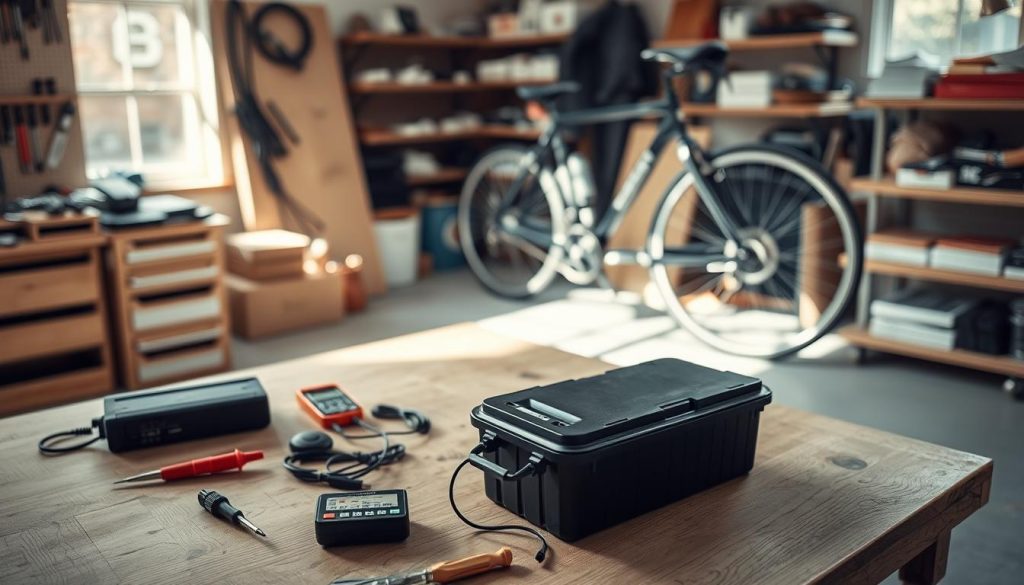
Keeping your e-bike battery in top shape is key to enjoying your ride. Regular care helps your battery last longer and work better. It’s all about making your electric bike more efficient and reliable.
Start with simple steps like cleaning and checking your battery. Dirt and moisture can harm your battery’s connections and performance. Use a soft, dry cloth to clean the battery and look for any damage or wear.
- Clean battery contacts monthly with a dry cloth
- Inspect battery mounting and connections regularly
- Check for any visible signs of wear or corrosion
- Ensure battery is securely attached to the e-bike
Temperature is also important for your battery’s health. Extreme temperatures can hurt your battery’s performance. Keep your e-bike battery away from direct sunlight and avoid extreme heat or cold.
Having a regular maintenance routine is essential. Make a simple checklist to keep track of your battery’s health. This way, you can catch any problems early on.
- Perform weekly visual inspections
- Keep battery contacts clean and dry
- Store battery in a cool, dry place
- Avoid complete battery drainage
Don’t forget about professional maintenance. An annual check-up with a certified e-bike technician can be very helpful. They can do detailed checks and fix any issues before they get worse.
Proper Charging Techniques for Maximum Battery Life
Learning how to charge your e-bike battery right is key to keeping it running well. Your battery is the heart of your electric bike. How you charge it affects how long it lasts and how well it works.
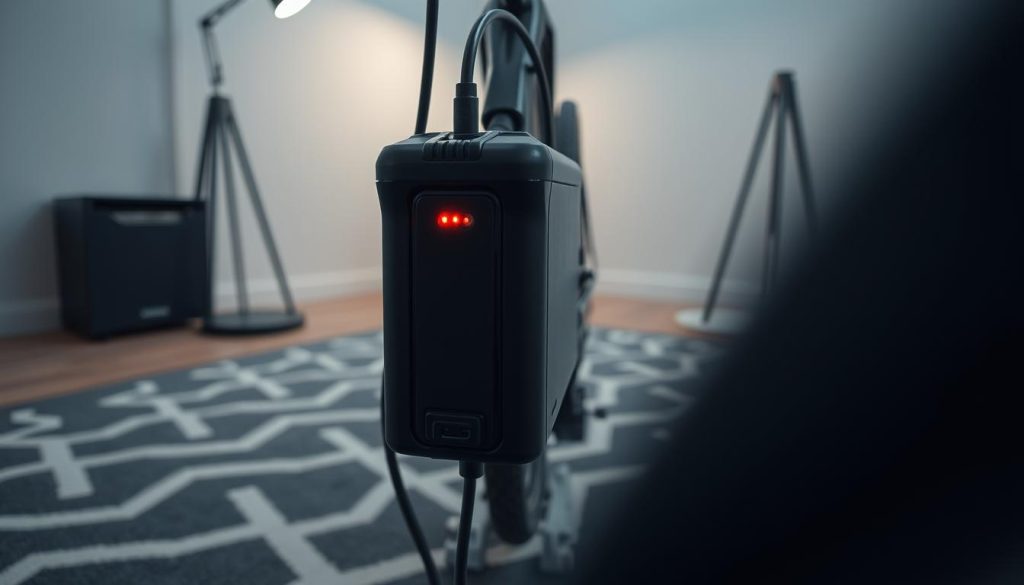
Charging your e-bike battery needs careful attention to a few important factors. These factors can greatly affect your battery’s health and performance.
Optimal Charging Temperature Range
Temperature is very important when charging your battery. The best temperature for charging is between 50°F and 77°F (10°C to 25°C). If it’s too hot or too cold, it can harm your battery.
- Avoid charging in temperatures below 32°F or above 95°F
- Store and charge your battery in a temperature-controlled area
- Never charge a frozen or extremely hot battery
Charging Frequency Guidelines
Knowing how often to charge your battery is important for its health. Most lithium-ion batteries don’t have memory effects. This means you can charge them more flexibly.
- Aim to keep battery charge between 20% and 80%
- Avoid completely draining the battery
- Charge after each ride for consistent performance
Avoiding Common Charging Mistakes
Stay away from common charging mistakes to protect your battery. These mistakes can shorten your battery’s life.
- Never leave battery charging unattended
- Use only the manufacturer-recommended charger
- Unplug the charger once the battery reaches full charge
- Avoid charging immediately after intense riding
By following these charging tips, you can make your battery last longer. This will keep your e-bike running at its best for many years.
Temperature Management and Battery Protection

Keeping your e-bike’s battery in top shape is key. Temperature control is crucial to avoid battery damage. It’s important for riders to manage this carefully.
Extreme temperatures can harm your battery. High heat speeds up chemical reactions, while cold reduces its power. Knowing this helps protect your e-bike’s battery.
- Avoid direct sunlight exposure for extended periods
- Store batteries in moderate temperature environments
- Use protective insulating covers during temperature fluctuations
- Keep batteries away from heat sources and extreme cold
In summer, park your e-bike in the shade. Remove the battery if it’s in direct sunlight. In winter, keep it indoors at room temperature for best performance.
Managing temperature is key to avoiding battery damage. Aim to keep your battery between 50-77°F (10-25°C). This ensures it works well and lasts longer.
Invest in a quality battery case or insulated cover. These protect your battery from extreme temperatures. They help keep your battery’s performance steady and extend its life.
Storage Solutions for Extended Battery Life
Keeping your e-bike battery safe during storage is key to its performance and life. Good storage tips can greatly help your electric bike’s battery last longer.
To make your e-bike battery last longer, pay close attention to how you store it. Different situations need different care to keep your battery working well.
Winter Storage Best Practices
Cold weather can hurt your battery’s performance. To keep your e-bike battery safe in winter, follow these important steps:
- Store the battery in a dry, temperature-controlled area
- Keep the battery charge between 40-60% when not in use for a long time
- Take out the battery if you’re storing it in an unheated place
- Avoid extreme cold or heat
Long-term Storage Requirements
For long storage, keep these tips in mind:
| Storage Duration | Recommended Charge Level | Maintenance Frequency |
|---|---|---|
| 1-2 Months | 50-70% | Check every 4-6 weeks |
| 3-6 Months | 40-60% | Recharge to 50% every 2 months |
| 6+ Months | 40-50% | Recharge every 60 days |
Maintaining Charge Levels During Storage
Regular battery care is crucial to keep its power. Don’t let the battery fully charge or drain to zero while stored. Use a smart charger to avoid overcharging and keep the battery healthy.
- Keep it in a cool, dry spot
- Use a battery management system
- Check the charge regularly
- Shield it from direct sunlight
By sticking to these storage tips, you can extend your battery’s life. This ensures your e-bike performs at its best when you’re ready to ride again.
Signs of Battery Degradation and When to Replace
Keeping your e-bike battery in top shape is key. Spotting early signs can help you keep your battery running well. This way, you can avoid sudden breakdowns.
Over time, your battery’s health will naturally go down. But, some signs mean it’s time for a new one. Look out for these important signs:
- Significant reduction in riding range
- Longer charging times
- Inconsistent power output
- Visible physical damage to battery casing
- Decreased overall battery capacity
Most electric bike batteries last 3-5 years with good care. If your battery can’t hold a charge or power as well, it’s nearing the end.
It’s important to keep an eye on your battery’s performance. Use tools to check its health or get a pro to look at it. Sometimes, getting a new battery is cheaper than fixing it over and over.
Here are some key times to think about replacing your battery:
- Battery capacity drops below 70% of original
- You need to charge it a lot
- Power goes up and down without reason
- Internal resistance goes up
By being proactive about your e-bike’s battery, you can make it last longer. This way, you’ll get the best performance for many years.
Safe Handling and Transportation Guidelines
E-bike batteries need careful handling to stay safe and last long. It’s important to handle them safely to protect both the rider and the battery. Knowing how to transport them is key to avoiding risks.
When moving e-bike batteries, there are important things to remember. Riders should know the rules and best ways to avoid dangers while traveling.
Travel Restrictions and Regulations
Understanding the rules for moving e-bike batteries can be tricky. Each way of traveling has its own rules:
- Air travel usually means carrying lithium-ion batteries in your carry-on
- Shipping companies have special rules for packaging and labeling
- Going abroad might need extra papers for battery transport
Protection During Transport
Keeping your e-bike battery safe while moving is crucial. Here are some ways to do it:
- Use strong, padded cases made for battery safety
- Take the battery off the e-bike before you move it
- Stay away from very hot or cold places during transport
Emergency Handling Procedures
It’s important to be ready for unexpected battery problems. Riders should:
- Have a fire extinguisher for electrical fires ready
- Learn basic first aid for battery issues
- Know how to safely remove a damaged battery
By following these guidelines, riders can reduce risks and ensure their lithium-ion batteries are safe during transport.
Maximizing Range Through Smart Battery Usage
Understanding how you ride affects your e-bike’s battery is key. Choosing the right power level for the terrain is a smart start. Using lower modes saves battery, letting you go further.
The terrain you ride on matters a lot. Flat areas use less energy than hills or trails. Plan your route to save battery by avoiding steep ups and downs.
Keeping your e-bike in top shape also helps. Proper tire pressure and well-maintained parts reduce energy loss. This means you can ride longer.
Experienced riders use regenerative braking to get energy back on the way down. Lighter riders and those who accelerate smoothly can also boost range. Smooth riding and avoiding sudden stops helps save battery.
New tech makes managing electric bike power easier. Modern e-bikes have systems that show how much energy you’re using. By learning these details and riding smart, you can get the most out of your e-bike. This leads to longer, better rides.