

Electric bikes have changed how we move around cities. They are green and efficient. As more people use e-bikes, knowing how to charge them safely is key.
Modern e-bike batteries are advanced and need careful handling. Charging your e-bike right is more than just plugging it in. It keeps your battery working well and safe.
This guide will teach you how to charge your e-bike safely. You’ll learn about batteries and how to avoid mistakes. It’s good for anyone who rides an e-bike, whether for work, fun, or adventure.
Learning the right way to charge your e-bike keeps it safe and working well. It also makes your battery last longer. Let’s explore the important safety tips for e-bike charging.
Understanding E-Bike Battery Fundamentals
E-bike batteries are key to electric bikes, with safety being a big deal. They store energy well, making e-bikes efficient and reliable.
There are many types of e-bike batteries, each with its own traits. Knowing these helps with keeping your battery in top shape.
Types of E-Bike Batteries
- Lithium-Ion (Most Common)
- Highest energy density
- Lightweight design
- Longer lifespan
- Lithium Polymer
- Flexible form factor
- Compact design
- Nickel-Metal Hydride
- More affordable
- Lower energy density
Battery Performance Specifications
| Specification | Typical Range | Impact on Performance |
|---|---|---|
| Voltage | 36V – 52V | Determines power output |
| Capacity | 10-20 Ah | Influences riding distance |
| Charge Cycles | 500-1000 | Battery longevity indicator |
Reading Battery Labels
It’s important to understand what battery labels mean. Look for voltage, capacity, and safety certifications. Also, check the charging guidelines for safety and performance.
Knowing your e-bike battery’s details helps you use it better. It also keeps you safe while charging and storing.
Essential E-Bike Charging Safety Guidelines
Charging your electric bike right keeps it running well and keeps you safe. The right way to charge helps your battery last longer. It also keeps your bike safe from harm.
When picking a spot for your e-bike charger, think about these important points:
- Choose a dry, well-ventilated indoor area for charging
- Keep charging stations away from flammable materials
- Use only manufacturer-approved charging equipment
- Avoid charging near sleeping areas or unattended spaces
Choosing the right place to charge is key. Your charger should be on a stable, flat surface. It should also be close to a power outlet. Don’t charge in very hot or cold places, as it can hurt your battery.
Here are some safety tips for charging your electric bike:
- Check the charging cables before each use
- Unplug the charger if you smell something odd or hear strange noises
- Don’t leave batteries charging all night without watching them
- Make sure there’s nothing around the charger
Today’s e-bike users need to take care of their batteries. By following these tips, you can avoid dangers and keep your bike running great for a long time.
Preventing Battery Overheating and Fire Risks
E-bike battery safety is very important for riders. To stop e-bike battery fires, we need to watch the battery closely. We must also know the dangers to keep riding safe and reliable.

It’s key to manage the battery’s temperature to avoid overheating. Batteries can get too hot and dangerous if they’re in bad conditions or have problems inside.
Temperature Monitoring During Charging
- Check battery temperature often while it’s charging
- Use the right charging tools as the maker suggests
- Don’t charge in the sun or very hot or cold places
- Make sure the charging area has good air flow
Warning Signs of Battery Malfunction
| Warning Sign | Potential Risk | Recommended Action |
|---|---|---|
| Unusual heat generation | Potential internal damage | Disconnect and inspect right away |
| Swelling or deformation | Chemical breakdown | Stop using battery, contact maker |
| Strange odors | Chemical leakage | Don’t use it anymore, get a pro to check |
Emergency Response Protocols
- Have a fire extinguisher ready when charging
- Turn off the battery if it gets too hot
- Put the battery in a safe, non-flammable spot
- Call the maker for a pro check
- Don’t try to fix a damaged battery yourself
Good care of your e-bike battery lowers risks and keeps you safe. By following these steps, you can ride your electric bike safely and worry-free.
Proper Charging Equipment and Compatibility
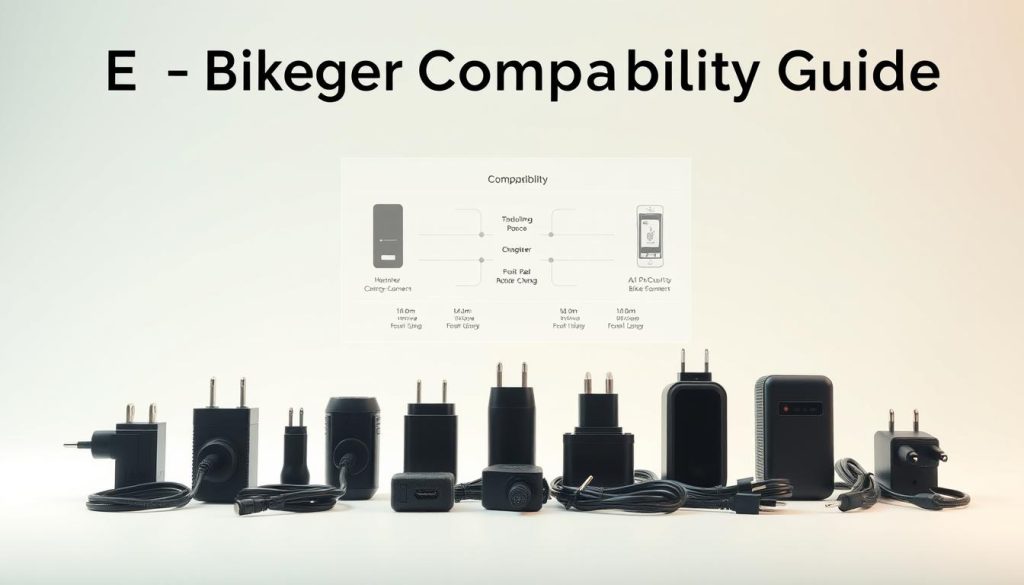
Choosing the right charger is key for safe e-bike charging and battery life. Not all chargers are the same. Using the wrong one can harm your e-bike’s battery or be unsafe.
When picking an e-bike charger, look at a few important things:
- Voltage matching between charger and battery
- Connector type and size
- Amperage specifications
- Manufacturer recommendations
Original equipment manufacturer (OEM) chargers are the safest choice. They are made just for your e-bike’s battery. This lowers the chance of overcharging or electrical problems.
Here are some tips for finding the right charger:
- Make sure the charger’s voltage matches your battery’s
- Check if the connectors fit
- Ensure the amperage rating is right for your battery
- Buy chargers from trusted makers
While generic or third-party chargers might be cheaper, they can hurt your e-bike’s performance and safety. A good, compatible charger keeps your battery safe and charges well.
Best Practices for Battery Storage and Maintenance
Keeping your e-bike battery safe is key to its long life. It’s not just about where you store it. It’s about doing it right to keep your battery working well.
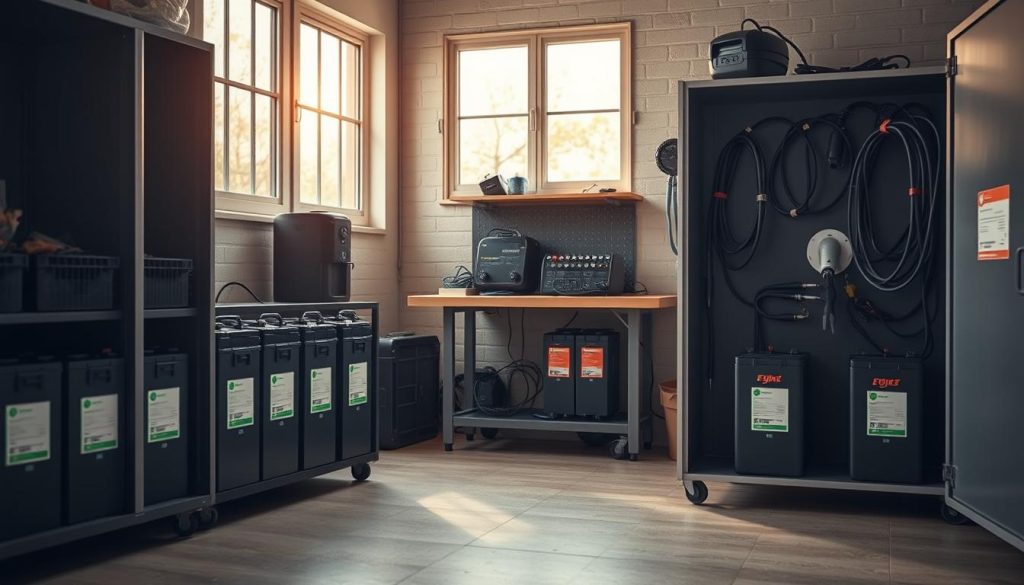
Looking after your e-bike battery means paying attention to a few important things. Knowing the best storage conditions can help avoid damage and keep your battery in top shape.
Ideal Storage Conditions
The place you store your e-bike battery is very important. Here are the main tips for storing it right:
- Keep the battery in a cool, dry place
- Maintain temperature between 50-77°F (10-25°C)
- Avoid direct sunlight and extreme temperatures
- Store battery at approximately 40-60% charge level
Long-term Storage Guidelines
For long-term storage, follow these steps:
- Charge the battery to 40-60% before long-term storage
- Check and recharge to 40-60% every 3-6 months
- Use original manufacturer storage cases
- Keep battery away from moisture and metal objects
Regular Maintenance Checklist
| Maintenance Task | Frequency | Purpose |
|---|---|---|
| Visual Battery Inspection | Monthly | Check for physical damage |
| Cleaning Battery Contacts | Every 3 months | Ensure optimal electrical connection |
| Charge Level Check | Every 30-45 days | Maintain battery health during storage |
By following these safety tips, riders can keep their batteries in great shape. This way, they can enjoy their e-bikes for many years.
Common Charging Mistakes to Avoid
E-bike riders often unknowingly harm their battery’s performance. Safe e-bike charging practices are key to keeping your electric bike in top shape.
Knowing how to manage e-bike charging time is vital. It helps avoid battery damage and keeps your bike running well. Here are the main charging errors to steer clear of:
- Charging in extreme temperatures (below 32°F or above 113°F)
- Leaving the battery plugged in continuously after full charge
- Using incompatible or damaged charging equipment
- Ignoring battery maintenance recommendations
Improper charging can shorten battery life and pose safety risks. Sticking to the right charging rules protects your investment.
| Charging Mistake | Potential Consequences | Recommended Action |
|---|---|---|
| Overcharging | Battery capacity reduction | Unplug after reaching full charge |
| Extreme Temperature Charging | Battery degradation | Charge in moderate environments |
| Using Damaged Chargers | Potential safety hazards | Replace worn or damaged equipment |
Good charging habits are crucial for e-bike owners. By avoiding these mistakes, riders can get the most out of their battery and ride safer.
Maximizing Battery Life Through Smart Charging Habits
Charging your e-bike right is key to keeping your battery in top shape. Smart riders know that charging wisely can make a big difference. Good charging habits keep your e-bike running strong for longer.
Safe charging starts with knowing the best way to charge. Try to keep your battery between 20% and 80% charged most of the time. Avoiding full discharges and 100% charges helps your battery last longer. Think of your battery like a marathon runner – steady, moderate use is best.
Temperature matters a lot for your battery. Charge your e-bike in a cool, dry place, away from sun or cold. Don’t charge it right after a hard ride when it’s still hot. Let it cool down first to keep it safe and healthy.
By taking care of your e-bike and charging it smartly, you’ll get more out of it. These simple steps can make a big difference. They help your battery last longer, save you money, and make your rides more reliable.