
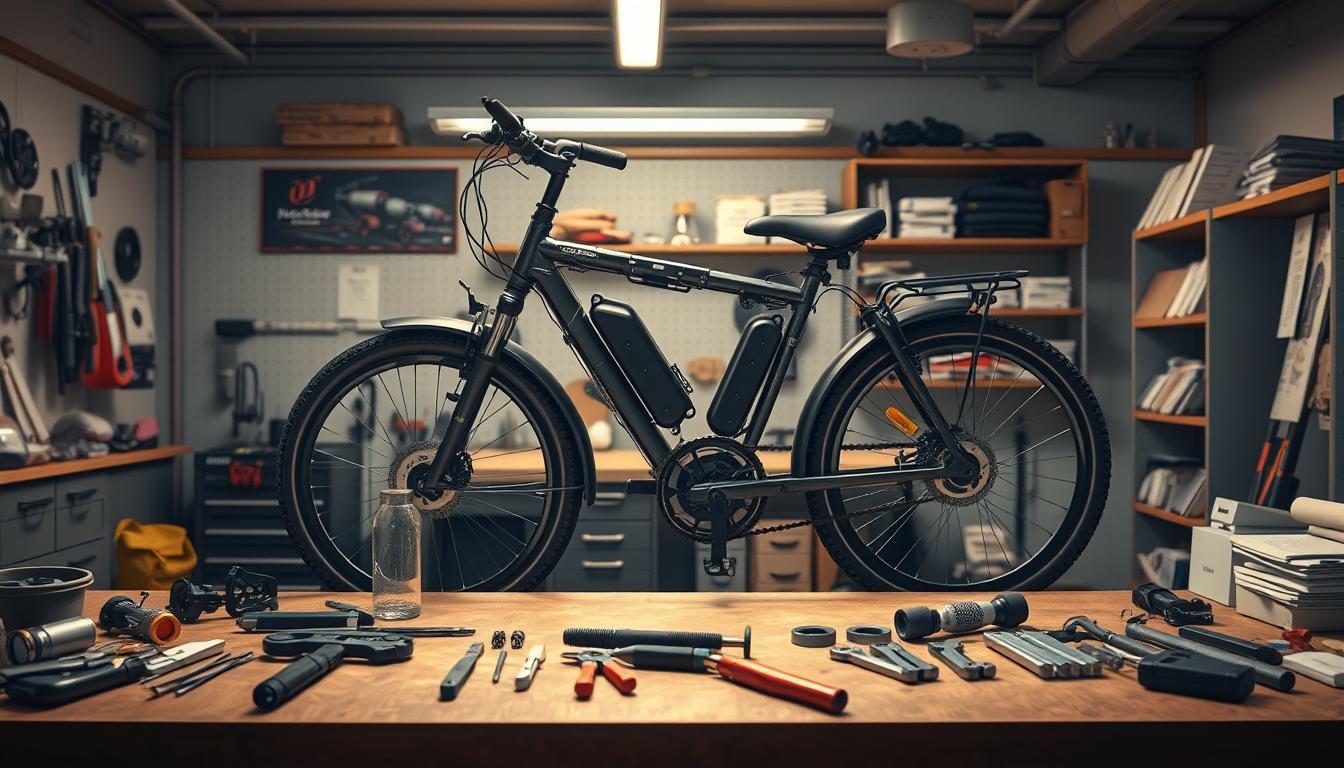
Your two-wheeled companion deserves more than just occasional attention. Like any trusted machine, consistent care keeps it running smoothly and safely. Simple habits—like checking tire pressure or wiping down the frame—can prevent costly repairs and ensure every ride feels effortless.
Studies show riders who perform monthly inspections reduce mechanical issues by 40%. Start with the basics: battery health, chain lubrication, and brake function. These elements work together to create a reliable, efficient experience. Always follow your manufacturer’s storage recommendations to extend your battery’s lifespan.
This guide covers everything from cleaning techniques to tool recommendations. You’ll learn how to spot worn brake pads, choose the right lubricant, and store gear properly. We’ve also included pro tips for seasonal adjustments and accessory choices that simplify upkeep.
Think of your ride as a long-term investment. A well-maintained machine not only performs better but also holds its value. Ready to dive in? Let’s explore how small efforts today lead to smoother adventures tomorrow.
Fundamentals of E-Bike Maintenance
Staying ahead of wear and tear maximizes your biking experience. Simple routines help components work harmoniously while preventing sudden breakdowns. Let’s explore how consistent attention keeps your machine safe and efficient.
Why Routine Checks Matter
Monthly inspections catch small issues before they escalate. For example, tire pressure impacts stability—underinflated tires strain motors and reduce range. Use a digital gauge weekly to ensure optimal PSI.
Dirt and debris hide in chain links and brake calipers, accelerating wear. A soft brush removes particles without scratching surfaces. Always wipe down the frame after rides to prevent corrosion.
Recognizing Early Signs of Wear
Battery terminals need regular cleaning for consistent power flow. Look for frayed wires or loose connections during checks. A sluggish chain often signals it’s time for lubrication.
Test brakes by squeezing levers—if they feel spongy, air might be in the lines. Worn treads on tires increase slipping risks, especially on wet roads. Addressing these early saves repair costs and keeps rides smooth.
E-Bike Maintenance 101: Keeping Your Electric Bike in Top Shape
Regular upkeep is the secret to a smooth, long-lasting ride. Combining quick cleanings with thorough inspections ensures every component works as it should. Experts recommend dedicating 15 minutes weekly to wipe down frames and check critical parts.
A clean machine performs better. Use a microfiber cloth to remove dirt from the frame and wheels. Focus on chain links and gears—debris here causes grinding noises and uneven wear. Lubricate the chain monthly with a weather-appropriate formula to prevent rust and ensure silent pedaling.
| Task | DIY Frequency | Professional Service |
|---|---|---|
| Chain Lubrication | Monthly | Every 6 months |
| Brake Pad Check | Weekly | During tune-ups |
| Battery Terminal Cleaning | Bi-weekly | Annually |
Always follow your manufacturer’s guide for battery care and torque settings. Worn brake pads reduce stopping power—replace them when grooves disappear. Schedule professional tune-ups twice yearly to adjust gears and inspect hidden components.
This balanced approach cuts repair costs by 30% according to cycling studies. Simple habits today mean fewer roadside surprises tomorrow. Your ride stays quiet, efficient, and ready for adventure.
Battery Charge and Storage Best Practices
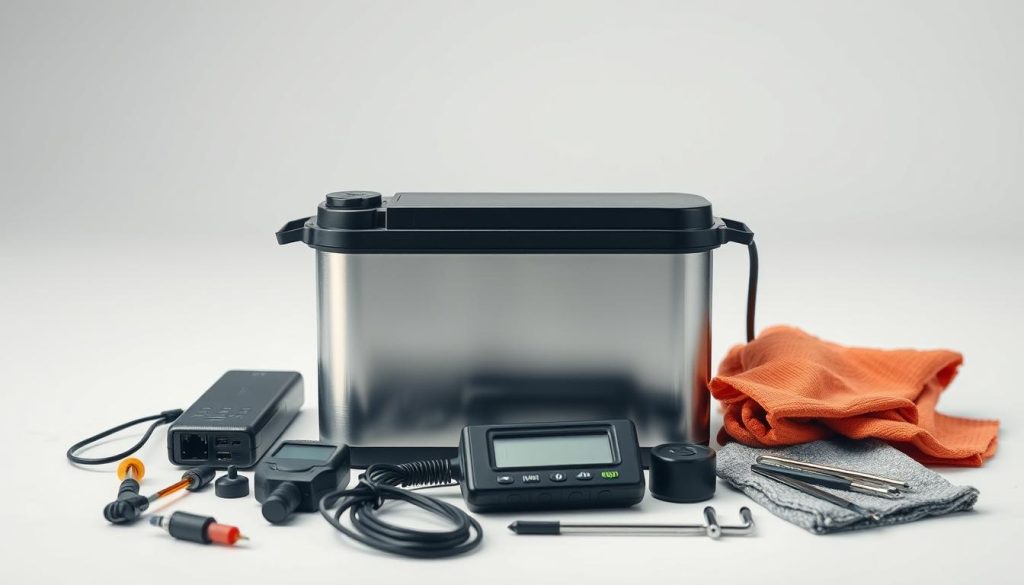
Powering your rides starts with smart battery habits. These energy packs thrive on consistent care—like avoiding extreme temperatures and using the right charger. Follow these guidelines to keep your bike’s heart beating strong for years.
Charging for Longevity
Plug in after every ride to maintain peak performance. Lithium-ion batteries prefer partial charges over full drain cycles. Always use the charger provided by your manufacturer—third-party options might deliver incorrect voltage.
| Charging Practice | Recommended Action | Frequency |
|---|---|---|
| After Short Ride | Charge to 80% | Immediately |
| Long-Term Storage | Keep at 40-60% | Monthly check |
| Deep Discharge Recovery | Use manufacturer mode | As needed |
Smart Storage Solutions
Store batteries in climate-controlled spaces—ideally between 50°F and 77°F. Basements or interior closets work better than garages. Keep terminals clean and check connections quarterly for corrosion.
- Remove battery during extreme cold/heat
- Wipe contacts with dry cloth monthly
- Schedule professional inspections yearly
Never leave your battery fully charged during storage. This stresses cells and reduces capacity over time. When in doubt, consult your bike’s manual—manufacturers know their systems best.
Cleaning, Lubrication, and Chain Maintenance
A sparkling machine glides smoother and lasts longer. Gentle cleaning paired with smart lubrication protects components from grit and grime. Let’s break down methods that keep your gear humming without harsh chemicals or complicated tools.
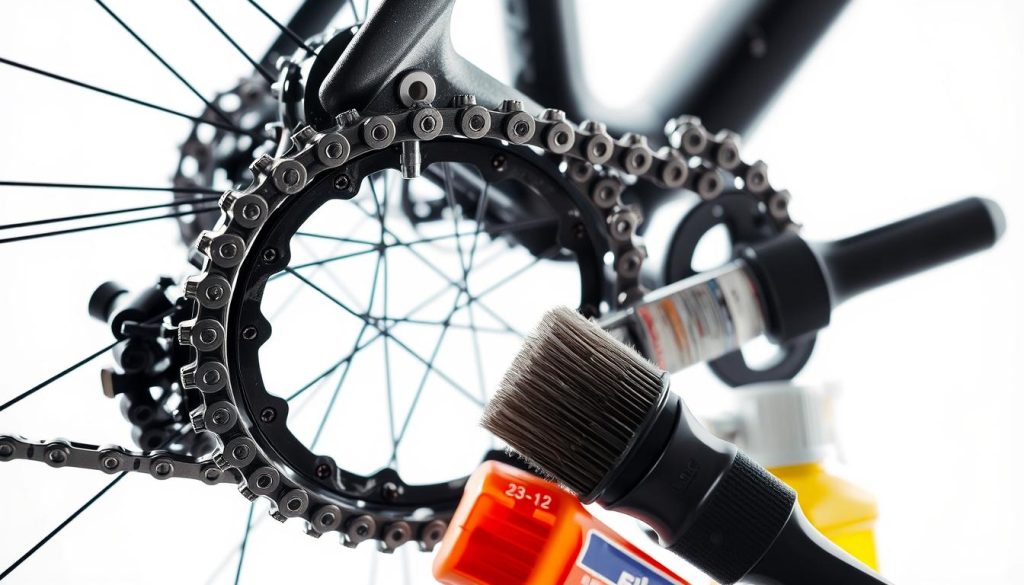
Effective Cleaning Methods for Your Ride
Start by rinsing the frame with low-pressure water to loosen dirt. Use a biodegradable cleaner like Muc-Off Bike Wash—harsh detergents strip protective coatings. Soft bristle brushes reach tight spots without scratching paint or cables.
Focus on the drivetrain where road grime collects. Scrub chain links with a dedicated gear brush, then rinse thoroughly. Dry with microfiber cloths to prevent water spots. Avoid high-pressure sprays near the battery or motor seals.
Lubrication Techniques and Chain Care
Apply lubricant after cleaning when the chain is completely dry. Rotate pedals backward while dripping product onto inner rollers. Wipe excess with a rag to avoid attracting dust—sticky residue accelerates wear.
Choose wet lube for rainy climates or dry formulas for dusty trails. Brands like Finish Line offer weather-specific options. Consistent lubrication reduces friction by 22%, according to cycling labs. Your chain stays quiet, and shifts stay crisp.
Pair these steps with monthly inspections for optimal results. A clean, well-oiled machine tackles hills effortlessly and extends component life. Simple care today means more miles and fewer repair bills tomorrow.
Maintaining Tires, Brakes, and Suspension for Smooth Rides
Reliable rides start with three key systems working in harmony. Proper care ensures stability, stopping power, and comfort across all terrains. Let’s break down how to keep these components performing at their best.
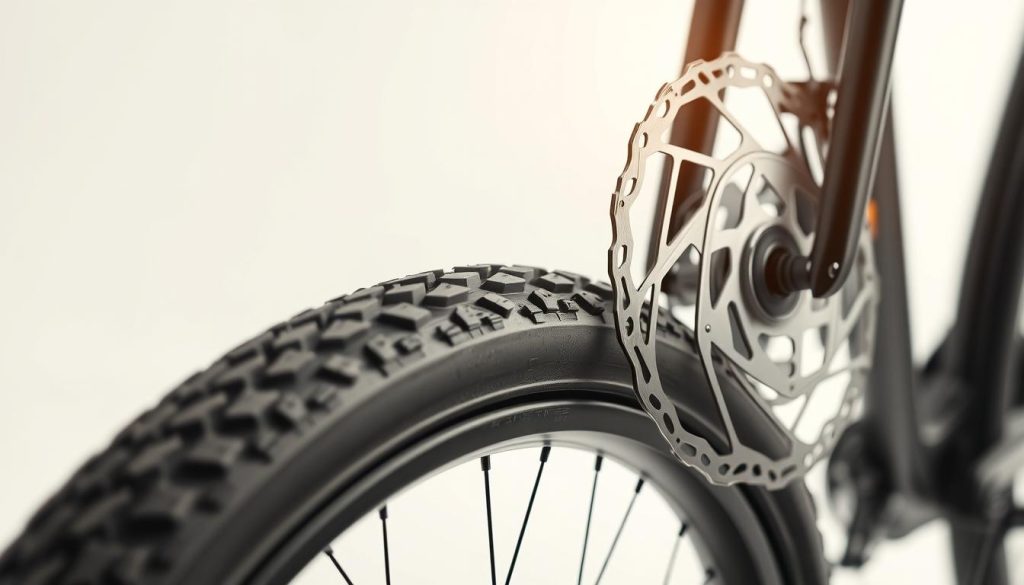
Tire Pressure and Inspection Guidelines
Check tire pressure weekly using a digital gauge. Underinflated tires strain the motor and reduce range by up to 15%. Follow these steps:
- Find recommended PSI on the tire sidewall
- Inflate when tires are cool for accurate readings
- Inspect treads for cuts or embedded debris
Rotate tires every 500 miles to prevent uneven wear. Replace them if tread grooves disappear or sidewalls crack.
Brake Pad Checks and Adjustments
Squeeze brake levers to test responsiveness. Spongy feel suggests air in hydraulic lines. For mechanical brakes:
- Check pad thickness – replace if under 3mm
- Align pads evenly against rotors
- Clean rotors with isopropyl alcohol monthly
Use manufacturer-approved lubricants on pivot points. Avoid getting oil on braking surfaces.
Suspension Checks and Fine-Tuning
Wipe down fork stanchions after muddy rides. Test suspension by compressing it – it should rebound smoothly without sticking. Look for:
| Issue | Solution |
|---|---|
| Oil leaks | Professional seal replacement |
| Unusual noises | Clean and lubricate joints |
| Sagging suspension | Adjust air pressure per manual |
Schedule annual professional servicing for complex adjustments. Your bike will handle bumps better and last longer.
Safety and Performance Tips for Every Ride
Smart riders know their machine’s condition directly impacts every journey. Quick pre-ride checks paired with seasonal tune-ups create safer adventures and prevent mid-ride surprises. Studies show 62% of cycling incidents involve neglected components – don’t let your ride become a statistic.
Regular Safety Inspections
Start with a 90-second visual scan before each trip. Squeeze brake levers to confirm firm resistance. Spin wheels to check for wobbles. Look for frayed cables near the handlebars.
| Check | Tool Needed | Action if Issue Found |
|---|---|---|
| Tire Pressure | Digital Gauge | Inflate to sidewall PSI |
| Battery Connections | Dry Cloth | Clean corrosion immediately |
| Chain Tension | Ruler | Adjust derailleur or replace |
Addressing Component Wear Proactively
Listen for new creaks or grinding noises during rides. Measure brake pads monthly – replace when thinner than a dime. Worn chains stretch beyond 0.5% length require urgent replacement.
| Component | Warning Signs | Repair Timeline |
|---|---|---|
| Brake Rotors | Visible scoring | Within 2 weeks |
| Battery Terminals | Discoloration | 48 hours |
| Frame Welds | Paint cracks | Professional inspection |
Balance DIY care with professional expertise. Mechanics spot hidden issues like bearing wear during annual checkups. Proper tools prevent stripped bolts – invest in torque wrenches and chain checkers. Consistent attention keeps rides smooth and extends your gear’s lifespan.
Final Thoughts on Keeping Your E-Bike in Top Condition
Consistent care transforms your ride from a machine into a trusted partner. Focus on three pillars: battery protocols, component cleaning, and routine checks. Charge batteries before storage but avoid leaving them at full capacity. Store power packs in dry places to prevent corrosion.
Wipe down chains after wet rides and lubricate monthly. Check tire pressure weekly—proper inflation protects motors and extends range. Brake inspections take seconds but prevent costly repairs. Always follow your manufacturer’s guide for torque specs and service intervals.
Simple habits create big results. Spend five minutes post-ride removing dirt from critical areas. Schedule seasonal tune-ups to catch hidden issues early. These steps boost safety while preserving resale value.
Your efforts today mean smoother rides tomorrow. Bookmark this guide for quick reference, and keep your manual handy. With these habits, your bike remains ready for countless adventures—reliable, efficient, and built to last.