

Ready to explore America’s scenic roads with a little extra power? This guide is your roadmap to unforgettable adventures on two wheels. Whether you’re planning a weekend getaway or a cross-state journey, we’ll cover everything from route selection to maximizing battery life. You’ll learn how modern pedal-assisted bikes make tackling steep hills and covering miles easier than ever.
Long rides become more enjoyable when you’re prepared. We’ve gathered insights from seasoned riders like Andrew Flood, who’s logged thousands of miles across U.S. trails. His real-world advice—paired with technical know-how—helps riders avoid common pitfalls. Discover how smart gear choices and energy management can turn challenging terrain into smooth sailing.
New technology has transformed how cyclists approach extended trips. Lightweight batteries now offer impressive range, while ergonomic designs keep riders comfortable for hours. This article blends practical strategies with inspiring stories to help you confidently plan your next adventure. Let’s dive into the tools and tactics that make every mile count.
Introduction to E-Bike Touring
The freedom to travel farther with less effort is reshaping how cyclists experience the outdoors. Unlike traditional cycling, pedal-assisted models let riders conquer steep climbs and cover more ground without exhaustion. Scenic routes once considered daunting now welcome riders of all skill levels.
Andrew Flood, who’s navigated countless trails, emphasizes smart energy management. “Your battery becomes your best ally when you understand its limits,” he says. Strategic planning ensures you’ll always reach charging points or destinations comfortably.
What makes these adventures unique? The blend of human power and motor assistance adapts to your preferences. Tackle rolling hills with extra boost or conserve battery for flat stretches. Upcoming sections will explore optimizing power usage and selecting routes that match your bike’s range.
This approach isn’t just about convenience—it’s about expanding horizons. With the right preparation, multi-day journeys become achievable rather than exhausting. Keep reading for actionable advice and firsthand accounts that’ll help you ride smarter, not harder.
The Appeal of Long-Distance E-Bike Adventures
Imagine cruising past mountain vistas and rolling farmlands without feeling drained. Modern pedal-assist technology lets riders tackle ambitious routes that traditional cyclists might avoid. This fusion of human effort and motorized support creates a new kind of exploration.
Seasoned rider Sarah Kline shares how motor assistance changed her approach. “I completed a 120-mile coastal route in two days,” she says. “The boost helped me conserve energy for steeper sections while enjoying the scenery.”
| Aspect | Traditional Cycling | Pedal-Assist Riding |
|---|---|---|
| Daily Range | 40-60 miles | 70-100 miles |
| Terrain Difficulty | Limits route options | Expands accessible paths |
| Physical Recovery | 24-48 hours | 8-12 hours |
Advanced batteries play a crucial role. New models provide 100+ miles per charge, letting riders focus on the journey rather than outlet hunting. Smart power modes help balance exertion across varied landscapes.
What makes these trips memorable? It’s the blend of physical engagement and tech-enhanced freedom. Your body works, but not to exhaustion. You climb hills that once seemed impossible and cover ground faster than standard bicycles allow.
Energy management becomes part of the adventure. Riders learn to adjust assistance levels like drivers shift gears. This active participation creates deeper connections with both machine and environment.
Understanding Battery Life and Management
Powering through a full day of adventure starts with smart energy planning. Three key factors impact your battery’s stamina: elevation changes, weather conditions, and cargo weight. Andrew Flood notes that steep climbs can drain power twice as fast as flat terrain, while cold temperatures reduce overall capacity.
Optimizing Battery Performance
Test rides reveal simple tweaks boost efficiency. Using eco mode on flats preserves 30% more energy than higher settings. Keep tire pressure at recommended levels—underinflated wheels increase drag by up to 15%.
Carrying a backup battery doubles your range without charging stops. Flood recommends lightweight models under 6 pounds. Pair these with a fast charger that refuels 80% capacity in 90 minutes.
Dealing with Range Anxiety
Seasoned riders overcome distance worries through preparation. One cyclist completed a mountain pass by alternating between battery packs and timing charges during lunch stops. Always check your battery’s health metrics before departure.
Monitor real-time consumption through your bike’s display system. Adjust assistance levels when facing headwinds or heavy loads. These strategies turn “will I make it?” into confident forward motion.
Mapping Charging Stops and Optimizing Your Range
Smart route planning turns charging stops into scenic highlights rather than obstacles. Modern apps like Google Maps and PlugShare reveal hidden power sources at breweries, libraries, and even picnic areas with outlets. Riders report ferry terminals often provide charging docks with stunning waterfront views.
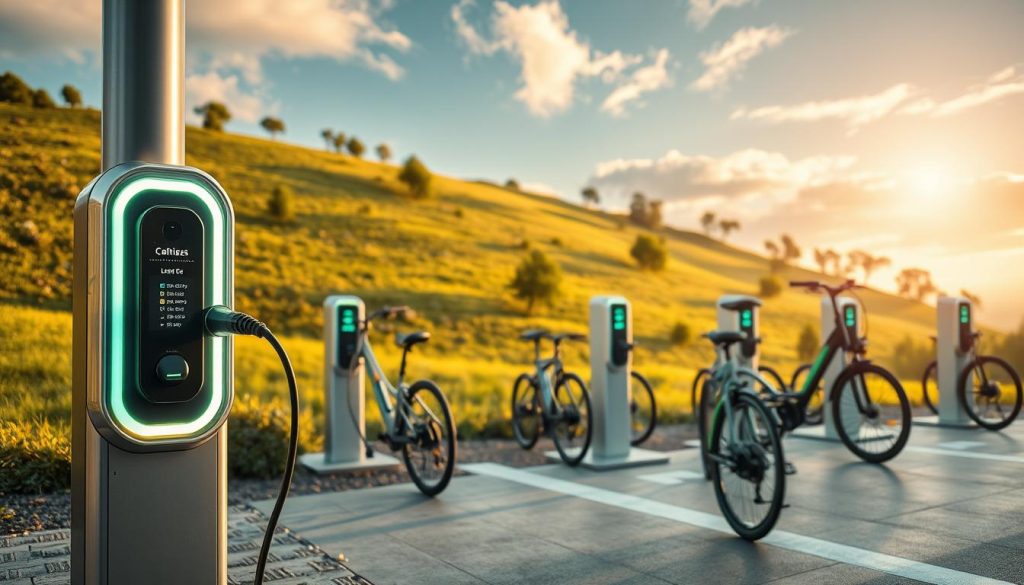
Finding Convenient Charging Stations
Start by plotting your daily distance against your bike’s max range. Add 15% buffer miles for unexpected detours. Popular tools include:
- ChargePoint’s network of verified public stations
- Local cycling forums highlighting cafe charging spots
- State park maps showing rest areas with outlets
One rider completed a 200-mile coastal trip by stopping at microbreweries every 35 miles. Always call ahead—some locations require purchase approvals for outlet use.
Strategies to Extend Battery Life
Small habit changes add up. Riding at 12-15 mph in eco mode preserves 40% more power than turbo settings. Check this comparison:
| Assistance Level | Range Impact | Best For |
|---|---|---|
| Eco | +25% miles | Flat terrain |
| Standard | Balanced | Rolling hills |
| Turbo | -35% range | Steep climbs |
Keep tires inflated to 50-65 PSI for smoother rolling. Pack light—every 5 pounds reduces range by 1 mile. Fast chargers work best during lunch breaks, restoring 80% capacity while you eat.
E-Bike Touring: Best Routes and Tips for Long-Distance Rides
Discover paths that blend natural beauty with rider-friendly amenities for unforgettable journeys. Three standout options combine safety, charging access, and visual appeal:
| Route | Terrain | Distance | Charging Stops |
|---|---|---|---|
| Great Allegheny Passage | Rail trail | 150 miles | 12+ towns en route |
| Katy Trail (Missouri) | Flat gravel | 240 miles | 15+ cafes with outlets |
| San Juan Islands Loop | Coastal hills | 65 miles | Ferry terminals |
Rail trails like the Katy offer smooth surfaces ideal for bikes with mid-drive motors. Steeper routes suit models with torque sensors for responsive power delivery. Check your bike’s range against elevation maps before committing.
Time your trip wisely. Spring and fall provide cooler temps that preserve battery life. Start early to avoid afternoon headwinds. Pack these essentials:
- Portable charger for emergency top-ups
- Tire repair kit for remote sections
- Lightweight rain gear
Maintain a steady 10-12 mph pace on flats to maximize range. Shift to eco mode when possible—one rider extended their ride by 18 miles using this tactic. Charge during lunch breaks at local diners or visitor centers.
Test your setup on shorter rides first. Adjust seat height and handlebar position for all-day comfort. With thoughtful preparation, multi-day adventures become thrilling realities rather than exhausting marathons.
Essential Gear and Supplies for Successful Touring
Packing smart transforms multi-day adventures from endurance tests into enjoyable explorations. The right equipment keeps you safe, extends your range, and lets you focus on the journey rather than logistical headaches.
Must-Have Accessories
Start with these proven items trusted by experienced riders:
- Waterproof panniers with 40L+ capacity
- Compact repair kit (tube patches, multi-tool, chain breaker)
- Lightweight layering system for changing weather

Emily Torres, who completed a 500-mile Great Lakes route, credits her USB-rechargeable headlight for night riding: “It lasted 6 hours on low beam – crucial when sunset caught us off-guard.”
Onboard Safety Essentials
Visibility matters most on shared roads. Consider this comparison of critical safety gear:
| Item | Day Use | Night Use |
|---|---|---|
| Reflective vest | Optional | Essential |
| 200-lumen light | Flashing mode | Steady beam |
| Mirror | Handlebar-mounted | Helmet-mounted |
Keep supplies accessible – store first-aid kits in frame bags rather than buried in luggage. Balance is key: heavy rear racks strain motors, while front-loaded weight affects steering.
Seasoned cyclists recommend testing gear on weekend trips before long journeys. Lightweight racks and compression sacks help manage cargo without overtaxing batteries. Remember – every pound counts when covering miles between charging stops.
Route Planning Strategies for American Landscapes
Charting your course through America’s varied terrain requires smart strategy and the right tools. Blend digital mapping apps with local cycling knowledge to create journeys that match your bike’s capabilities. Start by analyzing elevation profiles on platforms like Komoot or Ride with GPS—these reveal hidden climbs that could drain your battery.
Prioritize roads with wide shoulders or dedicated bike lanes using Google Maps’ cycling layer. Rural highways often provide safer alternatives to busy interstates while offering scenic views. Consider these terrain-specific factors when plotting distances:
| Landscape Type | Range Impact | Safety Tip |
|---|---|---|
| Mountain passes | -40% battery | Check weather alerts |
| Coastal routes | Steady drain | Monitor tide schedules |
| Desert basins | +20% range | Carry extra water |
The Blue Ridge Parkway demonstrates smart planning in action. Cyclists tackle its rolling hills by scheduling charging stops at visitor centers every 30 miles. Local cafes along the route often welcome riders needing quick power top-ups.
Always cross-reference your chosen path with recent trail condition reports. A well-planned system of stops—combining charging stations, repair shops, and supply stores—turns ambitious trips into manageable daily segments. This approach lets you focus on the journey rather than worrying about distance limitations.
Mastering Eco Mode and Effort Management on the Road
Finding the sweet spot between pedal power and motor assistance transforms all-day adventures. Engaging eco mode early preserves energy for when you truly need it. This setting reduces strain on both your body and battery, letting you cover more miles without fatigue.

Smart riders use lower power settings during flat stretches. Fresh legs in the morning? Try minimal motor support to build endurance. As fatigue sets in, gradually increase assistance to maintain steady performance. This strategy helps people complete multi-hour trips with energy to spare.
| Assistance Level | Body Effort | Best Time to Use |
|---|---|---|
| Eco | Moderate | Morning rides |
| Standard | Balanced | Midday climbs |
| Turbo | Low | Final miles |
Monitor your energy output like a dashboard. If your breathing becomes labored, ease the motor’s workload. Many cyclists schedule breaks every 90 minutes to stretch and check their system. Pair rest stops with quick battery checks for optimal time management.
Weather changes demand flexibility. Headwinds might require temporary power boosts, while tailwinds let you coast on eco mode. Test different approaches during short rides before committing to long trips. With practice, you’ll instinctively adjust settings to match the road’s demands.
Exploring Iconic U.S. E-Bike Routes
America’s vast landscapes offer pedal-assisted explorers endless opportunities to connect with nature and history. These carefully curated paths blend stunning visuals with thoughtful infrastructure, making extended journeys both practical and awe-inspiring.
Coastal Majesty: Highway 1 Adventure
The Pacific Coast Highway delivers 600 miles of ocean vistas from Washington to California. Cyclists navigate cliffside curves near Big Sur and redwood groves in Humboldt County. Charging stations dot coastal towns like Cannon Beach and Monterey, while campgrounds with RV hookups offer overnight power access.
Time-Traveling Trails
History buffs love these heritage paths:
- Great Allegheny Passage: 150-mile rail trail linking Civil War sites
- Underground Railroad Trail: 2,000-mile network with interpretive markers
- Route 66: Retro motels with vintage charging setups
Motor performance determines route success. Mid-drive systems handle steep grades on mountain passes better than hub motors. Check your battery’s capacity against elevation charts—a 500Wh pack lasts 40 miles on hilly terrain versus 70+ on flats.
| Route | Mileage | Key Feature | Rest Stop Frequency |
|---|---|---|---|
| Blue Ridge Parkway | 469 | Mountain overlooks | Every 15-20 miles |
| Katy Trail | 240 | Riverside towns | 10+ cafes |
| San Juan Islands | 65 | Ferry access | 4 terminals |
Smart preparation ensures smooth travel. Test your bike’s range on similar terrain before committing. Schedule rest breaks every 90 minutes to stretch and check tire pressure. Local cycling clubs often share updated maps showing new charging points along popular routes.
Handling Extra Weight and Practical Touring Challenges
Managing cargo effectively transforms challenging rides into smooth adventures. Extra gear and batteries add pounds that test your bike’s balance and motor efficiency. One rider reported a 15% drop in range when carrying 30 pounds of camping equipment through Colorado’s mountain passes.
Heavier loads affect stability during sharp turns and steep climbs. Wider tires (2.4-2.6 inches) improve grip when hauling panniers, while reinforced racks prevent sway. Jessica Miller, who crossed the TransAmerica Trail, advises: “Distribute weight evenly—front bags for lighter items, rear for dense supplies.”
Smart packing makes all the difference. Compare these strategies:
| Gear Type | Weight | Battery Impact |
|---|---|---|
| Standard Tent | 5.5 lbs | -8 miles |
| Ultralight Tent | 2.8 lbs | -4 miles |
| Steel Lock | 3.1 lbs | -5 miles |
| Folding Lock | 1.3 lbs | -2 miles |
Plan stops around charging stations with seating areas for easy unloading. Test your loaded bike on short routes before long trips—adjust tire pressure and suspension settings as needed. Lightweight accessories like collapsible water bottles save space without sacrificing utility.
Remember: Every choice shapes your journey. Proper preparation lets you conquer hills confidently while keeping your route enjoyable and efficient.
Maintaining Your E-Bike on Extended Journeys
Keeping your ride reliable starts with consistent care. Regular checks prevent mid-trip surprises and help your gear perform at its best. Focus on three key areas: power systems, moving parts, and weather protection.
Create a simple pre-ride routine. Wipe down the battery contacts weekly to ensure strong connections. Check tire pressure before every outing—underinflated tires drain power faster. This table shows essential tasks:
| Task | Frequency | Benefit |
|---|---|---|
| Battery terminal inspection | Weekly | Prevents charging issues |
| Tire pressure check | Before rides | Improves range by 10-15% |
| Brake pad alignment | Monthly | Ensures safety on descents |
| Chain lubrication | Every 100 miles | Reduces motor strain |
| Electrical connection test | Monthly | Maintains system performance |
Pack smart for roadside fixes. A compact kit should include spare inner tubes, a multi-tool, and tire levers. Experienced riders add zip ties and electrical tape for quick repairs.
Protect your battery from extreme conditions. Store it in dry areas overnight during multi-day trips. After riding through rain, dry charging ports with compressed air. These habits extend capacity over thousands of miles.
Listen for unusual sounds during rides. Squeaky brakes or grinding gears signal needed adjustments. Address minor issues quickly to avoid major breakdowns. With proper care, your machine will handle backroads and mountain passes with confidence.
Final Reflections on a Thrilling E-Bike Journey
Crossing finish lines you once thought unreachable reshapes your view of adventure. Electric bikes unlock possibilities that blend physical effort with smart technology, creating touring adventures where preparation meets spontaneity. Proper route planning and battery management transform potential stressors into opportunities for discovery—whether that’s finding a hidden café with charging ports or realizing your own endurance.
Time spent on the road teaches balance. Schedule rest stops to recharge both your bike and body, allowing you to savor sunsets over mountain passes or quiet country roads. Veteran riders emphasize adaptability: adjust assistance levels as terrain shifts, and let curiosity guide detours.
Every trip adds layers to your cycling experience. Challenges become stories, and mechanical hiccups turn into problem-solving victories. Pack your gear, plot your course, and embrace the thrill of seeing familiar landscapes through fresh eyes. The open road awaits—where will your next journey begin?