
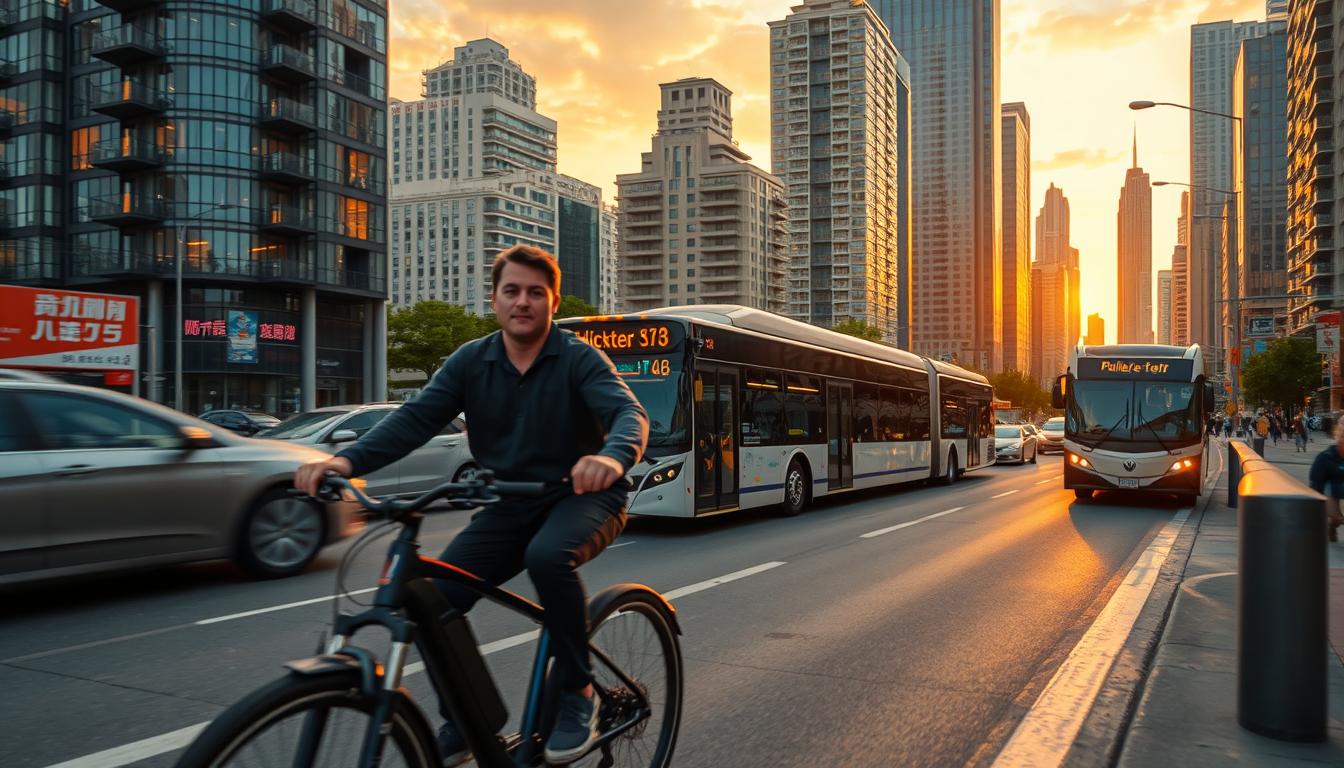
Urban transportation is changing fast in big cities across the United States. People are deciding between e-bikes and public transport. This choice affects their daily travel, money, and the environment.
The debate over e-bikes and public transport is growing. Americans are looking for better ways to get around cities. They want to save money, cut down on pollution, and enjoy easy travel.
City folks are moving away from old ways of getting to work. Whether you live in Seattle, Chicago, or Austin, knowing the good and bad of e-bikes and public transit is key. It helps you choose the best way to travel every day.
This guide will compare e-bikes and public transport in many important areas. We’ll look at cost, how efficient they are, their impact on the environment, and how convenient they are. Our goal is to help you understand the different options for moving around cities.
Understanding Modern Urban Transportation Choices
Urban transportation has changed a lot in recent years. Cities have moved from horse-drawn carriages to busy highways. Now, micromobility and new ways to travel are changing how we get around cities.
Today, cities face big challenges in moving people around. There’s a lot of traffic, worries about the environment, and not enough space for roads. People are looking for ways to travel that are good for the planet and easy to use.
The Evolution of City Commuting
- 1900s: Streetcars and walking dominated urban transportation
- 1950s: Personal automobiles became the primary mode of transit
- 2000s: Public transit and shared mobility options emerged
- 2020s: Micromobility solutions like e-bikes gain significant popularity
Current Challenges in Urban Mobility
Urban areas face many problems with moving people. There’s too much traffic, not enough parking, and rules to protect the environment. People are looking for new ways to travel.
The Rise of Alternative Transportation
Micromobility has changed how we travel in cities. E-bikes, electric scooters, and shared rides offer green and flexible ways to get around. These options help people move easily in busy cities, solving old problems.
New technology and what people want are changing city travel. The future of city travel will be smart, green, and flexible. It will focus on being efficient and caring for the environment.
E-bike vs Public Transport: A Comprehensive Comparison

Urban commuters have a big choice to make when picking their ride. Electric bicycles and public transport each have their own perks for city travel. Knowing the main differences helps people choose what’s best for them.
Let’s look at the main points of comparison between electric bicycles and public transport:
- Flexibility of movement
- Cost-effectiveness
- Environmental impact
- Personal health considerations
- Time efficiency
Electric bicycles give riders a lot of freedom in the city. They can go through traffic, pick their own paths, and skip the crowds during busy times. These bikes offer a personal ride that public transit can’t match.
Public transport is still a good choice for longer trips or places with lots of transit options. Each option has its own benefits, depending on what you need and where you live.
The next parts will explore electric bicycles and public transport more. This will help you figure out which one fits your city life best.
Cost Analysis: Daily Commuting Expenses and Long-term Investment
Choosing how to get around the city affects your wallet. E-bikes and public transit have different costs. Knowing these can help you pick what’s best for you.
Initial Investment and Running Costs
First costs matter when picking your ride. E-bikes cost more upfront than transit passes. E-bikes can be $1,000 to $3,000, while transit passes are $600 to $1,500 a year.
| Transportation Option | Initial Cost | Annual Expense |
|---|---|---|
| E-bike | $1,500 | $250-$500 |
| Public Transit Pass | $0 | $900-$1,500 |
Monthly Public Transit Passes vs E-bike Maintenance
E-bikes are getting popular for city travel. They’re easy to keep up:
- Battery replacement: $300-$500 every 2-3 years
- Annual tune-up: $75-$150
- Minimal electricity charging costs
Hidden Financial Factors to Consider
There are more money-saving perks:
- Potential health insurance discounts for active commuters
- Reduced gym membership costs
- Lower carbon footprint potentially qualifying for tax incentives
- Avoided parking fees in city centers
Every choice has its financial side. Think about your needs, budget, and lifestyle to make the best choice.
Environmental Impact and Sustainability Factors

Urban transportation is key to cutting emissions and making cities greener. E-bikes and public transport are leading the way. They can change cityscapes and lower carbon footprints.
E-bikes are a top choice for green city travel. They don’t produce emissions when in use. This makes them better than cars for the environment. Plus, they use little energy and help clean the air.
- E-bikes generate about 10 times fewer carbon emissions than cars
- Public transit can carry many people, lowering emissions per person
- Charging e-bikes with renewable energy makes them even greener
Public transport also helps a lot in reducing emissions. Today’s buses and trains are often electric or hybrid. This cuts down on pollution. Plus, they can carry lots of people, making them a smart choice for cities.
Deciding between e-bikes and public transit depends on the city and personal needs. Both are better than driving cars for reducing emissions in cities.
Time Efficiency and Route Flexibility
Urban commuters face a big challenge: making the most of their travel time and staying flexible. Last-mile solutions have changed the game for city travel. E-bikes and public transit bring unique benefits to commuting, making daily travel better.
Rush Hour Performance
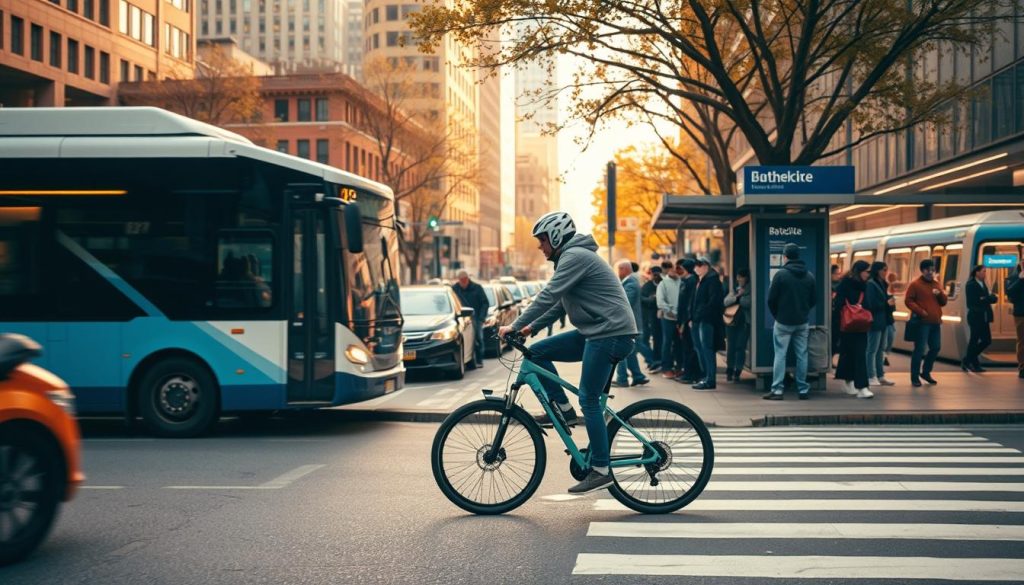
At peak traffic times, different commuting options show clear differences. E-bikes stand out by avoiding crowded streets and moving through tight spaces easily. Riders can:
- Avoid traffic gridlock
- Take alternative routes quickly
- Maintain consistent travel speeds
Door-to-Door Travel Times
Last-mile solutions excel in direct travel distances. E-bikes cut out the need for multiple transfers seen in public transit. Commuters save a lot of time with:
- Direct routing
- Reduced waiting times
- Immediate departure flexibility
Schedule Independence vs Fixed Routes
Traditional public transit has set schedules, which can be limiting. E-bikes offer unmatched flexibility, letting riders:
- Travel exactly when needed
- Select personalized routes
- Adapt to spontaneous changes
Understanding these commuting options helps urban travelers make better choices. They can pick what fits their lifestyle and time management best.
Health Benefits and Physical Activity Considerations
E-bikes are changing how we stay fit in cities. They mix exercise with easy travel, boosting our health. Unlike buses or trains, e-bikes offer a special way to stay active while getting around.
E-bikes are great for those who want to move more but don’t want hard workouts. You can set how much electric help you get. This makes it easy for people of all ages and fitness levels to ride.
- Cardiovascular health improvement
- Reduced sedentary time during commutes
- Enhanced muscle engagement
- Mental health stress reduction
Studies show e-bike riders get health perks that car or bus users don’t. The easy pedaling lets you keep moving without getting too tired.
E-bikes make it easy to fit exercise into our busy lives. By biking, we can burn calories, get our hearts pumping, and enjoy the outdoors while we travel.
But safety is key for city cyclists. Wearing the right gear, knowing the rules, and choosing safe paths are important. They help reduce the risks of biking to work or school.
Making the Right Choice for Your Urban Lifestyle
Choosing the right way to get around the city isn’t easy. It depends on many things like your daily trip, the city’s setup, and what you like. What works best for you will depend on your own needs.
E-bikes are great for short trips in the city. They let you get some exercise and help the planet. On the other hand, public transport is better for longer trips or places with good bus and train systems. Some people might use both to get the most out of their commute.
If you’re watching your money, think about how you travel. Some cities have great public transport that’s cheaper. Others might find an e-bike cheaper in the long run. Remember to think about upkeep, how fast you get where you’re going, and how comfy you are.
In the end, the best way to get around the city is what fits your life. Whether it’s an e-bike or public transport, you’re helping make the city greener. Try out different ways, see how they work for you, and change your plan if needed.