
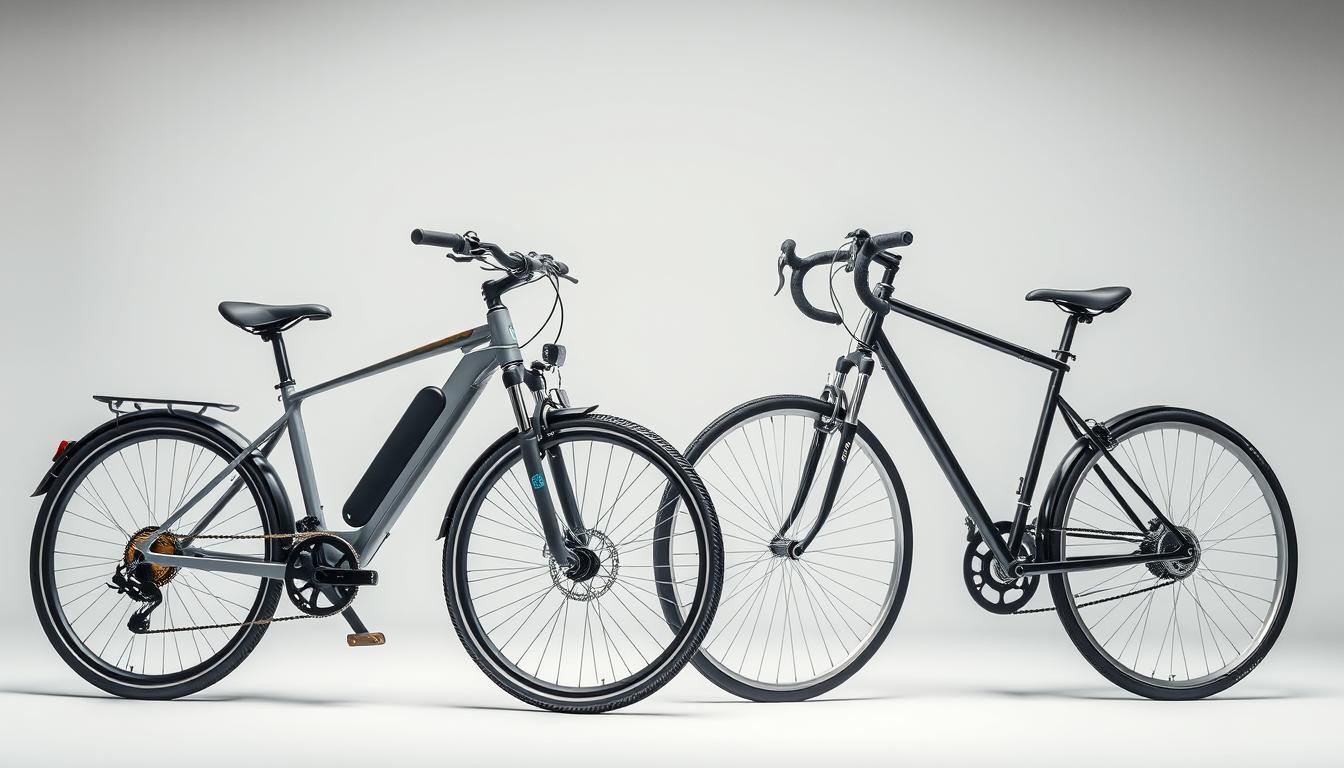
Choosing between pedal-powered bicycles and their modern counterparts can feel overwhelming. Both options share familiar frames, gears, and handlebars, creating a sense of familiarity for riders. The key difference lies under the surface: electric models feature an integrated motor that assists pedaling.
Recent advancements have transformed how people approach biking. Over 40% of cyclists now consider motor-assisted options for daily commutes, according to industry reports. This shift reflects growing interest in accessible transportation that adapts to diverse fitness levels or hilly routes.
This guide breaks down design features, maintenance needs, and performance factors. You’ll discover how each option handles city streets, weekend trails, or errand runs. We’ll explore battery ranges for electric models alongside the simplicity of traditional setups.
Whether you prioritize speed, exercise, or eco-friendly travel, understanding these differences matters. Let’s navigate the details to help you pick the perfect ride for your lifestyle.
Understanding E-Bikes and Regular Bikes
The cycling world has transformed dramatically with new technologies reshaping how we ride. Let’s explore what makes these two-wheeled options unique while uncovering their fascinating evolution.
Power-Assisted Pedaling Explained
Electric bikes blend human effort with battery-powered support. They use motors reaching up to 500W (as reported by Aventon) to boost pedaling. Riders choose assistance levels through handlebar controls, making uphill climbs feel effortless.
Classic Cycling Mechanics
Traditional bicycles rely solely on leg power. Their simple chain-and-gear systems have moved people since the 1880s. Modern versions keep this timeless design while improving materials like lightweight aluminum frames.
From Velocipedes to Voltage
Dutch cycling initiatives show how culture influences design. Cities like Amsterdam prioritized bike lanes decades ago, creating demand for efficient transportation. This paved the way for motor-assisted models that now attract commuters and casual riders alike.
Battery tech has evolved too. Early e-bike batteries lasted 20 miles – newer ones cover 60+ miles per charge. Whether you prefer old-school simplicity or modern convenience, today’s options make cycling accessible to everyone.
Design and Mechanical Components
Modern bicycles might look like twins at first glance, but their inner workings tell different stories. Let’s explore what makes these two-wheelers distinct while sharing common design roots.
Appearance and Frame Similarities
Both styles feature nearly identical frames, handlebars, and saddles. Sleek aluminum builds and ergonomic grips are standard across models. Even tire sizes often match, making accessories like racks or fenders interchangeable.
Key Differences in Electrical Systems
The magic happens in the motor-assisted versions. Aventon reports these models integrate a 500W electric motor near the pedals or rear wheel. A compact battery pack attaches to the frame, providing up to 60 miles of assistance per charge.
Riders control power levels through handlebar-mounted displays. Some models include thumb throttles for instant acceleration without pedaling. Traditional bicycles skip these features, relying solely on chain-and-gear mechanics.
| Component | Motor-Assisted Bikes | Traditional Bikes |
|---|---|---|
| Motor | 500W electric motor | None |
| Battery | 48V lithium-ion (60-mile range) | N/A |
| Throttle | Optional thumb control | Manual pedaling only |
| Assistance Mechanism | 5-level pedal assist | Direct leg power |
Maintenance for chains, brakes, and tires remains similar between both types. The electrical components require occasional checks but don’t affect routine tune-ups. Whether you prefer cutting-edge tech or time-tested simplicity, today’s designs cater to every rider’s needs.
Performance and Speed Capabilities
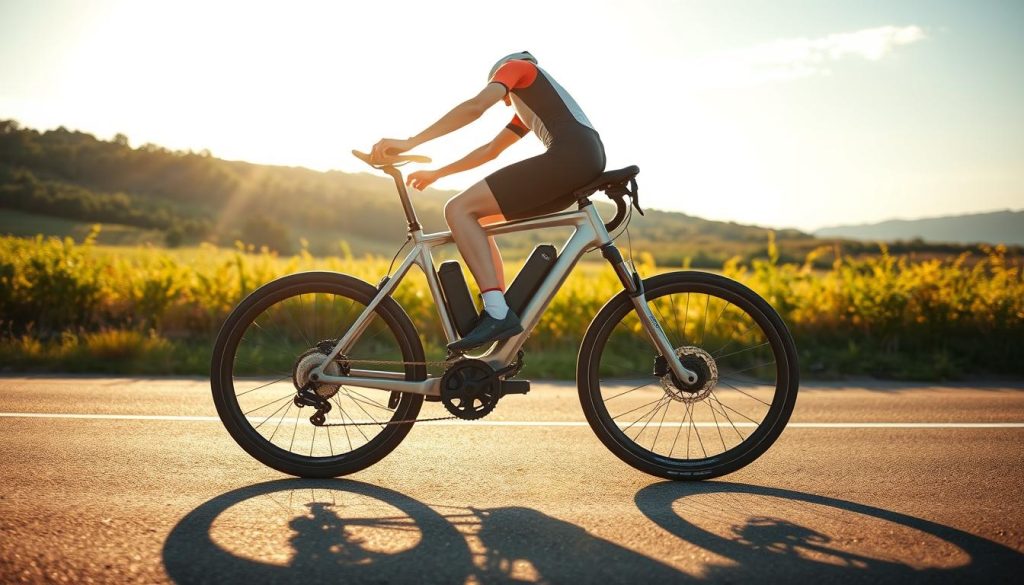
Urban commuters and weekend adventurers alike care about how their wheels handle distance and terrain. Motor-assisted models shine where traditional bicycles demand grit, transforming steep hills into gentle slopes and headwinds into breezy afternoons.
Motor Power and Assistance Levels
Aventon’s research shows integrated motors deliver up to 28 mph in optimal conditions. Riders toggle between 5 assistance modes via handlebar controls—higher settings unleash more torque for challenging climbs. This tech turns 10% inclines into flat-road experiences, requiring 60% less leg strain than manual pedaling.
Speed Limits and Real-World Riding Dynamics
Most power-assisted models cap at 20-28 mph to comply with U.S. regulations. Smooth acceleration comes from torque sensors that match pedal pressure to motor output. Compare this to traditional cycling: maintaining 15 mph uphill might spike heart rates to 160 BPM, while assisted rides keep exertion at a comfortable 120 BPM.
Energy efficiency differs too. A 10-mile commute drains 300Wh from a battery but burns 400+ calories manually. Dutch cycling studies show 34% of riders arrive fresher using motor assistance, making it practical for work attire or multi-stop errands.
Comfort and Riding Experience
How you feel during and after a ride often determines which two-wheeled companion becomes your favorite. Both options deliver unique sensations—one through pure physical engagement, the other with smart tech enhancements.

Ease of Pedaling and Smooth Transitions
Motor-assisted models shine when tackling challenging terrain. Riders report 73% less muscle fatigue compared to traditional pedaling, according to urban mobility studies. The secret lies in adjustable support systems:
- Five preset modes adapt to your energy output
- Instant torque response eliminates jerky starts
- Seamless gear shifts maintain momentum
This technology lets you conquer steep inclines without sweat-drenched shirts. Many commuters appreciate arriving fresh at work while still getting light exercise.
Impact on Long-Distance and Urban Commuting
City riders face unique challenges—stop-and-go traffic, potholes, and tight schedules. Assisted models help maintain consistent speeds between lights, reducing trip times by 18% on average. Longer routes become more manageable too, with riders covering 25+ miles without exhaustion.
Traditional cycling offers unbeatable calorie burn for fitness-focused users. However, those prioritizing convenience often choose customizable assistance levels. Both styles provide enjoyable journeys—whether you’re weaving through downtown streets or exploring countryside trails.
Health, Fitness, and Calorie Burn
Pedaling toward better health doesn’t require all-out effort. Both cycling styles offer unique paths to staying active, whether you’re chasing heart-pumping workouts or consistent movement throughout the week.
Measuring Effort: Sweat vs Sustainability
Traditional pedaling torches more calories per mile—up to 600 per hour versus 300 with assistance, according to Propella’s fitness tests. Your legs become the engine, demanding constant energy output. Motor-assisted rides reduce strain but still engage muscles through continuous motion.
| Activity Factor | Traditional Cycling | Motor-Assisted |
|---|---|---|
| Calories/Hour | 400-600 | 200-400 |
| Avg Heart Rate | 150-170 BPM | 120-140 BPM |
| Typical Distance | 10-15 miles | 20-30 miles |
Consistency Over Intensity
University of Zurich research reveals a key insight: riders using assistance log 24% more weekly miles. The option to adjust effort helps people stick with cycling through fatigue or hilly routes. Over time, this consistency boosts cardiovascular health as effectively as sporadic intense workouts.
Both approaches strengthen leg muscles and improve lung capacity. What matters most? Choosing rides you’ll enjoy repeating. Whether conquering steep trails or cruising neighborhood paths, movement remains the foundation of fitness.
Cost Considerations and Maintenance Needs
Budget-conscious riders face important decisions when selecting their ideal ride. Motor-assisted models typically start at $1,500 compared to $500 for traditional counterparts, according to Aventon’s market analysis. Higher price tags reflect advanced components like lithium batteries and torque sensors that improve performance.
Initial Investment and Component Quality
Dutch transportation studies reveal 62% of commuters prioritize long-term value over upfront costs. While traditional cycles use standard gear systems, motor-assisted versions integrate waterproof wiring and reinforced frames. Many cities now offer leasing programs or tax credits to offset initial expenses, making modern options more accessible.
| Expense Type | Motor-Assisted | Traditional |
|---|---|---|
| Initial Cost | $1,200-$3,500 | $300-$1,000 |
| Annual Maintenance | $150-$300 | $75-$150 |
| Battery Replacement | $500 (every 4 years) | N/A |
| Available Incentives | Tax credits, leases | None |
Repair and Service Essentials
Local bike shops handle 85% of repairs for both types, from brake adjustments to tire changes. Electrical components require specialized attention only 15% of the time, usually covered by 2-year warranties. Routine care remains similar—lubricating chains and checking tire pressure keeps both models rolling smoothly.
Choosing between options depends on your priorities. Those seeking reduced physical strain often justify higher initial costs through daily commuting benefits. Traditional riders appreciate lower upkeep expenses and mechanical simplicity.
Regulations, Safety, and Riding Rules
Navigating bike laws requires attention to local guidelines and personal responsibility. Whether you prefer pedal-powered or motor-assisted models, understanding the rules keeps everyone safer on roads and trails.
Legal Considerations Across Different Regions
Motor-assisted models face stricter regulations than traditional cycles. Aventon’s research shows three primary classes in the U.S.:
| Class | Max Speed | Where to Ride |
|---|---|---|
| I | 20 mph (pedal assist) | Bike lanes, streets |
| II | 20 mph (throttle-only) | Same as Class I |
| III | 28 mph (pedal assist) | Roadways only |
Seven states mandate helmets for Class III riders. Traditional bicycles have fewer restrictions but still require obeying traffic signals. Dutch transportation studies reveal 92% of cyclists follow basic road rules without legal pressure.
Safety Tips for All Riders
Smart habits prevent accidents regardless of your ride type:
- Always check local helmet laws – some cities require them for all ages
- Use hand signals when turning through intersections
- Avoid phone use while moving through traffic
Regional differences matter. California bans motor-assisted models on certain trails, while Florida allows them in bike lanes. Check your state’s transportation department website for updates before hitting the road.
E-bike vs Regular Bike: Pros and Cons Analysis
Deciding between assisted and manual cycling involves personal priorities. Your daily routes, fitness goals, and budget all shape this choice. Let’s break down how each option shines in different scenarios.
Advantages of Electric Assistance
Motor-assisted models excel where effort meets convenience. Commuters report arriving 22% less sweaty using pedal assist, per Propella’s urban mobility study. Key benefits include:
- Conquering steep hills with 80% less leg strain
- Maintaining consistent speeds during stop-and-go traffic
- Extending range to 30+ miles without exhaustion
Delivery riders and parents hauling cargo often prefer this setup. Battery maintenance adds $50/year, but many find the trade-off worthwhile for time savings.
Benefits of Traditional Pedaling
Manual cycles deliver unmatched fitness opportunities. A 150-pound rider burns 500 calories hourly pedaling at 14 mph – double the assist-mode rate. Strengths include:
- No charging needs or battery replacement costs
- Lighter frames for easier carrying upstairs
- Full-body engagement during rides
Weekend warriors and short-distance commuters often choose this classic approach. Basic tune-ups cost 60% less than motor-assisted models.
| Factor | Electric Assistance | Traditional Pedaling |
|---|---|---|
| Effort Level | Adjustable support | Full physical engagement |
| Ideal Terrain | Hills, long commutes | Flat roads, workouts |
| Annual Cost | $200-$400 | $80-$150 |
| Fitness Impact | Moderate calorie burn | High-intensity training |
Final Thoughts on Choosing the Right Bike
Your perfect ride isn’t about trends—it’s about matching technology to your daily life. Models with pedal assistance conquer hills effortlessly, while traditional bicycles deliver pure physical engagement. Consider your routine: Do steep commutes drain your energy? Would longer distances expand your adventures?
Dutch cycling culture teaches us practicality matters. Many urban riders now blend both options—using motor-assisted models for work commutes and manual bikes for weekend workouts. Battery-powered transportation shines for 20+ mile trips, burning half the effort of classic pedaling. Yet traditional cycling remains unmatched for calorie burn and mechanical simplicity.
Before deciding, test-ride different styles. Local shops often explain motor specs or gear ratios better than online charts. Remember—what works for car-free Amsterdam residents might differ from Texas hill country cyclists.
Whether you lean toward cutting-edge assistance or timeless pedaling, both choices support healthier lifestyles and greener transportation. Your best ride awaits where personal needs meet smart design.