
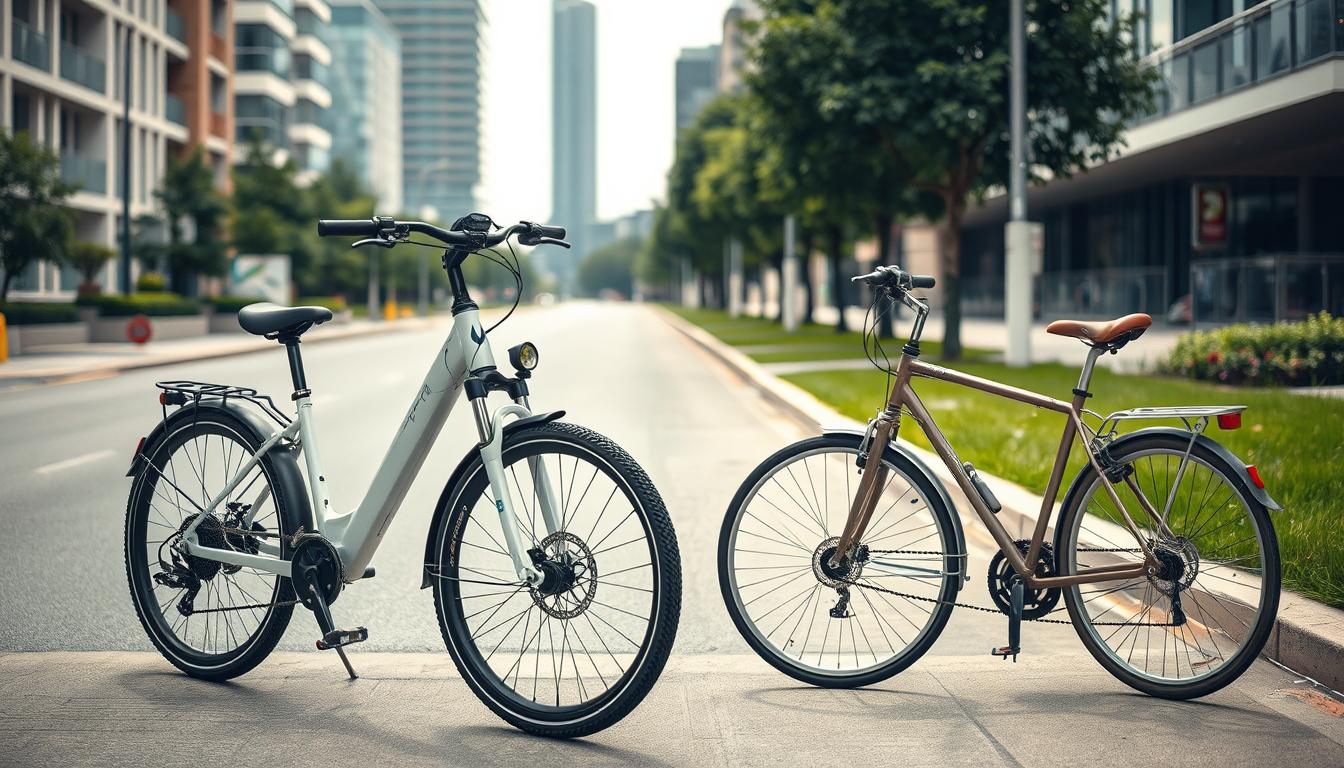
Cycling fans and city commuters are now deciding between electric and traditional bikes. The debate over e-bikes and traditional bikes is growing. More people want green transport that fits their life and health goals.
Electric bikes have changed how we travel, mixing tech with exercise. Traditional bikes are still loved by many. But e-bikes offer a new way to ride, opening cycling to more people.
This guide will look at the main differences between electric and traditional bikes. We’ll cover performance, cost, upkeep, and other key points. This will help you choose the right bike for you.
Whether you love working out, need a daily ride, or enjoy weekend cycling, knowing the benefits of e-bikes and traditional bikes is key. It will help you pick the best bike for your adventures.
Understanding the Key Differences Between E-bikes and Traditional Bikes
The world of cycling has changed a lot with the arrival of pedal-assist bikes. These bikes are a big step forward in bike technology. They mix traditional cycling with today’s transportation needs.
Today’s e-bikes give riders many options with different cycling modes. They help riders of all levels and on various terrains. This makes cycling easier and more fun than before.
Power Assistance and Motor Systems
E-bikes have special motor systems that change how we ride. These systems offer different levels of power help:
- Pedal-activated support
- Throttle-based propulsion
- Intelligent speed regulation
Battery Life and Charging Requirements
Battery tech is key for e-bikes. Riders can look forward to:
- 20-80 miles on one charge
- Charging in 3-6 hours
- Easy battery removal for charging
Weight and Portability Considerations
E-bikes are usually heavier than regular bikes. But, makers have worked hard to make them lighter. Now, they are easier to carry and store.
The growth of pedal-assist bikes is exciting. It makes cycling welcoming for everyone, no matter their age or fitness.
Cost Analysis: E-bike vs Traditional Bike Investment

Choosing between an e-bike and a traditional bike is more than just looking at the price. Urban mobility solutions have changed, making our choices more complex. This is especially true when it comes to how we get around.
E-bikes and traditional bikes have different prices. E-bikes cost between $1,000 and $3,000. Traditional bikes are cheaper, ranging from $200 to $1,000. This price difference shows the advanced tech in e-bikes.
- E-bike average price range: $1,000 – $3,000
- Traditional bike average price range: $200 – $1,000
- Potential government incentives can offset e-bike costs
Looking at the long-term costs is important too. E-bikes can save money over time. They cost less to maintain and can save on transportation costs compared to cars.
| Cost Factor | E-bike | Traditional Bike |
|---|---|---|
| Initial Purchase | $1,000 – $3,000 | $200 – $1,000 |
| Annual Maintenance | $100 – $300 | $50 – $200 |
| Battery Replacement | $500 – $800 (every 3-5 years) | N/A |
What you prefer to commute with matters a lot. Things like how far you need to go, the terrain, and your fitness goals should help you decide.
E-bikes might cost more at first, but they offer great value for city commuters. They are efficient and good for the environment.
Performance and Riding Experience Comparison
Cycling offers a world of differences between e-bikes and traditional bikes. Both are great for different needs and fitness levels. Knowing how they perform helps riders choose the best eco-friendly option.
Speed and Distance Capabilities
E-bikes let riders go farther and faster. Unlike traditional bikes, e-bikes have electric help. This means:
- Cycling longer without getting tired
- Staying steady on different paths
- Going up to 20 mph easily

Physical Effort and Fitness Benefits
E-bikes are not just for easy rides. They also help you stay fit. You can set how much electric help you want. This lets you work out at your own pace.
| Bike Type | Calories Burned Per Hour | Average Speed |
|---|---|---|
| Traditional Bike | 400-600 calories | 10-12 mph |
| E-bike | 300-500 calories | 15-20 mph |
Terrain Adaptability
E-bikes are great for tough places. Their strong motors make hills, trails, and city streets easier. This opens up more cycling paths for everyone.
- Easy electric boost on hills
- Steady on bumpy paths
- Less effort on tough rides
Maintenance Requirements and Long-term Care
Bicycle technology has changed a lot, especially for electric bikes. Each bike needs special care to work well and last long.
Electric bikes need more care than regular bikes. They have complex motors and batteries that need regular checks. Riders should pay attention to a few important things:
- Battery care and charging protocols
- Motor system diagnostics
- Electrical connection inspections
- Software and firmware updates
Regular bikes are easier to maintain. You just need to:
- Oil the chain
- Check tire pressure
- Replace brake pads
- Align the gears
How much you spend on maintenance differs between electric and regular bikes. Electric bikes might cost more for repairs and battery replacements. But, thanks to new tech, these costs are going down. Many makers offer good warranties and tools to help.
Looking after your bike well can make it last longer. Getting it serviced regularly, storing it right, and following the maker’s advice will keep your bike running smoothly. This way, you get the most out of your bike and enjoy it for years.
Making the Right Choice for Your Lifestyle and Needs
Finding the perfect bike means knowing what you need for city travel and your own style. Everyone has different needs for their cycling journey. Whether you love fitness, need a bike for work, or enjoy weekend rides, picking between an e-bike and a regular bike is key.
Things like budget, fitness level, and how you get around are important. E-bikes are great for long rides or tough paths. Regular bikes let you get a full workout and feel the ride more. Think about your daily trips, where you’ll store the bike, and your energy levels when choosing.
Trying out both types of bikes is the best way to decide. Bike shops let you test ride e-bikes and regular bikes side by side. See how each feels, focusing on comfort, ease, and how it fits into your city travel plans.
The best bike is one that fits your cycling dreams, fitness, and daily life. Take your time to think about what you want. Don’t hurry—try out both kinds of bikes before you decide.