
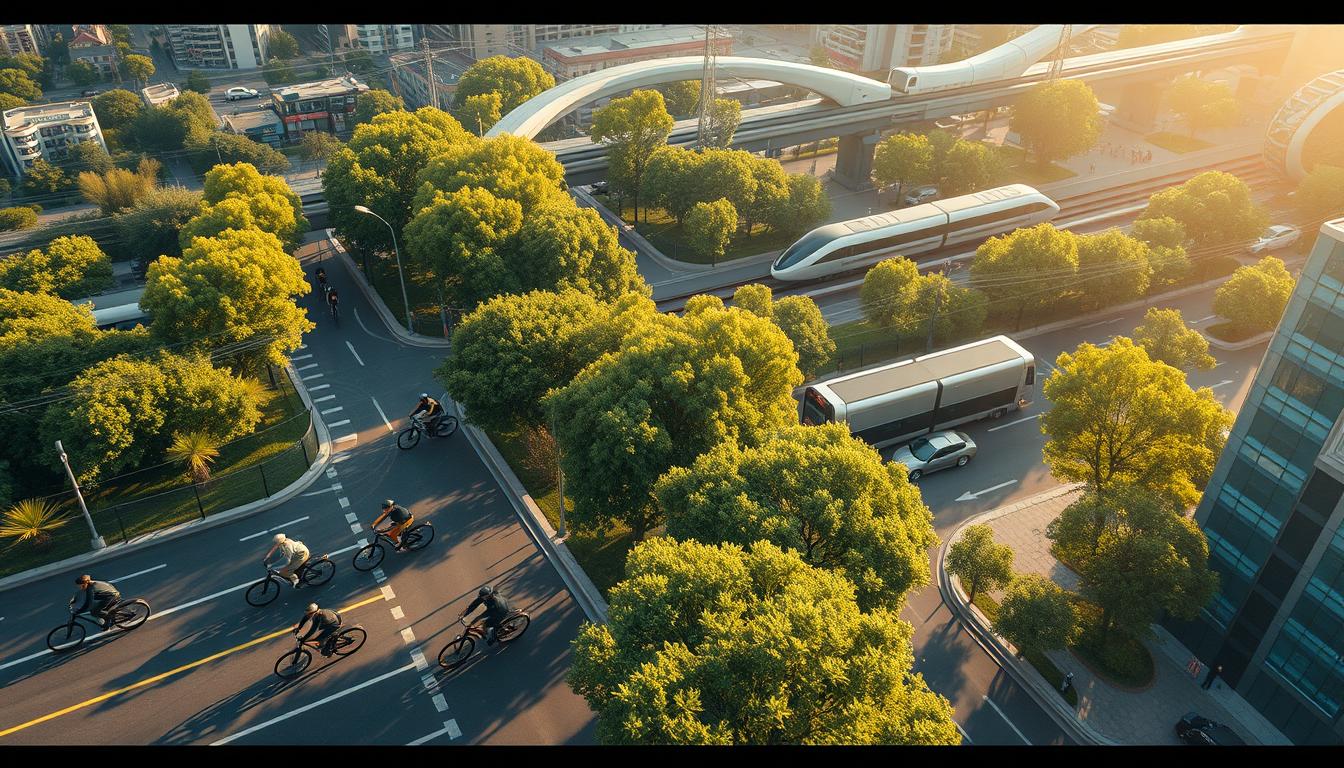
Urban transportation is changing fast towards being more green. Eco-friendly ways to get around are now key for healthier cities in the U.S.
Choosing green transport is vital for cutting down on carbon emissions and making cities better. People are starting to see how their daily travel affects the planet.
Today’s city folks want to reduce their carbon footprint. They’re looking at electric cars, bike-sharing, and better public transit to change how we move around.
The future of city travel is about finding ways that are good for the planet and easy to use. We can all work together to make our cities better places to live.
Cities are now focusing on green transport systems. They aim to make walking safer, cut down on traffic, and improve air quality. These efforts show a big commitment to a greener future for our cities.
Understanding the Environmental Impact of Traditional Commuting
Modern transportation faces big challenges for being green. Cars are a big problem, harming our environment and economy in cities.
Our roads show us big environmental problems that need fixing fast. We must learn how old ways of getting around hurt our planet.
Carbon Footprint of Personal Vehicle Usage
Cars make a lot of carbon emissions, affecting our climate. The average car:
- Creates about 4.6 metric tons of carbon dioxide each year
- Spews over 250 grams of CO2 for every mile driven
- Contributes a lot to greenhouse gases
Traffic Congestion and Air Quality Concerns
| Urban Area | Annual Hours Lost to Traffic | Estimated Pollution Increase |
|---|---|---|
| Los Angeles | 119 hours | 38% higher emissions |
| New York City | 140 hours | 42% higher emissions |
| Chicago | 104 hours | 35% higher emissions |
Economic Costs of Car-Dependent Infrastructure
Designing cities around cars is expensive. It costs a lot to keep roads up, build parking, and widen roads. This money could be spent on better things.
- A city spends $500 million a year on road upkeep
- Parking takes up too much city space
- Pollution makes people sick, costing more in healthcare
We need to work together to make transportation better. We must plan cities in new ways that are good for the planet.
Transforming Cities with Sustainable Public Transit Systems

Across the United States, cities are changing public transit. They’re using new, green ways to move people. This makes cities better for both people and the planet.
New public transit systems are smart and green. They use the latest technology and green ideas. These systems aim to:
- Use electric buses that don’t pollute
- Let people track buses on their phones
- Have special lanes for buses to move faster
- Power stations with clean energy
Cities like Seattle, San Francisco, and New York are at the forefront. They show how smart transit can cut down pollution. It also makes getting around easier for everyone.
For transit to work well, cities need a good plan. They should make a network that’s easy to use. This helps people use public transit more and drive less.
- Build more light rail lines
- Start bike-sharing programs
- Make walking safer
Creating these new transit systems takes teamwork. City planners, experts, and the community must work together. This way, cities can offer better, greener ways to travel. It’s good for people and the planet.
Eco-Friendly Commuting Solutions for Modern Urban Living
Urban transportation is changing fast, with a focus on green travel. Cities in the U.S. are making it easier to travel without harming the environment. Now, people have many green options instead of just cars.
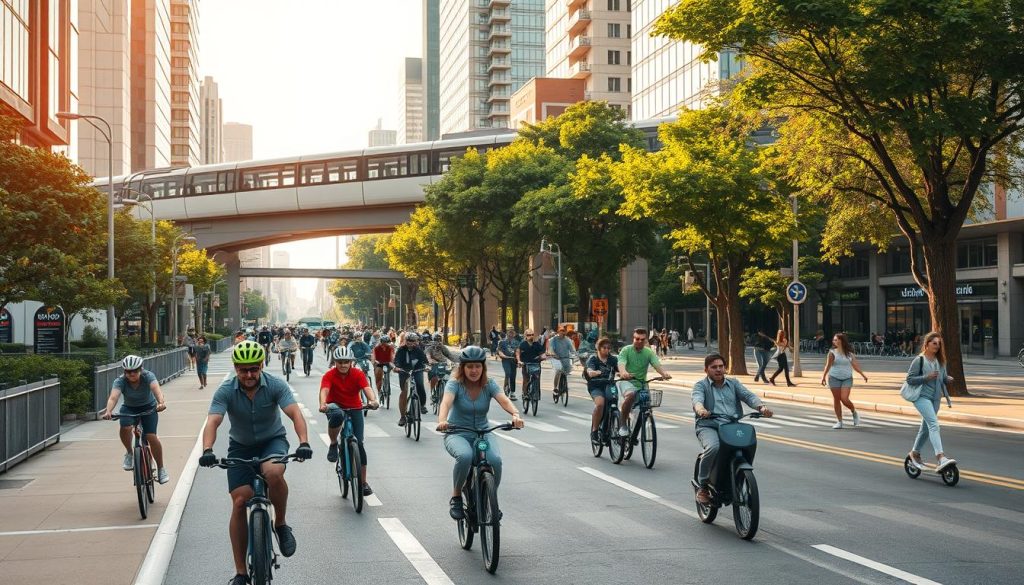
Cities are now thinking differently about how people get around. They want to make travel better for the planet and for people. This change is all about cutting down on pollution and making cities better places to live.
Electric and Hybrid Vehicle Integration
Electric and hybrid cars are changing how we travel in cities. They help the environment in big ways, like:
- Reduced carbon footprint
- Lower fuel costs
- Quieter urban environments
- Advanced technological features
Bike-Sharing Programs and Protected Lanes
Biking is becoming a big deal in cities. Bike-sharing and special bike lanes make it safe and easy to ride a bike. This is changing how people move around.
- Expanded bike lane networks
- Integrated bike-sharing systems
- Secure bicycle parking facilities
Walking Infrastructure and Pedestrian-First Design
Walkable cities are key to a greener future. By making cities friendly for walkers, cities encourage people to use their feet. This helps reduce the need for cars.
- Wider sidewalks
- Pedestrian zones
- Enhanced street connectivity
- Safety improvements for pedestrians
These new ideas show how cities can be better for everyone and the planet. They make travel more fun and green.
Workplace Incentives for Green Transportation

Today’s businesses are moving towards carbon-neutral commuting to cut down on environmental harm and support their workers’ health. They see that green transport plans can greatly reduce carbon emissions. At the same time, they boost employee happiness and work performance.
Forward-thinking employers are launching special programs to encourage eco-friendly travel to work. These efforts change how companies handle work travel. They also bring real environmental gains.
- Subsidized public transit passes
- Electric vehicle charging stations
- Bike-to-work reimbursement programs
- Carpooling matching services
- Flexible work-from-home options
Companies that adopt green transport plans gain big benefits. Workers value workplaces that care about the planet. They also appreciate the practical help in getting to work.
| Incentive Type | Cost Savings | Environmental Impact |
|---|---|---|
| Transit Pass Subsidy | $50-$100/month per employee | Reduces individual carbon emissions by 20-30% |
| Electric Vehicle Program | Up to $7,500 tax credit | Eliminates direct transportation carbon emissions |
| Bike Commuter Benefit | $20-$50/month | Zero direct carbon emissions |
By investing in green commuting, businesses show they care about the planet. They also offer real perks to their employees and the community. Green transport plans are a smart choice for companies that want to be sustainable.
Building Smart Infrastructure for Low-Emission Travel
Urban planners are changing transportation infrastructure to support eco-friendly travel. Smart city technologies are making sustainable mobility easier. Cities like San Francisco and Copenhagen are leading with new transportation systems.
These systems cut down on carbon emissions and connect communities better. Advanced digital platforms track and optimize public transit routes in real-time. They also include dedicated lanes for electric buses and bike-sharing stations.
These changes make cities more livable by reducing traffic and promoting health. Community engagement is key in developing these solutions. Local governments work with tech companies and design experts to create green transportation plans.
By using smart technologies and sustainable design, cities meet environmental and resident needs. The future of urban transport relies on teamwork between tech, design, and community. Residents can help by supporting local projects, choosing green transport, and pushing for eco-friendly solutions.
Every choice we make helps build a greener, more connected city.