

Riding electric bicycles has become a popular way to commute and explore. But staying safe means more than just balancing on two wheels. Understanding your state’s rules for protective gear is key to avoiding fines and staying injury-free.
Recent data shows nearly 90,000 injuries occur yearly from e-bike crashes, with head trauma being a major concern. Federal guidelines classify these vehicles into three categories, which helps define safety standards. However, each state sets its own rules for riders.
South Dakota, for example, has unique requirements compared to neighboring regions. Even areas without strict regulations strongly recommend protective headgear. Research proves it reduces severe injuries by over 60% in accidents.
This guide breaks down everything from nationwide policies to local ordinances. You’ll learn how to stay compliant while prioritizing safety—no matter where you pedal. Let’s dive into the details that keep riders informed and protected.
Understanding Helmet Laws for E-Bikes
Electric bike enthusiasts often prioritize speed and convenience, but overlooking protective gear regulations can lead to unexpected consequences. Wearing proper head protection reduces severe injury risks by 60% in collisions, according to national safety data. This makes choosing the right gear as important as understanding your vehicle’s capabilities.
Why Head Protection Matters
Studies show riders without adequate gear face three times higher hospitalization rates. Crashes involving electric bikes frequently result in impacts exceeding 15 mph—speeds where skull fractures become likely. Properly fitted equipment absorbs shock and distributes force, significantly improving outcomes.
State-by-State Variations
Rules differ dramatically across the U.S. New Hampshire requires all riders under 18 to wear certified protection, while adults face no mandates. Contrast this with California, where every cyclist using Class 3 models must comply. These distinctions often tie to vehicle classifications:
| State | Age Requirement | Class Requirements |
|---|---|---|
| New Hampshire | Under 18 | All classes |
| Texas | None | Class 3 only |
| New York | All ages | Class 1-3 |
Smart riders check both local ordinances and vehicle specifications. Class 2 models with throttle assist often face stricter rules than pedal-assisted versions. Staying informed helps balance legal compliance with personal safety preferences.
Federal Regulations Impacting E-Bike Standards
Federal oversight shapes how electric bicycles are designed and sold across America. These national rules create a safety baseline that manufacturers must follow. They help ensure riders get reliable products while clarifying legal distinctions from motorcycles.

Consumer Product Safety Commission Guidelines
The Consumer Product Safety Commission (CPSC) sets clear benchmarks for motorized bicycles. Key requirements include a 750-watt maximum motor power and a 20 mph speed limit when using pedal assistance. These thresholds determine whether a vehicle qualifies as an electric bicycle or falls under stricter motorcycle regulations.
Manufacturers meeting CPSC standards often integrate safety features like automatic cutoffs at speed limits. This reduces abrupt acceleration risks and encourages stable riding. Proper classification also impacts protective gear suggestions, as lower-speed models may not require full-face designs.
While federal rules focus on product engineering, states handle usage policies like age restrictions. Riders benefit from this dual system—consistent mechanical standards paired with localized safety protocols. Always check your vehicle’s specifications to confirm compliance before hitting the road.
State-Level Helmet Requirements and Registration Details
Navigating protective gear rules feels like learning a new dialect in every state. While some regions focus on youth safety, others weave registration processes into their safety standards. Let’s unpack these layered requirements.
Who Needs Protective Gear?
Age plays a starring role in many state laws. New Mexico demands certified head protection for riders under 18, while Alabama requires it for all ages. Contrast this with Colorado, where only Class 3 riders face mandates regardless of age.
Paperwork You Can’t Ignore
Several states treat motorized bicycles closer to mopeds than traditional bikes. New Mexico requires registration for Class 3 models, complete with VIN verification. Check out how different regions handle documentation:
| State | Age Requirement | Registration Needed? |
|---|---|---|
| New Mexico | Under 18 | Class 3 only |
| Texas | None | No |
| Alabama | All ages | Yes |
| Colorado | Class 3 riders | No |
Insurance rarely comes into play, but Louisiana recently proposed liability coverage for high-speed models. Always verify local information through official transportation websites—policies change faster than bike tires wear out.
Smart riders bookmark their state’s transportation portal. A quick annual check ensures you’re current with evolving standards and avoids surprise fines during traffic stops.
Three-Tiered E-Bike Classification and Helmet Mandates
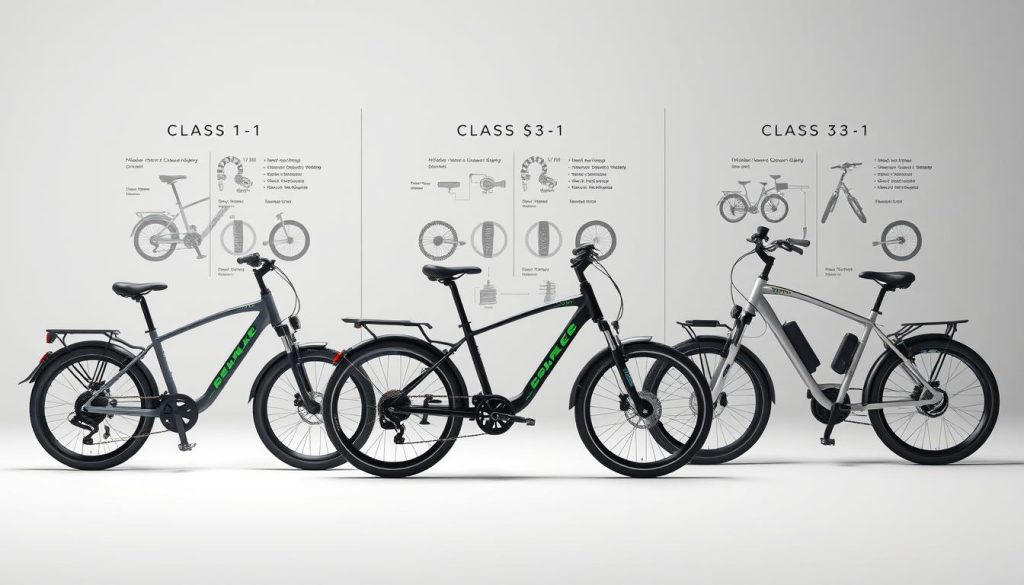
Electric bicycle classifications act as a roadmap for riders navigating safety rules. Most regions use a three-tier system to group models by speed and power. This structure helps determine where you can ride and what gear you need.
Breaking Down the Categories
Class 1 models provide pedal assistance up to 20 mph without throttle support. Class 2 versions add a throttle but cap speed at the same limit. Class 3 bicycles boost pedal-assisted speeds to 28 mph, making them popular for commuting.
| Class | Max Speed | Power Source | Common Rules |
|---|---|---|---|
| 1 | 20 mph | Pedal-assist only | Allowed on bike paths |
| 2 | 20 mph | Throttle-enabled | Restricted in some parks |
| 3 | 28 mph | Pedal-assist only | Helmet required in 14 states |
Faster models often face stricter safety rules. California mandates head protection for all Class 3 riders, while New York applies this to cyclists under 14. Traffic regulations also shift—some cities ban Class 3 bicycles from crowded pedestrian areas.
Registration requirements vary too. Oregon treats Class 3 models like standard bicycles, but Arizona requires permits for throttle-assisted versions. Checking your state’s transportation website ensures you stay legal and safe on busy streets.
Helmet Laws for E-Bikes: A Comprehensive Overview
Safety starts with understanding how regulations and gear work together. Head trauma accounts for 45% of serious bike-related injuries, according to ER reports. While rules vary, one fact remains: protective headgear slashes severe injury risks by 63% in collisions.
The Consumer Product Safety Commission sets strict testing standards for head protection. Every certified model must withstand high-impact scenarios at speeds matching Class 3 vehicles. Look for CPSC stickers inside gear—this ensures proper shock absorption and strap strength.
Urban commuters face unique risks. Data shows riders without proper protection suffer twice as many facial fractures and concussions. Modern designs now feature:
- Multi-directional impact protection systems
- Integrated LED lights for visibility
- Moisture-wicking liners for comfort
Twenty-three states require specific gear based on vehicle class and rider age. Oregon mandates full-face models for off-road trails, while Florida focuses on youth regulations. Always check your local transportation department’s website—policies update frequently.
New materials like graphene-reinforced shells combine lightweight comfort with motorcycle-level protection. These innovations make wearing approved gear easier than ever, blending safety with personal style. Remember: compliance isn’t just about avoiding tickets—it’s your best defense against life-changing injuries.
Benefits of Following Helmet Safety Guidelines
Head injuries drop by 63% when riders use certified protective gear, according to Consumer Product Safety Commission studies. These guidelines aren’t just rules—they’re lifesaving tools designed for modern transportation needs.
Reduction of Head Injury Risks
Proper head protection absorbs impact forces equivalent to a 10-foot fall. In New Jersey, emergency room visits for bicycle-related trauma fell 41% after stricter safety campaigns began. Data shows riders with approved gear face:
- 72% lower risk of skull fractures
- 55% reduction in concussions
- 89% fewer facial injuries
Enhancing Overall Riding Safety
Consistent gear use creates safer habits. Riders who prioritize protection are 3x more likely to check brakes and tire pressure regularly. Pairing these practices with visibility aids cuts accident risks by half.
| State | Injury Rate (No Gear) | Injury Rate (With Gear) |
|---|---|---|
| New Jersey | 27% | 9% |
| National Average | 34% | 12% |
Safety-conscious cyclists inspire others—communities with high gear adoption see 22% fewer pedestrian collisions. Simple changes like routine maintenance and hand signals amplify these benefits, creating safer roads for everyone.
Choosing the Right Helmet for Your E-Bike
Selecting proper headgear combines safety smarts with personal comfort. Start by checking certifications from the Consumer Product Safety Commission (CPSC)—their sticker means the gear meets crash-test standards. A snug fit matters most: your protective equipment shouldn’t shift when you shake your head.
Key Features and Safety Standards
Look for lightweight materials like polycarbonate shells paired with EPS foam liners. These absorb impacts better than basic designs. Ventilation slots keep you cool during summer rides, while reflective strips boost visibility at night.
State guidelines shape choices too. West Virginia requires certified gear for riders under 18, but their “Safe Ride” program offers discounts on approved models. Always verify local rules—some regions mandate full-face designs for high-speed models.
Use this checklist when shopping:
- CPSC or ASTM certification labels inside
- Adjustable straps that stay secure
- Replacement every 5 years (or after any crash)
Higher-priced options often include MIPS technology for multi-directional impact protection. Balance cost with features that match your riding style. Remember: proper gear pays off in safety dividends, not just compliance.
Local Ordinances: Navigating Unique Regulations and Incentives
City rules often add layers to state policies, creating a patchwork of requirements. Municipal governments frequently tailor safety measures to address local traffic patterns and accident trends. This means riders might face different restrictions on sidewalks, bike lanes, or park trails depending on their zip code.
Urban Policies and Financial Perks
New York City enforces stricter rules than New York State. Riders under 14 must wear certified head protection, and all cyclists using throttle-assisted models need reflective gear after dark. Passengers on cargo bikes face similar mandates, a rule rarely seen elsewhere.
Several cities pair regulations with incentives to boost compliance. Seattle offers rebates covering 30% of approved safety gear purchases. Portland’s “Safe Streets” program gives priority bike lane access to riders who complete free safety courses. Check local initiatives like:
- Denver’s tax credits for e-cargo bike owners
- Austin’s discounted parking permits for certified riders
- Chicago’s free light installations for low-income commuters
Sidewalk riding bans vary too. Miami prohibits it entirely, while Los Angeles allows it outside business districts. Always review municipal websites before exploring new areas—a wrong turn could mean a $150 fine. Bookmarking city transportation pages helps track seasonal rule changes affecting trail access or gear requirements.
Final Thoughts: Ride Smart and Stay Protected
Smart cycling communities thrive when everyone prioritizes safety and awareness. Federal guidelines set baseline standards, while state and local rules add specific requirements based on vehicle class and rider age. Knowing your electric bicycle’s category—whether Class 1, 2, or 3—helps align your gear choices with regional mandates.
Choosing certified head protection isn’t just about compliance. It’s a practical step that reduces injury risks and sets a positive example for others. Regular maintenance checks and updated safety knowledge keep riders prepared for evolving regulations.
Always check for CPSC certifications when selecting gear. Replace equipment after impacts, even if damage isn’t visible. Share safety tips with fellow cyclists to build a culture of responsibility on roads and trails.
Lead by example: your actions inspire others to adopt safer habits. Stay curious about policy changes through official transportation resources. Whether commuting or exploring, make every ride a testament to smart, law-abiding choices. Prioritize protection—it’s the mark of a truly savvy cyclist.