
Electric bikes have changed how we travel in cities and enjoy the outdoors. Knowing how to charge your e-bike battery right is key. It helps your battery last longer and makes riding better.
This guide is for all cyclists, new or experienced. We’ll cover everything about taking care of your battery. You’ll learn about the best charging tools and smart ways to charge. This will make your e-bike work better and last longer.
Looking after your battery is more than just keeping your bike going. It’s about staying safe, getting the most out of your ride, and protecting your investment. Our tips will make you a pro at managing your e-bike’s battery.
Learn how to charge your electric bike the right way. This will unlock its full potential and make your rides even better.
Understanding E-bike Battery Types and Charging Requirements
Recharging an electric bike battery is key for every cyclist. Modern e-bikes need careful attention to keep them running well and lasting long.
The battery is the heart of an electric bike. Lithium-ion batteries are the top choice because they perform well and are reliable.
Different Types of E-bike Batteries
- Lithium-ion (most common): Lightweight and high-energy density
- Nickel-Metal Hydride (NiMH): Older technology with lower performance
- Lead-Acid: Least expensive but heaviest option
- Lithium Polymer (LiPo): Compact and flexible design
Basic Charging Components and Equipment
To recharge an electric bike battery right, you need the right tools. It’s important to invest in quality charging equipment for safe and efficient charging.
- Original manufacturer charger
- Voltage-specific charging adapter
- Stable electrical outlet
- Protective charging case (recommended)
Battery Capacity and Voltage Specifications
Knowing your e-bike’s battery charging specs is key to keeping it healthy. Each model has its own voltage and capacity needs, affecting how well it performs.
| Battery Type | Typical Voltage | Capacity Range |
|---|---|---|
| Standard E-bike Battery | 36V – 48V | 400-600 Wh |
| High-Performance Battery | 52V | 700-900 Wh |
Understanding these specs helps riders make smart choices about charging. It keeps their e-bike running at its best.
How to Charge E-bike Battery: Step-by-Step Process
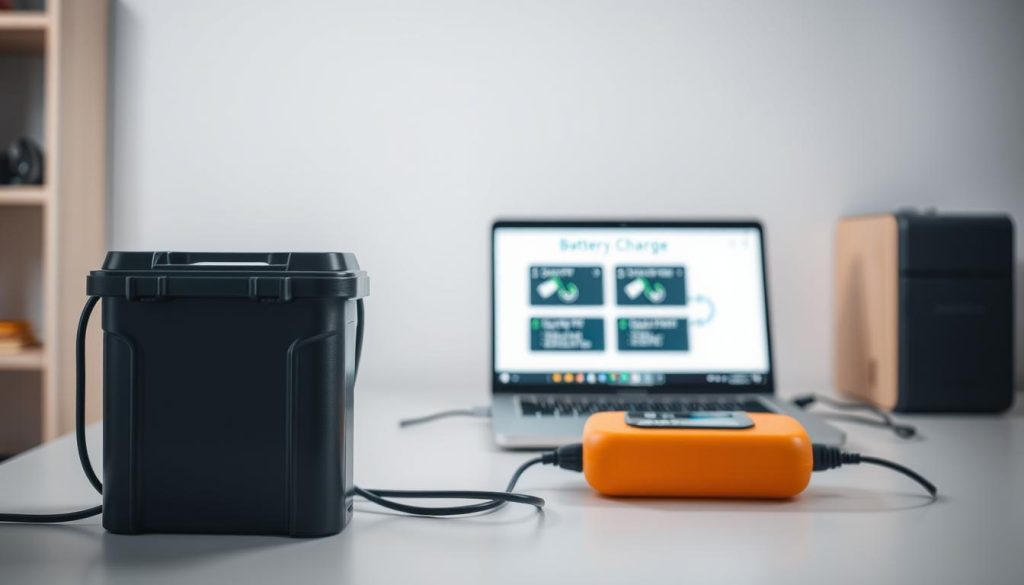
Charging your e-bike battery right is key to keeping it in top shape. The e-bike battery charging guide makes sure your electric bike is always ready for fun rides.
Before you start, make sure you have these important things:
- Original manufacturer charger
- Power outlet near your charging station
- Clean, dry workspace
- Battery temperature gauge (optional)
Here’s how to charge your e-bike battery safely:
- Remove the battery from your e-bike (if detachable)
- Check battery connections for any dirt or corrosion
- Plug the charger into a stable power outlet
- Connect the charger to the battery
- Monitor charging indicators
- Unplug once the battery reaches full charge
Experts say to avoid extreme temperatures when charging. Charge your battery in a room between 50-77°F (10-25°C) for best results. Most e-bike batteries charge in 3-6 hours, depending on size and charger type.
Always check your e-bike maker’s instructions for charging tips. Different batteries need special care to work well and last longer.
Safety Precautions and Best Practices for Battery Charging
E-bike battery safety is key for both performance and life span. Safe charging practices protect your investment and ensure a reliable ride. Knowing how to maintain your e-bike battery can prevent risks and extend its life.
Temperature Considerations During Charging
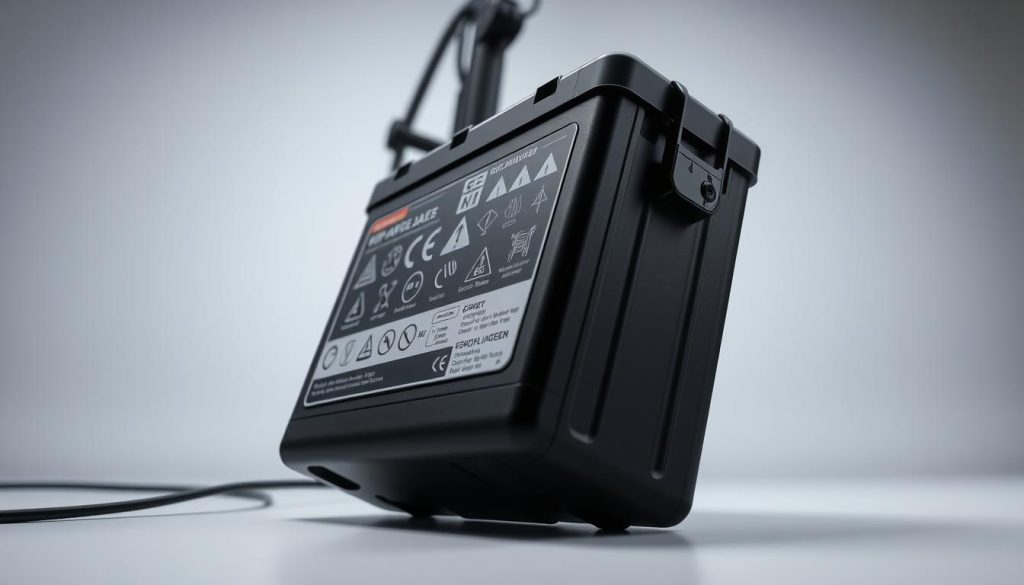
Battery performance changes with temperature. Extreme cold or heat can harm charging efficiency and battery health. The best charging temperature is between 50-77°F (10-25°C).
- Avoid charging batteries in direct sunlight
- Store batteries in temperature-controlled environments
- Never charge a battery immediately after riding when it’s extremely hot
Proper Storage Conditions
Proper storage is vital for battery performance. Store your e-bike battery in a cool, dry place. Keep it away from direct moisture and extreme temperatures.
| Storage Condition | Recommended Practice |
|---|---|
| Temperature | 50-68°F (10-20°C) |
| Charge Level | 40-60% capacity |
| Humidity | Low humidity, away from moisture |
Common Safety Hazards to Avoid
Be careful to avoid battery risks. Regularly check your battery for damage. Avoid overcharging and use only chargers recommended by the manufacturer.
- Never use damaged charging cables
- Unplug charger once battery reaches full capacity
- Keep battery away from flammable materials
- Avoid charging in high-traffic or crowded areas
Maximizing Battery Life Through Smart Charging Habits
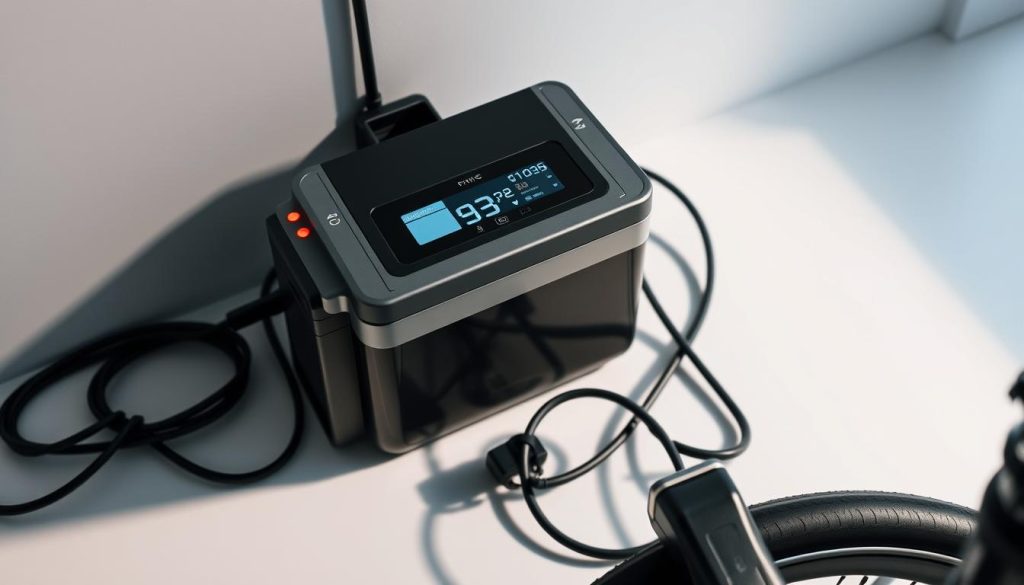
To make your e-bike battery last longer, follow smart charging tips. These habits protect your investment and keep your battery working well. Learning these maintenance techniques is key.
Smart charging is vital for your e-bike battery’s health. Lithium-ion batteries do best when charged between 20% and 80%. Avoiding full charges and keeping them from getting too low helps prevent damage.
- Avoid charging immediately after riding when the battery is hot
- Use the original manufacturer’s charger
- Store batteries at room temperature
- Perform partial charges more frequently
Keeping your e-bike battery in top shape means regular care and smart charging. Extreme temperatures can harm your battery. So, keep it away from direct sunlight and cold.
| Charging Practice | Battery Impact |
|---|---|
| Partial Charges | Reduces battery stress |
| Avoiding Full Discharge | Prevents capacity loss |
| Room Temperature Storage | Maintains battery efficiency |
By following these charging tips, you can make your e-bike battery last longer. This saves you money and helps the environment.
Troubleshooting Common E-bike Battery Charging Issues
Running into battery problems can really get you down. To fix e-bike battery issues, you need to follow a step-by-step guide. Most problems come from not keeping up with maintenance or from the environment.
First, check your charger and connections. Look for dirt or damage in the charging port. Clean it with a dry cloth and make sure it’s connected well. Keeping your charger clean is key to getting the most out of your e-bike.
Temperature affects your battery a lot. Cold or hot weather can slow down charging and shorten battery life. Keep your battery in a room between 50-77°F (10-25°C) for best results. If your battery won’t charge or loses power fast, it’s time to see a pro.
Trying to fix it yourself can work, but sometimes you need a pro. Keep your connections clean, avoid letting the battery fully drain, and charge it as the maker says. This will help your e-bike go further and last longer.