
Picking an electric bicycle isn’t just about specs—it’s about matching your lifestyle. Whether you’re commuting daily or exploring trails, the right combination of components makes all the difference. Let’s break down what matters most.
Experts like Gaston Daigle and Sixthreezero’s Dustin agree: understanding motors and batteries is key. Hub motors work well for flat roads, while mid-drives excel on hills. Battery capacity determines how far you’ll go, but weight and charging habits matter too.
This guide uses real-world examples from Endless Sphere forums and trusted brands. You’ll learn how to compare torque ratings, decode voltage specs, and spot durable frames. We’ll even share tips for test rides—because how a bike feels matters as much as the numbers.
Ready to cut through the jargon? Let’s explore how modern e-bikes blend engineering with everyday practicality. By the end, you’ll know exactly what to look for—and why.
Understanding Your E-Bike Needs
Before comparing motors or battery specs, map out where and how you’ll use your e-bike. A Consumer Reports survey found 68% of riders prioritize range for daily commuting, while weekend explorers focus on torque and suspension. Your needs shape everything—from frame design to accessory choices.
City riders tackling traffic need quick acceleration and built-in lights for safety. Weekend adventurers might prioritize cushioned seats and off-road tires. Those planning long trips should look for batteries with 500+ watt-hours. Ask yourself: Will this bike handle grocery runs, steep trails, or leisurely park loops?
Test rides reveal what specs can’t. Over 40% of buyers in CR’s study regretted skipping this step. A 10-minute spin helps assess seat comfort, handlebar reach, and how the bike handles bumps. Does the throttle respond smoothly? Can you lift it onto a bike rack?
Range and speed needs vary wildly. Commuters riding 15 miles round-trip require at least 20-40 miles per charge. Most urban riders stick to 20 mph assist limits, while rural users might need higher speeds for open roads. Leisure riders often prefer lower speeds for relaxed outings.
By aligning your needs with specs, you avoid paying for unnecessary power or skimping on essential features. Frequent hill climbers? Prioritize mid-drive motors. Tight storage space? Foldable designs save room. Jot down your non-negotiables before browsing—it simplifies decisions and saves time.
How to Choose the Perfect E-Bike: Motor, Battery, and Features Explained
The heart of any electric bicycle lies in how its key parts work together. Motors, batteries, and frame designs create a system where each piece affects performance and cost. A study by Electric Bike Report shows mid-tier models balance these elements best for most riders.
Hub motors paired with 48V batteries often cost less than mid-drive systems. For example, Rad Power Bikes’ RadCity 5 uses this setup at $1,899, while Trek’s mid-drive Allant+ 7S jumps to $3,999. The price difference comes from complex gear systems in mid-drives versus simpler hub designs.
| Model Type | Motor | Battery | Price Range |
|---|---|---|---|
| Commuter | 500W Hub | 48V 14Ah | $1,500-$2,200 |
| Hybrid | 750W Mid | 52V 17.5Ah | $2,800-$3,500 |
| Mountain | 1000W Mid | 52V 20Ah | $4,000+ |
Less expensive bicycles often use lower-grade battery cells. Samsung or Panasonic cells add $200-$400 to the price but last twice as long. Always check battery warranty length—18+ months signals quality.
Three main types dominate the market: commuter, hybrid, and mountain bikes. Commuter models focus on range, hybrids blend speed and comfort, while mountain versions prioritize torque. Your riding style determines which combination makes sense.
Smart shoppers compare total watt-hours rather than voltage alone. A 48V 15Ah battery (720Wh) outperforms a 52V 12Ah pack (624Wh). This knowledge helps avoid overpaying for flashy specs that don’t match your needs.
Choosing the Right Motor for Your E-Bike
Your e-bike’s motor acts as its powerhouse, directly shaping your ride’s capabilities. Three main designs dominate the market, each excelling in specific scenarios. Let’s explore what sets them apart and how technical specs translate to real-world performance.
Motor Types: Hub, Mid-Drive, and Front Hub
Hub motors sit inside the wheel—either rear or front. Brands like Bafang use these for affordable commuter bikes. They work well on flat roads but struggle on steep hills. Mid-drive motors, like Bosch’s Performance Line CX, mount near the pedals. These transfer power through the bike’s gears, making them ideal for mountain trails.
Front hub motors are less common. They provide basic assist but can feel unbalanced during sharp turns. Dustin from Sixthreezero notes: “Mid-drives handle 15%+ grades effortlessly, while hub motors max out at 10%.”
Wattage and Torque Considerations
Wattage measures raw power, but torque determines rotational force. A 750W hub motor might have 60Nm torque, while a 250W mid-drive hits 85Nm. Higher torque helps heavier riders climb hills without draining the battery.
Amps matter too. More amps mean faster acceleration. Pair a 48V battery with a 20A controller, and you get 960W peak power. Shimano’s STEPS E8000 system uses this combo for responsive pedal assist up to 20 mph.
Urban riders often choose 500W hub motors for zipping through traffic. Mountain enthusiasts prefer 750W mid-drives with torque sensors. Match your motor type to local terrain—flat cities need less torque, while hilly areas demand robust systems.
Selecting the Ideal Battery Pack for Your Ride
Your e-bike’s battery isn’t just a power source—it’s the lifeline that determines how far and how freely you ride. Balancing capacity with practicality ensures you’re not lugging around unnecessary bulk or running out of juice mid-commute.
Battery Capacity: Amp Hours vs. Watt Hours
Amp hours (Ah) measure current over time, while watt hours (Wh) reveal total energy storage. A 36V 10Ah battery delivers 360Wh—enough for 25-35 miles on flat terrain. Higher Wh means more range: a 48V 15Ah pack (720Wh) can handle 50+ miles.
| Voltage | Amp Hours | Watt Hours | Range Estimate |
|---|---|---|---|
| 36V | 10Ah | 360Wh | 25-35 miles |
| 48V | 14Ah | 672Wh | 40-55 miles |
| 52V | 17.5Ah | 910Wh | 60-75 miles |
Size, Weight, and Mounting Options
Lithium batteries vary widely in size. A compact 360Wh unit might weigh 6 lbs, while a 910Wh monster could hit 15 lbs. Heavier packs lower maneuverability but boost range—critical for touring cyclists.
Integrated frame batteries look sleek but limit upgrade options. External mounts allow swaps but add bulk. Bosch’s PowerTube design hides the battery inside the frame, while Rad Power uses removable rear racks for easy access.
Prioritize batteries with UL-certified cells, even if they cost 20% more. They last twice as long as generic packs, saving money over time. Remember: a lighter bicycle with a mid-sized battery often outperforms a heavy model with max capacity.
Understanding E-Bike Controllers and Displays
While motors and batteries get most of the attention, your e-bike’s true intelligence lies in its controller and display. These components work like a central nervous system, managing everything from acceleration patterns to safety features. Let’s explore how they translate your input into smooth, responsive rides.
The Role of the Controller in Performance
The controller acts as a traffic cop for energy flow. It takes raw power from the battery and adjusts it based on pedal input or throttle use. Advanced models from brands like Bosch and Shimano use algorithms to deliver seamless assistance without jerky surges.
Displays show real-time specs that matter. Most units track speed, distance, and battery percentage. Premium versions add GPS navigation and custom ride modes. Integrated lights often sync with these systems—automatically brightening when the sun sets for safer evening rides.
Three controller types dominate the market:
- Square wave: Affordable but less efficient (common in budget models)
- Sine wave: Smoother power delivery (used by Specialized Turbo models)
- FOC (Field-Oriented Control): Maximizes efficiency for steep climbs
Riders in hilly areas benefit from FOC controllers that optimize torque. Urban commuters might prefer simpler sine wave systems. Test different setups to feel how they balance power and precision.
Exploring Essential E-Bike Features and Accessories
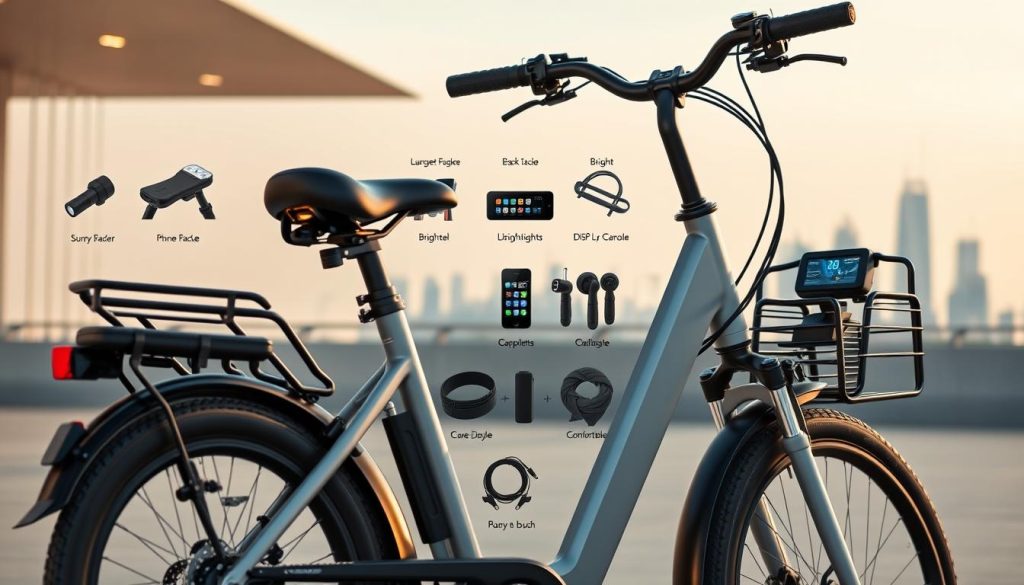
The right accessories transform your ride from functional to phenomenal. Gaston Daigle, a cycling instructor, notes: “Components like responsive brakes and grippy tires often get overlooked—until you need them most.”
Stopping Power Meets Smart Design
Hydraulic disc brakes outperform mechanical versions, especially in wet conditions. Sixthreezero’s Dustin recommends them for riders carrying cargo or tackling hills. They require less hand pressure and self-adjust as pads wear down.
Throttle types affect control. Twist grips work like motorcycles but can accidentally engage. Push-button throttles prevent mishaps and conserve battery. Test both styles to see which feels natural.
Traction and Added Conveniences
Urban riders benefit from puncture-resistant tires with reflective stripes. Mountain cyclists need wider, knobby treads for loose terrain. Schwalbe’s Marathon Plus tires last 5,000+ miles with proper inflation.
Integrated lights boost visibility without cluttering handlebars. Gear sensors automatically pause the motor during shifts, preventing chain strain. These features work with pedal assist systems to create smoother rides.
E-Bike Riding Styles: From Urban Commutes to Mountain Trails
Where you ride shapes what you need. Smooth city streets demand different features than rocky paths. Let’s explore how terrain influences design choices.
Tailoring Your Bike to Your Terrain
Bikes built for around town riding prioritize agility. Lightweight frames and narrow tires handle stop-and-go traffic effortlessly. Models like the Ride1Up Roadster V2 use 700c wheels for quick pavement navigation.
Mountain bikes require heavy-duty parts. Fat tires (4″+) grip loose dirt, while full suspension absorbs trail bumps. Brands like Specialized Turbo Levo pair 700Wh batteries with high-torque motors for steep hills.
| Riding Type | Key Components | Best For |
|---|---|---|
| Urban Commuter | Slim tires, hub motor, integrated lights | Flat roads, short trips |
| Mountain Explorer | Knobby tires, mid-drive motor, suspension | Hills, uneven trails |
Steep hills change everything. Riders tackling 15%+ grades need mid-drive motors that leverage gear ratios. Coastal paths with winding trails demand responsive brakes and wide handlebars for control.
Your riding style determines accessory choices. Around town riders benefit from pannier racks, while mountain enthusiasts need water-resistant gear bags. Match your bike’s strengths to your favorite routes for maximum enjoyment.
Balancing Cost and Performance in Your E-Bike Purchase
Smart shoppers know a great ride doesn’t require maxing out their budget. The sweet spot lies in matching components to your actual needs. For example, a 2023 EBR study found mid-drive motors add $800-$1,200 to prices compared to hub systems—but only benefit riders tackling frequent hills.
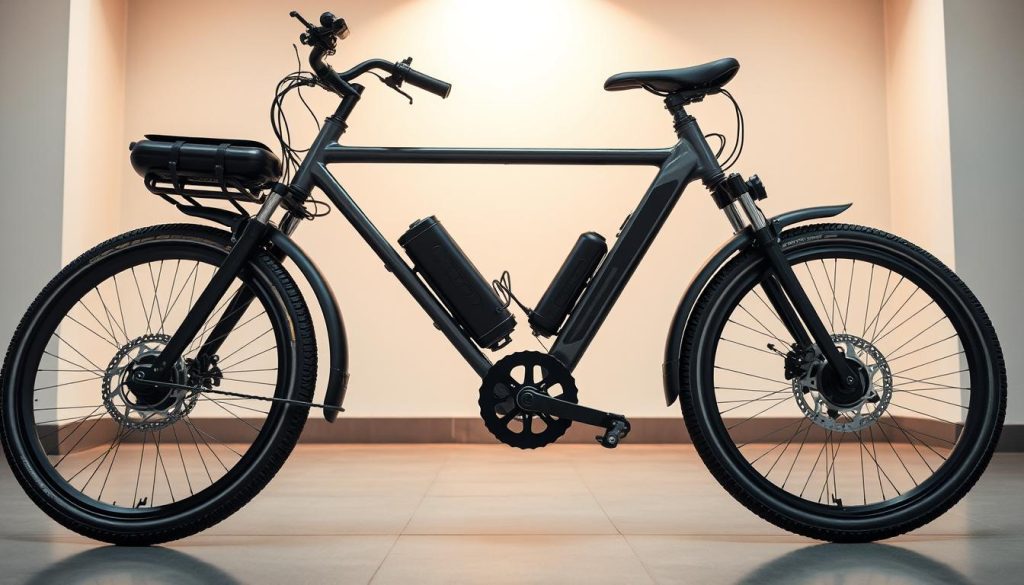
Battery choices dramatically impact cost. A 48V 14Ah pack with Samsung cells costs $450-$600, while generic alternatives run $300-$400. However, premium batteries last 2-3x longer, saving money over five years. Prioritize cells from trusted brands if you ride daily.
Three factors determine real value:
- Usage frequency: Occasional riders can opt for less expensive 350W motors
- Terrain demands: Flat commutes need fewer torque sensors
- Upgrade potential: Modular designs let you add features later
Price comparisons reveal smart options. Rad Power’s $1,599 model uses a 750W hub motor ideal for city streets. Bosch-powered bikes near $3,500 suit mountain trails. Test rides help identify which features you’ll actually use—avoid paying for unused tech.
By focusing on core needs, most riders get a lot of performance without overspending. Remember: the best e-bike isn’t the priciest one—it’s the type that disappears beneath you as you ride.
Navigating E-Bike Regulations and Safety Guidelines
Understanding local laws and safety protocols ensures your e-bike experience remains enjoyable and compliant. Rules vary widely across states, with factors like speed limits and trail access shaping where and how you ride.
State-Specific Rules and Licensing
California requires helmets for Class 3 bikes (28 mph max), while Texas allows 20 mph on sidewalks. Check your state’s classification system:
| State | Max Speed | Helmet Required | Trail Access |
|---|---|---|---|
| California | 28 mph | Class 3 only | Limited |
| New York | 25 mph | All riders | Roads only |
| Colorado | 20 mph | Under 18 | Most trails |
Six states mandate licenses for high-speed models. Always verify local updates—laws change faster than bike tech.
Safety Gear and Best Practices
Integrated lights aren’t just convenient; they’re legally required after dark in 43 states. Pair them with reflective clothing for visibility. Hydraulic brakes outperform mechanical versions during sudden stops, especially on steep trails.
Conduct a test ride to confirm your bike meets regional standards. Does the pedal assist disengage at legal speeds? Can you comfortably reach the brake levers?
On shared trails, reduce speed near pedestrians and announce passes verbally. Avoid throttles in crowded areas—they startle wildlife and other users. Your experience level determines safe riding zones; beginners should practice in empty parking lots before tackling busy streets.
Expert Opinions and Real-World E-Bike Insights
Industry veterans reveal what specs truly matter beyond marketing claims. Gaston Daigle, a cycling instructor with 12 years’ experience, stresses: “Brakes decide whether you stop safely or become a statistic.” His tests show hydraulic systems reduce stopping distances by 30% compared to mechanical ones in wet conditions.
Dustin from Sixthreezero highlights frame durability in mountain bikes. “Riders tackling rocky trails need aluminum alloys, not cheap steel,” he notes. Real-world stress tests prove thicker weld points prevent cracks after 2,000+ miles of rough terrain.
| Component | Expert Tip | Real-World Impact |
|---|---|---|
| Brakes | Choose 4-piston hydraulics | Shorter stops on steep descents |
| Frame Material | 6061 aluminum for trails | Lasts 3x longer than steel |
| Tires | 4″ width for sand/snow | 40% fewer slips |
Rider feedback exposes hidden flaws. Things like poorly angled seats cause numbness during hour-long commutes. Test riders at Endless Sphere forums found ergonomic grips reduce hand fatigue by half.
Urban models need different tweaks. Daigle recommends puncture-resistant tires for glass-strewn bike lanes. “It’s the little things like built-in reflectors that prevent accidents,” he adds. These insights help newcomers avoid costly mistakes.
Optimizing Battery Life and E-Bike Maintenance
Maximizing your ride’s potential starts with smart upkeep habits. Simple routines preserve power capacity and prevent costly replacements. Let’s explore how daily choices impact long-term performance.
Routine Care and Charging Tips
Lithium batteries thrive on partial charges. Avoid draining below 20% or keeping at 100% for weeks. Samsung recommends storing packs at 50% charge during off-seasons.
| Maintenance Task | Frequency | Benefit |
|---|---|---|
| Clean terminals | Monthly | Prevents corrosion |
| Balance cells | Every 10 cycles | Maintains amp output |
| Check voltage | Quarterly | Detects early issues |
Use OEM chargers like Bosch’s 4A model. Fast chargers save time but reduce cell lifespan by 30% over three years. Store batteries in dry areas above freezing.
Pedal assist settings matter. Higher modes drain power faster—mix levels based on terrain. Riders report 15% longer range using eco mode on flats.
Invest in dielectric grease for connectors. This $8 option prevents moisture damage. Annual professional check-ups spot worn cells before failures occur.
Following these steps keeps your battery healthy for 5+ years. Smart care today means fewer surprises—and lower costs—down the road.
Final Thoughts on Selecting Your Ideal E-Bike
Finding your ideal electric bicycle comes down to balancing technical know-how with personal factors. Components like motor power, battery range, and frame durability form the foundation. How they align with your daily routes and riding style matters most.
Quality brakes ensure safe stops in traffic. Throttle types affect control during climbs. Lights integrated into the frame boost visibility without compromising aesthetics.
Reflect on what you truly need from your bike. Are you navigating busy streets or exploring forest trails? Test rides remain essential—they reveal how pedal effort and seat comfort translate from specs to real-world use.
Remember, the best choice combines reliable specs with subtle details. Battery care extends your bike’s lifespan. Trust your instincts during the selection process—if a bicycle clicks with your lifestyle during a test spin, you’re on the right path.
Armed with these insights, you’re ready to find an e-bike that disappears beneath you, leaving only the joy of the ride.