
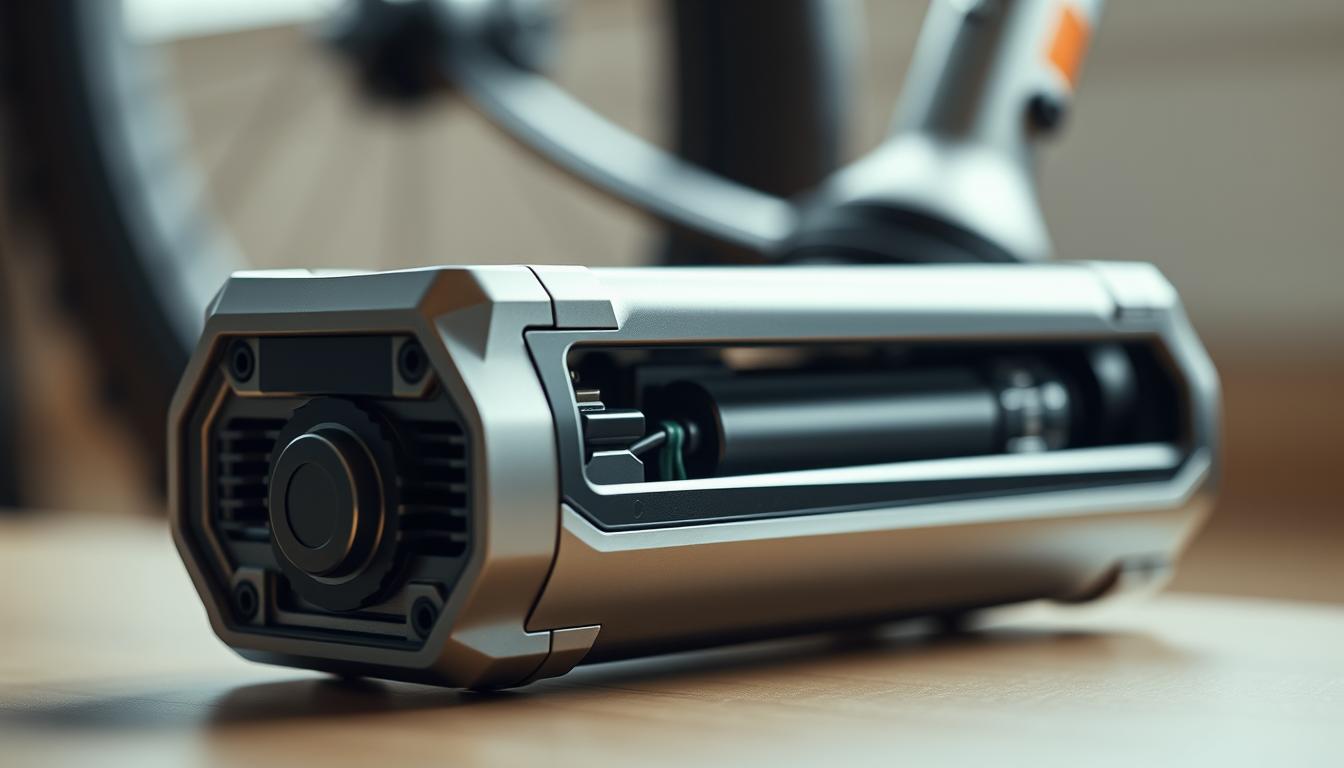
Electric bicycles have changed how we move around cities. The lithium-ion battery for e-bike is a key innovation. It has made electric bikes more powerful and reliable.
These batteries are a big step forward in storing energy. They are light, small, and very efficient. This means riders can go further and feel less weight.
Now, e-bike fans want batteries that are safe, powerful, and green. New lithium-ion systems have smart tech to keep batteries cool and last longer. This tech is always getting better, making e-bikes even more exciting.
This guide will take you into the world of lithium-ion batteries for e-bikes. We’ll look at safety, how to get the best performance, and the latest advancements in electric bikes.
Understanding Lithium-Ion Battery for E-Bike Technology
Electric bicycles have changed how we travel, thanks to lithium-ion cell technology. These batteries are packed with energy, making e-bike rides better than ever.
Today’s e-bike batteries are a big step forward in storing energy on the go. Their design lets cyclists go further without carrying heavy batteries.
Chemical Composition and Energy Storage
Lithium-ion batteries use special chemistry to store lots of energy. They have:
- Lithium cobalt oxide cathodes
- Graphite anodes
- Specialized electrolyte solutions
- Advanced separator membranes
Battery Cell Architecture
The design inside lithium-ion cells affects how well they work. There are two main types:
- Cylindrical cells: Compact and strong
- Prismatic cells: Thin and flexible
Power Output Specifications
Knowing about power output helps choose the right e-bike battery. Important specs include voltage, amperage, and energy density. These affect how far you can go and how fast you can go.
| Battery Specification | Typical Range |
|---|---|
| Voltage | 36V – 52V |
| Capacity | 10Ah – 20Ah |
| Energy Density | 250-300 Wh/kg |
By understanding these details, riders can make the most of their e-bike’s battery.
Key Safety Features of Modern E-Bike Battery Systems
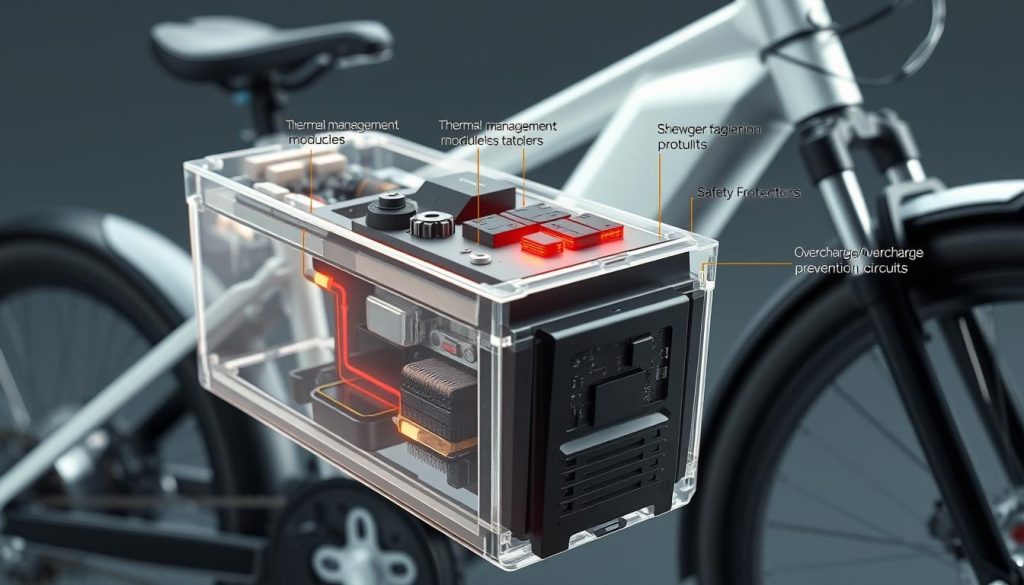
Safety is a top priority in making e-bike batteries. Today’s e-bike batteries have smart safety features. These features keep riders safe and batteries working well for longer.
The heart of e-bike battery safety is the Battery Management System (BMS). This smart system watches over many important things. It stops risks before they start. Some key safety features are:
- Overcharge protection to stop voltage spikes
- Temperature control to avoid overheating
- Short-circuit prevention
- Automatic shutdown in extreme conditions
Recent advances in e-bike battery tech have made them safer. Now, batteries have many safety layers. If you notice your battery getting hot, not working right, or looks damaged, it’s a sign of trouble.
Here are some tips to keep your e-bike battery safe:
- Check the battery’s outer casing often
- Keep it away from very hot or cold places
- Only charge it with the right charger
- Store it in a cool, dry spot
Looking after your battery well keeps you safe and makes your e-bike last longer. Knowing and using these safety steps means you can ride safely and enjoy your electric bike.
Maximizing Battery Performance and Longevity
To get the most from your e-bike’s battery, you need to take good care of it. Electric bike fans know that the right care can make a battery last longer and work better.
Electric bike batteries are advanced and need special care to work their best. Knowing how to take care of them can help you keep your bike running smoothly and efficiently.
Optimal Charging Practices
Charging your e-bike right is key to keeping its battery in top shape. Here are some important tips:
- Avoid fully depleting the battery before recharging
- Keep charge levels between 20% and 80% for maximum longevity
- Use the manufacturer-recommended charger
- Unplug the charger once the battery reaches full capacity
Temperature Management
Temperature is very important for battery health. Too hot or too cold can hurt how well your battery works and how long it lasts.
- Store batteries between 50-77°F (10-25°C)
- Avoid direct sunlight during charging
- Use protective covers in extreme weather conditions
Storage Guidelines
Storing your e-bike battery right is crucial when you’re not using it. Here’s what to do:
- Charge to approximately 50% before long-term storage
- Store in a cool, dry location
- Recharge every 3-4 months during extended periods of non-use
- Keep battery away from moisture and direct heat sources
By following these tips, you can make your e-bike battery last longer and work better. This means more power for all your rides and adventures.
Choosing the Right Electric Bicycle Battery
Finding the perfect electric bicycle battery can change your e-bike ride. The right battery affects your ride’s performance, range, and fun. Knowing what to look for helps you choose the best battery for your needs.
When picking an electric bicycle battery, think about these important points:
- Battery Capacity and Range
- Voltage Requirements
- Weight Considerations
- Compatibility with E-Bike Model
- Budget Constraints
Different riders need different batteries. Commuters might want batteries for long rides. Mountain bikers need strong batteries for tough trails. A good battery means longer rides and better performance everywhere.
| Battery Type | Capacity (Wh) | Typical Range | Best Use |
|---|---|---|---|
| Standard Lithium-Ion | 300-500 | 20-40 miles | Urban Commuting |
| Extended Range | 500-750 | 40-60 miles | Longer Trips |
| High-Performance | 750-1000 | 60-80 miles | Touring/Adventure |
Spending time learning about batteries helps you find the right one. Always talk to e-bike experts or makers to make sure it fits your bike well.
Environmental Impact and Sustainability of E-Bike Power Sources
The rise of eco-friendly power storage has changed how we move around. Lithium-ion batteries for e-bikes are key to green travel. They cut down on carbon emissions and encourage us to think about the planet.

Now, making batteries in a way that’s good for the planet is a big deal. The e-bike world is working hard to make things better. They’re finding ways to make less waste and use resources wisely.
Carbon Footprint Analysis
Let’s look at how e-bikes compare to other ways to get around:
- E-bikes cut carbon emissions by up to 90% compared to cars
- They make very little greenhouse gas when in use
- They help us use less fossil fuels
Recycling and Disposal Strategies
It’s important to handle batteries right to keep our planet safe. Everyone should focus on recycling:
- Use places that are certified for recycling batteries
- Join programs where makers take back old batteries
- Follow local rules for throwing away old electronics
Green Manufacturing Processes
| Manufacturing Approach | Environmental Benefit | Implementation Rate |
|---|---|---|
| Renewable Energy Production | Reduced Carbon Emissions | 45% |
| Sustainable Material Sourcing | Decreased Resource Extraction | 35% |
| Energy-Efficient Manufacturing | Lower Production Footprint | 55% |
The e-bike world is showing it cares about the planet. They’re using new ways to make things better for our future.
Latest Innovations in Lightweight Battery Technology
The e-bike world is changing fast with new battery tech. Scientists are working on light batteries that will change how we ride. They’re using graphene and new lithium-ion types to make batteries that pack more punch.
Solid-state batteries are a big step up. They’re safer, lighter, and hold more energy than old lithium-ion ones. Companies like QuantumScape and Toyota are working hard to make these batteries smaller and more efficient. This could make e-bikes go further and perform better.
New battery management systems are getting smarter. They use sensors and algorithms to use energy better. This means riders get more out of their e-bikes and can keep them running smoothly.
What’s coming next in battery tech is exciting. Graphene and nanotechnology are leading the way. They promise batteries that are lighter, smaller, and last longer. As we keep pushing forward, electric bikes will get even better, making cycling greener and more fun.