
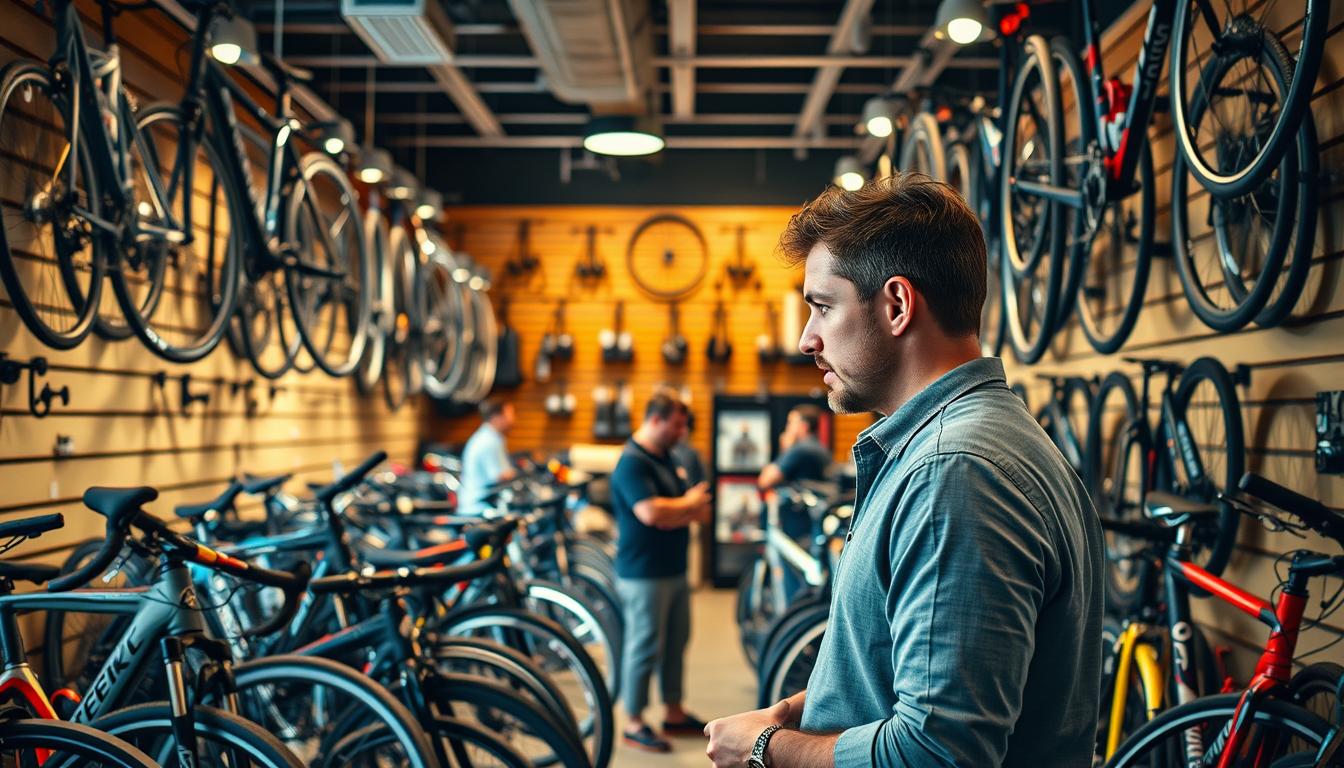
Cycling fans today have a big choice to make. They can buy a new bike online or visit a local shop. Both options have their own good points and bad points.
Now, cyclists have more ways to buy bikes than ever before. They can look online or go to a local bike shop. Each way has its own benefits and things to watch out for.
Knowing the differences between online and local bike shops is key. It helps riders make smart choices. Things like what bikes are available and the service you get are important.
This guide will look at the world of bike shopping. We’ll compare online stores with local shops. We’ll talk about things like how easy it is to shop, prices, expert advice, and help after you buy.
Understanding the Evolution of Bike Shopping in the Digital Age
The cycling world has changed a lot in recent years. Now, how we buy bikes is different. E-commerce has grown fast, making online shopping popular.
Today, cyclists can find and buy bikes online easily. They can see more options, get good prices, and shop from home. This was not possible just 10 years ago.
The Rise of E-commerce in the Cycling Industry
Online bike shopping has grown a lot. This change is thanks to:
- More products to choose from
- Reviews from other customers
- Prices that are hard to beat
- Easy delivery to your door
How Traditional Bike Shops Are Adapting
Local bike shops are not giving up. They are using technology to offer a mix of online and in-person service.
Current Market Trends and Consumer Behavior
Studies show how bike shopping is changing. People want:
- Shopping online and in stores to be easy
- Service that feels personal
- To know everything about a product right away
- Options for buying and returning
The debate over online vs. in-store shopping is ongoing. Both ways are finding new ways to keep cyclists coming back.
The Convenience Factor: Shopping for Bikes Online
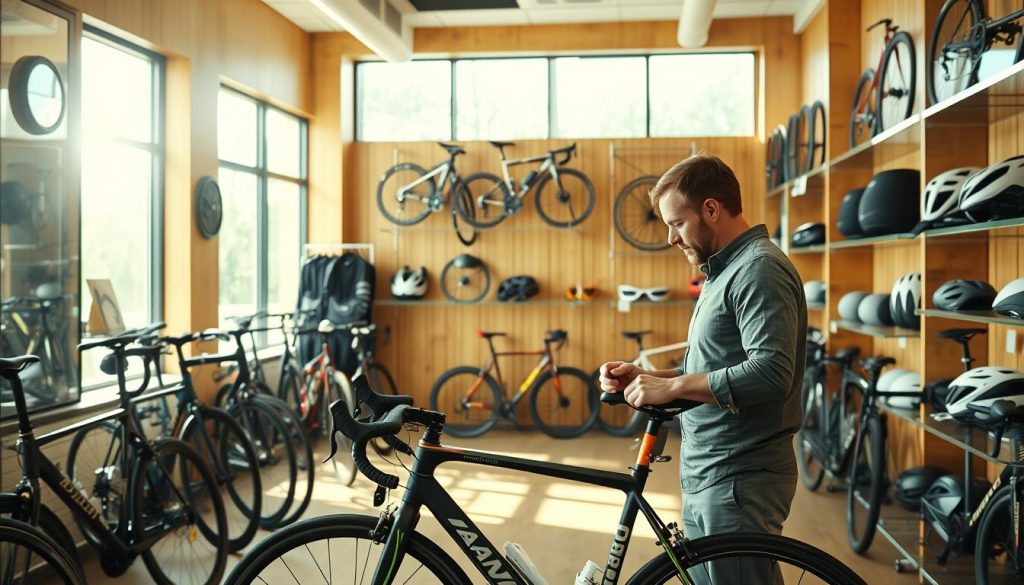
The digital world has changed how we shop for bikes. Now, online bike stores let riders look at many bikes from home. They can see lots of models, compare them, and read reviews without going to a bike shop.
Online bike stores are very convenient. They offer:
- 24/7 access to bikes from all over
- Clear details and pictures of each bike
- Easy way to compare prices
- Bikes delivered right to your door
- Reviews and ratings from other customers
New tech has made online shopping better. Tools like virtual sizing and augmented reality help you choose the right bike. You can even customize bikes online.
| Online Shopping Feature | Benefit for Cyclists |
|---|---|
| Virtual Sizing Tools | Helps find the right bike size |
| Comparison Platforms | Makes it easy to compare bikes and prices |
| Customer Reviews | Gives insights into how bikes perform |
| Delivery Options | Convenient delivery to your home |
Online bike shopping is great, but it has some downsides. You can’t test-ride bikes and need to know your exact size. But, doing your homework and knowing about returns can help.
Local Bike Shop Experience: Personal Touch and Expertise
Exploring in-store shopping advantages shows a world of cycling expertise. Online platforms can’t match this. Local bike shops offer a unique experience that goes beyond buying a bike. They create strong connections between cyclists and experts.
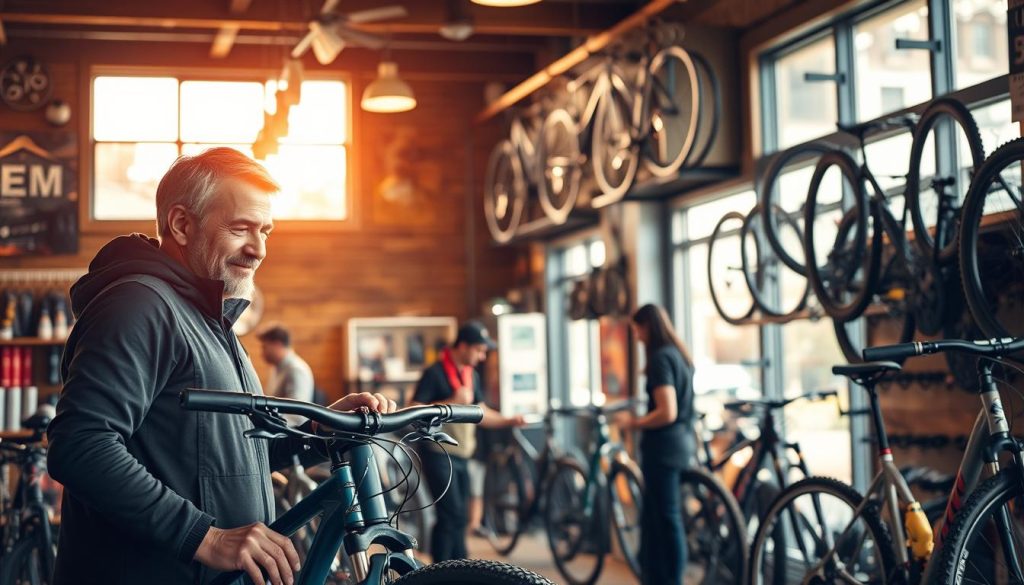
Local bike shops offer more than just bikes. They provide personalized service that makes shopping fun.
Building Relationships with Local Mechanics
Professional bike mechanics at local shops are key to your cycling journey. They offer:
- Detailed bike fitting recommendations
- Customized maintenance advice
- Personalized equipment suggestions
- Troubleshooting complex bicycle issues
Test Rides and Hands-on Product Assessment
Local bike shops let you try out bikes. You can:
- Feel bike comfort right away
- Compare models easily
- Get expert feedback quickly
- Learn about product differences
Community Involvement and Group Rides
Local bike shops are community centers. They host group rides and events. These help cyclists connect and support local cycling.
| Community Engagement Aspect | Benefits |
|---|---|
| Group Rides | Skill improvement, social connections |
| Workshops | Technical knowledge, maintenance skills |
| Local Events | Cycling awareness, community building |
Online vs Local Bike Shop: Direct Price Comparison
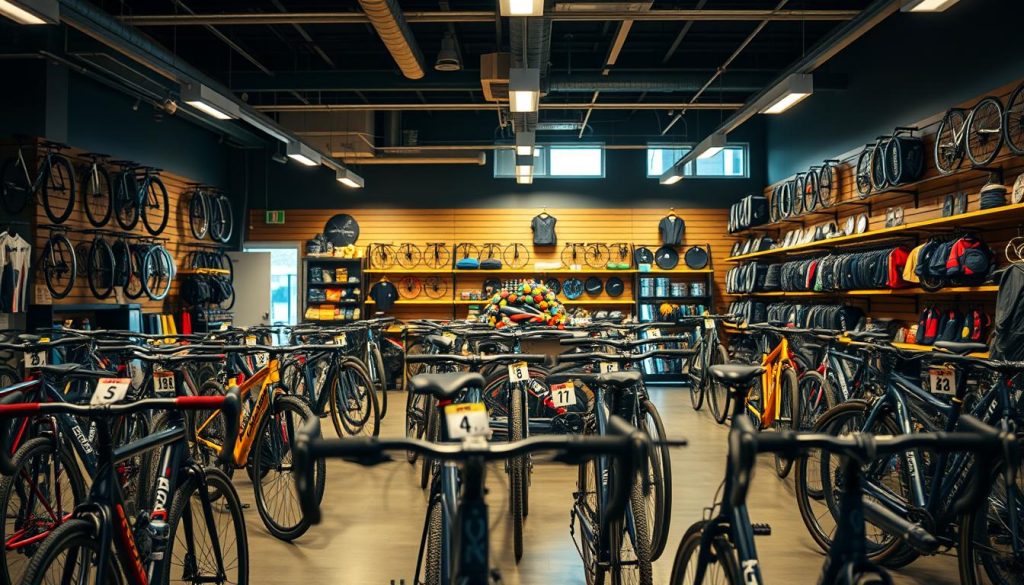
Pricing is key when comparing online and local bike shops. Cyclists look at costs when buying a bike. Knowing the prices helps them choose wisely.
Online shops usually have lower prices because of less overhead. They don’t pay for rent, utilities, or staff. This means they can offer 10-25% discounts compared to local shops.
- Online bike shop average savings: 15-20%
- Lower operational expenses
- More frequent promotional offers
Local bike shops might cost a bit more but offer more. They give personal service, quick access to products, and expert advice. The extra cost is for these special services and community support.
| Price Factor | Online Bike Shop | Local Bike Shop |
|---|---|---|
| Base Pricing | Lower | Higher |
| Additional Services | Limited | Comprehensive |
| Immediate Support | Virtual | In-Person |
Seasonal sales and clearance events also play a role. Online shops have promotions all year, while local shops offer end-of-season deals. Smart buyers look at both online and local prices.
The right choice depends on what you want and need. Price is important, but think about the whole experience. Online or local, choose what fits your cycling life best.
After-Sales Support and Maintenance Considerations
Choosing between online and local bicycle stores is more than just buying a bike. The quality of after-sales support greatly affects your cycling experience. It also impacts your long-term satisfaction with bike retail channels.
Cyclists need to look at several key factors when comparing bike maintenance options. These factors differ between online and local bike stores.
Warranty Claims and Returns Process
Different bicycle stores handle warranty claims in their own ways. Local bike shops usually offer:
- Face-to-face interactions for warranty issues
- Immediate assessment of product problems
- Faster turnaround for repairs and replacements
Regular Maintenance and Emergency Repairs
Bike retail channels vary in their maintenance support. Physical stores usually provide more detailed service options:
- Immediate diagnostic services
- On-site repair capabilities
- Personal consultation with experienced mechanics
Parts Availability and Service Scheduling
Local bicycle stores are often better at parts availability and scheduling. They can quickly find parts and offer service times that fit your needs.
Online retailers might find it hard to replace parts quickly and schedule repairs personally. This makes local shops a better choice for cyclists needing fast maintenance.
The Role of Brand Selection and Inventory
Bike shopping choices differ a lot between online and in-store options. Online stores have a wide range of bike brands. This gives cyclists many options to choose from.
Local bike shops, on the other hand, offer a smaller but more focused selection. They pick brands they really believe in. This helps customers get advice from experts and find bikes that fit their local riding needs.
- Online stores typically stock 50-100+ bicycle brands
- Local shops usually carry 5-10 premium brands
- Specialized retailers might focus on specific cycling disciplines
Shopping online or in stores has its own benefits for finding the right bike. Online, you can easily compare bikes, prices, and reviews. You can look at many brands without leaving your house.
Local bike shops, however, offer personalized advice. They know a lot about bikes and can suggest the best one for you. They consider your skill level, body type, and how you ride.
The amount of bikes available online and in stores is different. Online stores have a lot of bikes because they have big warehouses. But local shops focus on quality over quantity. Riders have to decide what’s more important to them.
Making the Right Choice for Your Cycling Needs
Choosing the right way to buy a bike is important. You need to think about what you want. Online and local bike shops have their own good points.
Think about how much you know about bikes and fixing them. Local shops give you help right away. Online stores have more choices and might be cheaper. What you need and how much you can spend will help you decide.
What you do and why you ride matters too. If you ride a lot on weekends, a local shop might be better. But if you like to look up things online, an online store could be easier. Look at what’s covered by warranties and if you can fix things yourself.
The best way to buy a bike is to find a balance. You want something easy, expert advice, affordable, and what you like. Whether it’s online or a local shop, choose what’s best for your ride.