
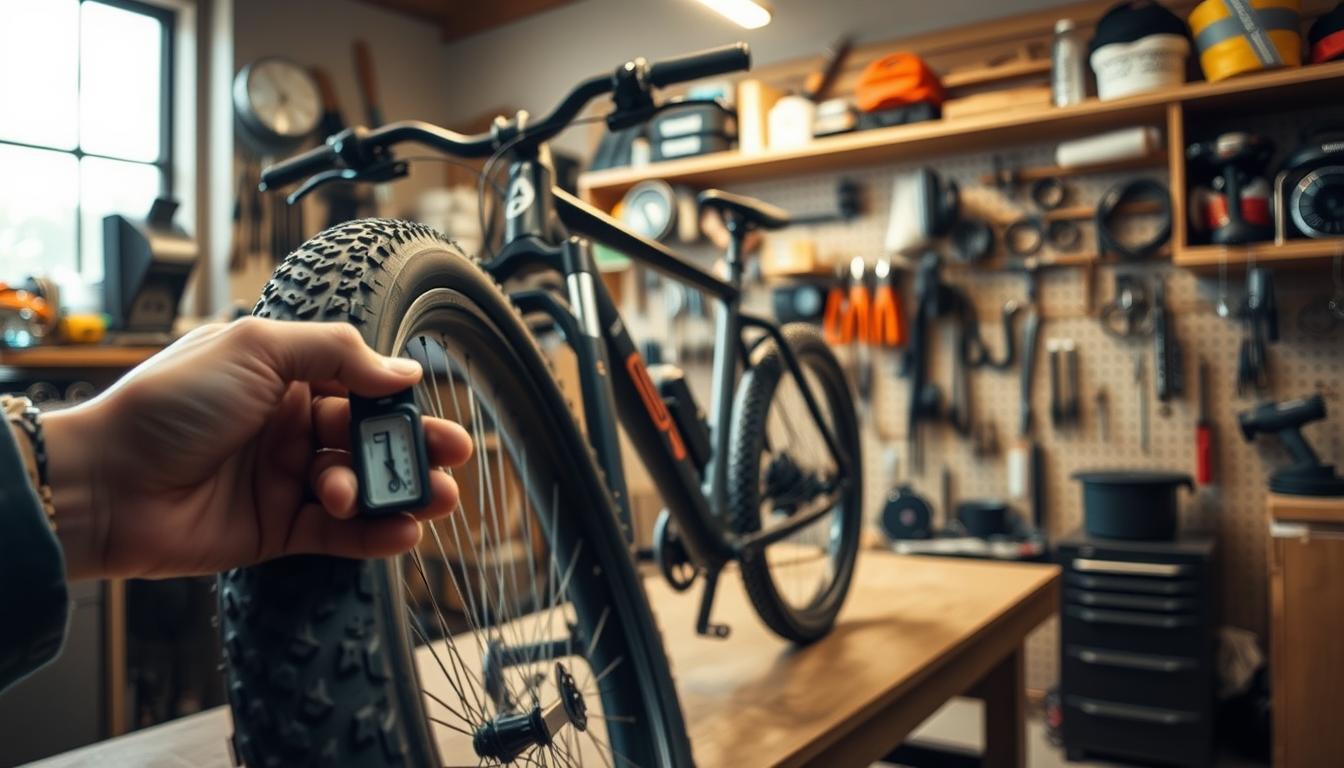
Want smoother, safer rides on your electric bike? It all starts with one simple step: checking your tires. Proper inflation isn’t just about avoiding flats—it’s the secret to unlocking peak performance and comfort.
Maintaining the right level keeps you rolling efficiently, whether you’re cruising city streets or tackling trails. Too low, and you’ll feel every bump. Too high, and you might lose traction. But when it’s just right? You’ll enjoy longer battery life, better handling, and fewer repair headaches.
This guide breaks down everything you need to know. We’ll share expert-backed tips for measuring and adjusting your setup. You’ll also learn how regular checks can prevent costly breakdowns and keep your adventures worry-free.
Ready to ride smarter? Let’s dive into the easy techniques that make a big difference.
Why Proper Tire Pressure is Critical for Your E-Bike
The difference between a good ride and a great one lies beneath the surface. Maintaining optimal inflation levels impacts everything from battery efficiency to how your bike handles unexpected obstacles. Let’s explore how this simple adjustment can transform your cycling experience.
Balance Between Speed and Stability
Incorrect inflation makes your bike work harder. Too soft, and you’ll feel sluggish on climbs. Too firm, and you might skid during sudden stops. Properly calibrated psi keeps rubber firmly planted while reducing unnecessary drag.
| Pressure Level | Performance Impact | Safety Risk |
|---|---|---|
| Low | Increased rolling resistance | Rim damage risk |
| Optimal | Smooth acceleration | Stable braking |
| High | Reduced surface grip | Loss of traction |
Efficiency That Extends Your Journey
Rolling resistance drops by up to 15% when psi matches road conditions. This means:
- Longer battery life per charge
- Less physical effort for riders
- Consistent handling on rough surfaces
Imagine cruising through city streets where cracks and debris don’t jolt your grip. Or tackling gravel paths without worrying about pinch flats. That’s the power of precise inflation.
Understanding e-bike tire pressure: Key Factors and Measurements
Getting the most out of your ride starts with knowing your numbers. Like Goldilocks finding the perfect porridge, your two-wheeled companion needs adjustments that are just right for your adventures.
Recommended Pressure Ranges and PSI Guidelines
Every wheel has an ideal zone printed on its sidewall—usually shown as a range. This span accounts for variables like terrain and load. Wider models (think 2.4″+) often sit between 20-30 PSI, while slimmer options need 40-70 PSI for optimal performance.
| Tire Width | Urban Riding | Off-Road Use |
|---|---|---|
| 2.0″ – 2.3″ | 35-45 PSI | 25-35 PSI |
| 2.4″ – 3.0″ | 25-35 PSI | 20-30 PSI |
Tire Specifications and Manufacturer Recommendations
Three elements determine your perfect setup:
- Load capacity: Add 2 PSI for every 20 lbs over standard rider weight
- Seasonal shifts: Air contracts in cold—add 3-5 PSI in winter
- Tool accuracy: Digital gauges beat analog for precision
Always check your wheel’s sidewall first. Brands design their products with specific ranges that balance durability and grip. A quality floor pump with built-in measurement makes adjustments foolproof—no more guessing games.
Techniques to Check and Adjust Your Tire Pressure
Mastering your setup starts with the right tools. A quality gauge and pump turn guesswork into precision, helping you maintain peak performance across surfaces and seasons.
Using a Reliable Pressure Gauge and Pump
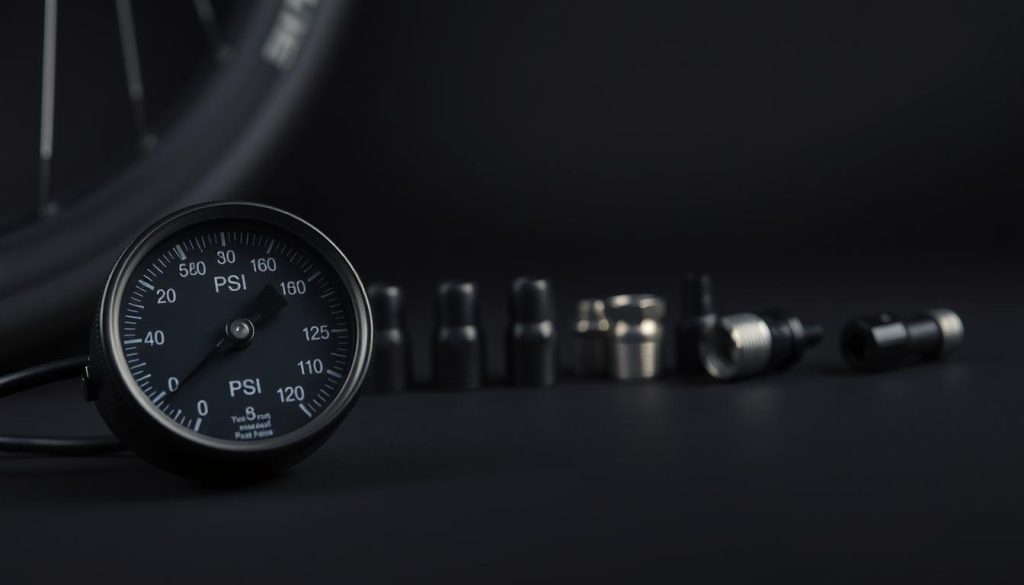
Temperature swings alter readings—air expands in heat and contracts when cold. Always check levels before rides when rubber is cool. Digital gauges outperform analog models, giving exact numbers down to 0.5 PSI.
Look for pumps with built-in meters. Brands like Topeak and Lezyne offer combos that attach securely to valves. Store tools away from extreme heat to preserve accuracy.
Step-by-Step How-To for Pressure Adjustment
- Remove valve cap and press gauge firmly onto stem
- Compare reading to manufacturer’s recommended range
- Attach pump hose, ensuring no air escapes
- Add short bursts of air, checking every 2-3 pumps
- Stop when reaching the right tire pressure for your ride
Over-inflated? Press the gauge’s release button while monitoring the dial. Test grip by pushing your thumb into the rubber—it should give slightly but bounce back quickly.
Riders in hilly areas might prefer higher PSI for efficiency, while commuters prioritize lower settings for shock absorption. Seasonal factors matter too—drop 3-5 PSI during rainy months for better traction.
Adapting Tire Pressure to Riding Conditions
Your journey isn’t static—neither should your setup be. Different surfaces and weather patterns demand tailored approaches to maintain peak performance and safety. Let’s explore how smart adjustments keep you rolling smoothly across any landscape.
Surface-Specific Adjustments
Roads, trails, and city streets each require unique configurations. For example, smooth pavement works best with firmer setups to minimize rolling resistance. Off-road paths benefit from softer profiles that absorb shocks and maintain grip.
| Environment | PSI Range | Key Benefit |
|---|---|---|
| Paved Roads | 35-50 | Speed efficiency |
| Gravel Trails | 25-35 | Impact absorption |
| Urban Commute | 30-40 | Puncture protection |
Environmental and Personal Factors
Temperature changes affect air density—drop 3-5 PSI in summer heat to avoid overinflation. Heavier riders should add 2-4 PSI for stability. These tweaks reduce the risk of pinch flats while maintaining responsive handling.
Regular checks matter most after extreme rides. Experts suggest testing levels at the end of each outing. This habit helps identify slow leaks early and prepares your vehicle for the next adventure. Keep a portable gauge handy for quick adjustments at trailheads or parking lots.
Three practical tips: First, lower PSI by 15% for wet conditions to improve traction. Second, inspect treads weekly for embedded debris that could cause punctures. Finally, record your preferred settings for different routes to save time.
Maintenance Practices to Prolong Your Tire Life
Keeping your wheels in top shape requires more than occasional attention. Consistent care prevents premature wear and maintains peak performance. Start by establishing simple habits that protect your investment and enhance every ride.
Regular Cleaning and Inspection Routines
Make weekly checks part of your routine. Use a digital gauge to verify levels match the recommended pressure on your sidewall. Wipe down rubber surfaces with mild soap and water to remove road grime.
Inspect for cuts, embedded debris, or uneven tread wear. These issues accelerate wear and increase rolling resistance. Address minor problems early to avoid costly replacements.
Proper Storage Methods and Rubber Care
Store your bike in cool, dry areas away from direct sunlight. UV rays degrade rubber over time. For long-term storage, maintain the right tire pressure to prevent sidewall cracks.
| Storage Practice | Benefit | Risk Avoided |
|---|---|---|
| Hanging vertically | Prevents flat spots | Deformed treads |
| Using covers | Blocks dust buildup | Valve corrosion |
| Climate control | Preserves elasticity | Dry rot |
Adjust settings seasonally—cold weather demands slightly higher readings. Always check tire condition before rides. Proper care reduces rolling resistance and keeps your journeys smooth for years.
Exploring Innovative Tools for Tire Pressure Monitoring
Technology is reshaping how cyclists maintain their setups. Modern riders now have access to smart devices that take the guesswork out of maintenance. These tools provide instant feedback, helping you stay safe and efficient on any terrain.
High-Tech Sensors and Smart Displays
Wireless sensors attach directly to valve stems, sending live updates to handlebar-mounted screens. They track levels continuously, alerting you if readings fall outside your preset range. This instant feedback helps prevent issues like pinch flats caused by underinflation.
Smart systems compare current settings to your stored preferences. For road tires, this means maintaining the correct tire firmness for speed. Off-road riders benefit from automatic adjustments based on surface changes.
| Feature | Traditional Method | Sensor Tech |
|---|---|---|
| Monitoring | Manual checks | 24/7 tracking |
| Accuracy | ±3 PSI | ±0.5 PSI |
| Alerts | None | Vibration/visual warnings |
| Storage | No reminders | Low-pressure notifications |
These tools shine during storage periods. They send phone alerts if levels drop over weeks of inactivity. No more surprise flat spots before your next ride!
Riders using these systems report 30% fewer pressure-related issues. They’re especially useful for commuters who need correct tire settings every ride. The data helps spot slow leaks before they strand you miles from home.
Final Thoughts for a Safer, Smoother Ride
Your cycling experience hinges on smart adjustments beneath the surface. Matching your setup to the terrain preserves rubber integrity while reducing rolling resistance. Whether navigating rocky paths or city streets, precise calibration keeps you stable and efficient.
Regular checks prevent gradual air loss that strains your rear wheel. Digital tools simplify monitoring, letting you spot issues before they escalate. Seasonal shifts and riding styles demand flexibility—what works for summer trails might not suit rainy commutes.
Consistent maintenance extends component life and boosts performance. Quick pre-ride inspections take seconds but save hours of repair time. Pair these habits with the techniques we’ve shared to maximize battery efficiency and control.
Remember: Great rides begin long before you pedal. Keep your equipment tuned, trust reliable gauges, and adapt to changing conditions. Your next adventure awaits—make every mile smooth, safe, and utterly enjoyable.