
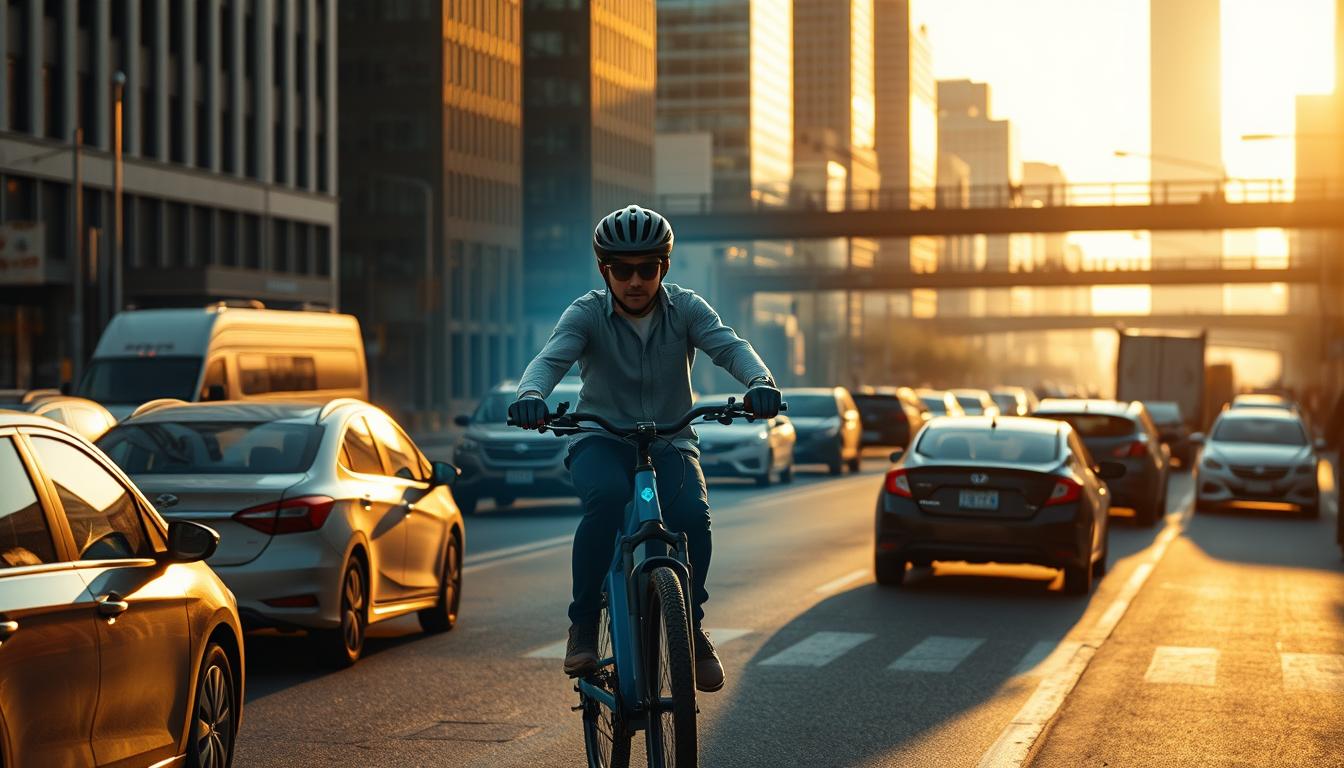
Electric bicycles are reshaping how Americans commute. Cities nationwide are seeing a surge in riders choosing these eco-friendly machines for daily travel. They’re fast, efficient, and perfect for dodging gridlock—but sharing the road demands smart strategies.
With more cyclists on streets, safety is a top priority. Riders must understand traffic laws designed to protect everyone. This guide dives into practical tips for staying visible, predicting driver behavior, and using bike lanes effectively.
Modern electric models blend classic cycling vibes with cutting-edge tech. Batteries and motors now work seamlessly, letting riders tackle hills or long distances without breaking a sweat. Yet, this power means extra responsibility when navigating busy areas.
We’ll explore must-know rules, gear upgrades, and defensive tactics to boost confidence. Whether you’re new to two-wheeled travel or a seasoned pro, mastering these skills ensures smoother trips. Let’s make every journey safe and enjoyable!
Understanding the Modern E-Bike Landscape
The rise of pedal-assisted machines is changing how people move. These vehicles blend human power with electric motors, creating a middle ground between traditional bicycles and scooters. Their ability to maintain consistent speeds makes them ideal for urban commutes and errand-running.
Legal Considerations for E-Bike Use
State laws vary, but most follow a three-class system. California requires riders under 18 to wear helmets for all classes. Motors must cap at 750 watts, and throttles are restricted in some areas. Always check if your local roads allow electric models on bike paths.
Key rules include:
- Age limits (14+ in many states for Class 3 models)
- Mandatory functional pedals
- Speed restrictions in pedestrian zones
Essential Safety Equipment on the Road
Visibility saves lives. A certified helmet reduces head injury risks by 60%. Front and rear lights are non-negotiable for dawn/dusk trips. Reflective clothing helps drivers spot you from 500 feet away.
Smart riders always carry:
- Mirrors for lane changes
- Audible bell for alerts
- Puncture-resistant tires
Using bike lanes properly prevents 80% of car-bike collisions. Signal turns early, and treat stop signs like car drivers would. Following these rules road strategies keeps everyone moving smoothly.
Mastering Riding E-Bikes in Traffic
Navigating busy streets requires a mix of awareness and preparation. Cyclists who master these skills reduce risks while enjoying efficient travel. Let’s explore how to stay safe and visible.
Defensive Riding Techniques
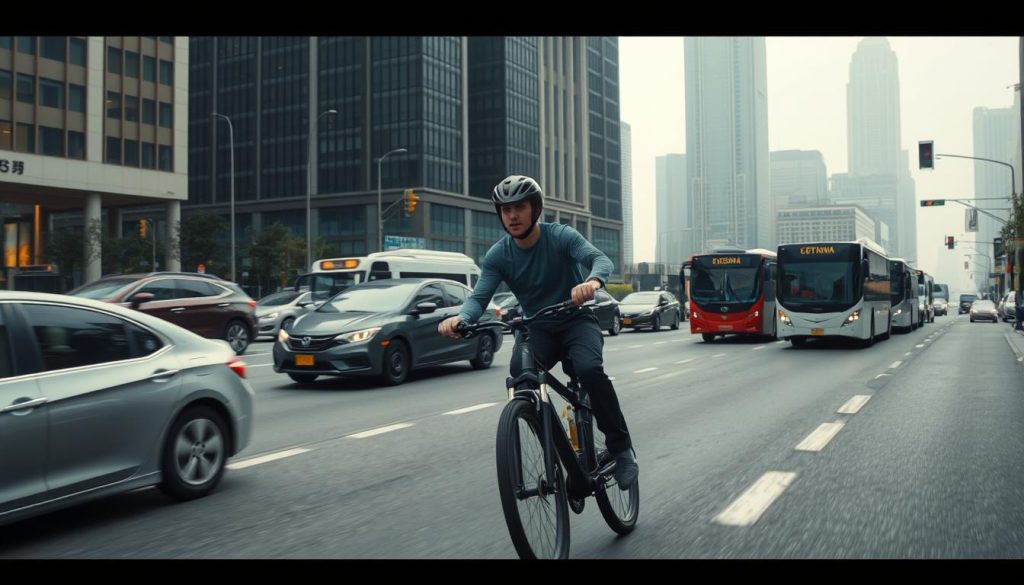
Anticipating hazards keeps you one step ahead. Scan the road 50 feet forward and check mirrors every 8 seconds. Maintain a 3-foot buffer from parked cars to avoid “dooring” incidents. Experienced riders recommend these tactics:
- Use hand signals 100 feet before turns
- Position yourself centrally in narrow lanes
- Adjust speed based on weather and visibility
| Technique | Purpose | Benefit |
|---|---|---|
| Scanning Patterns | Spot hazards early | More reaction time |
| Speed Modulation | Match traffic flow | Smoother stops |
| Lane Positioning | Increase visibility | Fewer blind spots |
Enhancing Visibility with Lights and Reflective Gear
Bright lighting makes you 75% more noticeable to drivers. Install a 500-lumen front light and pulsating rear LEDs. Reflective strips on helmets and ankles create moving patterns that catch attention. One study showed fluorescent clothing reduces collisions by 38% during daytime.
Combine these elements for maximum effect:
- White front + red rear lights (always on)
- Reflective side panels on wheels
- High-contrast jackets in orange or yellow
Navigating Traffic Laws and Road Signals
Understanding traffic regulations is key to safe commuting. Electric bicycle users share roads with cars and trucks, making legal awareness crucial. Local rules determine where you can ride and how fast you can go.
Interpreting Local E-Bike Regulations
State and city laws vary dramatically. Oregon allows Class 1 models on bike paths, while Florida restricts all motor-assisted bicycles to roads. Follow these steps to stay compliant:
- Check your state transportation department website weekly
- Note speed limits for bike lanes vs car lanes
- Verify parking rules near bus stops and crosswalks
New York requires registration for certain models, unlike Texas. Always confirm if your vehicle meets wattage and throttle restrictions before riding.
Obeying Stop Signs and Traffic Signals
Treat every intersection like a four-way negotiation. Come to complete stops at red lights and stop signs—rolling through puts you at risk. Position yourself ahead of cars at signals to increase visibility when lights change.
| State | Stop Sign Rule | Red Light Exception |
|---|---|---|
| California | Full stop required | None |
| Idaho | Yield if clear | Right turns allowed after stop |
| Colorado | Full stop | Proceed if sensor doesn’t detect bikes |
Signal turns 50 feet before changing direction. Use left-turn lanes where available, and never weave between stopped vehicles. Following these practices keeps everyone predictable and protected.
Integrating E-Biking into a Sustainable Lifestyle
Switching to pedal-assisted transportation isn’t just about convenience—it’s a lifestyle shift. More Americans are discovering how two wheels can transform their daily routines while supporting environmental goals. Let’s explore how this choice benefits both personal health and our planet.
Health and Environmental Benefits
Every mile pedaled reduces carbon emissions by 67% compared to driving. Commuters who use bikes for short trips prevent 1,500 pounds of CO2 annually. Even with motor assistance, riders burn 30% more calories than car drivers. Studies show regular cyclists have stronger hearts and better stamina.
Portland resident Mia Carter shares: “Using my e-bike cut my gas costs by $90 monthly. I’ve lost 12 pounds and breathe cleaner air.” Cities with dedicated lanes see 40% fewer traffic jams, proving sustainable transportation works.
Choosing the Right Bike Accessories
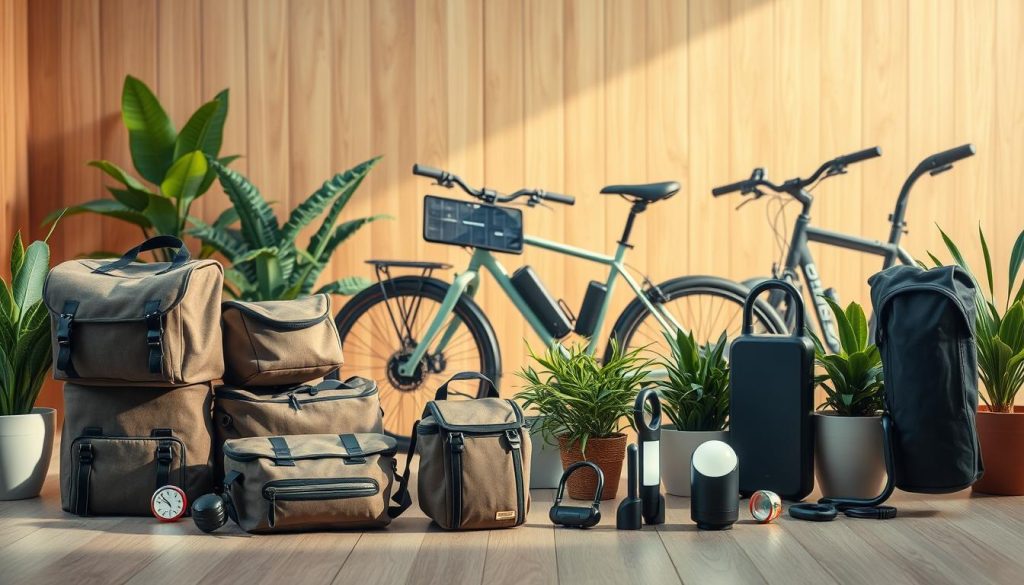
Smart gear boosts safety and comfort. Start with a MIPS-certified helmet—it reduces concussion risks by 50%. USB-rechargeable lights ensure visibility, while moisture-wicking clothing keeps rides enjoyable. Pannier bags or baskets make errand-running effortless.
Maintenance matters too. Clean chains monthly and check tire pressure weekly. Proper care extends your bike’s lifespan, saving money and resources. Combine these habits with solar-powered charging stations for maximum eco-impact.
From recycled tire tubes to bamboo fenders, manufacturers now offer earth-friendly upgrades. Every choice adds up, creating cleaner communities one pedal stroke at a time.
Addressing Real-World Challenges for E-Bike Riders
Urban commuters face unique obstacles when sharing streets with larger vehicles. Gaps in driver awareness and sudden road hazards demand constant vigilance. Smart preparation helps turn potential risks into manageable situations.
Smart Strategies for Busy Corridors
Anticipate drivers turning without signaling by scanning side mirrors and brake lights. Keep fingers near brakes when passing driveways – 38% of collisions occur here. Maintain a 4-second following distance behind buses or trucks.
| Challenge | Solution | Benefit |
|---|---|---|
| Blind spot risks | Use rearview mirror | 25% fewer lane-change incidents |
| Wet roads | Reduce speed by 30% | Better traction control |
| Intersection confusion | Make eye contact | Clear communication |
Wisdom from Seasoned Commuters
Portland cycling instructor Mark Torres advises: “Check tire pressure daily – underinflated tires cause 60% of emergency stops.” Chicago delivery riders recommend waxing chains monthly to prevent rust from road salt.
Machine Readiness Matters
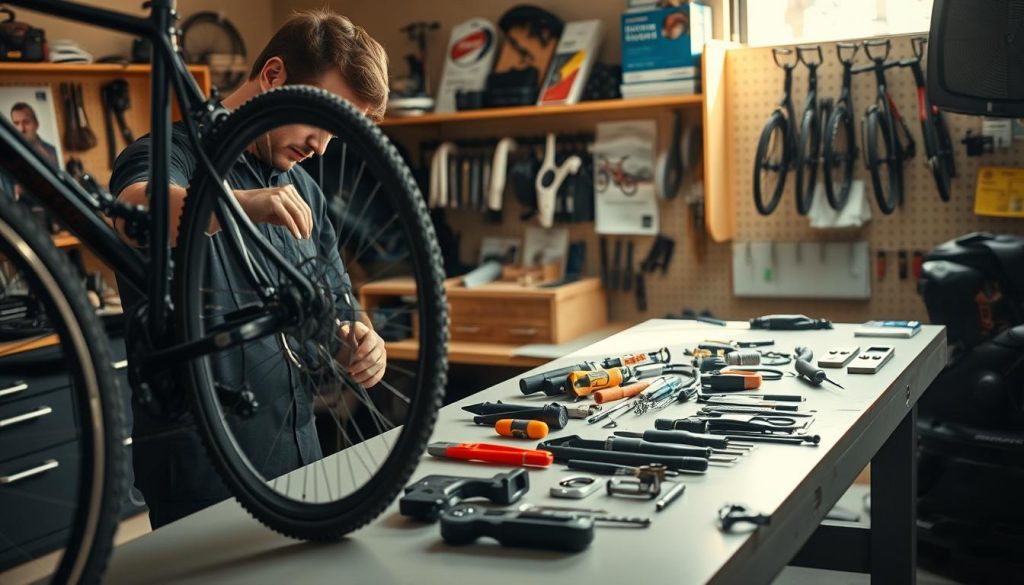
Test brakes weekly by squeezing levers before moving. Wipe down batteries after rain rides to prevent corrosion. A well-tuned motor responds faster when accelerating from stops.
Remember – obey traffic signals consistently, even when others don’t. Adjust your pace to match road conditions, and always leave room for unexpected pedestrian movements. Regular practice builds the reflexes needed for safe urban travel.
Final Thoughts on Safe and Confident E-Bike Commuting
Mastering urban mobility starts with smart choices. This guide has shown how knowing local laws, wearing bright gear, and anticipating others’ moves builds road confidence. Remember: Your bike becomes part of a larger transportation ecosystem the moment wheels hit pavement.
Staying safe means respecting speed limits and signaling clearly. Regular maintenance checks keep machines responsive when quick stops matter. Share lanes thoughtfully—drivers notice cyclists who follow traffic patterns predictably.
Communities thrive when riders and motorists coexist smoothly. Keep learning through local cycling workshops or online forums. Every commuter who prioritizes safety helps normalize sustainable transport options.
Ready to join the movement? Drop a comment below sharing your best road tip or favorite route. Together, we’re building cleaner cities one responsible journey at a time!