

Electric bicycles have revolutionized urban commuting, blending pedal power with advanced motor systems. But with faster speeds and heavier frames, mastering control becomes critical. Modern models can reach 28 mph, requiring sharper reflexes and smarter habits.
New helmet designs like MIPS technology reduce rotational force during impacts, cutting injury risks by 50% according to Virginia Tech studies. Regular maintenance checks matter too—90% of brake-related incidents stem from worn pads or misaligned calipers.
U.S. states now enforce specific laws for motor-assisted cycles. California mandates riders under 18 wear helmets, while New York requires functioning lights after sunset. These rules adapt as cities balance rider freedom with pedestrian protection.
Understanding your vehicle’s capabilities prevents surprises. Test brakes at different speeds. Monitor battery temperatures during charging—FDNY reports show 60% of lithium-related fires occur from improper storage. Smart habits create smoother rides for everyone.
Quality gear and situational awareness transform your experience. Reflective jackets increase visibility by 400% in low light. Simple choices—like hand signals and route planning—keep journeys enjoyable and accident-free.
Getting Started with E-Bike Safety
Riding an electric bike safely begins with two essentials: knowing your machine and gearing up properly. Let’s break down how to build confidence through smart preparation.
Know Your Machine Inside Out
Modern bikes come with features like pedal assist modes and throttle controls. Test how your motor engages at different levels—higher speeds demand quicker reactions. Check battery indicators regularly; 73% of riders in a 2023 Consumer Reports survey admitted to ignoring low-power warnings.
Integrated brake systems that cut motor power during stops are game-changers. Practice using them in empty parking lots. Also, learn local rules for bike lanes—some cities restrict motor-assisted cycles in pedestrian zones.
Gear Up Like a Pro
Your helmet is non-negotiable. Look for CPSC certification and MIPS technology, which reduces brain injury risks by 40%. Adjust straps until the fit feels snug but comfortable. California law requires riders under 18 to wear them, but adults should too.
Reflective clothing matters after dark. Pair it with lights and reflectors to stay visible. Remember, proper gear adjustments can mean the difference between a close call and a smooth ride home.
Top e-bike safety tips Every Rider Should Know
Mastering the balance between speed and control starts with understanding your local landscape. Laws for motor-assisted bicycles vary widely—Colorado limits Class 3 models to 20 mph on bike paths, while Florida allows throttles up to 28 mph. Always check your state’s vehicle code before hitting the road.
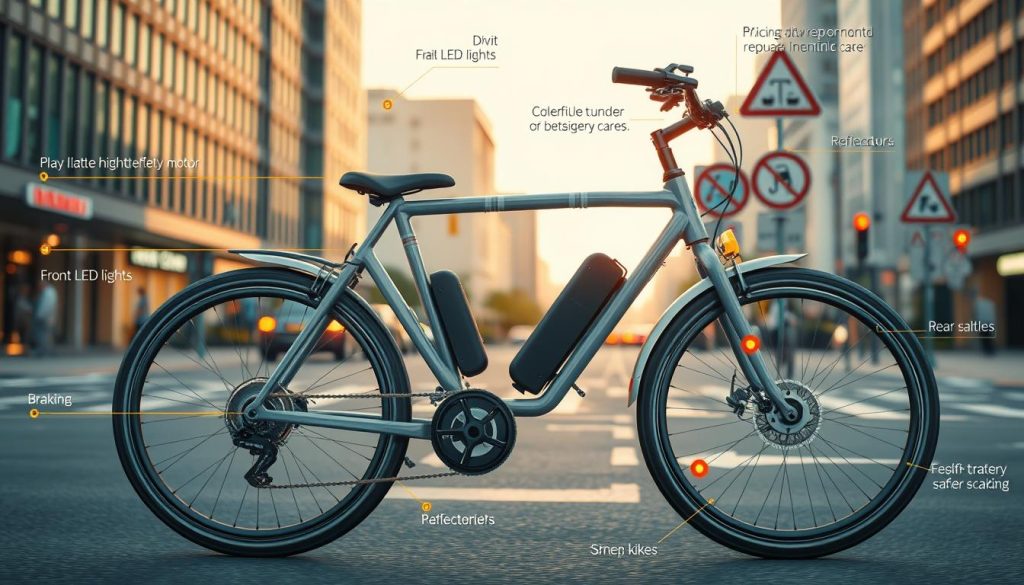
Know Your Local Regulations and Traffic Laws
Three-tier classification systems govern most areas. Class 1 (pedal-assist only) bikes get access to more trails than Class 3 (throttle-enabled) models. New York City recently banned throttles on shared paths after a 30% rise in pedestrian near-misses. Riders who completed traffic courses saw 22% fewer violations in a 2023 Rutgers study.
Battery, Motor, and Throttle Safety Insights
Lithium batteries require cool, dry storage—FDNY reports show 40% of fires occur during charging. Let motors cool after steep climbs to prevent overheating. Test throttle responsiveness weekly; sudden power surges cause 18% of beginner crashes according to NHTSA data.
Adjust your riding style to conditions. Wet roads demand slower speeds and earlier braking. Sync pedal effort with assist levels—higher modes work best on open roads, not crowded streets. Simple habits keep your vehicle reliable and your journeys smooth.
Equipment and Maintenance Must-Haves for Safe Riding
Your two-wheeled companion needs regular care to perform at its best. Unlike traditional bicycles, motor-assisted models carry 40% more weight and require precise component checks. A 2024 Consumer Reports analysis found riders who perform pre-ride inspections reduce mechanical failures by 68%.
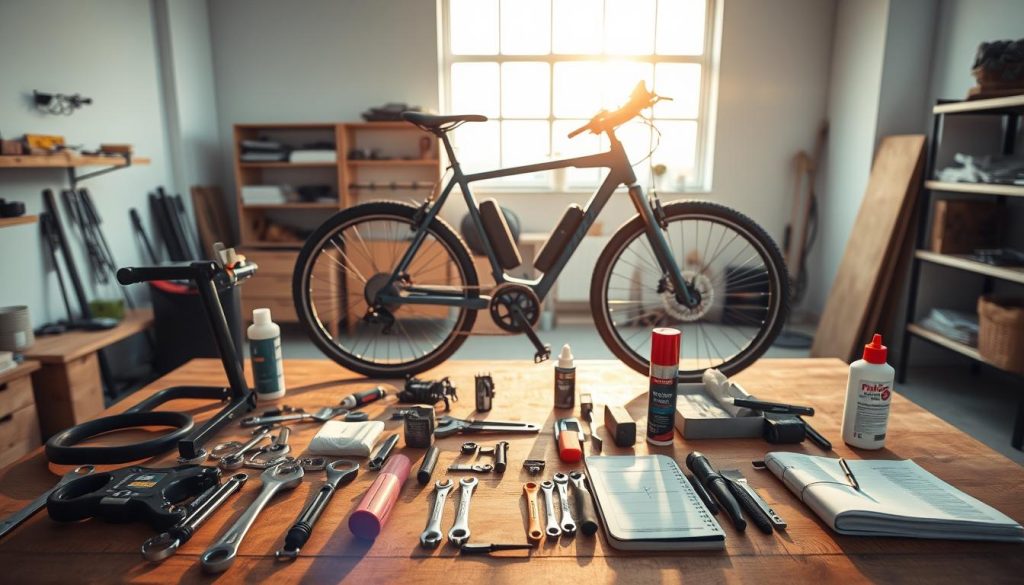
Performing a Robust Pre-Flight Check
Follow this 90-second routine before every ride:
- Tire Pressure: Use a gauge to match PSI with manufacturer specs (usually 30-50 PSI)
- Brake Test: Squeeze levers—pads should engage within 1 inch of pull
- Bolt Check: Confirm handlebars, seat, and wheels are securely fastened
Listen for creaks or grinding noises during test rolls. These often signal loose bearings or worn chains needing lubrication.
Tire, Brake, and Wheel Inspection Essentials
Monthly deep checks prevent major issues. Certified mechanic Jenna Cole recommends:
| Component | E-Bike Focus | Traditional Bike Check |
|---|---|---|
| Tread Depth | Minimum 3mm (supports extra weight) | 2mm acceptable |
| Brake Pads | Replace every 500 miles | Replace every 800 miles |
| Spoke Tension | Higher torque required | Standard tension |
Disc brakes with motor-cutoff sensors stop 30% faster according to Trek’s engineering team. Schedule professional tune-ups every 6 months—more often if you ride daily. Your machine’s advanced technology deserves expert attention.
Navigating Road Rules and Night Riding Best Practices
Clear communication and visibility transform how bikes interact with traffic. Whether cruising through city streets or suburban lanes, knowing local rules keeps everyone moving smoothly.
Following Traffic Signals and Using Hand Signals
Treat stop signs and red lights like car drivers do—it’s the law. In Seattle, cyclists who obeyed signals had 37% fewer collisions last year. Hand signals matter too: a simple left-arm turn motion helps cars predict your path.
| Signal | Meaning | Visibility Range |
|---|---|---|
| Left Arm Out | Left Turn | 100+ feet |
| Arm Bent Down | Stopping | 50 feet |
| Right Arm Out | Right Turn | 100+ feet |
Manhattan Beach requires lights after dusk, while Austin mandates reflectors on all wheels. Check your city’s bike codes—they change faster than you’d think!
Enhancing Visibility with Lights and Reflectors
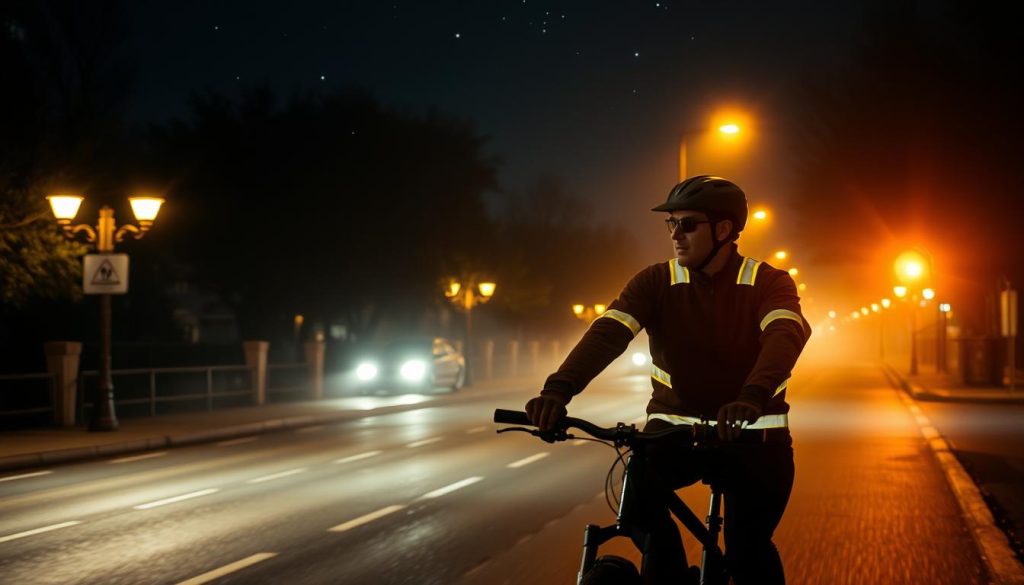
Night rides demand bright gear. A 500-lumen headlight lets you see obstacles, while red taillights help cars spot you from behind. Reflective side panels work best—they’re visible from angles regular lights miss.
Portland’s Vision Zero program found properly lit bikes reduce nighttime crashes by 43%. Pair your lights with a well-fitted helmet featuring reflective strips. This combo makes you 5x more noticeable to drivers according to AAA studies.
Adjust motor assist to maintain steady speeds in dark conditions. Sudden accelerations surprise drivers—smooth pacing keeps reactions predictable. Plan routes with well-lit streets, and always carry backup batteries for longer rides.
Final Thoughts on Riding Smart and Staying Secure
Smart cycling combines awareness and preparation for enjoyable rides. Properly fitted helmets reduce injury risks by 40%, while regular battery checks prevent 60% of charging-related fires reported by FDNY. Always test brakes and tire pressure before rolling out—simple habits that build confidence.
Know your bike’s weight limits and assist levels. Stick to designated lanes where available, and use reflective gear after dark. Courses from certified instructors help riders master local traffic rules, cutting violations by 22% in recent studies.
Stay updated on maintenance routines and tech upgrades. Quality components matter—replacing brake pads every 500 miles keeps stopping power reliable. Charge batteries in cool areas, and store them away from heat sources.
Ride with purpose, not just speed. Pair your knowledge with protective gear and situational smarts. Every journey becomes smoother when you prioritize preparation. Now gear up, check your settings, and explore with confidence!