
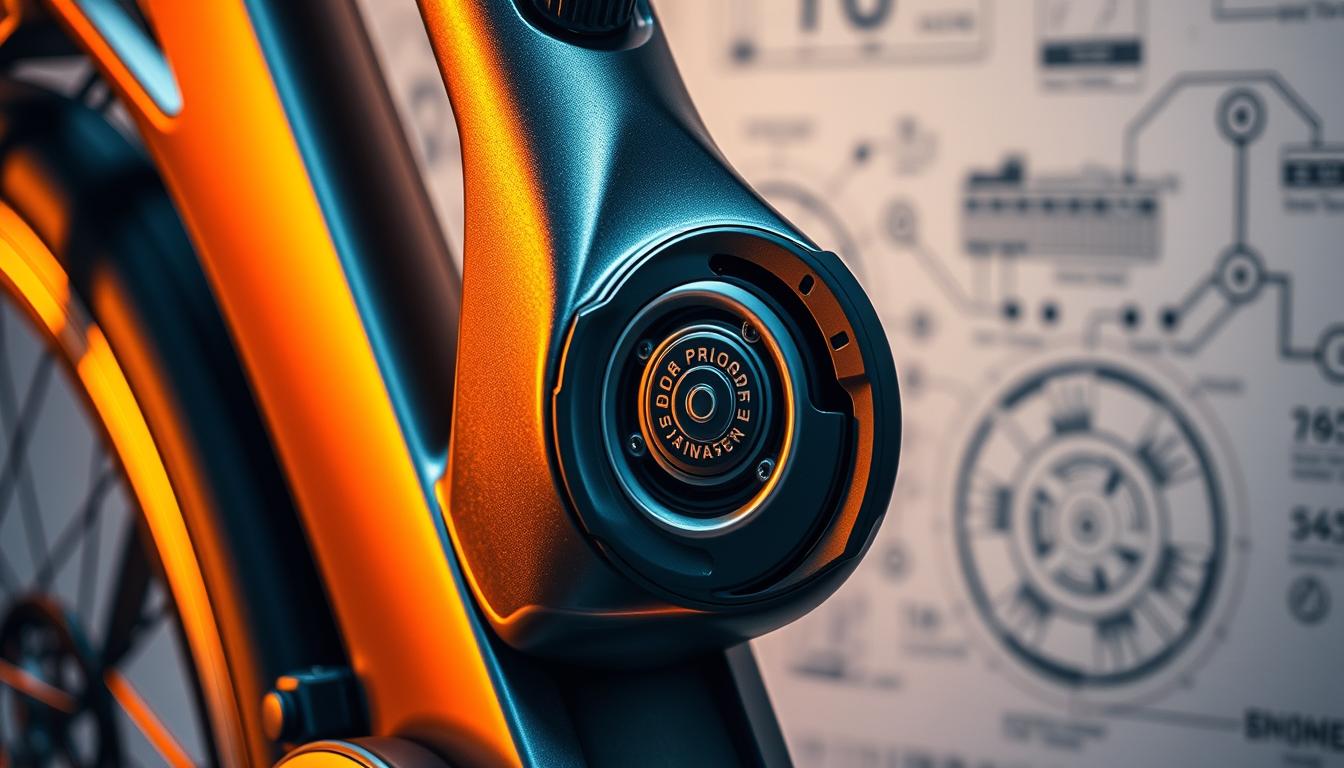
Electric bicycles have changed how we move around, with torque sensor e-bikes leading the way. These advanced bikes change how we feel on the road and how we perform.
Picture a bike that knows exactly how hard you’re pushing, giving you just the right amount of help. Torque sensor e-bikes do just that. They measure the force on your pedals, making your ride smooth and natural.
Cyclists in the U.S. are seeing how torque sensor e-bikes can change their rides. Whether you’re going to work or hitting trails, these bikes adjust to your style perfectly.
Today’s electric bike parts are more advanced than ever. Torque sensors are the future of e-bike riding. They offer a mix of power, efficiency, and fun that’s unmatched.
Understanding Torque Sensor E-Bikes: A Revolution in Cycling
Electric bicycles have changed how we move around, thanks to pedal-assist sensor technology. These bikes mix human effort with smart tech, offering a new way to travel.
Cycle torque measurement has changed how e-bikes work with riders. Unlike old electric bikes, today’s models with advanced sensors can sense and match a rider’s pedaling force.
How Torque Sensors Transform Your Riding Experience
Torque sensors make riding smooth by tracking pedal force. This smart system offers big benefits:
- Instant power that matches your effort
- Smooth starts and a natural feel
- Better energy use
- Longer battery life
The Science Behind Pedal-Assist Technology
Modern e-bikes use pedal-assist sensor tech to measure rider effort. These sensors turn human power into electric help, making rides dynamic and responsive.
Key Components of Torque Sensing Systems
Key parts of torque sensing systems include precise strain gauges, microprocessors, and smart algorithms. Together, they make riding feel natural and easy.
- Strain gauges sense pedal force
- Microprocessors figure out the best help
- Software algorithms manage power
The Benefits of Investing in a Torque Sensor E-bike
Getting an e-bike with torque sensing tech changes how you ride. It makes your bike more efficient and powerful, no matter your skill level.
With torque sensing, electric biking gets a big upgrade. It’s different from old e-bikes because it gives power smoothly. You feel like you’re getting help just when you need it, making every ride better.
- Enhanced Ride Quality: Instant power response matching your pedaling intensity
- Extended Battery Life: Precise power management reduces unnecessary energy consumption
- Improved Efficiency: Bike power meter tracks real-time performance metrics
- Natural Pedaling Experience: Eliminates abrupt acceleration and jerky movements
There are many perks to torque-sensing e-bikes. Commuters like the steady power, and fun riders get a ride that’s more exciting. The system learns how you ride and helps just the right amount.
Whether you’re tackling tough hills or riding through the city, a torque sensor e-bike is top-notch. It helps you use your energy wisely and makes every ride smooth and efficient.
Smart Technology: How Torque Signal Processing Works
Intelligent e-bike systems have changed cycling a lot. They use advanced torque signal processing. This tech makes riding feel more natural and connected.
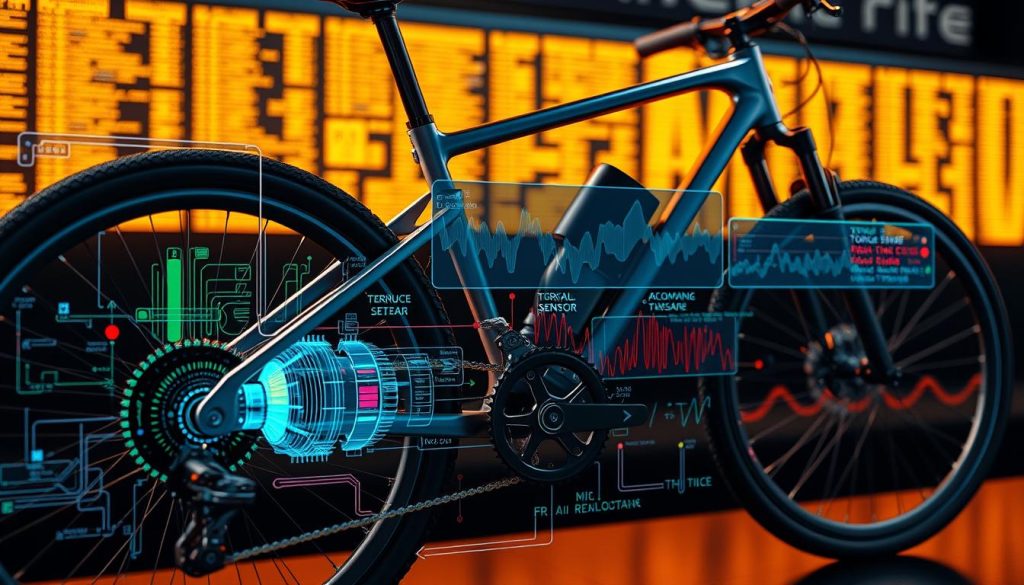
This tech works by using sensors to measure how hard you pedal. It turns your effort into signals that help the bike move smoothly.
Real-Time Power Measurement and Response
Today’s e-bikes have top-notch sensors. They do a few things at once:
- Detect how hard you’re pedaling
- Track how fast you’re going
- Figure out how much power you need
- Give you the right amount of help
Integration with Digital Control Systems
Digital systems are key to how e-bikes work. They quickly process data from the sensors. This ensures the bike’s power is always right and energy is used well.
Calibration and Sensitivity Adjustments
You can make your e-bike feel just right for you. The tech lets you adjust it to fit your style and how you like to ride.
Now, riding a bike is more personal and high-tech. It’s not just about getting from point A to point B. It’s about enjoying the ride more than ever.
Comparing Torque Sensors vs. Cadence Sensors
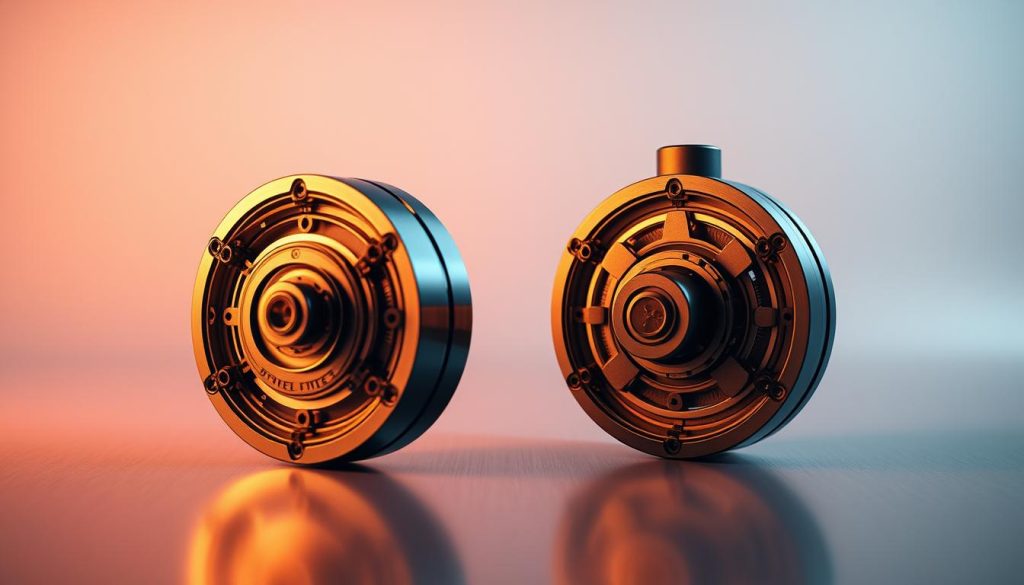
Cyclists looking at e-bikes often face two main choices: torque sensors and cadence sensors. Knowing the differences helps riders pick the right torque sensor e-bike.
Cadence sensors work by detecting when you pedal. They turn on the motor as soon as you start pedaling. This gives a straightforward ride with less varied power.
- Cadence Sensors:
- Activate motor based on pedaling motion
- Provide consistent power regardless of pedaling force
- Less expensive technology
- Torque Sensors:
- Measure actual pedaling pressure
- Deliver proportional motor assistance
- Create more natural riding dynamics
Torque sensor e-bikes use advanced technology. They measure the force on the pedals for a smoother ride. It feels more like regular cycling.
The main benefit of torque sensors is how they adjust power. Harder pedaling gets more help from the motor. Lighter pedaling gets less. This makes the ride more natural and efficient.
Premium Electric Bicycle Drivetrain Components
Electric bicycle drivetrain components are the heart of any high-performance e-bike. They are key to a great cycling experience. They also help riders get the most out of their electric bicycle accessories.
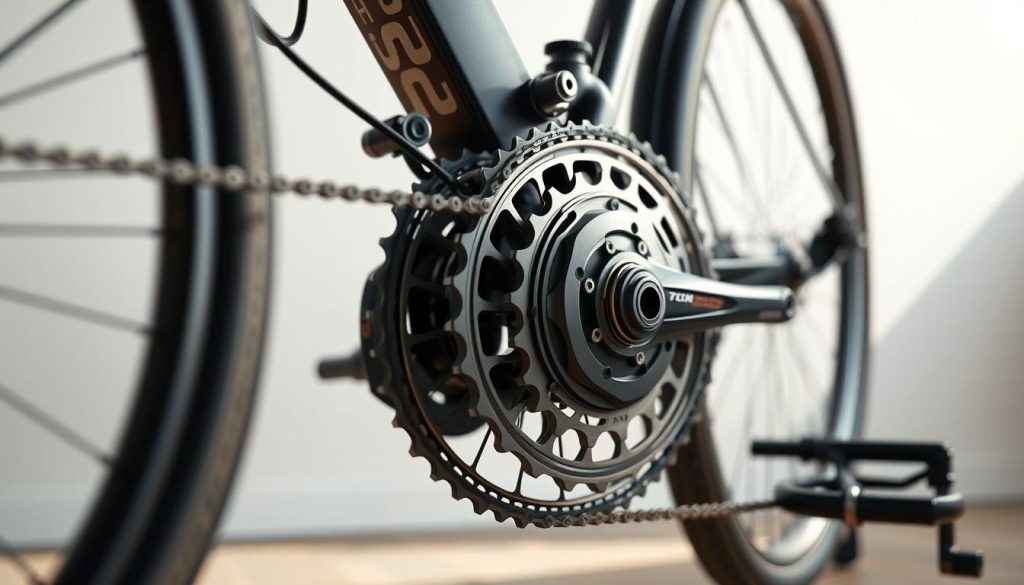
Modern e-bikes need advanced mechanical and electrical systems for smooth, efficient rides. The quality of these parts greatly affects how well the bike performs.
Motor and Controller Compatibility
Choosing the right motor and controller is essential. Riders should look at several important factors:
- Power output matching
- Voltage requirements
- Thermal management capabilities
- Communication protocol compatibility
Battery Performance and Integration
Battery technology is crucial for e-bike performance. New electric bicycle accessories have smart battery systems. These systems improve power delivery and increase range.
Maintenance Requirements
Regular maintenance keeps your e-bike’s parts in top shape. Important maintenance steps include:
- Periodic electrical system diagnostics
- Cleaning and lubricating mechanical interfaces
- Checking wiring and connection integrity
- Monitoring battery health and charging cycles
Investing in top-notch electric bicycle drivetrain components and accessories leads to a better riding experience.
Maximizing Performance with Intelligent E-bike Systems
Intelligent e-bike systems have changed cycling forever. They give riders more control and efficiency. E-bike torque sensing technology lets cyclists get the most out of their electric bikes.
To get the best out of your e-bike, learn about its key features:
- Learn different assistance modes and their specific benefits
- Practice efficient pedaling techniques that complement torque sensing
- Experiment with sensitivity settings for personalized riding experience
- Understand how intelligent systems adapt to terrain and riding conditions
Modern e-bikes use advanced sensors to measure pedal force in real-time. This tech turns your effort into precise power help. It makes riding smooth and natural. By using these smart features, cyclists can ride better and have more fun.
Riders should check their e-bike’s digital interface. It lets them customize settings and see how the torque sensing works. Keeping the bike updated and calibrated makes it even better.
- Check firmware updates regularly
- Calibrate sensors for optimal performance
- Understand your riding style and adjust settings accordingly
Using intelligent e-bike systems makes cycling more than just a ride. It turns it into a dynamic, high-tech journey.
Selecting the Right Torque Sensing Mechanism
Choosing the right torque sensing mechanism can greatly improve your e-bike’s performance. It also enhances your riding experience. Knowing the differences between sensor types helps cyclists make better choices for their electric bikes.
Riders have two main options for cycle torque measurement: bottom bracket and rear hub sensors. Each has its own benefits for e-bike fans.
Bottom Bracket Sensors: Precision Performance
Bottom bracket torque sensing mechanisms offer top accuracy in measuring pedaling force. They watch power transfer at the bicycle’s most important point.
- Highest precision for cycle torque measurement
- Direct power transmission evaluation
- Minimal latency in pedal-assist response
Rear Hub Sensors: Simplified Integration
Rear hub torque sensing mechanisms are easier to install. They measure pedaling data right at the wheel. This makes them a cost-effective choice compared to bottom bracket systems.
- Easier retrofit for existing bicycles
- Lower installation complexity
- More affordable sensor technology
Compatibility Considerations
Choosing the right torque sensing mechanism needs careful thought. You must consider your e-bike model, riding style, and what you expect from performance. Talking to professional e-bike technicians can help ensure the best sensor integration.
- Assess your bicycle’s current drivetrain
- Evaluate performance requirements
- Consider budget constraints
- Review manufacturer recommendations
Expert Tips for Optimizing Your E-bike’s Response
Getting the most out of your e-bike starts with knowing its power meter. Professional riders tweak the torque signal processing for better rides. Start by checking your e-bike’s sensitivity settings. These let you control how the bike responds on different terrains.
Whether you ride in the city or trails, adjust the assistance levels to fit your needs. Try different power curves to balance pedaling and electric help. Each tweak makes your ride more efficient and tailored to you.
Now, digital tools and apps make setting up your e-bike’s torque sensor simple. Spend time learning your bike’s quirks with short rides. Notice how it handles on flat ground, hills, and quick starts.
For tech-savvy riders, there’s more to explore. Small tweaks in torque signal processing can make a big difference. Remember, it takes practice and patience to get the most out of your e-bike. With the right adjustments, your electric bike will feel like an extension of you.