
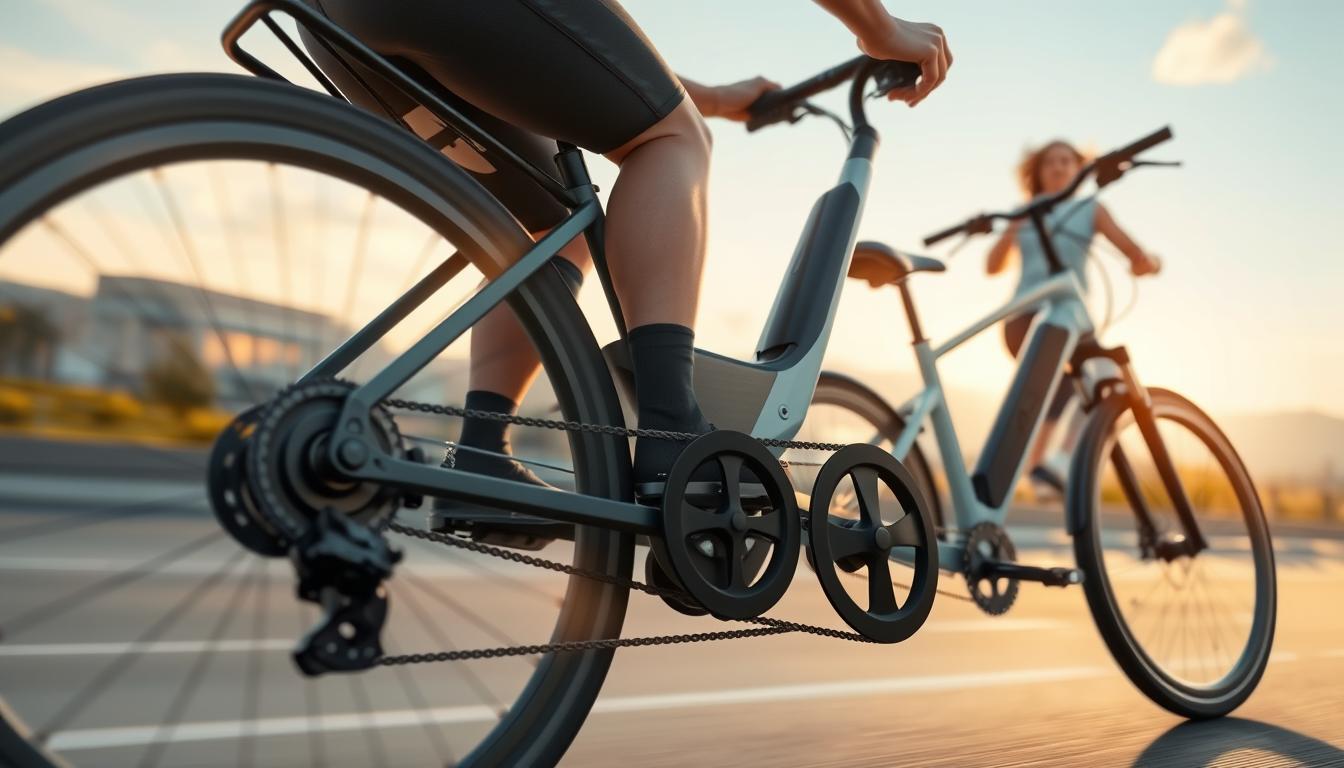
Electric bicycles have changed how we move around cities and enjoy the outdoors. They use pedal assist technology to mix human effort with electric power. This makes cycling easier and more fun for everyone.
The pedal assist system is clever and easy to understand. It senses how hard you’re pedaling and adds electric power to help. This creates a smooth and natural ride that’s easy to get used to.
Now, you can ride farther, tackle tough paths, and explore new places. Whether you’re going to work or hitting the trails, pedal assist makes cycling more exciting.
The main goal of pedal assist is to help riders go further without losing the feel of cycling. E-bikes use smart sensors and power control to change the game for cyclists today.
How Pedal Assist Works: The Basic Mechanics Behind E-Bike Power
Electric bike assist technology has changed cycling a lot. It makes riding easier and more fun. The key is the pedal assist system, which mixes human effort with electric help.
Today’s electric bikes use smart sensors to boost your ride. These sensors watch how you pedal and give you the right amount of help. This makes riding smooth and easy.
Types of Pedal Assist Sensors
E-bikes have two main types of sensors:
- Cadence Sensors: They notice when you pedal and give steady power.
- Torque Sensors: These measure how hard you pedal, offering better support.
Power Delivery Systems in Modern E-Bikes
Modern e-bikes have advanced parts for top performance. Motors, batteries, and sensors work together. This makes riding feel natural and fun.
The Role of Controllers in Pedal Assist
Controllers are the smart part of the system. They decide how much power to give you. They adjust based on how hard you pedal and what mode you’re in.
Knowing how these parts work helps you get the most out of your e-bike. You’ll enjoy a better ride.
Benefits of Pedal Assist Technology for Riders

Pedal assist technology has changed the way we cycle. It helps riders of all levels by adding smart power support. This makes cycling easier and more fun.
Riders get big benefits from pedal assist, especially when facing tough terrains. It helps them:
- Go further without getting too tired
- Conquer steep hills with more confidence
- Keep a steady speed on different paths
- Feel less tired on long rides
Using an e-bike also boosts health. People who were worried about their fitness can now cycle for fun or to get to work. The adjustable levels let riders choose how hard they want to work out. This helps keep their heart healthy and encourages more activity.
| Pedal Assist Level | Rider Benefit | Energy Expenditure |
|---|---|---|
| Low Support | Minimal Assistance | High Personal Effort |
| Medium Support | Balanced Assistance | Moderate Personal Effort |
| High Support | Maximum Assistance | Low Personal Effort |
Today, pedal assist technology makes cycling open to everyone. It breaks down barriers for people of all ages and fitness levels. E-bikes make cycling a fun and green way to get around and enjoy the outdoors.
Different Levels of Pedal Assist and Their Applications
E-bike riders can choose from many pedal assist levels. This changes their ride on different terrains and styles. Knowing these modes helps riders get the most from their e-bike and enjoy a ride that’s just right for them.
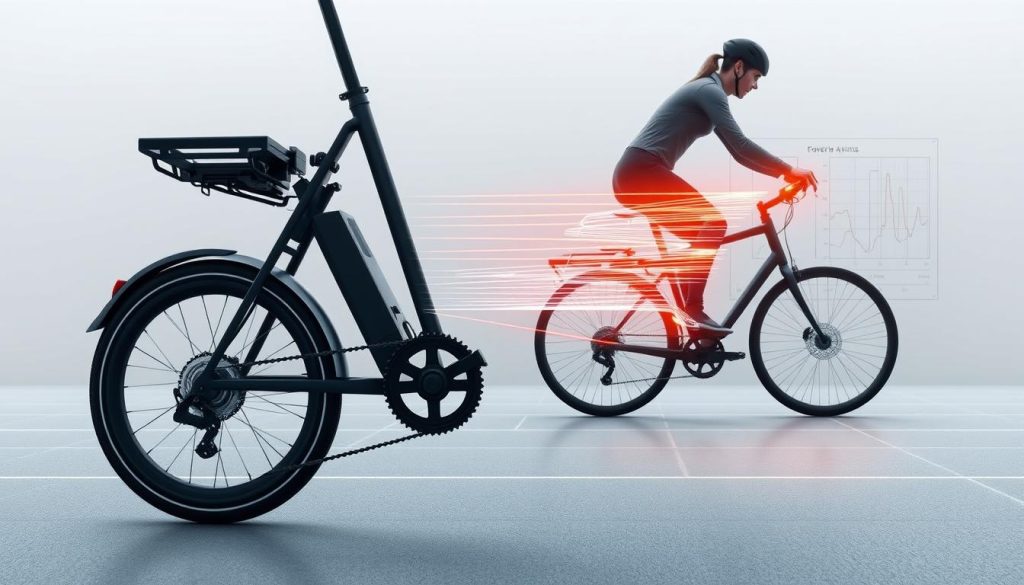
Today’s e-bikes have advanced pedal assist modes. These are made for different places and what riders like. They give riders the power to control their e-bike’s performance exactly how they want.
City Riding Assist Modes
Urban riders get special pedal assist levels for city streets. These modes offer:
- Smooth power for city stops and starts
- Less power to save battery
- Just the right help for daily trips
Off-Road and Trail Assist Settings
For those who love adventure, there are strong pedal assist modes for tough trails. Off-road settings give:
- More power for steep hills
- More torque for bumpy trails
- Quick power when needed on rough paths
Performance Mode Features
For those who want the most out of their ride, there are high-intensity pedal assist modes. Performance settings include:
- Full power
- Fast acceleration
- Quick response to how hard you pedal
Choosing the right pedal assist mode makes sure your ride is perfect for you and where you are.
Understanding Torque Sensors vs. Cadence Sensors
E-bike fans know pedal assist sensors are key to a great ride. There are two main types: torque sensors and cadence sensors. Each has its own way of improving your e-bike’s performance.
Cadence sensors are simple. They turn on the motor when you pedal. It’s like a switch for your e-bike’s power. They’re cheaper and easy to use.
Torque sensors work differently. They measure how hard you pedal. This makes riding feel more natural and responsive. Here’s what sets them apart:
- Cadence Sensors:
- Turn on the motor when you start pedaling
- Give consistent power
- Are less expensive
- Torque Sensors:
- Measure the force of your pedaling
- Help the motor assist you in proportion
- Make riding feel more natural
Those who want a more natural ride prefer torque sensors. They adjust to how hard you pedal, making hills and tough trails easier. Mountain bikers and serious cyclists often pick e-bikes with torque sensors.
Choosing between cadence and torque sensors depends on your riding style, budget, and what you expect from your e-bike. Both types have their own role in the world of e-bikes, offering different ways to assist your ride.
Maximizing Your E-Bike’s Range with Smart Assist Usage
To get the most out of your e-bike’s range, you need a plan and smart riding skills. Learning how pedal assist works can boost your battery life and make riding better.
Good battery care starts with knowing your e-bike’s limits and using smart riding tips. By choosing wisely how you use power and ride, you can make your e-bike go further.
Battery Management Strategies
- Maintain battery charge between 20-80% for optimal longevity
- Avoid extreme temperature exposure during charging
- Use lower pedal assist levels for longer rides
- Keep battery connections clean and secure
Terrain-Based Assist Selection
Each terrain needs a different pedal assist strategy. For flat city streets, use less assist. But on steep hills, you’ll need more power. Choosing the right assist level saves battery on your ride.
Optimal Pedaling Techniques
- Maintain consistent pedaling cadence
- Anticipate terrain changes
- Use momentum to reduce pedal assist dependency
- Practice smooth, steady pedaling
Mastering these techniques lets you get the most out of your e-bike’s range. You’ll enjoy longer, more efficient rides.
Common Pedal Assist Features in Modern E-Bikes
Modern electric bike assist systems have changed how we ride. The pedal assist mode is now more advanced. It gives riders more control and options.
Today’s e-bikes have cool features that make riding better:
- Walk Assist Mode: Helps riders move their e-bike when walking alongside it
- Boost Button: Provides instant power for quick acceleration
- Multiple Assist Levels: Allows riders to choose their preferred electric bike assist intensity
- Smartphone App Integration: Enables detailed tracking and customization
Riders can now adjust their pedal assist mode with great detail. Smart controllers adjust power based on the ride. This makes e-bikes more intuitive and responsive than ever.
Advanced electric bike assist features include:
- Terrain-specific power management
- Energy consumption tracking
- Personalized riding profile settings
- Real-time performance metrics
These tech upgrades make modern e-bikes more fun and easy to use. They’re great for city rides and fun cycling.
Legal Requirements and Regulations for Pedal Assist Systems
Understanding pedal assist regulations can be tricky for e-bike fans. Each state and city has its own rules for electric bikes. In the U.S., the Consumer Product Safety Commission sets limits on speed and motor power for e-bikes.
E-bikes are divided into three types based on speed and motor power. Class 1 e-bikes help you go up to 20 miles per hour. Class 2 lets you use a throttle, and Class 3 goes up to 28 miles per hour. Each type has rules on where you can ride.
Safety is key in e-bike rules. Many places require helmets, especially for faster bikes. Some areas also have age limits, like 16 or 18, for e-bike riders. E-bike makers must show what class their bike is to help buyers follow local laws.
Before buying or riding an e-bike, check local laws. Talking to local bike shops or transportation offices can give you the latest on e-bike rules in your area.