
Electric bike fans know that motor wattage is key to how well an e-bike performs. When you’re looking for an electric bike, knowing about the motor power is crucial. It can make all the difference between a great ride and a letdown.
Today’s e-bikes have different motors that affect how fast, how quickly you can go, and how well you can climb. If you want the best ride, you need to understand how wattage affects your ride. Whether you’re riding to work or exploring tough trails, the right motor power is essential.
For everyone from city riders to trail explorers, the motor power of your e-bike matters. It’s not just a number; it’s what makes your e-bike work its best.
This guide will help you understand motor wattage better. We’ll cover everything from technical details to how it affects your ride. You’ll learn how to choose the right e-bike for your needs.
The Basics of E-bike Motor Power Systems
Electric bicycle motor specs are key to knowing how e-bikes perform and save energy. An e-bike’s power system is made up of many parts. These parts work together to turn electrical energy into motion.
The motor at the heart of an e-bike is what matters most. The e-bike’s watt rating affects its power and how it feels to ride.
Understanding Nominal vs Peak Power Output
Electric bicycle motor specs talk about two important power levels:
- Nominal Power: The steady power a motor can keep up with
- Peak Power: The highest power during quick starts
How Motor Controllers Regulate Power Flow
Motor controllers are the e-bike’s brain. They control power, making sure it’s used right and keeping things running smoothly.
| Controller Function | Purpose | Impact on Performance |
|---|---|---|
| Voltage Regulation | Manages electrical input | Prevents motor damage |
| Current Limiting | Controls power draw | Protects battery and motor |
| Thermal Management | Monitors motor temperature | Prevents overheating |
Different Types of E-bike Motors
E-bike watt ratings change with different motors, each with its own traits:
- Hub Motors: Built into the wheel hub
- Mid-Drive Motors: Located at the bike’s center
- Geared Motors: Give more torque
- Direct-Drive Motors: The simplest design
Knowing about these motors helps riders choose the right e-bike for their needs.
Motor Wattage for E-bikes: What You Need to Know

Choosing the right electric bicycle means understanding motor output. The wattage of an e-bike’s motor affects its performance, speed, and ride quality. The motor’s power is key to handling various terrains and conditions.
E-bike motors range from 250 to 750 watts, each suited for different needs. Motors around 250-350 watts are great for flat city rides and casual use. They offer smooth starts and enough help for city trips.
- 250W: Best for flat terrain and light riders
- 500W: Suitable for moderate hills and mixed terrain
- 750W: Ideal for challenging landscapes and heavier loads
When picking an e-bike motor, think about what you need. Your body weight, usual ride terrain, and how you plan to use the bike are important. These factors help choose the right wattage.
| Motor Wattage | Terrain Performance | Rider Suitability |
|---|---|---|
| 250W | Flat urban streets | Lightweight riders |
| 500W | Mixed terrain | Average weight riders |
| 750W | Steep hills, rough terrain | Heavier riders, cargo transport |
Remember, more wattage doesn’t always mean better. Local laws, battery size, and your riding style also matter. These factors help pick the perfect e-bike motor for you.
How Watt Hours Impact Your E-bike’s Range
Knowing about watt hours for e-bike batteries is key for top performance and range. Watt hours show the battery’s energy capacity. This affects how far you can ride on one charge.

The link between watt hours and range isn’t simple. Many factors affect your e-bike’s actual range.
Calculating Expected Range from Watt Hours
To guess your e-bike’s range, follow these steps:
- Multiply battery voltage by total amp hours
- Think about your usual riding conditions
- Consider rider weight and terrain
- Remember the level of pedaling assistance
Factors Affecting Battery Efficiency
Several important things affect watt hours and range:
- Terrain type (flat vs. hilly)
- Rider weight
- Wind resistance
- Tire pressure
- Battery age and upkeep
Real-world Range Testing Methods
Testing range needs a careful method. Riders should track distance, battery use, and performance in different situations. This helps understand their e-bike’s true range.
Pro e-bike makers do detailed range tests. They give realistic estimates to help buyers choose wisely.
Choosing the Right Motor Power for Your Riding Style
Choosing the right e-bike motor watt capacity is key to meeting your riding needs. Different riding styles need different motor powers for the best performance and fun.
- Urban Commuting: Typically requires 250-500 watts
- Recreational Riding: Best with 500-750 watts
- Mountain/Off-road Terrain: Recommended 750-1000 watts
- Long-distance Touring: Ideal range of 500-750 watts
Knowing your riding area is crucial for picking the right motor power. City riders might want efficiency, while mountain bikers need strong power for tough trails.
| Riding Style | Recommended Watt Capacity | Terrain Suitability |
|---|---|---|
| Urban Commuting | 250-500 watts | Flat, paved surfaces |
| Recreational Riding | 500-750 watts | Mixed terrain, mild inclines |
| Mountain/Off-road | 750-1000 watts | Steep trails, rough terrain |
| Long-distance Touring | 500-750 watts | Extended range, varied landscapes |
When picking your e-bike motor, think about your fitness, how far you ride, and the terrain. More watt capacity means more power but can use more battery.
Legal Requirements and Power Restrictions by Region
Understanding electric bike motor power laws can be tricky. Each area has its own rules about e-bike motor power. This makes it hard for riders and makers to follow the rules.
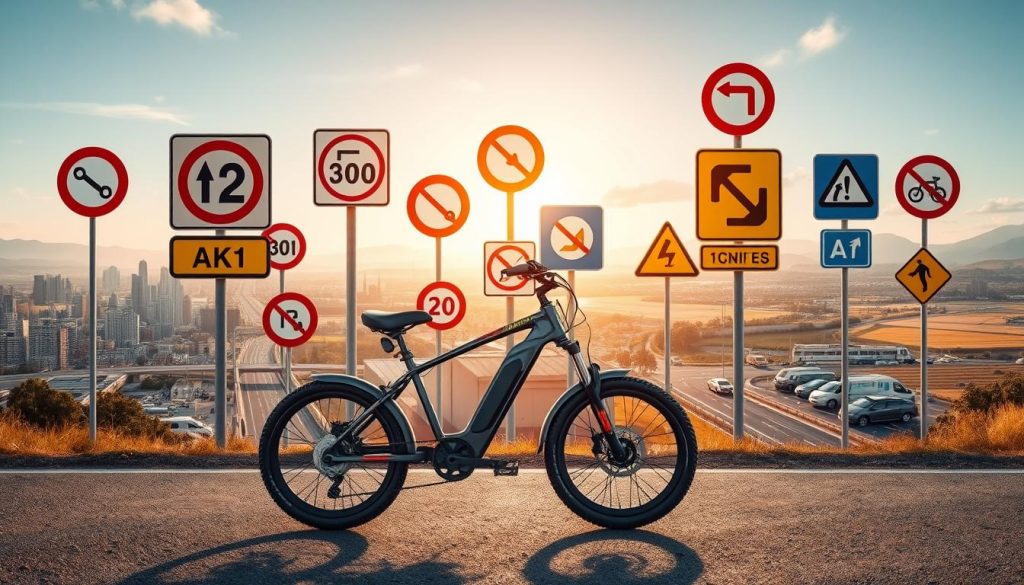
It’s important to know about electric bike motor power limits for safe riding. Laws in different places affect how e-bikes are made and used. This is especially true for the power of the motor.
US Federal and State Regulations
In the US, e-bike laws change from state to state but follow federal rules. There are three main types of e-bikes:
- Class 1: Pedal-assist up to 20 mph, max 750W motor
- Class 2: Throttle-assisted up to 20 mph, max 750W motor
- Class 3: Pedal-assist up to 28 mph, max 750W motor
International Power Limitations
| Region | Maximum Motor Wattage | Speed Limit |
|---|---|---|
| European Union | 250W | 25 km/h (15.5 mph) |
| Canada | 500W | 32 km/h (20 mph) |
| Australia | 250W | 25 km/h (15.5 mph) |
Street Legal vs Off-road Requirements
Street-legal e-bikes must follow certain rules about power and speed. Off-road e-bikes have looser rules, letting them have more powerful motors. This is for better performance on tough trails.
- Street legal: Restricted power, integrated lighting, reflectors
- Off-road: Expanded motor power, specialized suspension
Before buying or riding an electric bike, check the local laws. This ensures you follow the rules about motor power in your area.
Power Efficiency and Battery Life Optimization
To get the most out of your e-bike, you need to manage your battery well and ride smart. Knowing about e-bike watt rating and battery capacity is key. It helps your electric bike last longer and perform better.
Here are some tips to make your battery last longer:
- Maintain consistent pedaling pressure to reduce battery strain
- Avoid complete battery depletion between charges
- Store batteries at moderate temperatures (50-77°F)
- Use eco-mode when possible to conserve energy
Looking after your battery is important for your e-bike’s power. Check tire pressure, keep the battery clean, and avoid extreme charging. This helps keep your battery’s watt hours and performance up.
Charging your battery wisely is key to its health. Try to keep it between 20-80% charged most of the time. Don’t let it sit fully charged or completely empty for too long.
The terrain and how you ride affect your e-bike’s power use. Flat areas use less power than steep hills. Knowing this helps you use your e-bike’s watt rating and battery better.
- Use lower assistance levels on flat terrain
- Plan routes with battery efficiency in mind
- Practice smooth acceleration and braking
By keeping your e-bike in good shape and riding smart, you can enjoy longer rides. This also helps your battery last longer and work better.
Common Misconceptions About E-bike Motor Power
Many riders think that more wattage means better performance. But, electric bicycle motor specifications are more complex. A 750-watt motor doesn’t always beat a 500-watt one, especially if it’s well-designed.
People often believe that more power means faster speeds everywhere. But, experts say it’s not that simple. The best motor depends on battery quality, controller tech, and how the bike is built. The most powerful motor isn’t always the best for city rides or mountain trails.
New e-bike owners are often surprised by legal limits on power. Different places have their own rules about e-bike motors. For example, some areas limit motors to 750 watts, while others have stricter rules.
Knowing these details helps riders make better choices. E-bike tech is always getting better, with smarter, more efficient motors. Buyers should look at the whole system, not just wattage.