
Electric bicycles have changed how we move around cities. They mix pedal power with electric help. Knowing how far they can go is key for those who use them daily.
Today’s e-bikes can go much farther than before. Most can travel 25-75 miles on one charge. This makes them great for longer trips and daily commutes.
The battery is what decides how far an e-bike can go. Things like how heavy you are, the terrain, and how much help you need affect the range. Companies are always working to make e-bikes go even farther.
Whether you ride to work or on weekends, knowing your e-bike’s range is important. There are many types of e-bikes, from small city bikes to big touring bikes. Each one meets different needs and riding styles.
As e-bike tech gets better, we’ll see even more ways to go farther. These improvements will keep e-bikes efficient and fun to ride.
How Battery Capacity Impacts Your Electric Bike’s Range
Electric bike battery capacity is key to your riding experience. Knowing how it works can help you get more out of your ebike. This means longer, more fun rides.
The power of an electric bike comes from amp hours and voltage. These specs affect how far you can go on one charge. They also impact how well your bike performs.
Understanding Amp Hours and Voltage Ratings
Amp hours (Ah) show how much charge a battery can hold. Voltage is the electrical power. Think of amp hours as the fuel tank and voltage as the engine’s power.
- Lower voltage batteries (36V) are good for city riding
- Mid-range batteries (48V) help with hills and longer rides
- High-performance batteries (52V) give you the most power and distance
Battery Chemistry and Performance Factors
Different battery types change how far and how long you can ride. Lithium-ion batteries are popular because they’re light and reliable.
| Battery Type | Average Range | Typical Lifespan |
|---|---|---|
| Lithium-Ion | 25-75 miles | 500-1000 charge cycles |
| Lithium Polymer | 20-60 miles | 300-500 charge cycles |
| Lead Acid | 15-40 miles | 200-300 charge cycles |
Common Battery Sizes and Their Distance Potential
Battery sizes affect how far you can ride. Bigger batteries mean more miles but also more weight and cost.
- 10Ah Battery: Ideal for short urban commutes (15-25 miles)
- 13Ah Battery: Great for moderate distances (30-40 miles)
- 17.5Ah Battery: Perfect for longer recreational rides (50-75 miles)
Choosing the right battery size is important. It balances performance, range, and fun.
Key Factors Affecting the Daily Range of Electric Bicycles
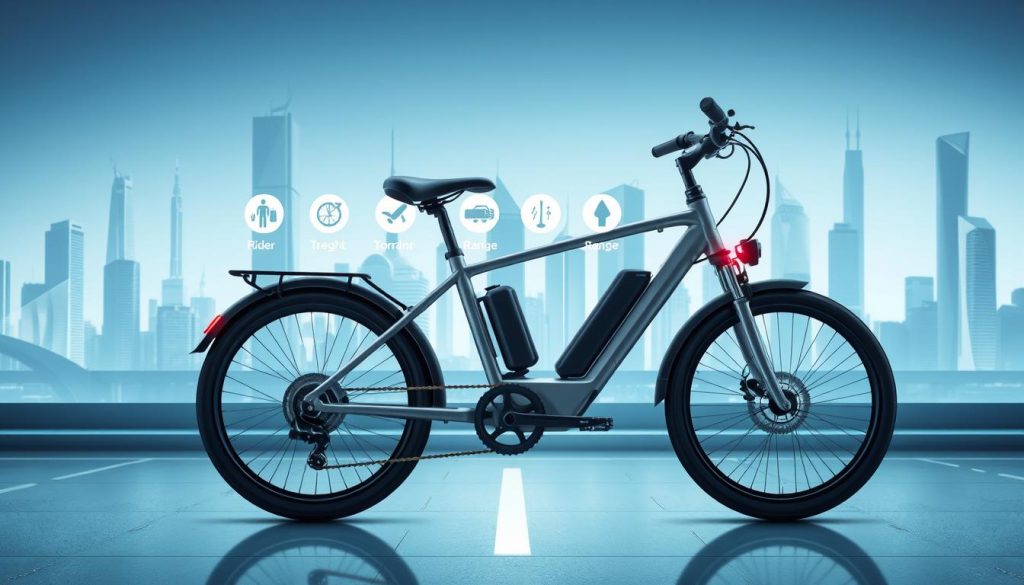
Electric bicycle range isn’t just one number. Many things affect how far you can go on a single charge. Knowing these factors helps riders plan better and set realistic goals for their rides.
The terrain you ride on is very important. Riding on flat, smooth roads lets you go farther than rough or hilly areas. Steep hills use up the battery fast because they need more power.
- Flat terrain: Maximum range efficiency
- Moderate hills: Moderate battery consumption
- Steep mountainous routes: Reduced range
Your weight also matters a lot. Heavier riders need more power from the motor, which means less range. For example, a 220-pound rider will go shorter distances than a 150-pound rider.
| Rider Weight | Estimated Range Reduction |
|---|---|
| 150-180 lbs | Standard Range |
| 180-220 lbs | 10-15% Range Reduction |
| 220+ lbs | 15-25% Range Reduction |
The motor’s power also affects range. More powerful motors use more battery but help you go up hills faster. Most e-bikes have motors between 250-750 watts, with how much power they use depending on how you ride and the assist level.
- 250W motors: Most efficient, longer range
- 500W motors: Balanced performance
- 750W motors: Maximum power, shorter range
Other things like wind, tire pressure, and how you ride also affect range. Keeping your tires inflated and riding efficiently can help you go farther.
Maximizing Your E-bike’s Distance Per Charge
Electric bicycles give us great freedom, but to get the most out of them, we need to ride smart and keep them in good shape. Learning how to make your e-bike go further can really enhance your ride and let you explore more.

There are many ways to boost your e-bike’s performance. The goal is to save battery while still enjoying the ride.
Optimal Riding Techniques for Extended Range
Here are some tips to make your ebike go further:
- Use lower pedal assist levels when possible
- Maintain steady, consistent pedaling
- Avoid rapid acceleration and sudden stops
- Shift gears smoothly to reduce battery strain
Maintenance Tips to Preserve Battery Life
Looking after your battery is key to keeping your e-bike’s range:
- Keep battery charged between 20-80% for optimal longevity
- Store battery in cool, dry environments
- Clean battery connections regularly
- Avoid complete discharge after each ride
Weather Conditions and Range Management
Weather affects how well your e-bike works. Cold weather can cut battery life by up to 30%. Heat can also be tough on the battery. Planning your rides with these factors in mind helps keep your range consistent.
By following these tips, you can ride your electric bike further and enjoy longer trips.
Real-World Range Testing: What to Actually Expect

Figuring out how far an electric bike can go is not easy. Companies often say their bikes can go farther than they really can. An ebike range calculator can give a better idea, but everyone’s experience is different.
Testing how far an electric bike can go involves many things. Riders need to think about a few important factors. These include:
- Terrain type and elevation changes
- Rider weight and cargo load
- Pedaling intensity
- Assistance level selected
- Battery condition and age
Experts who review e-bikes do detailed tests. They try to see how far bikes can go in real life. They test bikes in different ways to get accurate results.
| E-Bike Class | Average Range | Range Variation Factors |
|---|---|---|
| Class 1 Urban Commuter | 35-50 miles | Flat terrain, moderate assistance |
| Class 3 Performance | 25-40 miles | High-speed riding, challenging terrain |
| Cargo E-Bikes | 20-35 miles | Heavy loads, frequent stops |
Keep in mind that ebike range calculators are just estimates. Real-life riding can change things a lot. Experienced riders say the best way to know your bike’s range is to test it yourself in real riding conditions.
Comparing Range Across Different E-bike Classes and Models
Electric bicycle ranges vary a lot, depending on the class and model. Class 1 e-bikes usually go about 20-40 miles. Class 3 models can go up to 50-70 miles on one charge. City e-bikes often perform better than off-road ones for daily use.
Mountain and cargo e-bikes face special range challenges. High-end mountain bikes from Specialized and Trek have big batteries. They can go 40-60 miles in tough terrain. Rad Power Bikes’ cargo e-bikes are great for city delivery and family rides.
New battery tech is changing e-bike ranges. Advances in lithium-ion and motor efficiency are boosting performance. Now, some top models can go 80-100 miles on one charge. Knowing these differences helps pick the right e-bike for your needs.
People’s needs are pushing e-bike range to new heights. Companies are spending a lot on battery research. This means we’ll see even better ranges in future e-bikes.