
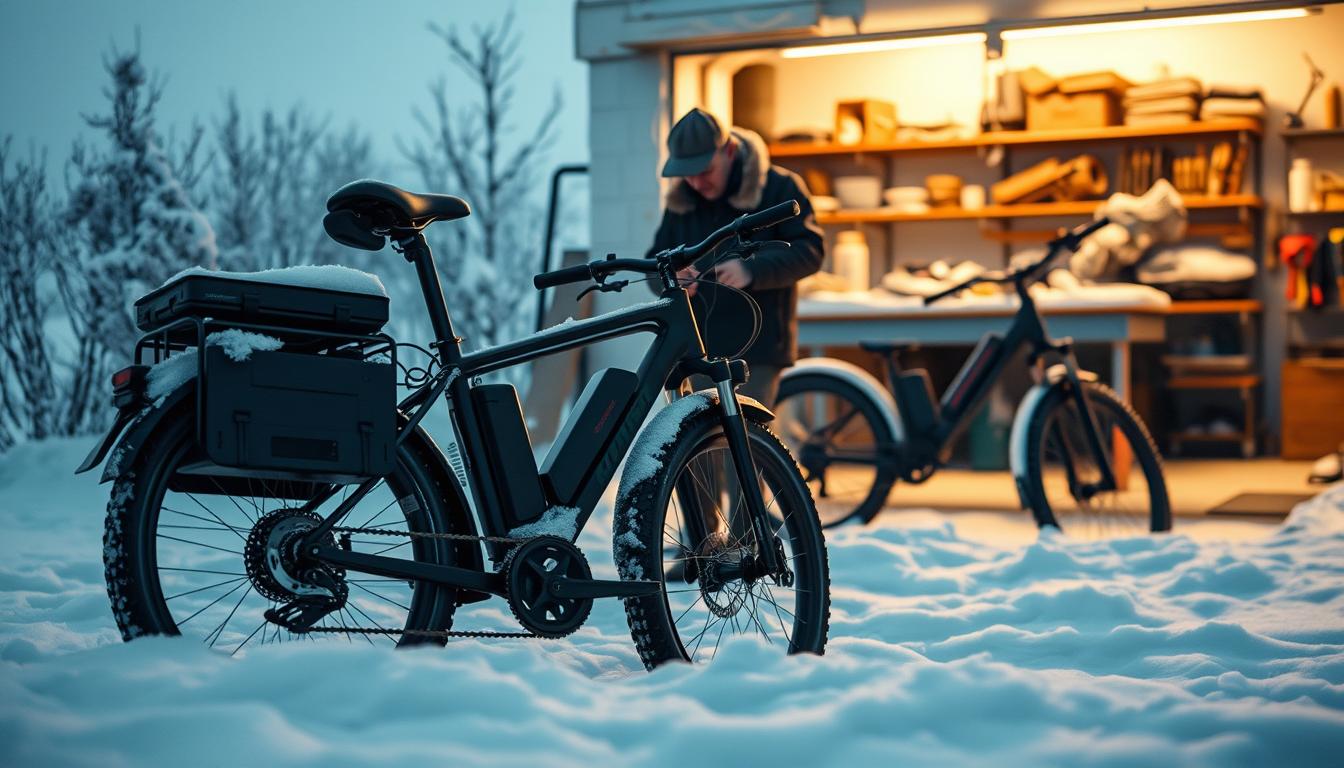
Electric bikes are a big deal for those who love to ride outside, even when it’s cold. To keep your e-bike in top shape, you need to plan and take care of it. This is especially true for the battery.
Looking after your battery-powered bike in winter is more than just putting it away. You need to know how cold affects your bike. Cold can make your battery work less well and even harm it over time.
This guide will show you how to keep your e-bike safe in winter. We’ll cover battery care, storage tips, and maintenance. By following these tips, your bike will stay reliable and work great all winter.
We’ll teach you about battery chemistry and smart storage. Our full plan will help your e-bike perform well, no matter the winter weather.
Understanding Battery Performance in Cold Weather
Electric bike batteries are very sensitive. They change a lot when it gets cold. Riders need to know how temperature affects battery chemistry.
Lithium-ion batteries, found in most electric bikes, change a lot in winter. The cold affects how the battery cells work. This changes how well they store energy and how far you can go.
Impact of Temperature on Battery Chemistry
When it gets cold, battery molecules move slower. This makes it harder for them to store and use energy. If it’s below 32°F, your battery might lose 20-30% of its power. This means your e-bike won’t go as far or be as powerful.
- Chemical reaction rates decrease in cold conditions
- Molecular movement becomes sluggish
- Energy transfer efficiency drops
Optimal Temperature Ranges for E-bike Batteries
The best temperature for battery performance is between 60°F and 80°F. Try to keep your battery in this range. It helps keep it working well during winter.
Signs of Cold-Weather Battery Stress
Knowing when your battery is stressed is important. Look out for signs like less range, slower starts, and longer charging times. These could mean your battery is under stress from the cold.
- Unexpected power drops
- Increased charging duration
- Diminished overall battery capacity
Winter Care For Battery Powered Bikes: Key Protection Methods
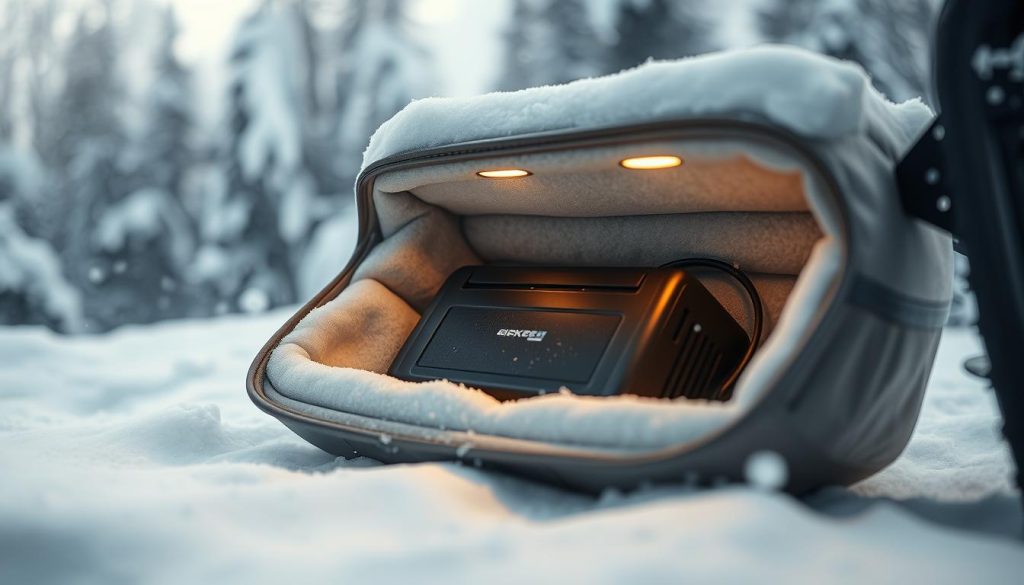
Keeping ebike batteries safe from cold is key. Winter can hurt how well they work. It’s important to keep them warm to avoid damage.
There are a few ways to protect your bike’s battery:
- Use special covers for cold weather
- Wrap batteries with thermal wraps
- Store batteries in a warm place when not in use
- Warm batteries up before charging in cold
Knowing how to manage temperature helps batteries last longer. Keep them between 50-77°F (10-25°C) for best performance. Use insulated bags for extra protection in cold weather.
Get ready before you ride. Check battery connections and charge fully. Avoid sudden temperature changes to prevent damage.
Experts say get good battery protection gear. Neoprene covers and thermal sleeves help a lot in winter.
Smart Storage Solutions for E-bike Batteries
Keeping your e-bike battery safe in winter needs careful planning. It’s important to store your ebike battery right to keep it working well. You should know how to keep it safe in the cold.
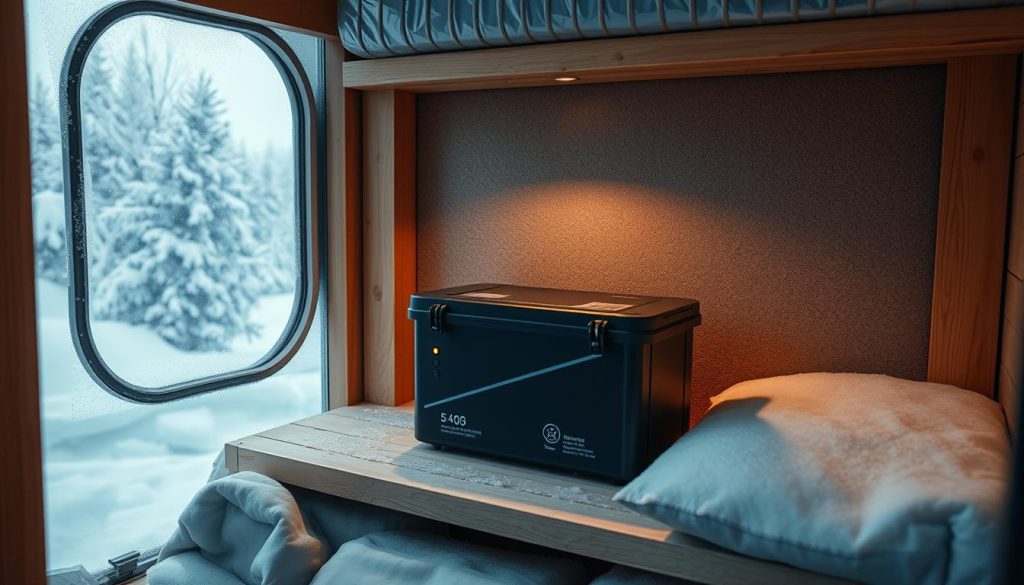
Storing your e-bike right is more than just hiding it away. You need to think about temperature, charging, and where you store it.
Indoor Storage Requirements
Having the right indoor spot is key for keeping your battery safe in winter. Using smart ways to keep your battery warm can help. Here are some tips for indoor storage:
- Choose a dry, cool spot away from sunlight
- Keep the room temperature between 50-70°F (10-21°C)
- Don’t let your battery get wet or face extreme temperatures
- Use a special case for extra protection
Proper Charging During Storage
It’s important to keep your battery charged right during storage. Here’s how to charge it:
- Charge it to 50-60% before you store it for a long time
- Don’t charge it all the way or let it go completely dead
- Charge it every 4-6 weeks to keep it from losing power
Humidity and Temperature Control
| Parameter | Ideal Range | Potential Risks |
|---|---|---|
| Temperature | 50-70°F | Battery capacity reduction |
| Humidity | 40-60% | Corrosion and electrical issues |
| Storage Location | Indoor, dry area | Prevent moisture damage |
By following these tips, you can keep your e-bike battery safe and ready for spring.
Weatherproofing Your Electric Bike Components
Winterizing electric bicycles means protecting all important parts from cold weather. It’s not just about the battery. You need to keep moisture, salt, and cold away from many parts.
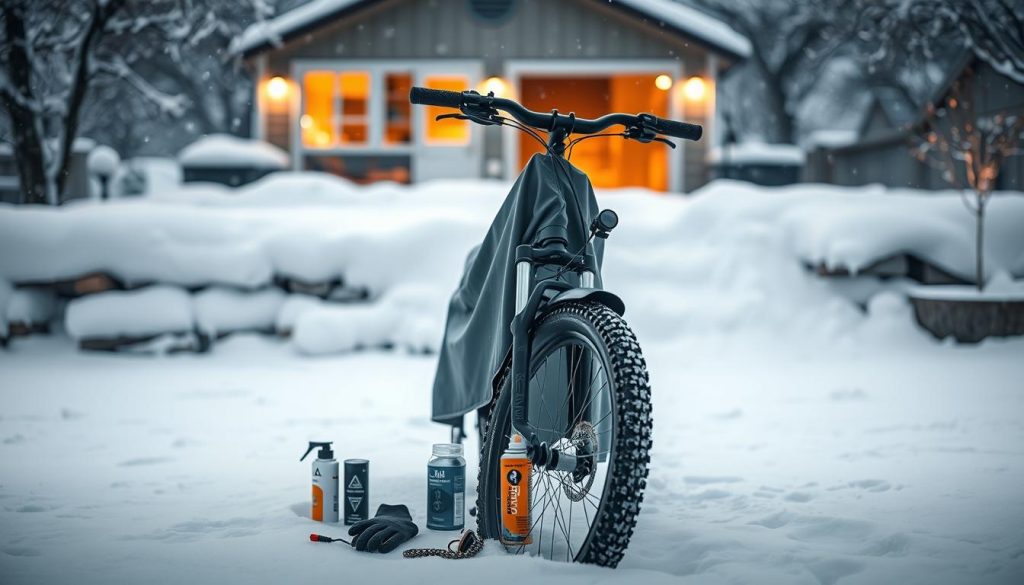
Important areas to protect include electrical parts, display units, and mechanical parts. Salt and moisture can harm these parts a lot in the cold.
- Apply dielectric grease to electrical connections
- Use waterproof covers for display screens
- Install fender extensions to reduce road spray
- Clean and dry electrical components after each ride
Keeping your electric bike safe in winter needs regular care and protection. It’s key to block water and harmful chemicals.
| Component | Winter Protection Method | Frequency |
|---|---|---|
| Motor | Waterproof sealant | Before winter season |
| Electrical Connections | Dielectric grease application | Monthly |
| Display Unit | Protective silicone cover | Continuous use |
Using these tips will keep your bike safe and working well in winter.
Essential Maintenance Tips for Winter Riding
Winter riding with your e-bike needs extra care. Knowing how cold affects your bike is key. Regular checks keep your ride safe and smooth.
Tire care is vital in cold weather. Check pressure often, as it drops in cold. Look for worn treads and use winter tires for better grip.
Lubrication is crucial in winter. Use special cold-weather lubricants for your chain and parts. Clean your bike well after each ride to avoid rust and corrosion.
Always think about safety in winter. Wear bright clothes and make sure your bike lights work. Ride slowly, balance well, and avoid sudden turns. With the right care, you can enjoy your e-bike all winter.